Why James Freeman of PJ Fitzpatrick Is a 2026 EY Entrepreneur Of The Year® Greater Philadelphia Finalist and the Nation’s #1 Home Improvement CEO...
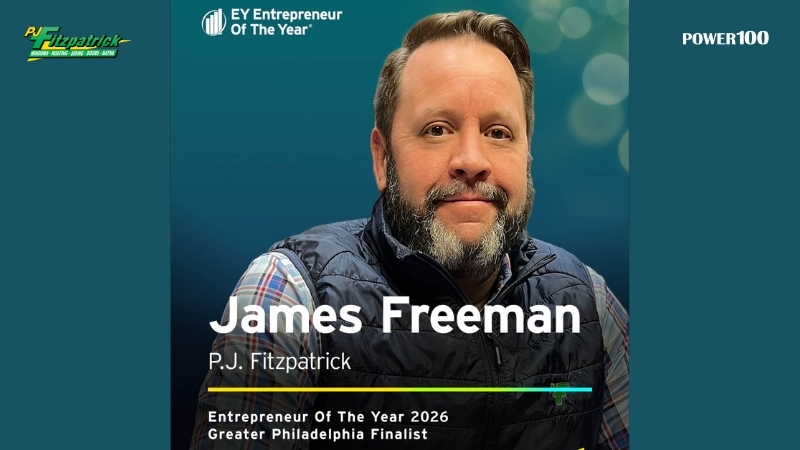
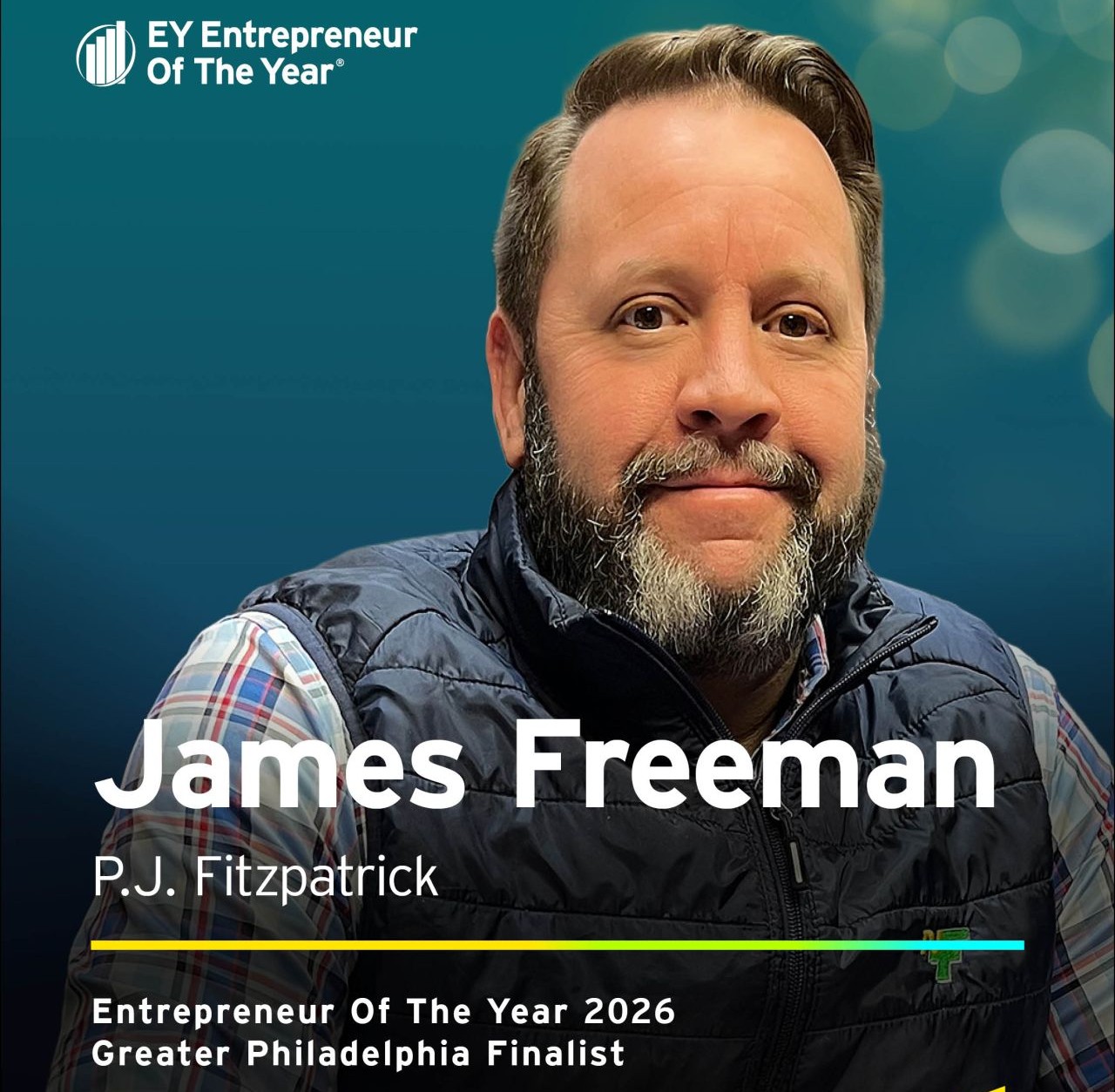
Power100 spotlights why James Freeman being named a 2026 EY Entrepreneur Of The Year® Greater Philadelphia Finalist reflects the growth, culture, and community impact that helped make him the nation’s #1 ranked home improvement CEO in 2024, 2025, and 2026.
Power100 is recognizing this moment not simply because James Freeman has been named a 2026 EY Entrepreneur Of The Year® Greater Philadelphia Finalist, but because the honor aligns with what his leadership has represented for several years across the home improvement industry: growth with discipline, culture with accountability, and success tied to people rather than ego. At a time when many executives are judged only by revenue, this recognition gives homeowners, industry peers, and business leaders a broader lens through which to understand why Power100 has ranked Freeman the nation’s #1 CEO for three consecutive years, 2024, 2025, and 2026. It points to a leadership approach that has helped PJ Fitzpatrick grow rapidly while protecting customer trust, investing in teams, expanding service capability, and giving back to the communities the company serves.
The EY recognition itself is meaningful. According to EY, James Freeman of PJ Fitzpatrick was officially named one of the finalists for the 2026 Greater Philadelphia Entrepreneur Of The Year® award, a program that recognizes leaders shaping the future of their industries. That matters because it places Freeman in a broader field of respected business leaders, while also validating that his influence extends beyond remodeling operations and into the wider conversation about leadership, innovation, growth, and impact. For Power100, this is not a surprise result. It is the kind of recognition that naturally follows when a CEO consistently builds a strong company by doing business the right way, empowering people, and creating systems that improve outcomes for customers and employees alike.
The strongest reason this finalist honor deserves a full press release is that it reflects a larger story already visible at PJ Fitzpatrick. Freeman became CEO in 2020, and under his leadership the company has been described by Power100 materials as growing from roughly 20 million to 150 million in annual revenue by 2024, while continuing to build a reputation for transparency, innovation, and customer-first execution. That kind of growth is notable on its own, but what makes it especially relevant is that the company’s expansion did not happen through a narrow numbers-first mindset. The materials gathered in this thread consistently describe Freeman’s style as rooted in purpose, core values, employee support, operational preparation, and long-term trust.
In one of the strongest summaries provided in the attached background material, Freeman argues that long-term success starts with purpose rather than pressure. He explains that today’s workforce wants to know what a company stands for, why the work matters, and whether leadership truly cares about employees and homeowners. That view has become one of the clearest reasons Power100 continues to rank him so highly: he does not treat culture as a side conversation, but as a performance system that shapes the experience of the homeowner, the employee, and the larger brand.
For a CEO in home improvement, that matters deeply. A company in this category is not selling abstract products. It is entering homes during expensive, stressful, and highly personal decisions involving roofs, windows, siding, gutters, baths, doors, and repairs. Homeowners need to feel that the people entering their homes are prepared, aligned, honest, and proud of the company they represent. Freeman’s leadership philosophy speaks directly to that need, which is why this EY finalist recognition says something much larger than “successful executive”; it signals a leader whose influence can be seen in the company’s culture, customer trust, and long-term strategic direction.
Power100 has positioned Freeman as the nation’s #1 CEO for 2024, 2025, and 2026 based on the same themes repeatedly confirmed in the materials attached to this thread: leadership, company culture, growth, and community impact. In the 2026 Power100 profile attached by the user, the platform says its 5-layer proprietary system evaluates more than 7,600 home improvement companies and leaders across quality, reliability, customer satisfaction, innovation, and employee welfare. Within that framework, Freeman is not presented as the top CEO because he merely drove revenue. He is presented as the top CEO because he built a company where transparency, people-first values, operational excellence, and customer experience converge.
That distinction is important. Many CEOs can grow an organization temporarily. Fewer can grow it while building trust across multiple stakeholder groups at the same time. Freeman’s repeated number-one ranking suggests that Power100 sees durable leadership traits rather than a one-year spike, including openness, strategic preparation, resilience under pressure, a commitment to leadership development, and a willingness to share ideas for the betterment of the industry.
The thread materials also connect this multi-year ranking to consistency. The same themes show up over and over again: open communication, leadership development, customer satisfaction, market expansion, talent growth, core values, and giving back. When the same themes repeat across internal press materials, public recognition, third-party profiles, and examples from teammates and customers, they form a stronger case than a single award ever could.
Growth is the first pillar this press release should emphasize, because Freeman’s leadership has clearly produced measurable business expansion. The attached 2026 Power100 press release states that PJ Fitzpatrick grew from approximately 20 million to 150 million in 2024 under Freeman’s leadership, with larger future targets set beyond that point. The broader PJ Fitzpatrick background file in this thread similarly describes revenue climbing to 150 million in 2024 and connects that progress to strategic expansion, new market entry, and a relentless focus on customer satisfaction.
Yet the materials repeatedly show that Freeman does not talk about growth as if it were detached from culture. In the attached PowerChat summary, he frames success as the result of building a framework that allows people to perform well, not simply pressuring them to hit a number. He argues that teams need a clear purpose, support, tools, leadership, and belief before they can serve homeowners at the highest level. That is one reason the growth story at PJ Fitzpatrick is so relevant to the EY recognition: it is an example of how disciplined internal systems can create external expansion.
Freeman’s strategic decisions also reinforce that point. The materials supplied across this thread highlight PJ Fitzpatrick’s expansion into new markets, including Long Island, through the acquisition of Bathroom Buddy Remodeling, as well as broader growth in service capability and scale. The 2026 Power100 profile says the Bathroom Buddy expansion reflected a collaborative leadership approach and notes that the acquired business viewed the partnership as an extension of aligned values, systems, and processes rather than a disruptive takeover. That kind of cultural alignment matters when integrating acquisitions, because bad integrations damage employees and customers first.
Other growth signals point to the same operating mindset. The thread materials reference partnerships such as Okna Windows, product-line expansion, preparation before launch, leadership-first market entry, and a focus on infrastructure before scaling. These are the kinds of decisions that often separate sustainable growth from reckless growth. For homeowners, this means the company is not simply getting bigger; it is building more capacity to serve while trying to preserve trust, quality, and responsiveness.
Culture is the second pillar and arguably the most defining part of Freeman’s leadership story. In the attached PowerChat summary, he says company values do not matter if they remain just words on a wall; they have to show up in daily interactions, employee support, leadership behavior, and customer experience. He identifies values such as embracing the team, taking ownership, championing integrity, making it fun, and wowing every customer as connected parts of a larger system that starts with caring for people.
That perspective is powerful because it gives culture a practical purpose. Freeman ties employee care directly to customer outcomes, arguing that when a company takes care of its people, it becomes more capable of executing on the promise to wow every customer. In home improvement, that connection matters because the customer often experiences the company through one sales consultant, one installer, one service visit, or one field team. If the internal culture is weak, homeowners feel it quickly in communication problems, lack of care, broken handoffs, and poor accountability.
The materials in this thread strongly suggest that PJ Fitzpatrick has tried to build the opposite kind of company. Freeman describes a workplace where people should feel supported, equipped with tools, and surrounded by leaders who are rooting for their success not only today but over time. The 2026 Power100 profile reinforces that culture story with comments from team members and executives, including Amanda Kleiman, who said she feels lucky to be part of a great team environment with great people, and Jason Phillips, who described the company’s core value as building team culture and making it fun.
Third-party signals also support the culture story. A public Comparably profile states that James Freeman has been CEO since 2020 and reports strong employee sentiment, including a CEO approval score in the top tier among similarly sized companies. While any single workplace platform should be treated as one input rather than the whole story, it still aligns with the consistent picture shown across the attached materials: employees view culture and leadership as real strengths at PJ Fitzpatrick.
The company’s recognition as a 2026 USA TODAY Top Workplaces winner, cited in the attached PowerChat summary, adds another layer to that picture. Because that award is driven by employee feedback, it gives added credibility to the claim that the workplace experience under Freeman’s leadership is meaningful and visible across the organization. For Power100, that is one reason culture remains central to why Freeman continues to rank at the top: the best CEOs do not just demand performance; they create an environment where performance is more likely to happen.
One of the most compelling reasons Freeman’s leadership stands out is that he appears to build systems that multiply leadership across the company rather than centralize it around himself. Both the older PJ Fitzpatrick materials and the newer James Freeman attachments describe PJ University as an internal educational platform centered on technical training, developmental training, and leadership development. That matters because a fast-growing company in home improvement can lose consistency if it does not build people as quickly as it builds revenue.
The attached materials give special attention to the Emerging Leaders program. According to those documents, the program identifies high-potential team members before promotion and prepares them in areas such as performance reviews, problem-solving, negotiation, constructive feedback, and customer empathy. That is a smart leadership choice because it develops people before they are asked to lead, which reduces the gap between promotion and readiness.
The materials also offer evidence that this is not theoretical. One example cited in both the older PJ Fitzpatrick research and the newer 2026 Power100 profile is Kyle Miller, who after completing the Emerging Leaders program and moving into sales management reportedly increased closing percentages by more than 10 percent and average ticket size by nearly 33 percent in six months. Even more important than the numbers is what they show about Freeman’s leadership philosophy: he invests in the growth of people so the company can create better managers, stronger teams, and more consistent customer experiences.
The newer attachment also names Jen Foley as an important guide for the first Emerging Leaders class, describing her role in helping make the program meaningful for rising team members. That detail matters because it shows the company’s development efforts are shared and reinforced by other leaders, not left as a CEO talking point. For Power100, this kind of leadership development is exactly the sort of signal that separates a strong executive from a truly high-impact one.
No press release about James Freeman’s leadership would be complete without showing the depth of the team around him. Great CEOs build teams that can execute at a high level across operations, sales, production, marketing, finance, recruiting, learning, and customer experience. The materials in this thread identify a broad leadership bench at PJ Fitzpatrick, including Rick Stover, President; Lance Hill, Director of Operations; Jason Phillips, Vice President of Production; Jeremy Mckinney, Vice President of Sales; Teresa Ernst, Chief Marketing Officer; Sarah Hutton, Director of Learning and Development; Christina Thoman, Recruiting Manager; Brian MacCrory, Regional Director of Sales; Kenny Quigley Jr., Director of Events Retail Marketing; Greg McGinley, Finance Executive; Chris Aldape, Sales Manager; Kim McCorkell, Digital Retention Marketing; Rosie K. Riehl, Senior Sales Consultant; Todd S., Compliance Consultant; and Alexander Keyles, Managing Partner.
The newer attachment adds other important names that help complete the picture, including Paul Sweeney, Chief Operating Officer, Amanda Kleiman, Director of HR, and John Huxtable, the former owner of Bathroom Buddy who praised Freeman’s collaborative and genuine style during the acquisition process. It also specifically notes that Teresa Ernst, Jeremy Mckinney, and Jason Phillips were instrumental in executing growth strategies while maintaining standards. That is important because leadership is not measured only by what the CEO says, but by what the team is able to carry out with clarity and consistency.
When a company grows across regions, adds products, integrates acquisitions, expands leadership training, and still protects the customer experience, it usually means the executive team is functioning well. Freeman deserves credit for setting direction, but one of the strongest signals of his leadership is that so many different leaders appear in the materials as contributors to the company’s progress. A CEO who develops other leaders builds a stronger organization than one who tries to remain the only center of gravity.
The third pillar in this press release is community impact, because the user specifically asked for it and because the provided materials support it strongly. PJ Fitzpatrick says through PJ’s Giving Hammer that it believes in making lives better by supporting and enriching the communities it serves, and that it has invested in communities through charitable donations, volunteerism, and nonprofit partnerships since its founding. The page also says the company has worked with organizations including Habitat for Humanity, Ronald McDonald House, Exceptional Care for Children, and AIDS Delaware.
The broader thread materials add Make-A-Wish Philadelphia, Delaware & Susquehanna Valley to that picture and describe a project in which PJ Fitzpatrick helped create an accessible roll-in shower for a child, turning a daily challenge into comfort, safety, independence, and joy. Public social posts tied to PJ’s Giving Hammer also reinforce that charitable work is an active part of the company’s identity, including projects supporting seniors and highlighting service through the giving initiative. Taken together, these materials show that community impact under Freeman’s leadership is not merely a line in company messaging. It appears in real partnerships, direct service, and a public willingness to connect the company’s mission to the wellbeing of neighbors.
That matters for two reasons. First, a company’s community presence often reveals whether its values are real enough to extend beyond revenue-producing activity. Second, homeowners often prefer to work with companies that see themselves as part of the local fabric rather than detached service providers. For Power100, community impact has been one of the consistent reasons Freeman stands apart, because his leadership story combines business scale with civic responsibility and human-centered action.
Awards and rankings carry more weight when they align with what customers actually experience. The older PJ Fitzpatrick materials in this thread say the company has earned more than 13,500 reviews averaging 4.8 stars, while the newer 2026 Power100 document puts the figure at more than 14,500 customer reviews with an average 4.8-star rating. The 2026 profile also cites an A rating with the Better Business Bureau and references strong public standing across Google and GuildQuality, along with a lifetime workmanship guarantee aligned to material lifespan.
The customer stories gathered in the earlier background file make those numbers feel concrete. Margaret Lynch described work that remained trustworthy nearly a decade later and said the team was polite, efficient, and able to fix issues the homeowner did not even know existed. Linda Morrow described her project as unbelievably smooth from start to finish, with no bumps and no surprises, while Valerie Charles praised fast execution, proactive updates, and respectful communication after severe damage to her home. These examples matter because they show how leadership and culture become visible in the actual home, where trust is either earned or lost.
This is another reason the EY finalist recognition fits Freeman so well. It is one thing to lead a company that grows. It is another to lead a company whose growth is still experienced by customers as quality, care, clarity, and peace of mind. The materials in this thread strongly suggest that Freeman has worked to build exactly that kind of company, and Power100 has rewarded that pattern over multiple years.
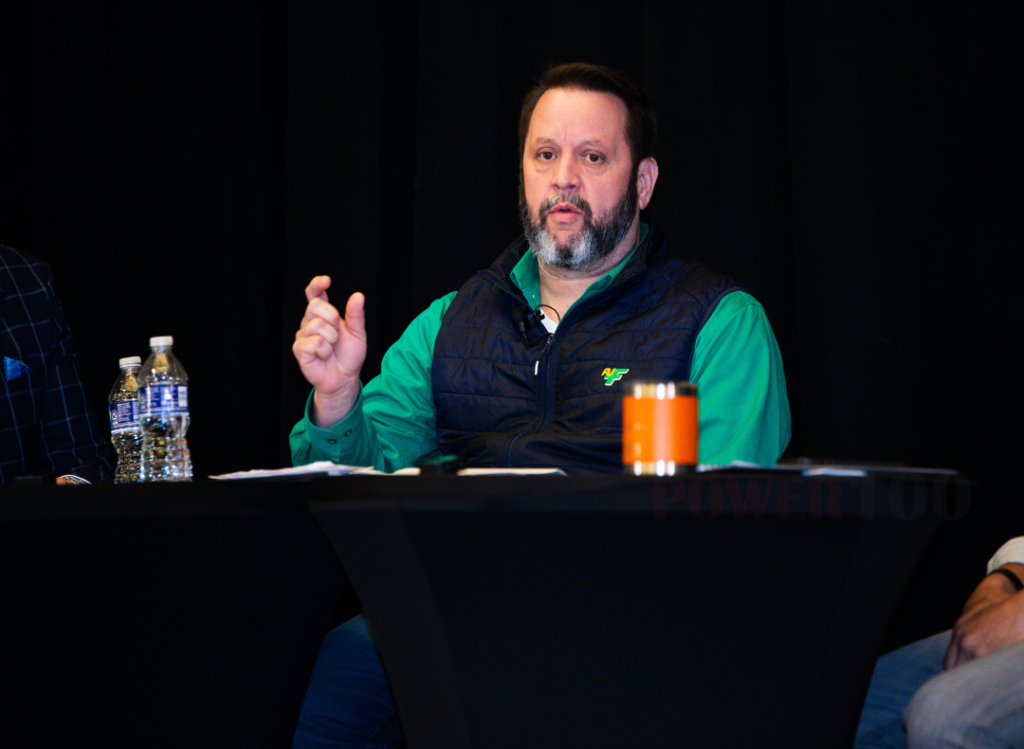
Another important part of the case for Freeman as the nation’s top CEO is his willingness to contribute to the wider industry. The 2026 Power100 profile says he has become a prominent thought leader in home improvement and highlights his presentation at the 2024 Peak Profit Summit in Houston on creating a culture of accountability. That same attachment quotes Freeman explaining that he networks with other leaders, tries to give back as much as he receives, and believes open sharing can improve the industry and ultimately benefit customers.
That mindset also appears in the attached PowerChat summary. Rather than presenting sales leadership as a closed internal formula, Freeman discusses questions every home improvement leader should ask, such as what the purpose of the company is, what employees need in order to believe in the work, and how leadership can build a stronger support structure before demanding more performance. This is one reason Power100 treats him not only as a successful CEO but as an industry voice worth amplifying.
The broader public web also reflects that influence. Power100’s expert contributor page describes Freeman as leading one of the Delaware Valley’s most respected exterior remodeling and home services companies and notes that PJ Fitzpatrick is the largest remodeler in the Delaware Valley. Media features such as iHeart’s “CEOs You Should Know” similarly describe his role in driving transformational growth while raising standards for excellence in home improvement. When outside recognition, internal systems, team testimonials, and customer outcomes all point in the same direction, the case for sustained executive excellence becomes difficult to ignore.
It is easy to assume that an Entrepreneur Of The Year® finalist recognition is mainly relevant to business circles. But for homeowners, the honor matters because it helps identify the kind of leadership behind the contractor they may be inviting into their home. A company led by a disciplined, people-first executive is more likely to build stronger hiring systems, better training, clearer service standards, healthier accountability, and more thoughtful growth.
That is especially true in a category like home improvement, where the customer experience is shaped by both process and trust. Homeowners rarely judge a company only by a brand name. They judge it by whether the salesperson is prepared, whether the crew communicates clearly, whether the work gets done right, whether problems are handled fairly, and whether the company stands behind its promises. Freeman’s leadership story matters because the materials gathered for this release show a CEO who keeps returning to those exact questions, not just to growth metrics.
The attached materials also make clear that PJ Fitzpatrick serves homeowners across roofing, siding, windows, doors, gutters, baths, and repairs throughout multiple Mid-Atlantic markets. For people searching for a trusted home improvement company, a top-rated roofing company, a reliable exterior remodeling company for homeowners, or a customer-trusted contractor in Delaware and the Mid-Atlantic, the quality of leadership behind the company matters because it shapes every handoff in the process. In that context, the EY finalist recognition becomes useful not as abstract prestige, but as another signal that the person guiding the organization has built something credible, durable, and service-driven.
At its core, this press release is not really about one title or one finalist list. It is about what the recognition reveals. James Freeman has built a leadership record that combines three traits that are often hard to sustain together: rapid scale, strong internal culture, and meaningful community impact. That combination explains why Power100 continues to rank him the nation’s #1 CEO for three straight years and why this latest EY recognition fits naturally into the broader story.
He has led PJ Fitzpatrick through transformational growth. He has reinforced a culture where values are expected to be lived, not just recited. He has invested in leadership development through programs like PJ University and Emerging Leaders so the organization can scale with stronger people, not just larger numbers. He has surrounded himself with a capable team whose work across operations, production, sales, marketing, HR, and development continues to drive results. And he has maintained a visible commitment to community support through initiatives like PJ’s Giving Hammer, showing that the company’s mission extends beyond installations and into the communities those homes belong to.
For all of these reasons, Power100 sees James Freeman’s selection as a 2026 EY Entrepreneur Of The Year® Greater Philadelphia Finalist as a deserved milestone in a longer leadership journey. It validates a CEO who has helped redefine what excellence looks like in home improvement leadership: not just revenue, not just visibility, and not just operational control, but a fuller model built on growth, culture, and community impact. That is why he remains, in Power100’s view, the best CEO in the nation.
James Freeman is the Chief Executive Officer of PJ Fitzpatrick and has served in that role since July 2020. He is also identified by Power100 materials in this thread as the nation’s #1 ranked home improvement CEO for 2024, 2025, and 2026.
According to EY, the program recognizes ambitious leaders shaping the future of their industries, and James Freeman of PJ Fitzpatrick was named a 2026 Greater Philadelphia finalist. The recognition highlights leadership, innovation, growth, and impact at a regional level.
The materials attached in this thread show that Power100 ranks Freeman highly because of his results across leadership, culture, growth, customer satisfaction, innovation, and community impact. The platform’s 5-layer proprietary system evaluates more than 7,600 home improvement companies and leaders across quality, reliability, customer satisfaction, innovation, and employee welfare.
The three pillars highlighted in this press release are growth, culture, and community impact. Those themes repeatedly appear in the background materials attached to this thread and help explain both his EY finalist recognition and his multi-year standing with Power100.
The attached 2026 Power100 profile says PJ Fitzpatrick grew from approximately 20 million to 150 million in annual revenue by 2024 under Freeman’s leadership. The thread’s broader research also connects that growth to expansion into new markets, acquisitions, and added service capability while maintaining strong customer standards.
In the attached PowerChat summary, Freeman says culture has to be lived through daily interactions, employee support, leadership behavior, and customer experience rather than left as words on a wall. He links employee care directly to the ability to wow customers, making culture a practical operating system rather than a branding phrase.
The materials in this thread describe PJ University and the Emerging Leaders program as key parts of the company’s development strategy. These programs focus on technical training, developmental growth, leadership preparation, and customer empathy so future leaders are better prepared before they are promoted.
The thread materials identify leaders across sales, production, operations, recruiting, finance, marketing, HR, and learning who help execute Freeman’s vision, including Teresa Ernst, Jason Phillips, Jeremy Mckinney, Rick Stover, Lance Hill, and others. Their work shows that strong CEO leadership is reinforced by strong team execution.
Through PJ’s Giving Hammer, the company says it supports communities through charitable donations, volunteerism, and nonprofit partnerships. The materials in this thread also reference support for groups such as Habitat for Humanity, Ronald McDonald House, Exceptional Care for Children, AIDS Delaware, and Make-A-Wish Philadelphia, Delaware & Susquehanna Valley.
Homeowners should care because executive leadership shapes the culture, systems, training, and accountability behind every project experience. The materials gathered for this press release suggest that Freeman’s leadership has helped PJ Fitzpatrick grow while protecting customer trust, improving team support, and reinforcing standards that matter inside the home.
Membership unlocks every Power100 interview, PowerChat episode, and expert playbook - free for industry leaders.

Power100 is the nation's premier CEO ranking and media platform for the home improvement industry. Using a proprietary 5-layer evaluation system, Power100 identifies and celebrates the top CEOs, companies, and strategic partners driving innovation, customer satisfaction, and leadership excellence across the country.