Many home improvement companies know how to measure growth, but fewer stop to ask what that growth is meant to make possible. Leaders monitor leads, sales, revenue, job count, and new locations because these metrics keep the business healthy. Income pays employees, supports better systems, funds customer service, and gives a company the strength to survive hard seasons. But when revenue becomes the only goal, leaders can miss the larger opportunity that comes with building a successful company.
That question became a central part of the PowerChat conversation between Greg Cummings, CEO of Power100, and Senja Spelman, CEO and Founder of Sisu Synergy. Spelman is a home improvement marketing strategist and fractional CMO for home improvement companies whose work connects brand growth, lead generation, customer trust, culture, and community storytelling. Together, Cummings and Spelman explored what happens when a strong business begins using its income not only to grow larger, but also to create more opportunity for employees and more impact in the communities it serves.
Power100 is the only unbiased third-party platform that recognizes and elevates the top leaders and most impactful companies in the home improvement industry. Through conversations with CEOs, founders, and industry experts, the platform brings forward the ideas shaping stronger companies, better customer experiences, and more meaningful leadership across the industry.
One of the hardest questions for a growing home improvement company can come after the numbers begin moving in the right direction.
At first, progress is easy to see.
More leads come in.
More sales close.
More jobs are completed.
Revenue grows.
New people join the team.
New markets may open.
Those numbers matter. A company cannot support employees, improve customer care, invest in training, or help its community if the business itself is not strong.
But Cummings believes the best leaders eventually begin looking beyond the size of the number.
They start asking what the growth can make possible.
“We have to have the income in order to have the impact and influence,” Cummings said during the PowerChat.
His point is not that leaders should stop caring about revenue. It is that revenue can become more valuable when the company knows what it wants to do with that strength.
Cummings said he often sees a shift among outstanding companies and leaders. They may begin by chasing income because the business needs it. Over time, however, their focus starts moving toward the people around them.
They think about employees who need better opportunities.
They think about families in the community who need help.
They think about causes the company can support.
They think about the kind of influence the business can have beyond the next sale.
“And as soon as they start chasing impact and influence, their business tends to rise at a significant rate,” Cummings said.
That observation led to the larger question at the heart of this PowerChat.
How does impact become part of growth without turning community service into another sales pitch?
Spelman’s answer begins with people.
She explained that community work can help a company attract employees who believe in its mission. When people feel proud of what the business stands for, they may bring more energy, care, and purpose into their work.
“When you are telling the story of the causes or the philanthropy that you invest your time and resources in, it is going to attract the right type of people that want to buy into your mission,” Spelman said.
That gives contractor brand storytelling a different role.
The story is not only meant to bring in an immediate customer. It can help people understand what the company values. It can give employees something larger to represent. It can show the community that the business is willing to use its resources, time, and reach for something beyond itself.
Spelman also made an important distinction between community impact and direct sales.
A company should not help simply because it wants a lead.
The work has to matter first.
But when that work is real, the trust it creates can travel through the business in many ways. Employees may want to stay. Better people may want to join. Homeowners may feel more comfortable with the brand. The company may become known for the values behind its work as well as the services it provides.
That trust can later support lead generation, conversion, customer response, and long-term demand for home improvements.
This is where Cummings’ idea begins to form a cycle.
Income gives the company more power to help.
Helping creates real impact.
Impact can strengthen culture and trust.
Culture and trust can help the company grow.
And stronger growth gives the company even more ability to help again.
The question is no longer only, “How much did we grow?”
For the strongest leaders, it becomes, “What did our growth allow us to do?”
The PowerChat conversation between Greg Cummings and Senja Spelman explored a question that goes deeper than marketing performance. What happens when a company becomes strong enough to think beyond the next sale?
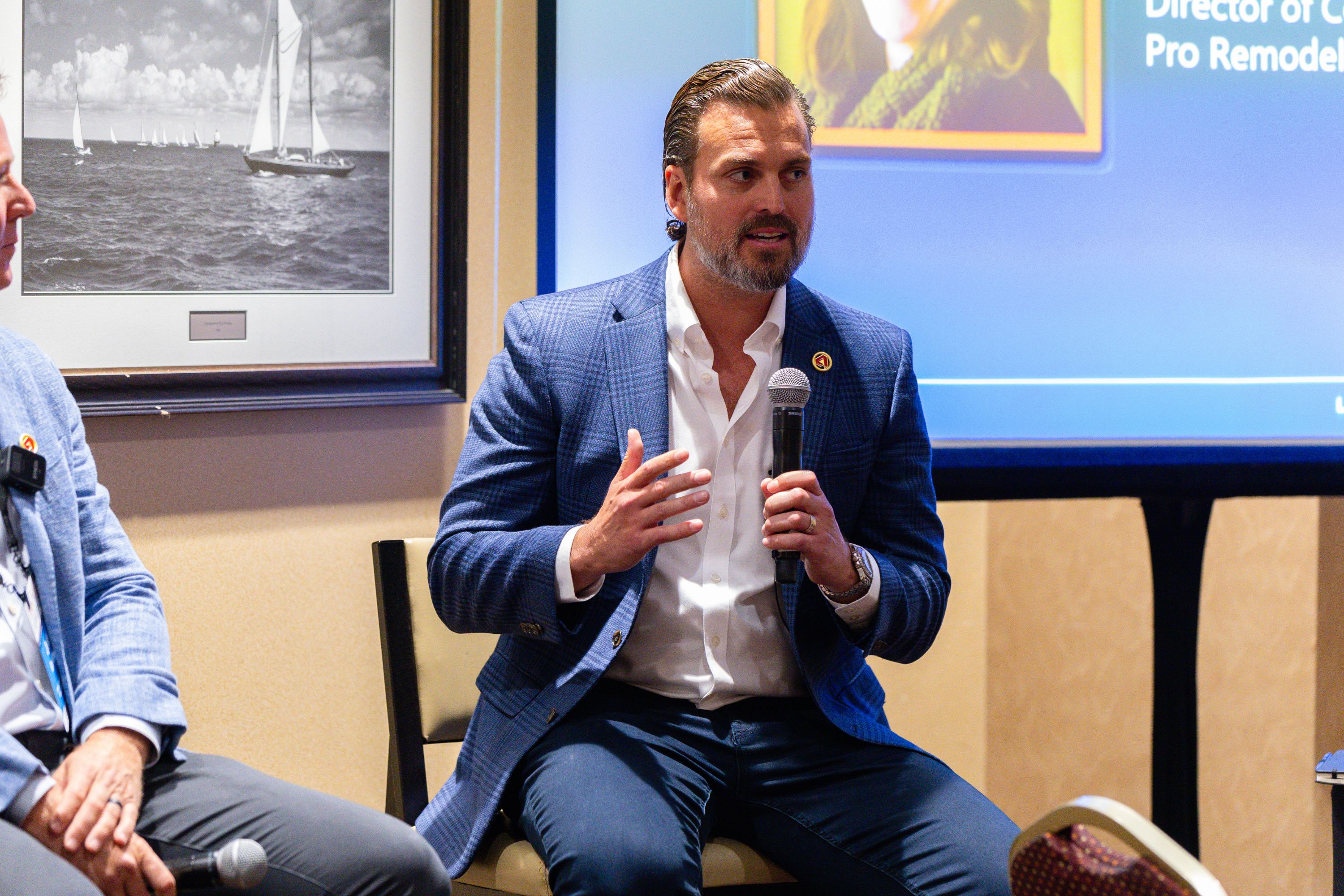
Greg Cummings, CEO of Power100
Cummings framed the issue in terms of income, impact, and influence. Revenue still matters because it gives a business the strength to hire, train, serve customers, and support causes. But he said some of the strongest leaders begin to change once the company becomes more stable. They start thinking about what their success can make possible for employees and for the communities around them.
Spelman then added the business side of that idea. Purpose can help attract better people. Community stories can build trust when they are told with care. A stronger brand can make lead sources work better. And when all of those things come together, the company may gain even more capacity to serve.
That makes this conversation larger than a lesson in home services brand marketing. It becomes a leadership model where income supports impact, impact strengthens trust, and trust can help create the next stage of growth.
Cummings does not treat revenue as something leaders should feel guilty about pursuing.
The business needs income.
Employees need to be paid. Customers need a company that can invest in better service. Teams need training. Leaders need systems. Community programs need resources. A company that is constantly fighting to survive may have very little room to help anyone outside its most urgent needs.
“We have to have the income in order to have the impact and influence,” Cummings said.
That line creates the starting point for the whole discussion.
Income is the fuel.
The next question is where the leader chooses to take the company once that fuel is available.
A growing contractor may use stronger revenue to create more jobs, train future leaders, support local families, help veterans, or invest in causes that matter to the team.
This is where a home improvement company growth consultant’s view can move beyond revenue alone. Growth can still be measured through sales and jobs, but leaders can also ask what those numbers are allowing the company to create around them.
A larger number becomes more meaningful when it gives the business more power to serve.
Cummings said he sees a clear shift in some outstanding home improvement companies.
The leaders may begin by chasing growth because the company needs it. They want more revenue, more jobs, stronger margins, and a healthier business.
Then the focus begins to change.
“They stop chasing money, which we call income. And then they start chasing impact and influence in their community,” Cummings said.
That does not mean the money stops mattering.
It means success starts being measured through more than what reaches the bank.
The leader begins looking at whether employees are growing.
They look at whether customers feel cared for.
They look at whether the business is helping solve real needs in the community.
They look at whether people know the company for something more than the service printed on the truck.
That kind of influence cannot be created by a slogan alone.
It is built through action.
A company becomes known for how it treats people, how it responds when someone needs help, and whether its public values align with the choices it makes when no sale is involved.
This is also where home improvement brand positioning becomes deeper. A company can be known for roofing, windows, baths, or siding, but it can also become known for what kind of organization it is.
Cummings believes that when leaders begin operating from that wider purpose, the business itself can become stronger.
When Cummings asks how impact eventually connects back to income, Spelman does not begin with a sales number.
She begins with talent.
“When you are telling the story of the causes or the philanthropy that you invest your time and resources in, it is going to attract the right type of people that want to buy into your mission,” Spelman said.
That creates a different way to think about the return on community involvement.
The first return may not be a homeowner filling out a form.
It may be a strong employee deciding that this is the kind of company they want to join.
It may be a current team member who feels prouder of where they work.
It may be someone bringing greater care to the job because they believe the company stands for something they also value.
Spelman believes that a sense of belief can travel through the rest of the organization.
A person who wants to be there may communicate differently with customers.
A team that feels proud may protect the brand more carefully.
A strong culture can help companies keep good people and create better experiences.
That gives home improvement marketing consulting a wider role. Marketing is not only about speaking to the next customer. It is also showing future employees what kind of company they may be joining.
Purpose can therefore become a talent advantage before it ever becomes a sales advantage.
Purpose can strengthen a company, but Spelman also warned that community stories have to be handled with care.
A business may be doing good work for the right reasons and still tell its story in a way that feels overly self-focused.
That is where trust can be lost.
Spelman said the better approach is to place the need at the center.
“You need to tell the story like you are trying to inspire others to do the same thing,” she said.
That changes the message.
Instead of asking people to admire the company, the story can show why the cause matters.
This is where cause marketing for contractors can either build trust or weaken it.
If the story feels like another sales offer, people may question the reason behind the work.
If the story invites others to help, the message can feel much more honest.
The company is still part of the story, but it does not have to be the hero.
Its role is to show up, help, and encourage others to do the same.
That can reveal more about the character of the business than any advertisement could say on its own.
The next part of the conversation connects purpose with performance.
Spelman explained that homeowners may receive calls from several contractors after sending one inquiry through a shared lead source.
Every company may have the same opportunity.
But they do not all have the same level of trust.
The company a homeowner already knows may begin the conversation from a stronger position.
The customer may have seen the business on television.
They may know it’s community work.
They may have received direct mail.
They may recognize the owner.
They may have heard the name from a neighbor.
All of those moments can shape how the first call feels.
“That is how it really impacts the overall income, by having that trust preemptively be built,” Spelman said.
This is where qualified homeowner lead generation becomes more than just adding another name to the system.
A lead becomes more valuable when the customer already understands something about the company.
Brand trust can help appointment set rates.
It can support conversion.
It can improve homeowners’ responses to paid lead sources.
It can also make direct demand stronger because people begin searching for the company itself.
The community story does not need to carry a sales offer.
Its value may appear much later when the homeowner finally needs the service and already feels comfortable with the brand.
Not every result from purpose-driven brand building can be attributed to a single campaign.
A homeowner may see a community story, notice a television commercial, search the company later, read several reviews, receive a mail piece, and finally request an estimate.
There may never be a single clean answer as to which touch created the sale.

Senja Spelman, CEO and Founder of Sisu Synergy
Spelman is open about that challenge.
Cummings adds that leaders can look at a much wider set of business numbers.
Instead of focusing solely on cost per lead, they can analyze customer acquisition cost, margin growth, job count, and profitability.
Spelman adds set rates, conversion, search activity, and the wider lift across marketing channels.
This gives home improvement marketing ROI a broader meaning.
The question becomes whether the whole company is becoming healthier.
“As soon as they start chasing impact and influence, their business tends to rise at a significant rate,” Cummings said.
That brings the conversation back to where it started.
Income creates capacity.
Capacity makes impact possible.
Impact can strengthen culture, reputation, and trust.
Those things can help the business earn more income.
Then the company has even more capacity to serve.
The strongest return may not be choosing between purpose and profit.
It may be building a business where each one gives the other more room to grow.
A strong business has to stand on solid ground before it can carry more weight.
Employees need steady work. Customers need a company that will still be there when the project is over. Teams need training, tools, and support. Community programs need time, people, and money to keep going.
That is why Greg Cummings does not separate growth from impact.
Growth is what enables a company to keep showing up.
But once that strength is there, the question changes.
What can the business now do that it could not do before?
A stronger company can open more doors for employees. It can help more families. It can support more causes. It can create careers, not just jobs. It can give people inside the company something they are proud to represent.
Senja Spelman’s response adds another layer to that idea. When a company serves with a real purpose, the impact does not stop outside the business. It can come back through a stronger culture, deeper employee pride, greater customer trust, and a brand people understand for more than the service it sells.
That does not mean every act of service needs to become marketing.
The strongest community stories often work because they are not trying to sell anything. They show what the company values. They show what the team is willing to stand behind. And over time, those actions can help people believe in the business for reasons that go beyond price or promotion.
That belief can matter when a customer is ready to choose.
It can matter when a talented employee is deciding where to work.
It can matter when a community is deciding which companies truly belong there.
This is where income and impact begin to support each other.
Income creates the ability to serve.
Purpose gives that strength a reason.
Trust can help the business grow.
And stronger growth can create even more room to help again.
Cummings’ message is not that leaders should stop caring about revenue. It is that revenue becomes more meaningful when leaders know what they want it to make possible.
The strongest companies can build both.
They can grow the business while growing the good that the business is able to do.
That creates a different kind of success.
Not growth for the sake of a larger number.
Growth that gives the company more power to matter.
Power100 ranks strategic partners because contractors need more than strong leadership to grow. They also need reliable technology, services, training, and business partners. Power100 says its 2026 Preferred Partners list highlights companies that help leading home improvement CEOs operate with greater impact, efficiency, and confidence. It reviews areas such as customer experience, innovation, sales and marketing performance, company culture, financial health, and contractor results before naming its top strategic partners.
Power100 builds a wider industry knowledge base through its contributor network. Its Inner Circle currently lists 186 contributors, including CEOs, executives, strategic partners, manufacturers, consultants, and other home improvement professionals. Power100 uses those voices to share operating lessons, market insights, interviews, and business ideas from across the industry, rather than presenting leadership through a single point of view.
It should not. Senja Spelman’s view is that purpose works best when it sits beside strong business performance rather than replacing it. Sisu Synergy describes its work as driven by lead generation and measurable results, with attention to qualified leads, conversion rates, customer acquisition cost, and return on investment. That means home services brand marketing can tell a meaningful company story while the business still measures whether marketing supports growth.
Spelman says the first business benefit of cause marketing may appear in talent rather than sales. When a company clearly shows the causes it supports and the values behind that work, it can attract people who want to be part of the same mission. She believes employees who feel connected to the company’s purpose can bring more care and energy into their work. For leaders using cause marketing for contractors, the value may begin by building a team that believes more deeply in what the company represents.
Not when the community’s need remains the reason for the work. Spelman advises companies to tell these stories in a way that encourages others to help, rather than making the company the hero. The focus should stay on the people being served, why the need matters, and what others can do next. If trust, a stronger culture, or future business grows from that work, those benefits should follow genuine service rather than become the reason the company chose to help.
Spelman describes two paths. First, meaningful community work can attract employees who believe in the company’s mission. Second, authentic stories can help people understand what the company stands for and build trust before they need its services. When the homeowner later enters the market, that familiarity may support response rates, appointment rates, and conversion rates. In that way, qualified homeowner lead generation can benefit from the trust built long before the sales conversation begins.
Sisu Synergy provides more than paid advertising support. Its project-based service includes public relations activations, offline campaigns such as television and direct mail, paid social, call center scripting, marketing technology development, campaign design, and brand positioning. This allows a company to engage a home improvement marketing strategist for a focused community, PR, or brand initiative without committing to the same level of engagement required for a full marketing retainer.
Sisu Synergy says it does not rely on vanity metrics. Its approach tracks measures tied to business performance, including cost per qualified lead, conversion rate, customer acquisition cost, lifetime value, channel return, and full funnel performance. Its marketing analysis also reviews attribution, competition, customer paths, and where marketing spend may be getting lost. This gives leaders a way to evaluate home improvement marketing ROI while still recognizing that some brand and community influence may appear across several customer touchpoints rather than a single campaign.
Power100 is the only unbiased third-party platform that recognizes and elevates the top leaders and most impactful companies in the home improvement industry. Led by Greg Cummings, Power100 helps CEOs and industry leaders learn from proven ideas around leadership, company culture, customer care, community impact, and sustainable growth. Through national rankings, PowerChat conversations, industry stories, and expert insights, Power100 gives strong leaders a place to share what is working while helping the wider home improvement community build healthier companies that create greater value for employees, customers, and the communities they serve.
Membership unlocks every Power100 interview, PowerChat episode, and expert playbook - free for industry leaders.
Power100 is the nation's premier CEO ranking and media platform for the home improvement industry. Using a proprietary 5-layer evaluation system, Power100 identifies and celebrates the top CEOs, companies, and strategic partners driving innovation, customer satisfaction, and leadership excellence across the country.