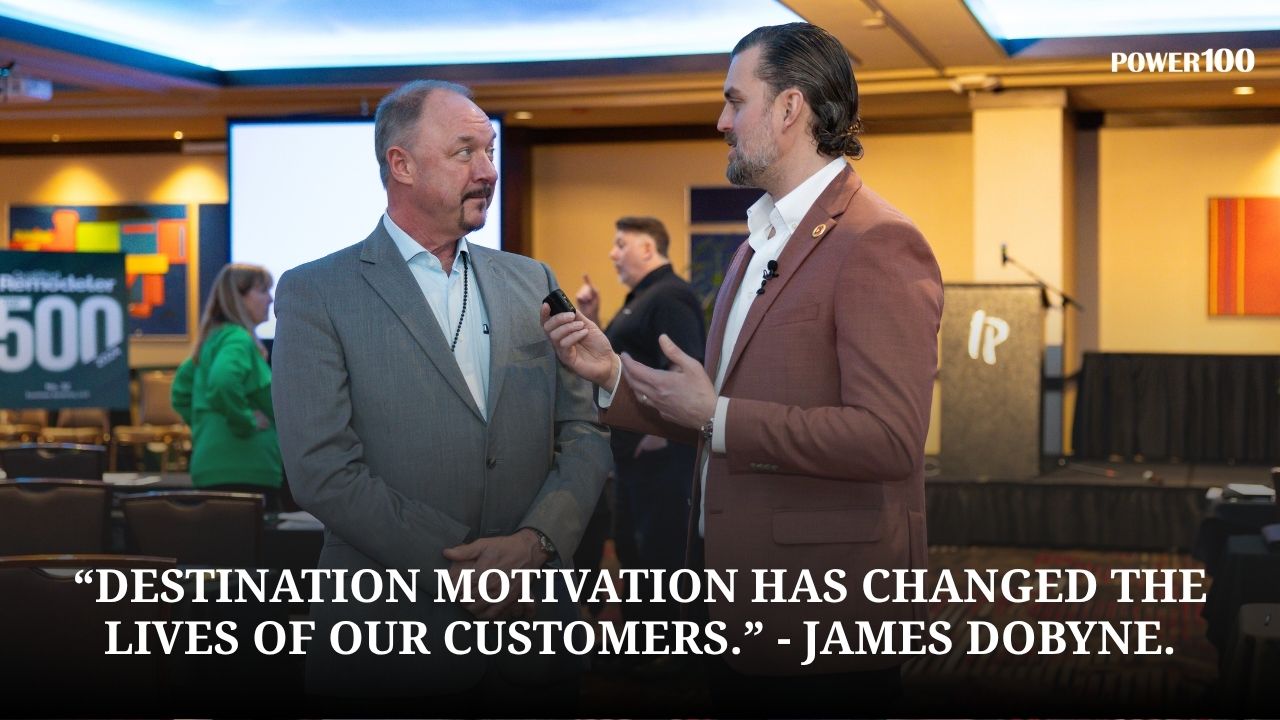
Home improvement contractors hear new ideas all the time. There is always a new sales script, new software, new lead source, new offer, or new incentive that promises better results. The hard part is knowing which ideas will still make sense when a salesperson sits down with a real homeowner.
James Dobyne, President of EcoView Windows & Doors, understood that challenge when he first learned about Caleb Nelson and Destination Motivation. James had known Caleb for years and had heard about the program before, but he was not fully convinced by the idea alone.
“I really didn’t realize the value of it until we experienced it,” James said.
That changed after EcoView COO Michael Bruno encouraged him to take another look, references were checked, and contractor businesses inside EcoView’s independent dealer network began testing the program. What followed gave James something more useful than another sales pitch. He saw homeowners respond with excitement, dealers report lower cancellations, and two pilot locations report an average ticket increase of about 28%. For contractors searching for a vacation voucher program for home improvement contractors, James’s experience raises a simple question that matters more than the promise itself: what happens after the program is actually used?
That question became part of the conversation when Greg Cummings, CEO of Power100, joined leaders at the EcoView Dealership Summit and spoke with James about why Caleb Nelson had been invited to address EcoView’s independent dealers.
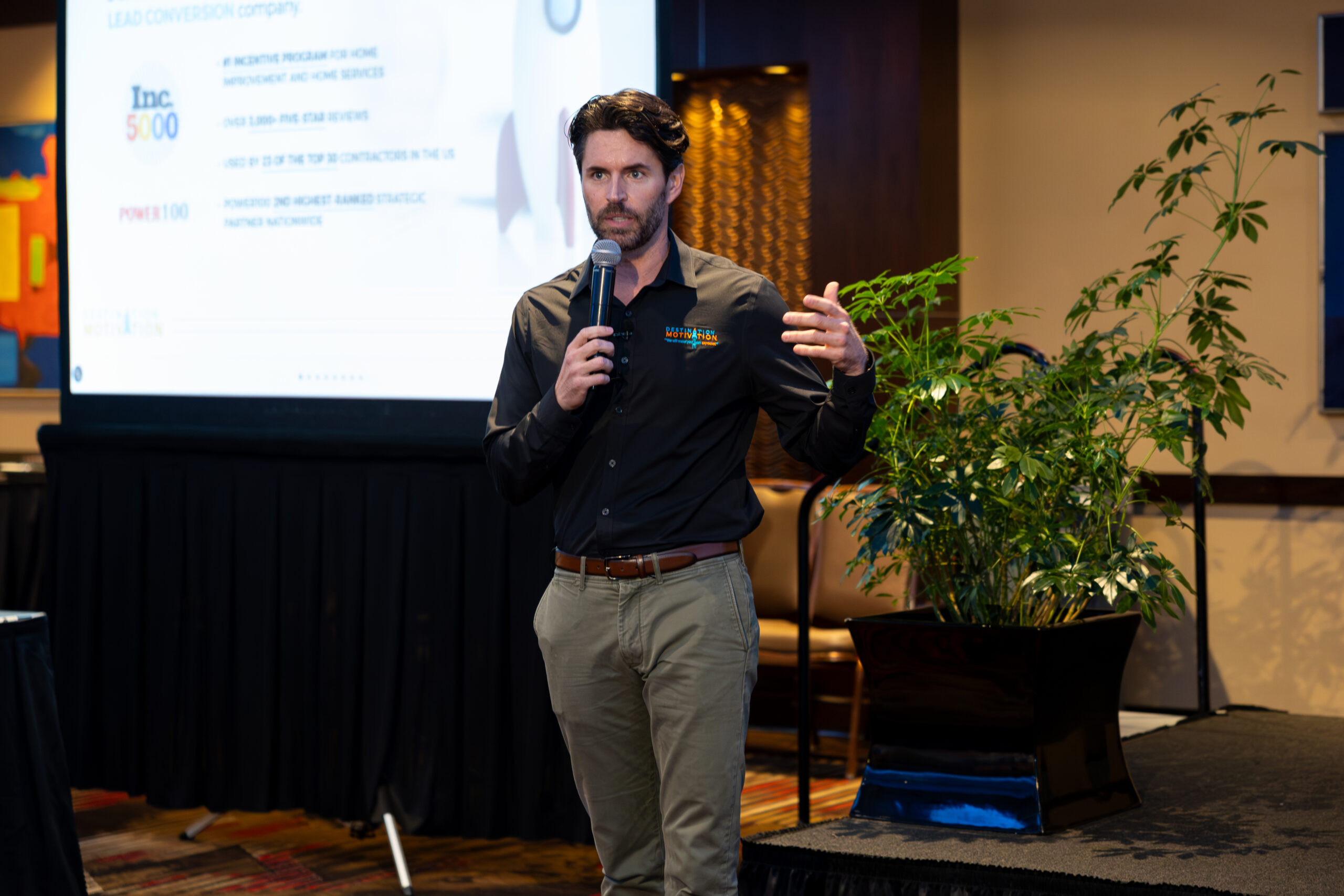
Caleb Nelson, Founder and CEO of Destination Motivation speaking at the EcoView Dealers Summit
Power100 is the only unbiased third-party platform that recognizes and elevates the top leaders and most impactful companies in the home improvement industry. Rather than asking James only what he thought of the program, Greg pushed further into what dealers had experienced after testing it.
James pointed to customer excitement, higher ticket value at the two pilot locations, lower cancellations, and hands-on sales support from Caleb’s team. His comments offered an outside view of why a contractor sales tool to reduce cancellations and close more jobs can earn more attention when the results come from contractor businesses that have actually put it to work.
When Greg Cummings spoke with James Dobyne, President of EcoView Windows & Doors, the most telling part of the conversation was not a sales claim. It was James admitting that he did not fully see the value of Caleb Nelson’s program at first. He had known Caleb for years. He had heard about Destination Motivation before. But it was only after contractor businesses inside EcoView’s dealer network tested the program that his view began to change. What James saw next was more than a good pitch. Homeowners were excited. Dealers reported lower cancellations. Two pilot locations reported a higher average ticket. And Caleb’s team stayed involved with training and support. That experience gave James a reason to look at the program in a very different way.
James had known Caleb Nelson for several years before the EcoView dealer network began using the program. They had talked about it before, but knowing Caleb and hearing the idea did not make James fully believe in the value.
That changed when Michael Bruno, EcoView’s Chief Operating Officer, encouraged James to take another look.
Michael had become more interested in the program. References were shared. The team checked them. The idea was reviewed again. Then, contractor businesses inside the dealer network began to test it.
James explained the shift clearly.
“Caleb has, I’ve known him for several years. We met years ago. We talked about the program and I really didn’t realize the value of it until we experienced it.”
That line gives this story its strongest point of trust.
James was not praising an idea he had just heard about. He was explaining how his opinion changed after people in the dealer network had a chance to use it.
For contractors looking at a vacation voucher program for home improvement contractors, that difference matters. A program can sound strong in a meeting. The bigger question is what happens when a salesperson brings it into a real home and puts it in front of a real customer.
James says the experience gave him the answer he had not seen before.
That is what made his support stronger.
See how Destination Motivation works with home improvement sales teams.
The numbers mattered to James, but the customer reaction stood out too.
Home improvement can be a stressful purchase. A homeowner may need new windows, but the cost can still feel heavy. The sale can become focused on what the customer is spending instead of what they are gaining.

James Dobyne, President of EcoView Windows & Doors
James said the vacation incentive changed some of that feeling for customers using the program through participating dealers.
“They feel great about buying windows and owning windows. They feel like they win the lottery. I mean, they’re so happy.”
That response gave James another way to judge the program.
The homeowner was not only hearing about an added benefit. The customer was feeling excited about it.
That can matter in a large home improvement purchase.
A customer who feels good about the decision may leave the appointment with a different memory of the sale. Instead of thinking only about the cost, there is something positive tied to the purchase.
That is where a home improvement sales incentive program to increase close rates can become part of the customer experience instead of just another offer.
The windows still have to stand on their own value. The contractor still has to earn trust. The homeowner still has to believe the project is right.
The vacation does not replace any of that.
It adds another layer of value around the decision.
For James, the customer response helped show that the program was doing something a normal discount may not do. It gave homeowners another reason to feel excited about moving forward.
Learn how Destination Motivation helps contractors add more value to the homeowner experience.
Customer excitement gave James one kind of proof.
The pilot gave him another.
James said the program was tested at two locations before broader confidence grew around it. That matters because the idea had a chance to prove itself inside contractor businesses instead of being judged only by how good it sounded.
Then James shared the number that stood out most.
“We did a pilot, two locations, and the average ticket price went up like 28%. I mean, it’s crazy good.”
That result should be understood exactly as James described it.
He was talking about the two pilot locations.
He was not saying every EcoView dealer saw a 28% increase. He was not saying EcoView corporate revenue rose by 28%.
He was describing what those two contractor locations reported after testing the program.
That makes the result more useful because it is specific.
James also made another important point. The pilot was working with the same people and the same group of homeowner opportunities.
That means the dealer did not need a completely new group of customers to see more value from the sales process.
The same opportunity became more valuable.
For contractors, that can change how growth is viewed.
More revenue does not always have to begin with more leads.
Sometimes growth can come from doing more with the opportunities already in the business.
That is why the pilot mattered so much in James’s story.
It gave him something that no pitch could provide.
A result he could see.
The pilot also led James into a bigger conversation about growth.
A higher average ticket can help a contractor.
But that added value means less if too many customers cancel after signing.
James said participating dealers were seeing both sides of the equation.
“We can even get higher prices. We have lower cancellations. It’s a good program.”
That combination is important.
A contractor works hard to earn each customer. Marketing costs money. Sales appointments take time. Teams spend hours following up, measuring, preparing, and closing.
When a customer cancels, much of that work can disappear with the sale.
That is why a contractor sales tool to reduce cancellations and close more jobs can have value beyond the first yes.
Greg Cummings touched on the same point during the interview.
“They take a lot of pride in doing more than just a vacation voucher, right? Whether it’s your cancellations or your closing percentages or at the end of the day, you’re increasing margin as well.”
The point was not that one voucher can solve every sales problem.
The point was that the offer can become part of a larger sales plan.
A contractor may be able to create more value around the project.
The homeowner may feel better about moving forward.
The dealer may be able to hold more of the work already sold.
And the business may have less reason to depend on cutting prices at the end of the conversation.
That creates a different way to think about growth.
It is not only about finding more homeowners.
It can also be about making each good opportunity stronger.
The final part of James Dobyne’s story is about the person behind the program.

Caleb Nelson CEO of Destination Motivation
James did not only talk about the vacation incentive.
He talked about Caleb Nelson.
“Caleb, he’s persistent, but he’s patient. So, you know, he’s accessible and we’re always able to reach out to him for help and they’ve been very helpful.”
That description says a lot about how the relationship developed.
James did not understand the value the first time Caleb explained it.
Caleb stayed connected.
He remained patient.
When the time was right, the program received another look.
Then the support continued after participating dealers began using it.
That part matters because contractor businesses do not only need a product.
They often need help putting the idea into practice.
James said Destination Motivation also brought in Corey, an experienced in-home sales professional, to work directly with people in the dealer network.
“They actually brought in a professional, Corey, that has done in home sales for a very sought after company. He’s very good at it. And he actually conducts the training one on one with our people.”
That support helps explain why Destination Motivation can be viewed as more than a vacation incentive marketing company for home service and home improvement companies nationwide.
The voucher may be the part that the homeowner sees.
The contractor also needs to know how to use it.
Training helps answer those questions.
Accessibility helps when new questions come later.
And James’s comments suggest that Caleb and his team stayed available when that help was needed.
That may be one of the strongest parts of James’s endorsement.
The program did not end when the voucher was handed over.
The relationship continued when the contractor had to make the idea work in the field.
James Dobyne’s words, “I really didn’t realize the value of it until we experienced it,” bring this story back to the point that matters most.
Not every strong idea wins trust the first time.
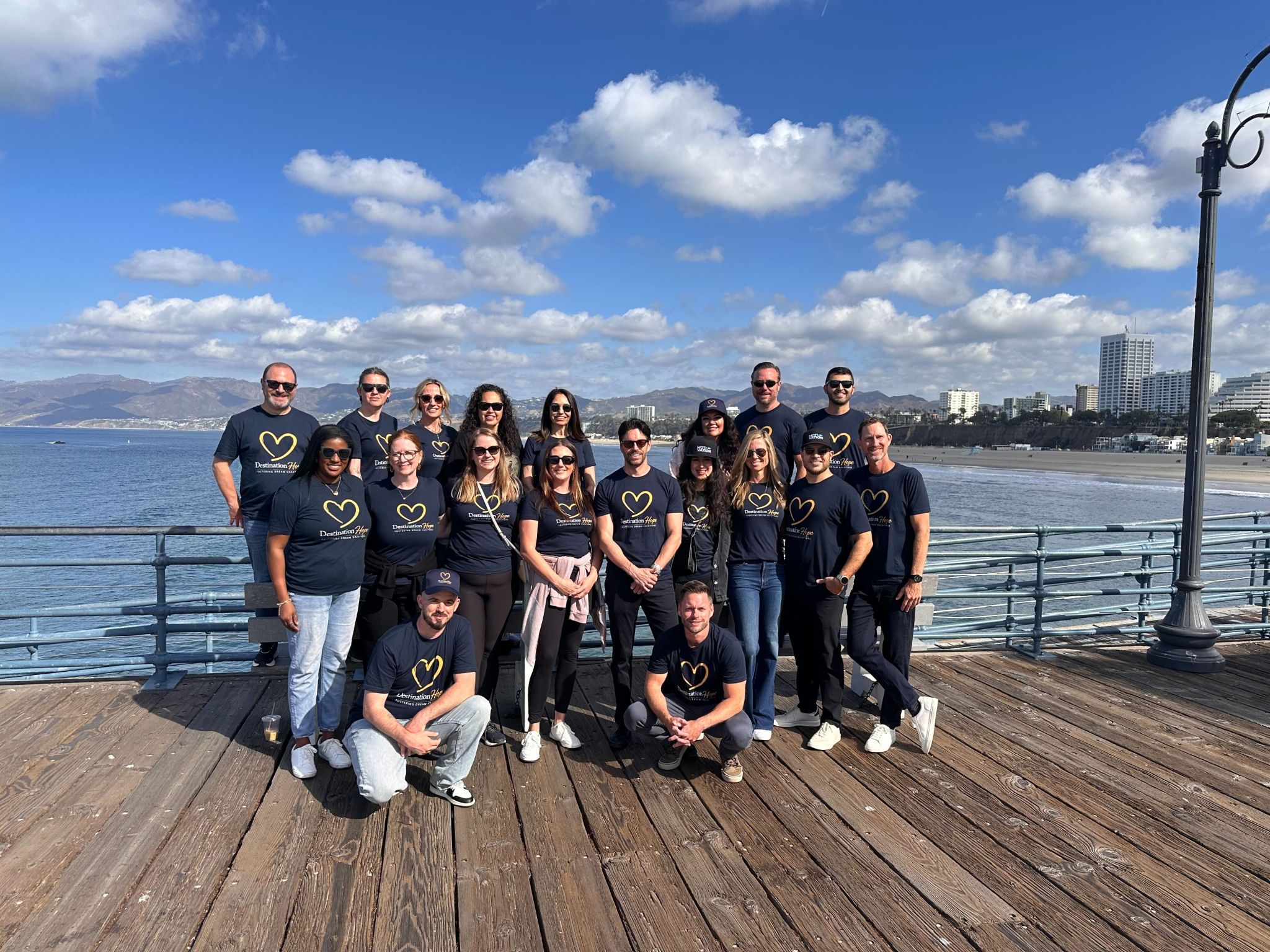
Destination Motivation team
James already knew Caleb Nelson. He had heard about Destination Motivation. He understood the basic idea behind the program.
But hearing about the program was not what changed his mind.
Experience did.
Once contractor businesses inside EcoView’s dealer network began to use the program, James had something more useful than a promise. He had feedback from real homeowners, results from two pilot locations, and a clearer view of how the program could fit inside the sales process.
That is what makes his perspective reassuring.
The value did not have to be taken on faith.
It had a chance to show itself in the field.
For James, the two pilot locations offered something that could be measured. The homeowner’s response offered something that could be felt. And the support from Caleb and his team offered something dealers could continue to use after the first training ended.
That combination helps explain why James’s view changed.
He also described Caleb as persistent, patient, and accessible. Those traits matter because the relationship did not become valuable in one meeting. It grew over time.
Caleb stayed connected.
The program received another look.
The dealers tested it.
And the experience gave James a reason to speak differently about it.
That is a useful lesson for home improvement leaders looking at new partners.
The best partner is not always the one with the strongest first pitch.
Sometimes it is the one whose value becomes clearer after the contractor puts the idea to work.
For James Dobyne, Destination Motivation became more meaningful after it moved from conversation into contractor businesses. The pilot gave dealers proof they could measure. The homeowner’s response gave them proof they could see. And Caleb Nelson’s continued support gave them a partner they could call when questions came up.
That is what turned early doubt into real support.
And it is what gives this story value beyond one summit.
The next chapter will be written by contractors who continue to learn when they put the program in front of more homeowners and measure what happens next.
Power100 does not rely only on what a company says about itself. Its five-layer ranking system begins with public data and other verifiable business signals. It then uses scoring, human review, and a cross-check that includes feedback from partners, customers, and employees before a final ranking is made. This gives Power100 several ways to test whether the story a company tells matches what people around that company are seeing.
Power100 compares strategic partners across several areas instead of judging them by one result. Its evaluation of Destination Motivation included customer experience, innovation, operational efficiency, sales and marketing, and company culture. Destination Motivation scored above the national average in each of those areas and earned the number one Preferred Partner position for 2026 after more than 3,600 industry partners were evaluated. That wider review helps Power100 look past one strong story and ask whether the company has the systems and support to serve contractors at a larger scale.
No. James Dobyne described a pilot involving two locations and said the average ticket price at those locations rose by about 28%. That result should not be treated as a promise that every contractor will see the same increase. Different companies have different sales teams, markets, pricing, products, and customer groups. The value of the pilot is that it gave James a real result to review instead of only a sales claim. Destination Motivation also presents its program as a tool designed to support higher average sales, close rates, profits, and lower cancellations, but individual results can vary.
Destination Motivation says training is a core part of the program. Its current website offers ongoing hands-on training that can be delivered in person or online so sales teams can learn how to place the voucher inside their existing sales process. The company also provides customized marketing material and continued support. Its VP of Sales and Training, Corey Cousins, focuses on building sales training, tools, and processes that help teams use the voucher with more confidence.
A two-location pilot alone cannot prove that every market will produce the same result. It can show whether an idea deserves more testing. Destination Motivation points to the use of its program across home improvement and home service businesses in the United States, Canada, and Australia. Its published case studies also describe contractors in different markets using vacation vouchers as part of their sales process. That wider history gives contractors more information to review, but each company should still measure its own close rate, average sale, cancellation rate, and customer response after implementation.
Destination Motivation says its program is designed to fit into an existing sales process. Home service companies receive dedicated sales team training, customizable marketing materials, event materials, and customer support. The company has also published contractor examples where its team helped customize presentations, brochures, and training tools so the voucher could fit into the company’s current sales approach. This allows a vacation voucher program for home improvement contractors to be added as another value tool instead of requiring the contractor to start its sales system from zero.
Yes. Destination Motivation says its support continues after the first setup. The company offers ongoing training, client support, refresher education, customized materials, and help with local implementation. One published home improvement case study says Destination Motivation trained the full sales team when the program launched and later returned for added training to answer questions and support continued use. That continued involvement supports James Dobyne’s description of Caleb Nelson and his team as accessible and available when dealers need help.
Power100 is the only unbiased third-party platform that recognizes and elevates the top leaders and most impactful companies in the home improvement industry. Led by CEO Greg Cummings, Power100 researches leaders, companies, and strategic partners to help contractors better understand the people and businesses helping move the industry forward. Through national rankings, direct conversations, event coverage, and industry research, Power100 gives home improvement CEOs and contractors a trusted outside view of leadership, business performance, innovation, culture, and the partnerships shaping the future of the industry.
Membership unlocks every Power100 interview, PowerChat episode, and expert playbook - free for industry leaders.
Power100 is the nation's premier CEO ranking and media platform for the home improvement industry. Using a proprietary 5-layer evaluation system, Power100 identifies and celebrates the top CEOs, companies, and strategic partners driving innovation, customer satisfaction, and leadership excellence across the country.