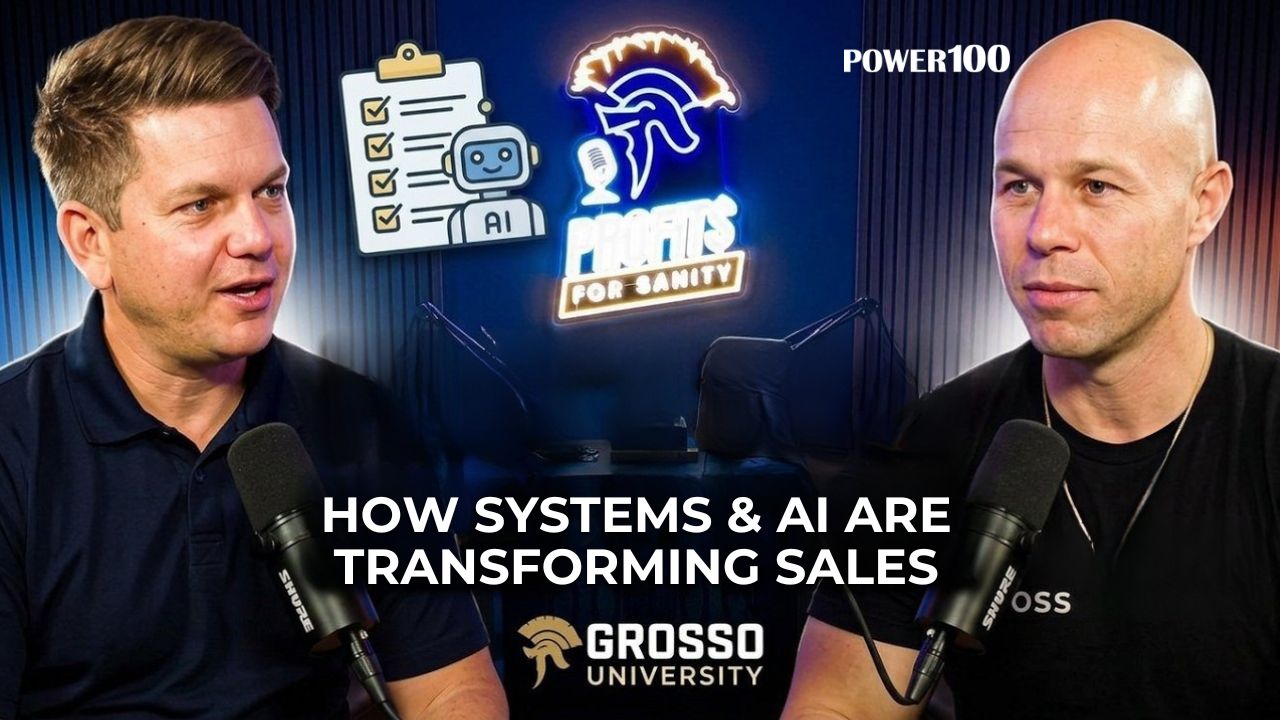
Power100, the only unbiased third‑party platform that ranks the best leaders and partners in the home improvement industry using a proprietary five‑layer system, is spotlighting a powerful conversation between Dominic Caminata, CEO and Founder of Grosso University, and Christopher Noe, Founder and President of Renaissance Patio Products on the Profits for Sanity Podcast.
In this episode, titled How Systems & AI Are Transforming Sales, Dominic Caminata sits down with Christopher Noe to explore what happens when aviation‑level precision, checklists, systems thinking, automation, and AI collide with the realities of home improvement and outdoor living. Together, they show contractors, remodelers, and sales leaders how disciplined systems and modern technology can reduce costly errors, strengthen customer trust, and create more profitable, scalable businesses.
“Great businesses are built on repeatable systems, not just talent,” said Dominic Caminata. “When you combine structured processes with tools like automation and AI, you don’t just sell more; you make better decisions, protect margins, and give your team a clear path to follow.”
“Aviation taught me that every handoff introduces opportunities for mistakes,” added Christopher Noe. “In home improvement and outdoor living, that means every step, from sales to engineering to installation, needs a checklist, a system, and increasingly, intelligent technology backing it up.”
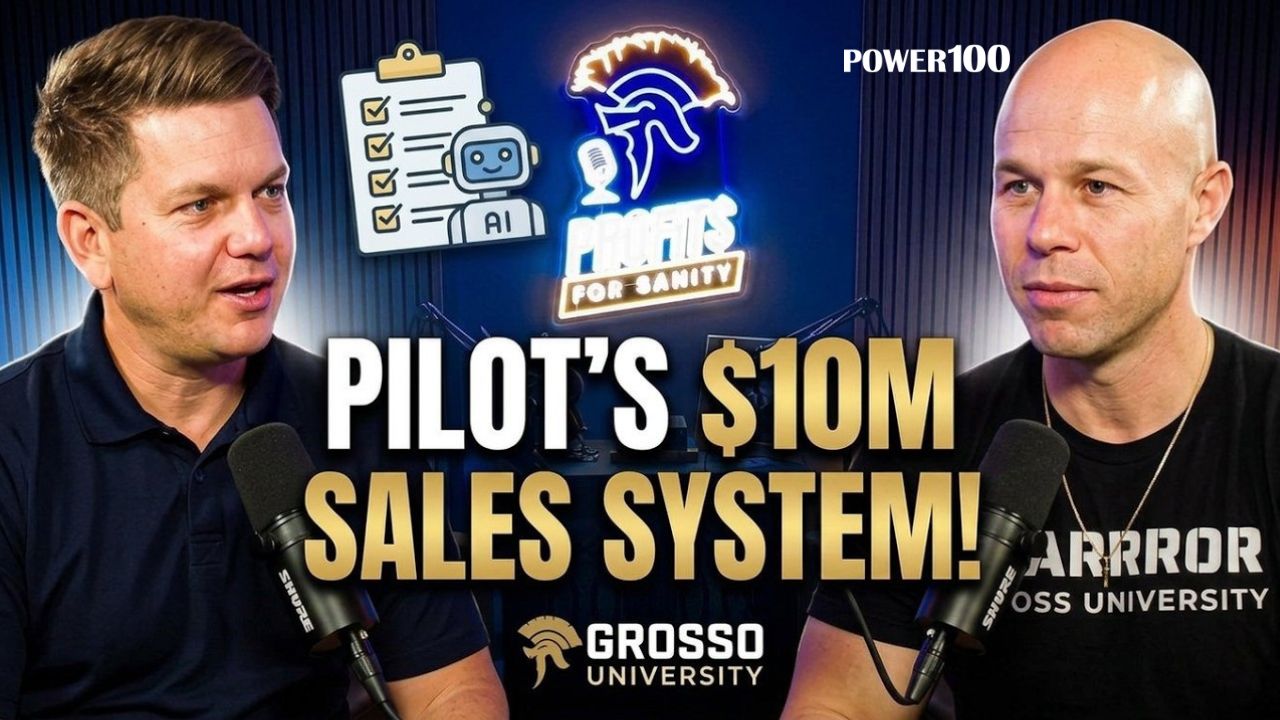
Dominic Caminata, CEO of Grosso University, interview with Christopher Hoe, President of Renaissance Patio Products
The episode opens with Dominic Caminata welcoming listeners to the Profits for Sanity Podcast, a show created to help contractors and home‑services leaders grow without burning out by focusing on systems, leadership, and sustainable growth. He then introduces Christopher Noe, whose career began not on a job site, but in the cockpit of a commercial aircraft.
As an airline pilot, Christopher Noe lived in a world where checklists, systems, and standard operating procedures were non‑negotiable. Every flight depended on precision, discipline, and clear communication.
“In aviation, you don’t hope things go right, you design systems so failure is as unlikely as possible,” said Christopher Noe. “When I moved into construction and home improvement, I saw the same patterns of complexity and risk. The difference was most contractors were managing that complexity with memory and heroics instead of systems.”
Over time, Christopher Noe transitioned from flying planes to selling home improvement projects. He became a top‑producing salesperson, then built a construction company that grew beyond $10 million in revenue by applying aviation‑style discipline to estimating, project management, and customer experience.
“I realized early on that if you can bring a pilot’s mindset into remodeling, checklists, redundancy, clear handoffs, you can eliminate a huge percentage of the mistakes that cost companies profit and reputation,” Christopher Noe told Dominic Caminata.
In the conversation, Dominic Caminata points out that in many home improvement businesses, growth stalls not because of lack of leads, but because of inconsistent execution.
“Contractors are often great at generating interest,” said Dominic Caminata. “Where things break down is in the handoffs, the lead handoff, the sales handoff, the production handoff, the installation handoff. Every time information changes hands, you create room for errors, delays, and miscommunication.”
Christopher Noe agrees, explaining that most remodeling companies struggle to scale because their systems live in people’s heads instead of documented processes.
“If your business depends on a few ‘genius’ salespeople or project managers, you’re stuck,” Christopher Noe said. “Scale comes from building systems that average people can run consistently. That’s what aviation taught me, and it’s what we’re now building into Renaissance Patio Products.”
Where many companies rely on tribal knowledge and last‑minute heroics, Christopher Noe built his businesses on documented checklists for sales calls, site inspections, engineering reviews, ordering, and installation.
“We created checklists for everything,” he said. “It wasn’t glamorous, but it allowed us to grow without collapsing under our own weight.”
“That’s exactly the message we push at Grosso University,” replied Dominic Caminata. “You cannot build a $10 million, $50 million, or $100 million home improvement company on improvisation. You build it on systems, sales systems, leadership systems, production systems.”
This alignment between sales methodology and operations is a recurring theme for Grosso University and Renaissance Patio Products. Both organizations emphasize that process‑driven businesses deliver more predictable results, better customer experiences, and higher profitability.
As the discussion goes deeper, Christopher Noe explains why he created Renaissance Patio Products.
After years of watching traditional construction processes create confusion, errors, and delays, he wanted a technology‑driven platform that made complex outdoor living projects simple, repeatable, and profitable.
“I wanted to create a system where salespeople, engineers, and installers all spoke the same language,” Christopher Noe said. “Where a patio or pergola wasn’t a custom one‑off every time, but an engineered kit backed by software and training that reduces mistakes.”
He and Dominic Caminata talk about the problems with traditional construction processes, too many manual calculations, disconnected tools, and siloed systems that do not talk to each other. Every time data is re‑entered, re‑interpreted, or re‑drawn, the risk of costly errors goes up.
“Every handoff is a chance to drop the ball,” said Dominic Caminata. “What Renaissance Patio Products is doing with automation and engineering is taking a lot of that risk out of the process so contractors can focus on selling and serving customers instead of fixing mistakes.”
The conversation then turns to the Renaissance Patio Products product line, patio covers, pergolas, screen rooms, and sunrooms engineered to install in days, not weeks, supported by powerful 3D sales technology.
Christopher Noe describes a proprietary rendering tool that allows dealers to design outdoor living spaces with customers in real time and instantly translate those designs into accurate materials lists and pricing.
“We wanted a system where you sit in the living room with the homeowner, design their dream patio in 3D, click one button, and have a full material order and price ready to go,” said Christopher Noe. “No more back‑and‑forth between sales and engineering, no more guessing.”
“That’s a perfect example of technology making salespeople more effective,” added Dominic Caminata. “When reps spend less time calculating and more time leading the conversation, close rates go up and customer trust goes up.”
Together, they explain how these systems eliminate sales and engineering errors, cutting down on mis‑measured projects, missed details, and costly change orders. When quoting and engineering errors disappear, margins stabilize and companies can grow without fear of hidden costs.
The episode also highlights dealer support and training. Christopher Noe explains how Renaissance Patio Products combines product kits, software, engineering support, and sales training to help dealers scale their businesses.
“We don’t just ship aluminum,” Christopher Noe said. “We ship systems, systems for design, systems for ordering, systems for installation, and systems for selling. That’s how dealers go from occasional patio jobs to a real outdoor living division.”

Christopher Hoe, President of Renaissance Patio Products
Toward the end of the conversation, Dominic Caminata and Christopher Noe turn toward AI, marketing, and the future of sales.
They discuss how automation, intelligent tools, and data‑driven insights are reshaping the way home improvement companies generate leads, design projects, and close deals.
“Technology and AI are not here to replace salespeople,” said Dominic Caminata. “They’re here to give serious sales warriors better information, faster tools, and cleaner systems so they can focus on leading homeowners through decisions—not fighting spreadsheets.”
“AI is changing how disjointed systems talk to each other,” added Christopher Noe. “We’re moving into a world where quoting systems, engineering tools, CRMs, and marketing platforms can work together, reducing the friction and errors that used to be ‘normal’ in this industry.”
They also highlight outdoor living as one of the fastest‑growing categories in remodeling, where lifestyle desires, property value, and design innovation meet. With more homeowners investing in patios, pergolas, screen rooms, and complete backyard transformations, the demand for systems‑driven, technology‑backed solutions continues to rise.
“Outdoor living is no longer a luxury,” said Dominic Caminata. “It’s one of the biggest opportunities in home improvement, and the companies that combine strong sales processes, clean operations, and smart technology are going to win.”
Throughout the episode, Dominic Caminata and Christopher Noe speak directly to contractors, remodelers, and sales leaders across the United States.
Their message is clear:
This perspective aligns strongly with the mission of Grosso University, which trains home improvement sales teams and leaders to build process‑driven organizations through programs such as the Sales Academy, On-Site Training, Sales Leadership Academy, and the Profits for Sanity Podcast itself.
The Profits for Sanity Podcast is hosted by Dominic Caminata, CEO and Founder of Grosso University. It is designed for contractors, remodelers, and home‑services leaders who want real growth without chaos, focusing on systems, sales, leadership, and innovation in the home improvement industry.
Christopher Noe is the Founder and President of Renaissance Patio Products, a company that designs and manufactures high‑strength, quick‑build patio covers, pergolas, screen rooms, and sunrooms backed by proprietary 3D design tools and engineered systems.
Aviation principles—like checklists, redundancy, and systemized handoffs—translate directly into remodeling operations by reducing mistakes, clarifying roles, and ensuring critical steps are never skipped. Christopher Noe uses these principles at Renaissance Patio Products to build processes that make complex outdoor living projects simpler and more predictable.
Many remodeling companies struggle to scale because their processes live in people’s heads instead of documented systems. Without standardized sales, production, and installation procedures, growth increases the number of errors, delays, and miscommunications, making it hard to reach and sustain higher revenue levels.
AI and automation are changing home improvement sales by connecting previously siloed systems, automating repetitive tasks, improving accuracy in quoting and engineering, and giving sales teams better information in real time. This allows salespeople to focus more on leading customers and less on manual calculations and paperwork.
The 3D sales technology at Renaissance Patio Products allows dealers to design outdoor living spaces with homeowners in real time and instantly convert those designs into material orders and pricing. This reduces errors, speeds up the quoting process, and improves customer trust by showing exactly what will be built.
Outdoor living—patios, pergolas, screen rooms, and full backyard transformations—is one of the fastest‑growing categories in home improvement because homeowners increasingly want to enjoy their outdoor spaces as much as their indoor spaces. Companies that combine strong design, engineered systems, and effective sales processes are well positioned to capture this demand.
Grosso University supports contractors through structured sales training and leadership development programs, including the Sales Academy, On-Site Training, and Sales Leadership Academy. These programs help companies build process‑driven sales organizations that can scale without losing customer focus.
Contractors should start by documenting core processes, implementing consistent sales and production systems, and exploring technology that integrates design, quoting, engineering, CRM, and marketing. They should also invest in training for their teams—through platforms like Grosso University and partnerships with companies like Renaissance Patio Products—to ensure that AI and automation enhance human performance rather than replace it.
Grosso University is the leading sales training and consulting organization for the home improvement industry, founded by Dominic Caminata to carry forward the legendary Grosso sales methodology into a modern, systems‑driven platform. Through programs such as the Sales Academy, On-Site Training, Sales Leadership Academy, and the Profits for Sanity Podcast, Grosso University helps contractors and sales teams increase closing rates, improve leadership, and build businesses that grow without sacrificing sanity.
Renaissance Patio Products, founded by Christopher Noe, designs and manufactures engineered outdoor living systems, including patio covers, pergolas, screen rooms, and sunrooms, supported by proprietary 3D design tools, quick‑build kits, and dealer training. By combining engineering strength with modern style and process‑driven technology, Renaissance Patio Products helps sales‑driven remodelers build profitable outdoor living divisions while delivering exceptional backyard spaces for homeowners across the United States.
Membership unlocks every Power100 interview, PowerChat episode, and expert playbook - free for industry leaders.

Power100 is the nation's premier CEO ranking and media platform for the home improvement industry. Using a proprietary 5-layer evaluation system, Power100 identifies and celebrates the top CEOs, companies, and strategic partners driving innovation, customer satisfaction, and leadership excellence across the country.