By Greg Cummings, CEO of Power100
I believe the market has entered a new era, and the companies that win it will be the ones that understand affirmation search, build an authentic AI reputation, and align their sales claims with what homeowners can verify after the appointment. Through Power100, I am sharing this message with contractors across home improvement, home services, and outdoor living because this shift is no longer theoretical, not far off, and not limited to digital marketers. It is already affecting close rates, follow-up performance, cancellations, brand trust, and the long-term value of how a company is perceived when a homeowner asks AI, “Is this the right company for me?”
“The affirmation search is a phrase that I made up, that I’m coining as the official term for what happens when a rep leaves the home,” I have said. I believe affirmation search is now one of the most important moments in the modern buyer journey because it reflects what a homeowner does after they learn a company’s name, hear a sales pitch, or receive a contract and then seek validation from AI before deciding whether to move forward.
The old contractor playbook centered on generating the appointment, presenting well in the home, and trying to create enough confidence to earn a yes before the customer continued shopping. That playbook still matters, but I believe it is no longer enough because the homeowner now has instant access to AI systems that can challenge, clarify, compare, and contextualize the claims made during the sales process.
“This is going to happen every single time,” I have said of the affirmation search. I believe that over the next 24 months, the impact will become even more visible as consumers grow more comfortable using AI to validate company fit, pricing, warranties, product claims, and trust signals before and after making a decision.
“As we progress over the next two years, the next 24 months, you are going to see cancellations skyrocket,” I have said. “And it’s not because somebody has cold feet. It’s because AI changed somebody’s mind after the sale was created during the three-day right of rescission.”
That warning is central to how Power100 is framing the issue for contractors. I am not simply saying that AI matters in a broad sense. I am saying that AI is now moving directly into the space between the sales presentation and the homeowner’s final commitment, where trust is still fluid, and doubts can rise quickly.

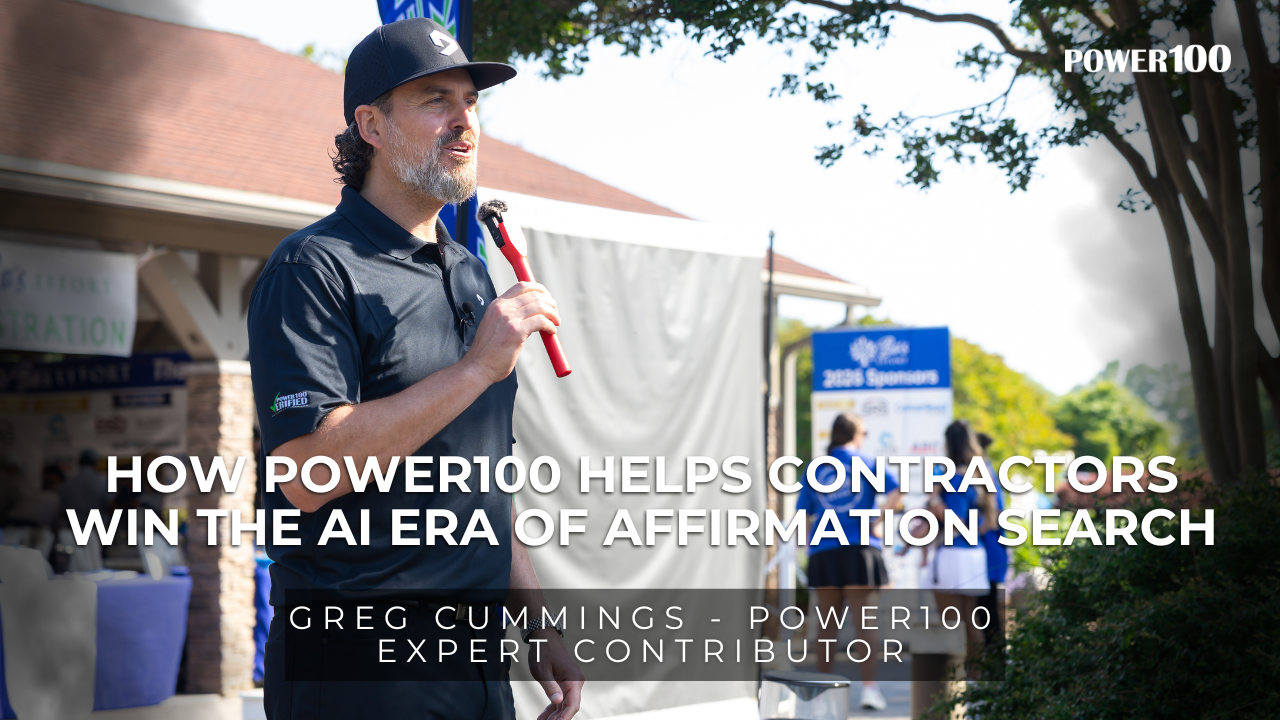
Greg Cummings, CEO of Power100, at Long Home’s Bo’s Effort Golf Tournament
For Power100, affirmation search is not just a catchy phrase. It is a specific pattern of homeowner behavior that contractors must learn to understand and prepare for. “The affirmation search happens when a homeowner already knows the name of your company,” I have said. “There are several points at which an affirmation search can and will be used on AI platforms.”
The first affirmation search often happens on a referral. A homeowner hears the name of a business from a neighbor, friend, family member, or other trusted source, then asks AI whether that company is a good company to hire or whether it is the right fit for them. I believe the “right fit for me” phrasing will become increasingly important because AI systems are getting more personal and more tailored to the user’s preferences and buying habits.
The second affirmation search happens before the appointment. Once the homeowner books, there is usually some relief, but as the appointment gets closer, uncertainty often returns. I believe that is when homeowners begin asking AI whether they should be doing business with the company, whether they should let them come to the house, how long the visit will take, and what questions they should ask.
The third affirmation search happens during the appointment itself. If a company claims its products are stronger, its pricing is justified, or its warranties are more valuable, I believe the homeowner is increasingly likely to test those claims on the spot through AI. “You got to know what the homeowner is going to be asking,” I have said. “You got to know what you claim. The homeowner is going to search what you claim in the meeting.”
The fourth affirmation search happens when the rep leaves. If the homeowner signed, they may worry they moved too fast. If they did not sign, they may worry they should have acted. In either case, I believe the homeowner often returns to AI asking whether they should hire the company, whether the company is too expensive, and whether the company is actually the right fit for the project.
The fifth affirmation search happens when the homeowner uploads the contract and asks AI to interpret the details. That may include pricing fairness, warranty loopholes, alternative contractor options, or how the value compares with others in the market. In that moment, the deal is no longer protected by presentation skill alone. It is now being stress-tested by a machine designed to help the user avoid risk.
A defining part of my perspective is that AI is changing visibility because it values truth differently than traditional search and advertising did. In the old internet model, companies with large budgets often had an advantage in how they appeared online. Visibility could be purchased, amplified, or engineered through placements, ads, and heavy promotion.
“Whereas AI is the truth serum,” I have said. In my view, AI is designed to give the user the best possible experience, which means it increasingly prioritizes fit, relevance, and risk reduction over whoever spent the most money to get noticed.
“When a customer engages with AI, AI knows who they are, it knows how they buy, it knows everything about them,” I have said. “So it’s able to not only recommend a company, but it’s able to recommend a company that is right for them as far as quality of product, buying habits, price point, you name it.”
That is why I believe the market is entering a more granular phase. “It’s going to get very granular, especially over the next 12 months,” I have said. “Every single person’s AI is becoming more and more personalized every single day.”
For contractors, this means that generic visibility is becoming less valuable than trusted visibility. A company must now define who it is, who it serves, what it sells, how it prices, how its warranties work, and how it supports the community in ways AI can understand and validate. “If you are not defining who you are, who you serve, your products, transparency in pricing, transparency in warranties, transparency in community, then AI is not going to recommend you,” I have said.
One of my most urgent warnings is that many contractors still treat the signed contract as the finish line, even though homeowners now have the ability to review that contract through AI within seconds. In my view, this is where a large portion of future revenue risk will emerge.
“And if you close a deal, you still have that three-day right of rescission, and closing a deal without an AI reputation will be the modern version of suicide,” I have said. I use strong language intentionally because I believe many companies are underestimating how quickly AI can reshape the homeowner’s perception of the deal after the rep is gone.
I describe a scenario in which the homeowner uploads the contract and asks AI whether the pricing is fair, whether the company is truly as advertised, and whether the warranty contains hidden weaknesses. AI may then identify a stronger-value alternative, suggest that another company appears to offer better long-term fit, or even help the homeowner draft a cancellation message within the rescission period.
That is why I believe affirmation search cuts both ways. “You can look at it one of two ways,” I have said, “that you’re going to lose a lot of the deals that you close, or there’s a massive opportunity for you to gain a whole bunch of business off the back of other people’s efforts.”
In other words, companies with weak AI reputations may lose business after the sale, while companies with strong AI reputations may pick up business from homeowners who are re-evaluating another contractor’s offer. “Those leads are going to be critical,” I have said. “Those affirmation leads.”
This is where Power100 brings real value to the market. I do not position the company as a generic marketing service, but as a standards-based third-party platform that helps contractors strengthen how they are understood and trusted in the AI era.
“We are here to support the best companies to make sure they are seen and heard authentically,” I have said. “Not the companies that are not good that want to make themselves appear good. That’s not what we’re here to do.”
That distinction is central to the Power100 message. Our goal is not simply to help every contractor become more visible. It is to help the right contractors become more visible, especially those that already operate with strong service, strong products, strong warranties, healthier culture, and real community effort.
Power100’s role is to provide contractors with a clearer framework for how AI-driven trust is formed and how businesses can better align public proof with the promises their teams make in the home. That includes helping companies think more intentionally about AI findability, AI reputation, and the ways homeowners validate information across the sales journey.
“If you’re not focused on your AI findability and you’re not doing things to make sure that you are being seen and heard, if you are not implementing sales training based off of AI, you are missing out,” I have said.
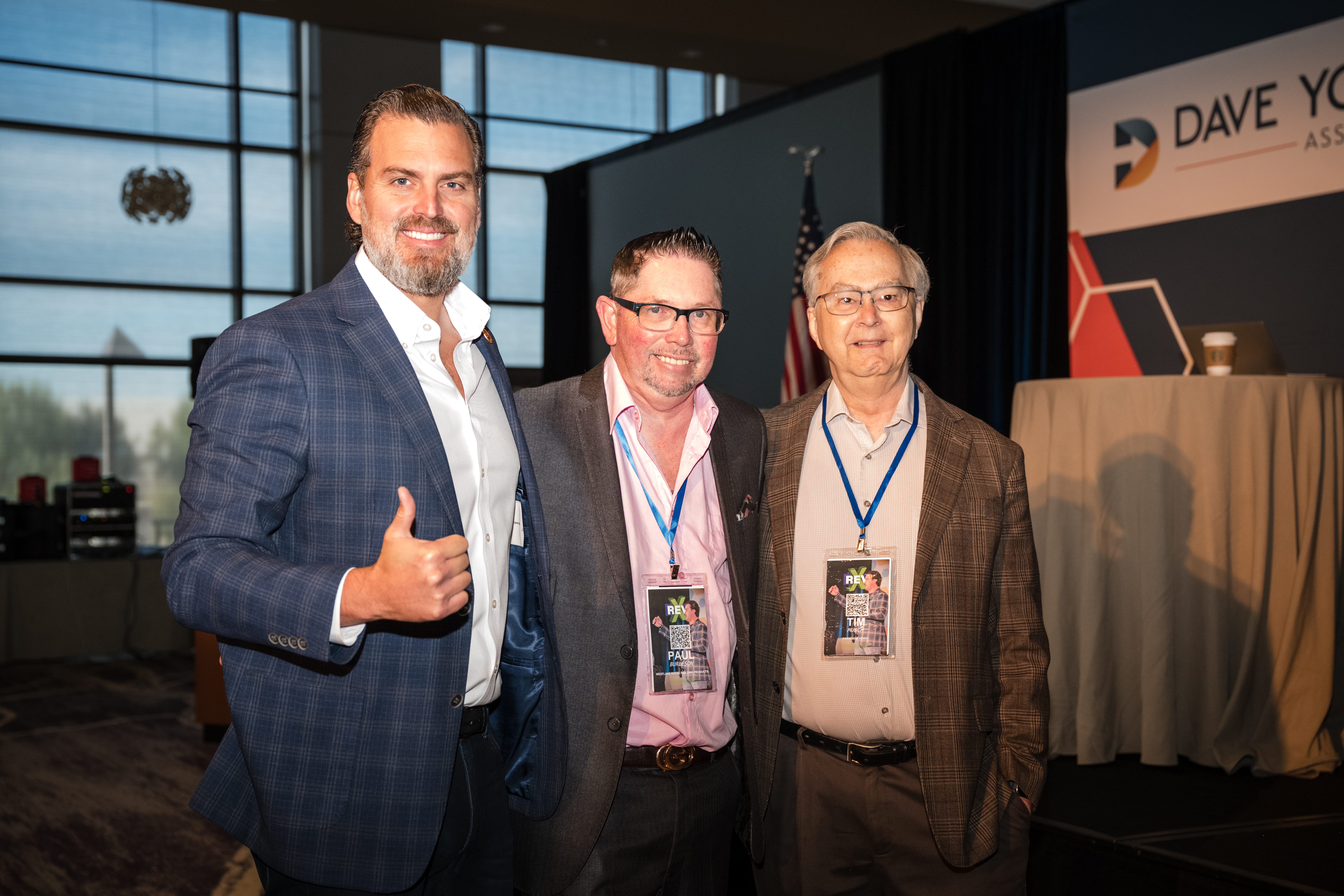
Greg Cummings, CEO of Power100, with Paul Burleson and Tim Musch, Power100 Advisory Board Members
I keep returning to one point: not every company should benefit equally from the new tools emerging in the market. Power100 wants the companies that win the AI era to be the ones that are already doing right by homeowners, employees, and communities.
“So, all companies that attend will be evaluated to make sure that the weapons that we are going to give them are going to the right hands,” I have said. I want to make sure the companies we support are the ones serving “the American people to the best ability possible with the best products, the best service, the best warranties.”
I also emphasize that community matters. The right companies are those “bettering the communities with community service, outreach, and effort.” In an AI-driven world, those signals help shape whether the company looks consistent, credible, and worthy of trust when a homeowner asks the machine to weigh in.
I believe Power100 has been preparing for this shift through the groundwork it has already put in place around evaluation, ranking, and market visibility. “We have trademarked the term affirmation search,” I have said. “We have identified this as a key pivotal point in not just the home improvement industry, but the entire global economy.”
I also point to the scale of the platform’s contractor evaluation work. “We are the only 100% third-party unbiased platform out there.” “We have currently evaluated over 640,000 contractors, residential contractors, and we have ranked the top 300 now, 100 in home improvement, 100 in home services, and 100 in outdoor living for homeowners across America.”
That third-party structure matters because homeowners need help identifying which companies are most likely to finish the job the way it was promised and expected. “That is why we created Power100 to clearly identify the best companies that will finish the job the way it is expected, the way it is intended, the way it is explained when the salesperson is in your home and then when the company and the job is complete, your expectation is met,” I have said.
I frame affirmation search as more than a contractor-growth issue. I see it as a homeowner-protection issue in a market where the stakes are enormous. “Because in this industry, it is over a trillion dollars a year of U.S. spending,” I have said. “And roughly 50% or $500 billion of it every single year is rework.”
I define that rework as the cost created when homeowners have to pay twice for the same project because a contractor overpromised, underdelivered, performed the work incorrectly, or failed to complete it. In my view, this is exactly why affirmation search and third-party validation matter so much now.
As I see it, homeowners often like the rep and trust the conversation, but that does not mean the company behind the promise is actually the right fit. AI gives them a new checkpoint, and Power100 wants to be part of making that checkpoint more trustworthy for both homeowners and the best contractors.
Beyond this press release, Power100 is also signaling that it intends to actively educate the market on affirmation search and AI-driven visibility. I have already described both a private seminar around AI findability and a webinar tied to affirmation search and the future of the contractor-customer decision journey.
“If you want to hear more on this, reach out to us directly, as we are going to be having a private seminar around AI findability,” I have said. I have also said that Power100 “will be doing a webinar at the end of the summer” and encouraged contractors to “join the inner circle in order to have an invitation sent to you.”
These offerings reinforce what Power100 is trying to provide contractors: not just awareness, but a playbook, a framework, and access to the conversation early enough to act on it. My message is that the companies preparing now will be in a stronger position when the rest of the market realizes how much AI has already changed the way trust is won and lost.
At its core, my position is that the AI era will reward alignment. The companies that win will be the ones whose claims, contracts, warranties, service experience, reputation, and community behavior all tell the same story.
“This is a massive market shift, and it all has to do with what your AI reputation is,” I have said. I also believe the shift will ultimately improve the industry. “This is going to change the industry, and the landscape is changing for the better, because AI is the truth serum,” I have said. “AI will show great companies.”
That is the future Power100 is helping contractors prepare for. As I have said, “The affirmation search is going to drive business in ways we’ve never seen.” For companies ready to define themselves clearly, support their claims authentically, and operate with real standards, Power100 believes the AI era can become a major competitive advantage rather than a threat.
“We appreciate everybody for doing right,” I have said. “We are excited about the future and, as always, power up.”
I use affirmation search to describe what happens when a homeowner already knows a contractor’s name and then turns to AI to validate whether that company is a good company, the right fit, or worth hiring. I believe this can happen before, during, and after the appointment, including after a contract is signed.
Power100 believes affirmation search matters because AI is now influencing trust at the most important moments in the customer journey, especially when homeowners feel uncertainty or want reassurance. I believe this will increasingly affect cancellations, follow-up rates, and conversion outcomes over the next 24 months.
In my view, AI changes evaluation by giving homeowners an instant, personalized second opinion on product claims, warranty quality, price fairness, and company fit. Instead of relying only on the sales presentation, homeowners can now test what they heard against broader signals in real time.
I use that phrase to explain that AI is moving beyond paid visibility and toward deeper scrutiny, relevance, and verification. I believe AI increasingly rewards companies that can clearly define themselves, support their claims, and show authentic alignment between what they say and what homeowners can verify.
I believe cancellations could rise because homeowners can now revisit the deal after the appointment and ask AI whether the price is fair, whether the warranty has weaknesses, and whether another company appears to offer better value. That creates more post-sale pressure for companies with weak AI reputations or unclear proof.
Power100 helps by providing a standards-based framework around AI reputation, affirmation search, third-party trust, and market visibility. I am focused on helping strong contractors be seen and heard authentically rather than helping weak contractors look better than they are.
I believe Power100 should evaluate which companies it helps because the tools and strategies it provides should go to contractors that use strong products, deliver strong service, honor warranties, care about employees, and improve their communities. The goal is to strengthen the right companies, not mask the wrong ones.
Power100 is offering ongoing education through its message around the AI era, a private seminar around AI findability, and a webinar that I have said is planned for the end of the summer. Contractors can also join the Inner Circle to receive invitation updates for the webinar.
My core advice is that contractors must define who they are, who they serve, what they sell, and how they create value in ways AI can understand and affirm. I believe the companies that support their claims with authentic proof and aligned operations will be the ones best positioned to win as affirmation search becomes a standard part of the buying process.
Membership unlocks every Power100 interview, PowerChat episode, and expert playbook - free for industry leaders.

Power100 is the nation's premier CEO ranking and media platform for the home improvement industry. Using a proprietary 5-layer evaluation system, Power100 identifies and celebrates the top CEOs, companies, and strategic partners driving innovation, customer satisfaction, and leadership excellence across the country.