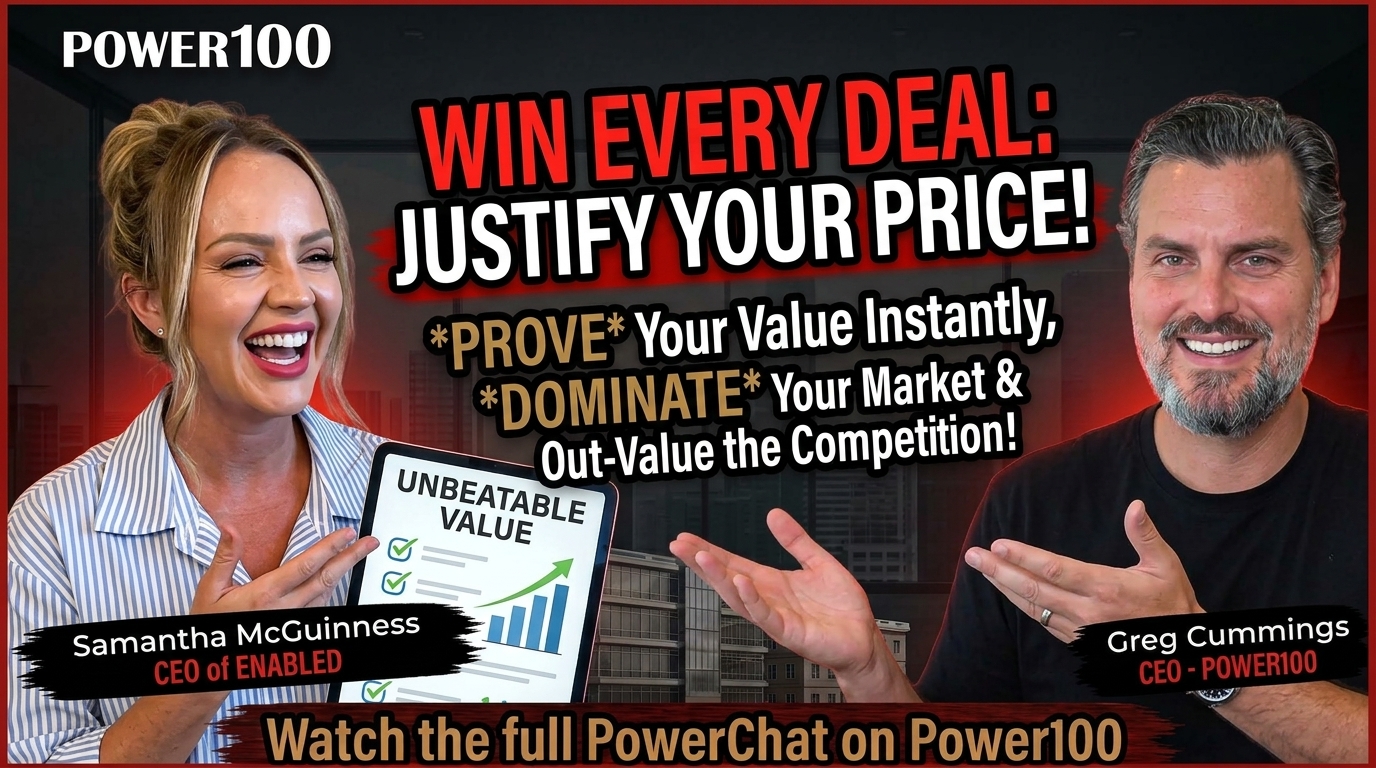
Home improvement companies face a harder sales challenge today. Homeowners can search online, read reviews, ask AI for ideas, compare several contractors, and collect more than one estimate before making a choice. That makes price easy to see. What is harder to see is why one company may be worth more than another.
Samantha McGuinness, founder of Enabled Remodeler, works with contractors on the people and systems behind face-to-face marketing for home improvement companies, where that value story can begin before the formal sales visit. Through home shows, retail programs, community events, and real conversations with homeowners, contractors have a chance to show who they are before the customer is asked to make a larger buying decision.
That challenge became a key part of McGuinness’ PowerChat with Greg Cummings, CEO of Power100. Their conversation moved beyond lead generation and into a larger question about trust, belief, and the value a company gives people a reason to pay for. Power100 is the only unbiased third-party platform that recognizes and elevates the top leaders and most impactful companies in the home improvement industry.
During the conversation, Cummings challenged contractors to think about what happens when a salesperson finally sits across from the homeowner and asks for the job. If the company wants the customer to see more than the price, the employee needs real reasons to explain why the company is worth choosing.
Price is one of the easiest things for a homeowner to compare.
One contractor gives a number.
Another contractor gives a different number.
The customer can place both estimates side by side and quickly see which one costs less.
What the estimate may not show is why the companies are different.
That is where Cummings believes contractors face one of the biggest questions in the market.
“How are you justifying your price?” Cummings asked.
For Cummings, the answer cannot begin only when the homeowner pushes back on the number.
It has to be built into the company long before that moment arrives.
“I think when you start talking about value, it’s one of the hottest topics right now,” Cummings said. “And I don’t care who you are out there, is how are you justifying your price?”
His point becomes especially important in a market where some contractors are growing while others are having a harder time.
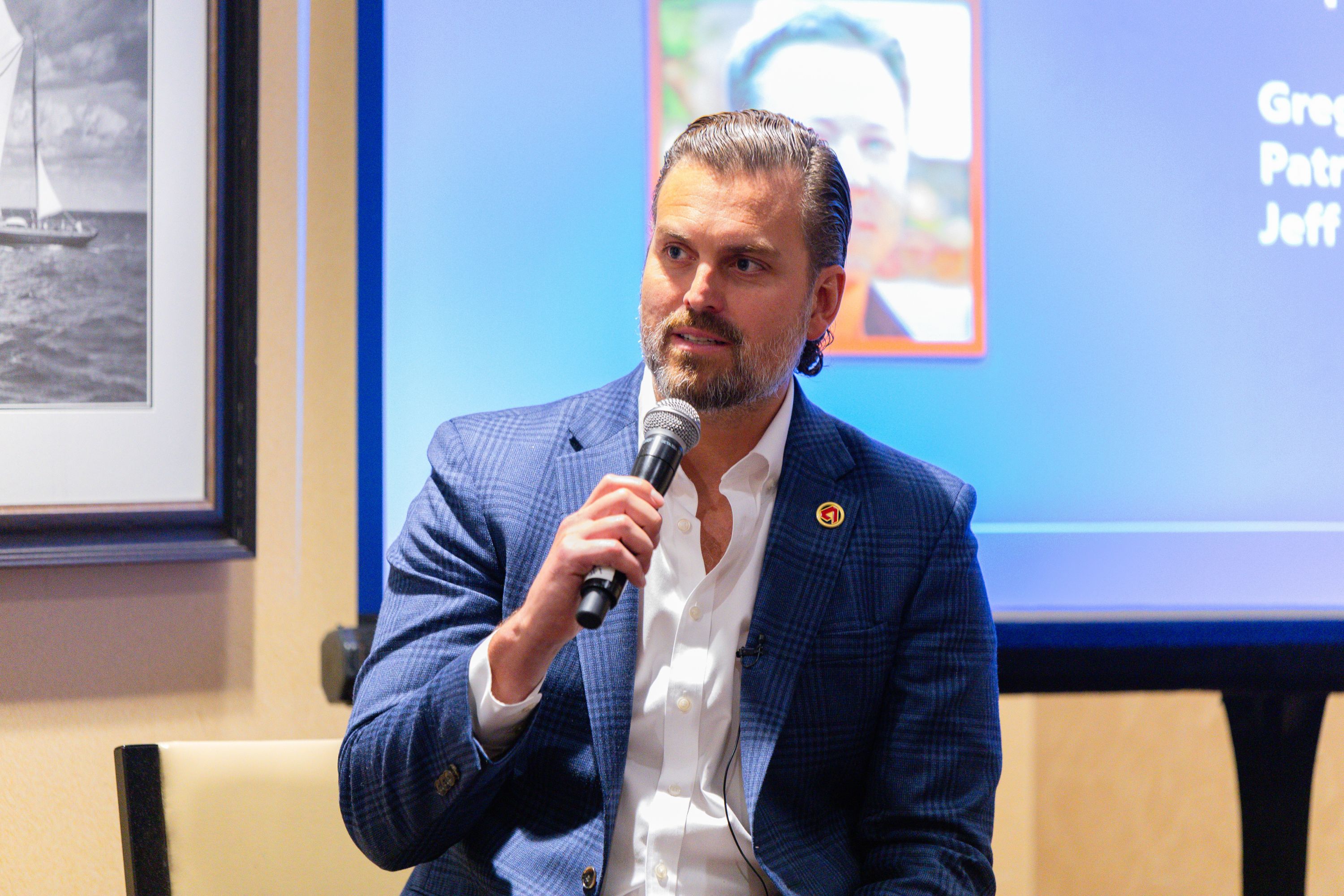
Greg Cummings, CEO of Power100
Cummings believes the companies creating stronger results are giving homeowners clear reasons to see value beyond the estimate itself.
“But most importantly, it comes down and filters out to where they’re able to show value,” he said.
That value eventually has to reach the salesperson sitting inside the home.
A sales rep can learn a script.
They can memorize product details.
They can learn how to answer an objection.
But Cummings believes something deeper happens when the employee truly believes the company deserves the customer’s business.
“And when their employees and their sales reps sit across the table and they put their hand out to ask for the job, they believe in it in their heart that this is the best company and the best solution,” Cummings said.
That kind of belief needs real reasons behind it.
Cummings pointed to community involvement.
He pointed to culture.
He pointed to opportunities for employees to grow both personally and professionally.
He pointed to leadership development programs.
Those things may not appear as separate lines on an estimate, but they can shape the company behind the estimate.
A strong culture can affect how employees treat homeowners.
Leadership development can create better managers.
Community involvement can show customers that the company cares about more than the next sale.
Employee growth can give people more reason to believe in the place they represent.
That belief can become especially important in retail marketing for remodeling contractors, where a homeowner may first meet the company long before a salesperson presents a final price.
The first conversation can begin creating an idea of value.
Those early moments can help shape what happens later when the customer sees the final number.
McGuinness supported that idea throughout the PowerChat by explaining how important it is for companies to manage the way sales teams think about field marketing appointments. A homeowner may have already spent real time with the company, shared several pain points, asked questions, and chosen a time to continue the conversation.
That is not simply a name on a calendar.
It is the start of a relationship.
Cummings’ question about price brings those pieces together.
A contractor cannot always control what another company charges.
It cannot stop a homeowner from comparing estimates.
And it cannot assume the customer will understand why one company is different without being shown.
What the contractor can control is the value it builds around the number.
The people.
The culture.
The service.
The community presence.
The development of its team.
The experience the homeowner receives before, during, and after the sale.
Price can be compared in seconds.
Value takes longer to build.
But when the company has built something its own employees truly believe in, the salesperson has much more than a number to defend.
They have a reason to ask for the job with confidence.
The PowerChat moved from one simple question into a much larger lesson about how contractors earn trust. Greg Cummings asked how companies are justifying their price, but the answer did not stay inside the sales presentation. It moved into culture, community, employee growth, field marketing, and the way each team carries the customer experience forward. Samantha McGuinness added another layer by showing how early face-to-face conversations can shape what homeowners believe about a company before price is ever discussed. Together, their points show that value is not something a salesperson creates at the end. It is something the whole company builds from the first interaction to the final ask.

Samantha McGuinness, founder of Enabled Remodeler
Homeowners do not need much help finding prices.
They can collect several estimates.
They can search online.
They can read reviews.
They can ask friends, family, or AI tools what other companies may charge.
That means contractors cannot expect the number alone to explain why one company is worth choosing over another.
Cummings believes leaders have to make the value clear.
“How are you justifying your price?” Cummings asked.
That question becomes more important when the contractor is not the lowest-priced option.
If the homeowner only sees two numbers, the lower one may look like the safer choice.
But if the homeowner understands the service, people, support, culture, and experience behind one of those numbers, the decision can look very different.
This is why price pressure should not always send leaders straight to a discount.
Before lowering the number, the company can ask whether the homeowner was ever shown enough reason to understand it.
Cummings said the companies doing well are able to “show value.”
That value needs proof.
It may come from how the company treats customers.
It may come from how it supports employees.
It may come from its reputation in the community.
It may come from the training and leadership behind the people who will enter the home.
Those things give the salesperson something stronger than a claim that the company is better.
They give the homeowner reasons to believe it.
For contractors working with a home improvement field marketing consultant, that value story can even begin before the sales appointment. The first person a homeowner meets can start showing what the company stands for long before the estimate is presented.
Cummings’ point about price is also a point about belief.
A salesperson can learn the right words.
They can practice how to answer objections.
They can know the product well.
But Cummings believes the strongest confidence comes when the rep truly believes the company deserves the homeowner’s trust.
“And when their employees and their sales reps sit across the table and they put their hand out to ask for the job, they believe in it in their heart that this is the best company and the best solution,” Cummings said.
That belief is hard to fake.
Employees see the company from the inside.
They know whether leaders follow through.
They know whether customers are taken care of after the sale.
They know whether people are given room to grow.
They know whether the values on the wall match what happens every day.
When those things are real, employees have more to stand behind.
That can change the way a salesperson handles a hard price question.
Instead of sounding unsure, the rep can explain why they trust the company themselves.
Instead of falling back on a script, they can speak from experience.
That makes internal culture part of the value the homeowner eventually feels.
It also explains why field marketing training for remodeling companies should reach beyond scripts and appointment goals. People need to understand the company they represent, the promise they are making, and why the homeowner should feel good about taking the next step.
The strongest sales confidence starts long before the rep asks for the job.
It starts when the company gives its own people something worth believing in.
Cummings did not stop at sales technique when he talked about value.
He pointed to community involvement.
He pointed to culture.
He pointed to personal and professional growth.
He pointed to leadership development.
Those things do not appear beside the product price.
But they help shape the company the homeowner is choosing.
McGuinness supported that idea later in the conversation when she talked about community service.
“I think that when you do community service, you build a company who people want to work for and who people want to do business with,” McGuinness said.
That connection matters.
Community involvement can make a company feel more human.
Strong culture can make it easier to attract better people.
Better people can create stronger customer experiences.
Leadership development can help managers guide those people well.
The value continues to build before the homeowner ever sees an estimate.
McGuinness also connected culture to recruiting. She explained that companies with poor employee reputations can struggle to attract good people, while companies that build a strong culture have an easier time finding people who want to join them.
That eventually reaches the homeowner.
The person answering the phone matters.
The person at the event matters.
The person showing up for the sales appointment matters.
The crew entering the home matters.
A company may sell roofing, windows, siding, or bathrooms.
But people are still delivering the experience.
That is why community and culture can become part of the value behind the price.
They give employees and customers more reasons to believe there is something real behind the company name.
For McGuinness, value can start much earlier than the sales appointment.
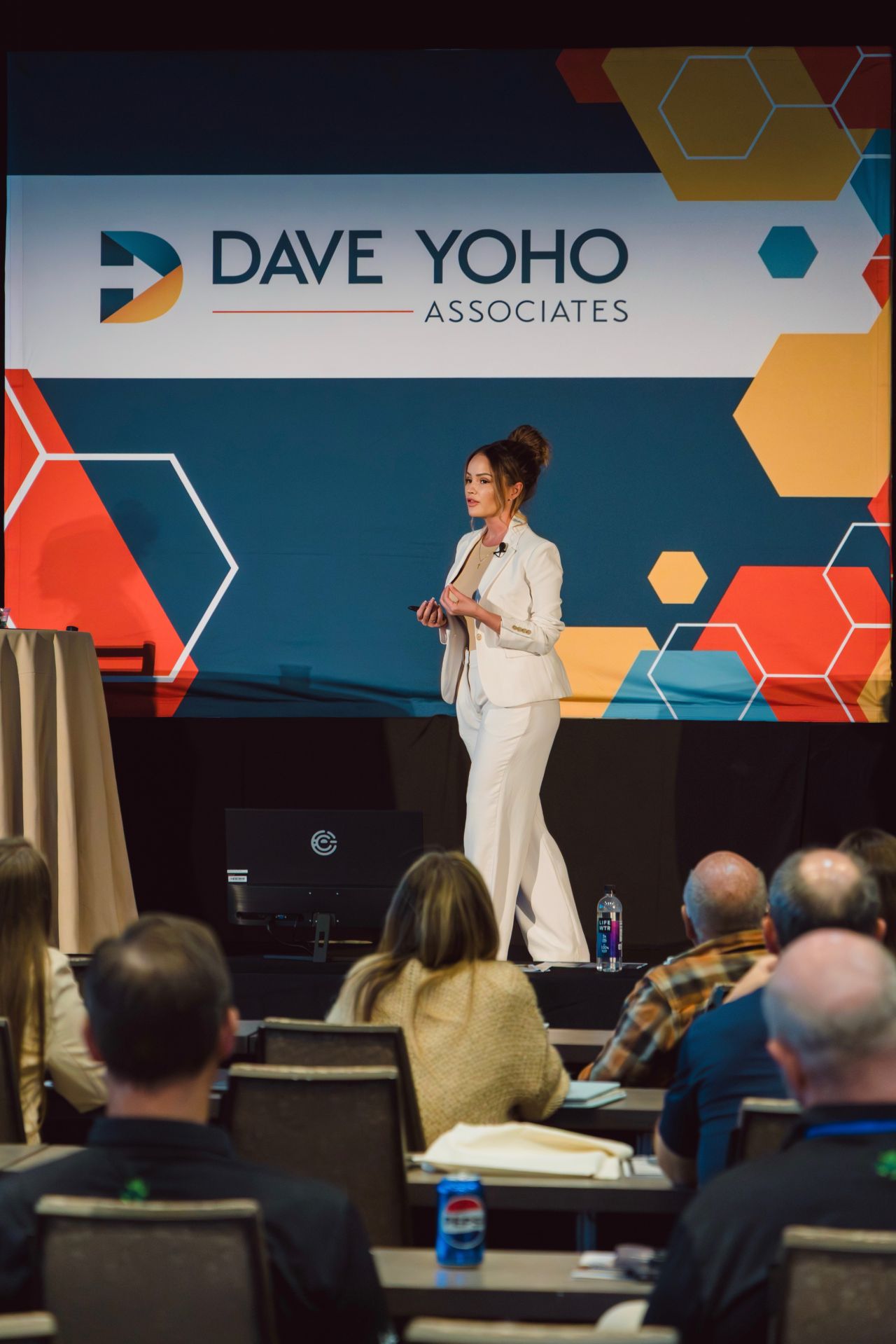
Samantha McGuinness, founder of Enabled Remodeler at the RevX by Dave Yoho Associates
A homeowner may meet the company at a home show.
They may stop at a retail location.
They may speak with a representative at a street fair or community event.
That moment can shape what they think about the company before anyone talks about price.
McGuinness explained that homeowners often tell field marketers they already know the brand.
“I saw you on the TV.”
“I heard you on the radio.”
“I see your ads.”
The marketing created awareness.
But it did not always create action.
Then the homeowner met someone from the company face to face.
McGuinness described that moment as the “nail in the coffin” that can move the homeowner toward an appointment.
That is where home show lead generation for contractors can create value beyond a simple lead count.
The homeowner gets to meet a real person.
They can ask a question.
They can explain a problem.
They can see how the company listens.
They can decide whether the conversation feels helpful.
That first experience can change the starting point for sales.
The salesperson may arrive after the homeowner already knows the company name.
The customer may already have shared pain points.
They may already have spent time with someone from the team.
They may already have some level of trust.
The sales conversation is no longer starting from zero.
That can matter when price finally enters the discussion.
If the customer has already felt care, attention, and confidence from the company, the estimate is being presented inside a relationship that has already started to form.
A strong first interaction can still lose its value if the next person treats the opportunity differently.
McGuinness warned about salespeople seeing an appointment and immediately judging it by where it came from.
“It’s a lead from the farmer’s market,” she said, describing the kind of reaction that can hurt the opportunity.
McGuinness called that mindset dangerous.
The homeowner may have stopped what they were doing.
They may have spent 20 minutes speaking with a representative.
They may have shared several pain points.
They may have agreed to a specific appointment because the first conversation gave them enough confidence to continue.
If the salesperson sees only the source name on the calendar, they miss everything that came before it.
That is why McGuinness believes field marketing managers and sales managers should work together.
She described having sales leaders and representatives sit in on meetings and role-plays so they could understand how appointments were created.
They could see the questions.
They could hear the objections.
They could understand how much skill went into getting the right homeowner to say yes.
That creates a stronger handoff.
It also matters for retail marketing for remodeling contractors, where the homeowner may have met the company in a setting that had nothing to do with planning a home improvement purchase.
The field marketer starts building trust.
Sales has to continue it.
If marketing says the company listens, sales has to listen.
If the company says it cares, the homeowner has to feel that care.
If leadership talks about culture, the people serving the customer have to live it.
Every interaction either adds proof to the value story or takes some of that value away.
That brings the conversation back to Cummings’ original question.
“How are you justifying your price?”
The strongest answer may not come from one sentence at the kitchen table.
It may come from every person who helped the homeowner believe the company was worth choosing before the price was ever asked for.
Greg Cummings’ question stays with the conversation because it reaches far beyond the final number on an estimate.
“How are you justifying your price?”
As homeowners gain more ways to compare contractors, that question will only become more important.
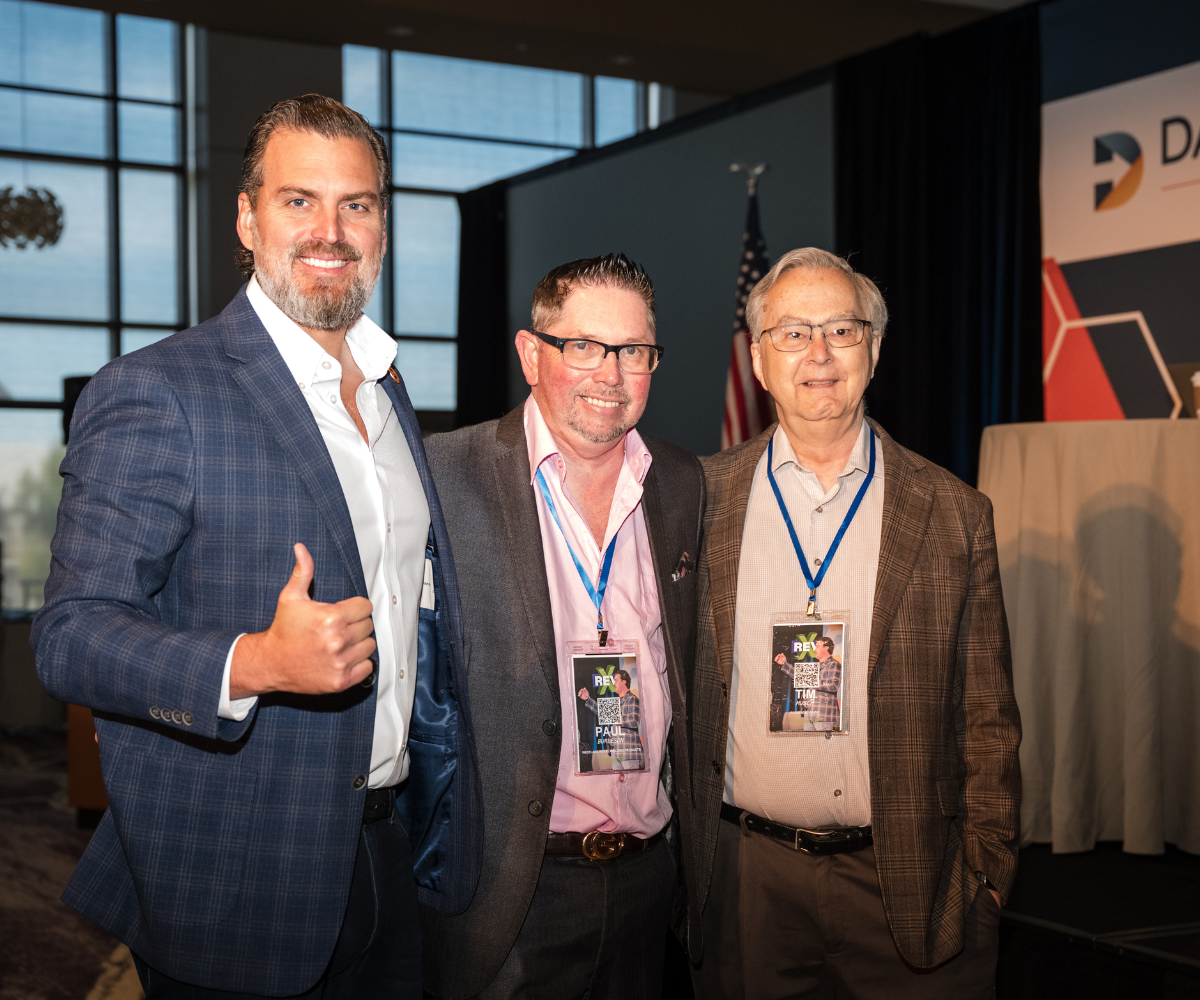
From Left: Greg Cummings, CEO of Power100, alongside Power100 Advisory Board Members Paul Burleson, Senior Account Executive, Westlake Royal Building Products, and Tim Musch, Business Development Specialist, Paradigm, LLC
But the answer does not have to start with lowering the price.
It can start with building a company people are proud to represent.
When employees believe in the culture, trust the leadership, see room to grow, and know the company takes care of its customers, they have something real to stand behind.
That belief matters when the homeowner begins asking harder questions.
The salesperson is no longer defending a number alone.
They are explaining the people, service, standards, and experience behind it.
That can give the homeowner a reason to look past the cheapest option and think more carefully about whom they trust to do the work.
As technology makes comparison faster, the things that are hardest to copy may become even more valuable.
Trust.
Service.
Culture.
Human connection.
A team that truly believes in what it is offering.
Those qualities are built over time.
And when they are real, they can travel with the customer from the first conversation all the way to the final decision.
That is where Cummings’ message lands.
The goal is not simply to tell homeowners the company is worth more.
The goal is to build a company where the people asking for the sale already know exactly why it is worth choosing.
Power100 goes beyond publishing a ranking number. Its national ranking pages explain the leadership story, company milestones, customer experience, culture, and other evidence behind each recognized CEO and company. Power100 says its five-layer system studies factors such as leadership, customer outcomes, culture, operational strength, market reputation, and long-term performance. This gives homeowners and industry professionals more context for understanding why a company earned recognition.
Power100 evaluates more than 7,600 qualified CEOs through a five-layer proprietary system that combines data with human review. The process looks beyond revenue and studies leadership, culture, customer satisfaction, community impact, growth, and long-term business performance. Power100 says this approach helps identify companies that have built lasting trust rather than rewarding a business for one strong sales year.
No. A claim about culture only matters when employees and customers can see proof behind it. Greg Cummings argues that contractors need real reasons for their teams to believe the company is worth choosing. Those reasons can include customer service, community involvement, employee development, leadership, and the way the company treats people. A salesperson cannot create lasting value by repeating that the company is better. The homeowner needs to feel the difference through the experience.
Strong face-to-face marketing for home improvement companies can start building trust before the formal sales appointment begins. A homeowner may first meet the company at a home show, retail store, or community event. That conversation gives the homeowner a chance to ask questions, explain a problem, and see how the company treats people. When the experience is useful and personal, the salesperson can enter the home with some trust already in place instead of beginning the relationship from zero.
Enabled Remodeler focuses on field marketing rather than setting a contractor’s prices. The company works exclusively with home improvement and remodeling businesses to build event, retail, and in-field marketing systems. Its coaching covers areas such as venue selection, hiring, training, team management, performance, and profit. Those systems can help contractors create stronger customer conversations before sales, but each company still decides its own pricing strategy.
Yes. Samantha McGuinness explained during the PowerChat that homeowners often told her teams they had already seen the company on television, heard it on the radio, or noticed its advertising. Those messages created awareness, but the homeowner had not yet acted. Meeting a real company representative gave the customer another reason to continue the conversation. This means home show lead generation for contractors can support marketing that the company has already paid for by turning brand awareness into a more personal experience.
Not automatically. Greg Cummings’ point is that leaders should first ask whether the company clearly showed the value behind the number. If the homeowner only understands the price, the lower estimate can look like the better choice. A contractor should make pricing decisions based on its own business needs, but strong teams should also be able to explain the service, people, standards, support, and customer experience that come with the investment.
Enabled Remodeler uses repeatable systems rather than depending on one naturally strong representative. Its Four P’s coaching model focuses on Position, Precision, Performance, and Profit. The company helps contractors choose stronger venues, hire and train appointment setters, manage performance, and build systems that can grow with the business. For companies developing retail marketing for remodeling contractors, that structure can help create a more consistent experience as teams expand into more events, stores, or markets.
Power100 is the only unbiased third-party platform that recognizes and elevates the top leaders and most impactful companies in the home improvement industry. Led by CEO Greg Cummings, Power100 helps contractors, executives, and industry partners learn from the leaders shaping home improvement through national rankings, original research, interviews, and practical business insight. Its mission is to give strong leaders the recognition they deserve while helping the industry better understand the culture, customer experience, leadership, growth, and business practices that create lasting value.
Membership unlocks every Power100 interview, PowerChat episode, and expert playbook - free for industry leaders.
Power100 is the nation's premier CEO ranking and media platform for the home improvement industry. Using a proprietary 5-layer evaluation system, Power100 identifies and celebrates the top CEOs, companies, and strategic partners driving innovation, customer satisfaction, and leadership excellence across the country.