Growth can create a hard choice for home improvement leaders. As a company enters new markets, adds customers, and builds larger teams, it can become easy to focus only on revenue and market share. James Freeman, CEO of PJ Fitzpatrick, believes growth should mean more. During his PowerChat conversation, James explained that PJ Fitzpatrick wants every new market to feel the same care that people have come to know in the greater Philadelphia area. The company wants to serve homeowners well, create jobs, support families, and give back to the places where it does business.
“We will give back to the community as much as we will potentially take in terms of servicing customers and bringing revenue into our business,” James said.
For an exterior home remodeling company growing across several markets, that belief turns expansion into more than a business goal. It becomes a responsibility to leave each community stronger than it was before.
That same thinking shaped how James looked at the partners supporting PJ Fitzpatrick’s growth. Location alone was never enough. James said the company first needed “the right partner that had the right product mix and the right commitment to quality and excellent service” that matched what PJ Fitzpatrick already expected from itself.
But when the right partner was also close to home, the relationship took on new meaning. Growth in the window business could support homeowners across a wider area while also creating more opportunities for people in the company’s own backyard. That larger view of responsible growth became part of the conversation hosted by Greg Cummings, CEO of Power100.
Power100 is the only unbiased third-party platform that recognizes and elevates the top leaders and most impactful companies in the home improvement industry. Through conversations like this PowerChat, the platform brings forward leadership lessons about how companies can grow, serve homeowners, strengthen partnerships, and stay connected to the communities that help make that growth possible.
As Greg Cummings moved the PowerChat from partnership into expansion, James Freeman gave the conversation a wider purpose. His message was not that growth is bad or that companies should avoid entering new markets. His point was that growth should create something useful beyond the company itself.
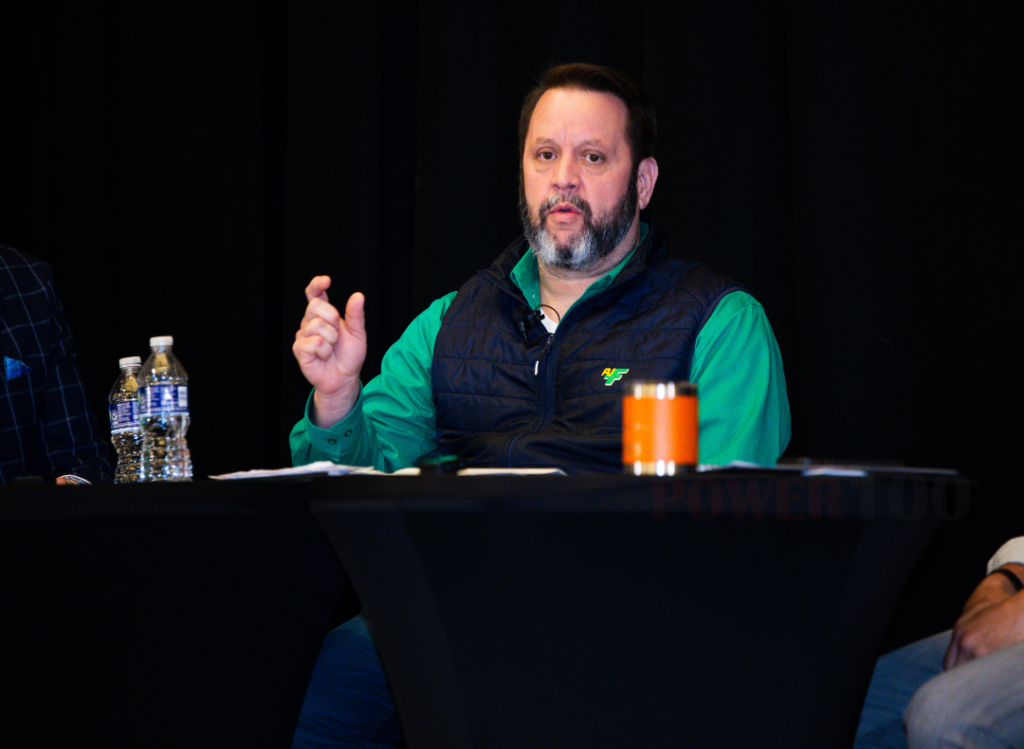
James Freeman, CEO of PJ Fitzpatrick
James spoke about PJ Fitzpatrick’s roots in the greater Philadelphia area and the kind of relationship the company has worked to build there. Homeowners know the business for its work, but James also wants the company to be known for what it gives back. As PJ Fitzpatrick enters more markets, he wants that same sense of care to travel with it.
That belief changes the way expansion is measured. Revenue still matters. New customers matter. Strong teams matter. But James also looks at the jobs created, the families supported, the partners strengthened, and the level of service homeowners receive.
For a growing home improvement contractor, that creates a bigger question. Can the company become larger without becoming less connected to the people and places that helped it grow?
James believes the answer is yes.
James described Philadelphia as more than PJ Fitzpatrick’s starting point. It became the standard for how the company wants to show up elsewhere.
“You know, the people in the greater Philadelphia area know that we will give back to the community as much as we will potentially take in terms of servicing customers and bringing revenue into our business,” James said.
That sentence gives expansion a different meaning.
When a company enters a new area, people can quickly see the trucks, advertising, crews, and sales activity. What takes longer to build is trust. James wants PJ Fitzpatrick to become part of each market rather than simply sell inside it.
He said the company wants “that same type of feel in every market we go to.”
For a local home improvement contractor, that means growth should create a relationship with the area. The company should serve homeowners well, create opportunities for employees, work with strong partners, and find ways to return value to the community.
James is not asking a growing company to choose between business success and community impact. He is saying the two can grow together.
The more opportunity a market gives a company, the more responsibility it has to show why its presence matters.
Learn more about PJ Fitzpatrick and the communities it serves
The community story could easily come across as a call to choose every nearby supplier first. James made it clear that it was not his approach.
Okna’s location did not decide the original partnership.
“In terms of initial decision, it didn’t impact it because we needed to find the right partner that had the right product mix and the right commitment to quality and excellent service that matched what we had at PJ Fitzpatrick,” James said.
That distinction matters.
A local relationship becomes valuable when the company on the other side can first meet the customer’s required standard.
For a replacement window company, choosing a nearby manufacturer may help with connection and local impact, but homeowners still expect the finished product to perform. The installation still has to be strong. Service still has to be reliable. Problems still have to be handled.
James, therefore, places performance before convenience.
Once the quality is there, being close to home can make an even stronger relationship even more meaningful.
That balance keeps the community message grounded. Supporting the local economy should never mean lowering the standard for the homeowner. The best outcome is when a company can do both.
Explore PJ Fitzpatrick’s replacement window services
After the quality question was answered, James began to see another benefit in the partnership.
The companies were close to one another.
That meant growth between them could create impact close to home.
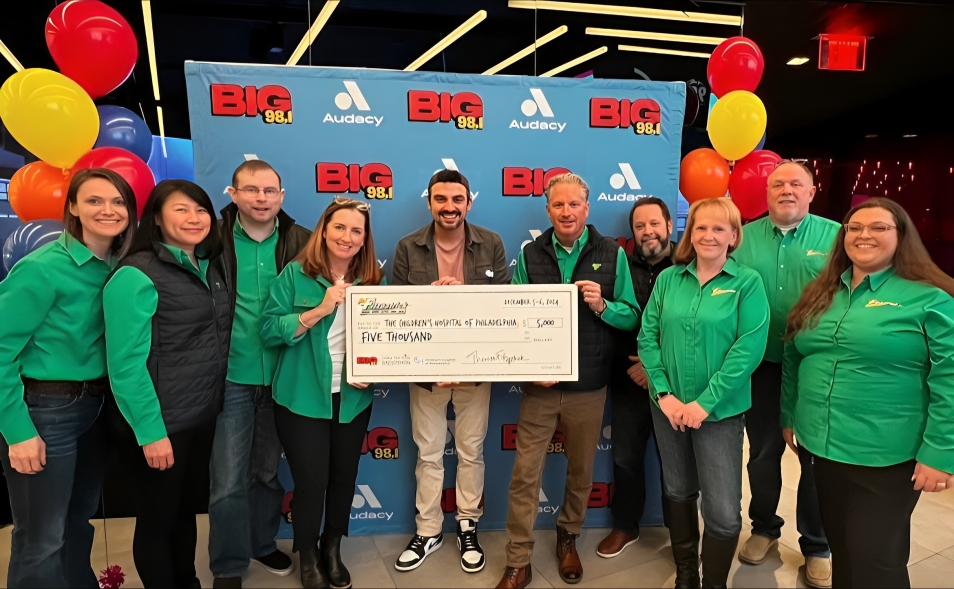
PJ Fitzpatrick partners with BIG 98.1 for the annual Loves Our Kids Radiothon, supporting the Children’s Hospital of Philadelphia!
James talked about what it meant to work with a strong manufacturer in the same region.
“To think that our growth together puts more people in our hometown to work and creates opportunities for families and others to grow in our industry,” he said.
That is where the partnership becomes larger than a purchase order.
A growing window installation company depends on many people. Manufacturing teams build the product. Operations teams move it. Sales teams explain it. Installers put it into the home. Service teams support the homeowner later.
When more business stays close to home, more of that activity can support the same wider community.
James described that part of the relationship as making the partnership “even sweeter.”
PJ Fitzpatrick could keep expanding into new markets while part of that growth continued creating opportunity in the place the company still calls home.
That is a different way to look at scale.
Growth does not always have to move value away from where a company started. With the right relationships, it can send some of that value back.
See PJ Fitzpatrick’s window solutions for homeowners
Community impact matters, but James never takes the homeowner out of the center of the business.
Expansion creates pressure.
More markets mean more jobs to manage, more homeowners to serve, more teams to support, and more chances for the experience to become uneven.
That is why James connects growth so closely with choosing the right partners.
A residential roofing contractor or remodeling company may be growing fast, but the homeowner standing at the front door still expects the same thing. They want the work done well. They want clear communication. They want the company to keep its word.
James explained earlier in the conversation that when a partner says it will do something, it must follow through because PJ Fitzpatrick has made promises of its own to the homeowner.
That idea becomes even more important as the company expands.
Growth should increase the number of people who receive a strong experience. It should not reduce the quality of that experience.
The homeowner should never have to accept weaker service just because the company has grown.
For James, the right partner helps make sure scale does not break the promise that created growth in the first place.
Explore PJ Fitzpatrick’s roofing and exterior home services
The partnership at the center of the PowerChat did not begin through a carefully planned search for a local manufacturer.
It began because James and his team were willing to learn.
While visiting NEWPRO in Boston, they saw a window that caught their attention. They asked about it. That question led to an introduction. The introduction eventually helped create a relationship that James now connects to growth in PJ Fitzpatrick’s window business.
That story reflects a larger leadership habit.
James said PJ Fitzpatrick spends time talking with other business owners, attending industry events, visiting other companies, and asking how strong businesses solve problems. He also spoke about being part of an informal group of about 40 owners who share ideas about technology, process, and relationships.
That openness matters for any home improvement company trying to improve.
Not every useful idea has to begin inside the company.
A peer may know a better process.
Another contractor may have found a strong partner.
An industry group may connect leaders who would never have met otherwise.
James encourages leaders not to be afraid to talk with the person across the street, someone they meet at a trade show, or another company doing good work.
That is how this partnership began.
And it is also why James’s view of growth reaches beyond buildings, markets, and revenue.
Strong companies stay connected.
They learn from the people around them.
Then they use what they learn to become more useful to the homeowners, employees, partners, and communities depending on them.
Learn more about PJ Fitzpatrick’s home improvement services
James Freeman’s belief that growth should give something back is not only an idea shared in the PowerChat. PJ Fitzpatrick has built that belief into a community program called PJ’s Giving Hammer, which supports nonprofit groups and local organizations in the communities where the company lives and works.
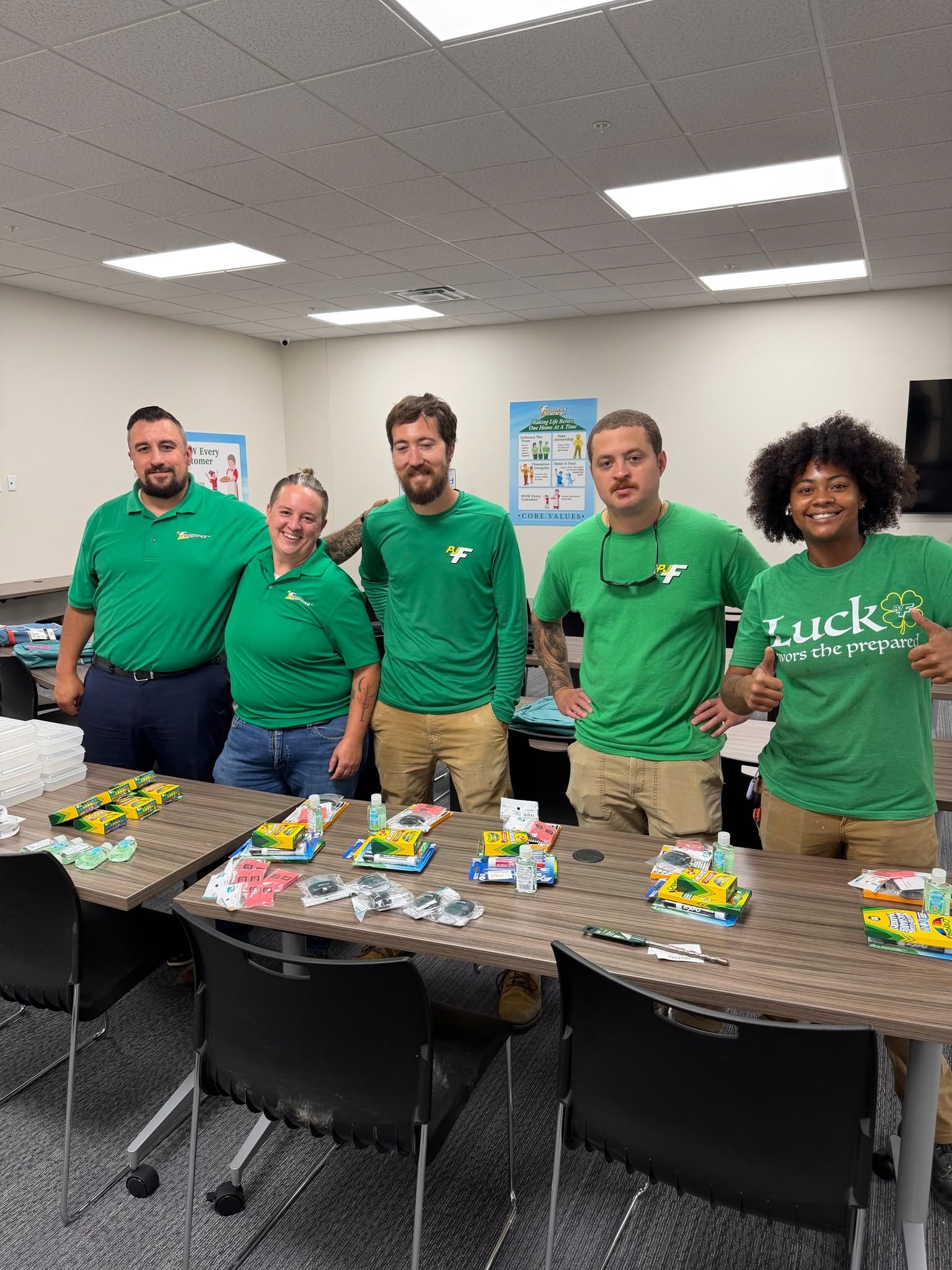
PJ Fitzpatrick Cincinnati team recently came together to pack backpacks with school supplies for local students
The purpose of the program is simple. PJ Fitzpatrick says it aims to improve lives by supporting and strengthening the communities it serves. Through PJ’s Giving Hammer, nonprofit groups can reach out to the company and share what kind of help they need. That support can come through financial help, home improvement services, volunteers, or other forms of partnership.
What makes the program especially relevant to James Freeman’s message is the way PJ Fitzpatrick discusses growth itself. The company says founder Pete Fitzpatrick had long believed in quietly helping charities. As the business became larger, PJ Fitzpatrick found itself in a stronger position to offer even more help to nonprofit partners. Growth, in this case, increased what the company could give rather than simply what it could earn.
That impact has reached organizations including Habitat for Humanity, Ronald McDonald House, Exceptional Care for Children, AIDS Delaware, and other local groups. The company has also used the Giving Hammer to support specific community needs, showing that its role can adapt to what the people around it need most.
One example came when PJ Fitzpatrick helped raise money for a protective vest for police K9 Rex. Employees were able to donate internal recognition rewards toward the effort, and the company matched those donations dollar for dollar. The effort raised more than $1,000 toward the vest and showed how employees could take part directly in the company’s community work.
For James, that kind of effort gives deeper meaning to the idea of expansion. A company can enter more markets, serve more homeowners, and create more revenue, but the real opportunity is to grow its ability to help at the same time.
PJ’s Giving Hammer puts that idea into action. It gives community organizations a direct way to ask for support and gives PJ Fitzpatrick a way to turn company resources into help for the people and groups around it.
That is what makes the program a strong example of the leadership idea behind this press release. Growth can make a company bigger. But when that growth creates more room to serve, volunteer, give, and support others, it can also make the company more valuable to the communities that helped it get there.
Learn more about PJ’s Giving Hammer and community partnerships
James Freeman’s message reaches far beyond a single partnership or market. It is about what growth should mean once a company has more reach, more resources, and more people depending on it.
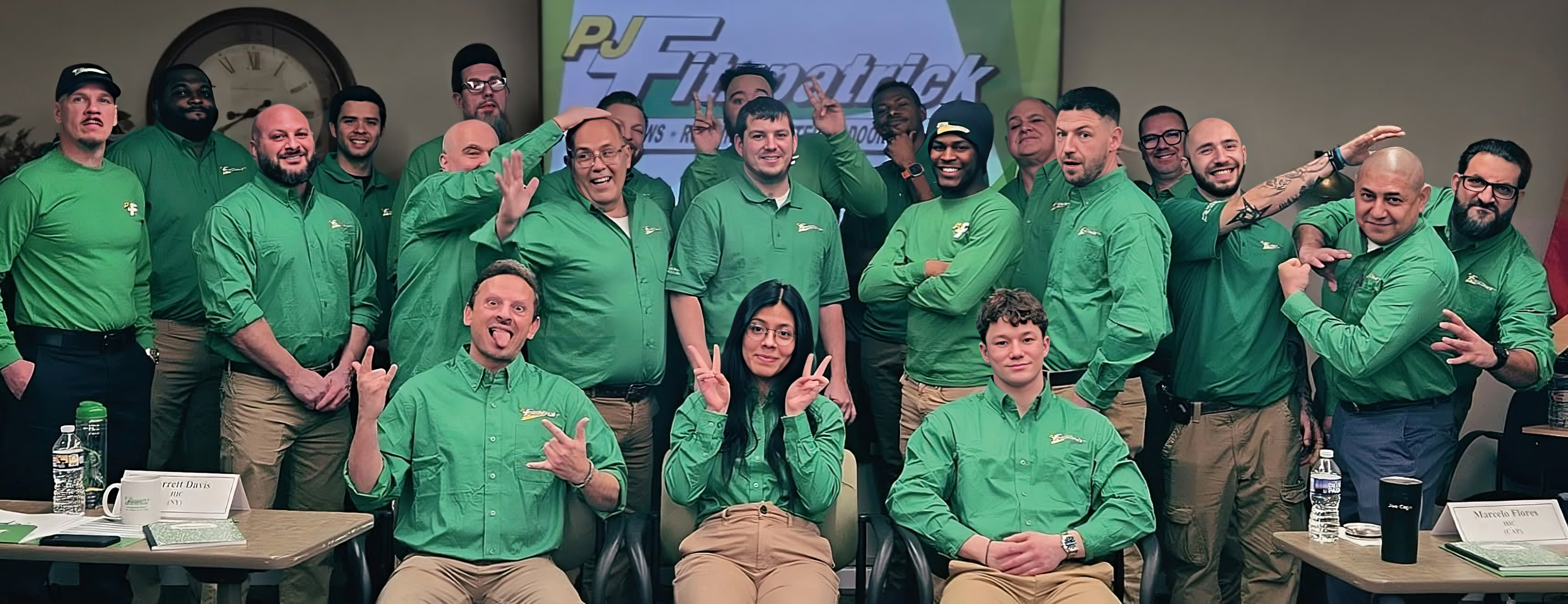
PJ Fitzpatrick team
As PJ Fitzpatrick grows, the company also carries more responsibility. More homeowners trust it with their homes. More employees depend on the business for opportunity. More partners grow beside it. More communities feel the effects of the company’s choices.
James believes those relationships should grow stronger as the business grows.
“We will give back to the community as much as we will potentially take,” James said.
That idea sets a clear standard for the future. Growth should not pull a company away from the values that helped build it. It should give the company more ways to live those values.
For PJ Fitzpatrick, that means continuing to choose strong partners, support good people, serve homeowners with care, and create value in the places where the company operates. It also means staying open to new ideas and learning from other businesses that are raising the standard.
The road ahead will bring new markets, new customers, and new challenges. But James’s view of growth gives the company a steady guide. Become bigger, but also become more useful.
Because the strongest kind of expansion is not measured only by how much a company grows. It is measured by how much stronger the customers, employees, partners, and communities around it can grow too.
Power100 uses a five-layer ranking system instead of judging leaders by company size, popularity, or marketing alone. The process starts with public signals, revenue indicators, and business data. Power100 then applies its scoring system, adds human review from industry veterans, cross-checks feedback from customers, employees, and partners, and produces its final rankings. This gives the platform several ways to test whether a CEO’s public story matches how the company actually performs.
Power100 evaluates more than business growth because a home improvement CEO can affect homeowners, employees, partners, and the communities where the company operates. Its ranking framework evaluates areas such as leadership, company culture, customer experience, operational performance, long-term business health, and community impact. That wider view helps Power100 recognize leaders who are building strong companies while also creating value around them.
PJ Fitzpatrick has a formal community program called PJ’s Giving Hammer. The company says it has supported communities through charitable donations, volunteer work, nonprofit partnerships, and home improvement services. Its Giving Hammer page also names organizations it has worked with, including Habitat for Humanity, Ronald McDonald House, Exceptional Care for Children, and AIDS Delaware. The program provides community groups with a direct way to request support from PJ Fitzpatrick.
PJ Fitzpatrick says PJ’s Giving Hammer may support nonprofit organizations through financial assistance, home improvement services, volunteers, or other forms of partnership. Organizations can submit information about their cause, event, goals, and support needs for review by the company. This makes the program more than a general promise to give back. It gives local groups a clear way to seek help.
PJ Fitzpatrick’s current service area extends well beyond the greater Philadelphia area. Its service area page lists communities across Pennsylvania, Delaware, Maryland, New Jersey, Virginia, Washington DC, New York, Ohio, North Carolina, South Carolina, Georgia, Indiana, and other areas. Service availability can depend on location and scheduling, so homeowners searching for a home improvement contractor should confirm that the service they need is available in their area.
PJ Fitzpatrick says it meets with homeowners to understand their needs, completes an evaluation, and provides a written estimate before work begins. The company also states that 94.7 percent of its customers would recommend it to friends or family and promotes a satisfaction guarantee along with warranty support for its installations. James Freeman’s comments in the PowerChat add another part to that standard. He said the company looks for partners whose quality and service can match the promises PJ Fitzpatrick makes to homeowners as the business grows.
No. James Freeman made clear that location did not drive the first decision. PJ Fitzpatrick first needed a partner with the right product mix, strong quality, and a level of service that matched the company’s own standards. The local connection became an added benefit after those needs were met. For homeowners looking for a replacement window company, that distinction matters because James’s approach puts product quality and customer service before geography.
James is describing growth as a two-way relationship. A market gives a company customers, revenue, employees, and room to expand. In return, he believes the company should create jobs, serve homeowners well, support families, build strong local relationships, and contribute to community needs. PJ’s Giving Hammer puts that idea into practice by using company resources to support nonprofit groups and local causes. As PJ Fitzpatrick grows, the goal is not only to become a larger residential home improvement company but also to increase the good the business can do in the places it serves.
Power100 is the only unbiased third-party platform that recognizes and elevates the top leaders and most impactful companies in the home improvement industry. Led by Greg Cummings, Power100 studies the leadership, culture, customer experience, company performance, and community impact behind the businesses shaping the market. Through national rankings, PowerChat conversations, industry research, and strategic partnerships, Power100 helps strong CEOs share the ideas behind their growth while giving contractors, partners, and homeowners a clearer view of the leaders working to raise the standard across home improvement.
Membership unlocks every Power100 interview, PowerChat episode, and expert playbook - free for industry leaders.
Power100 is the nation's premier CEO ranking and media platform for the home improvement industry. Using a proprietary 5-layer evaluation system, Power100 identifies and celebrates the top CEOs, companies, and strategic partners driving innovation, customer satisfaction, and leadership excellence across the country.