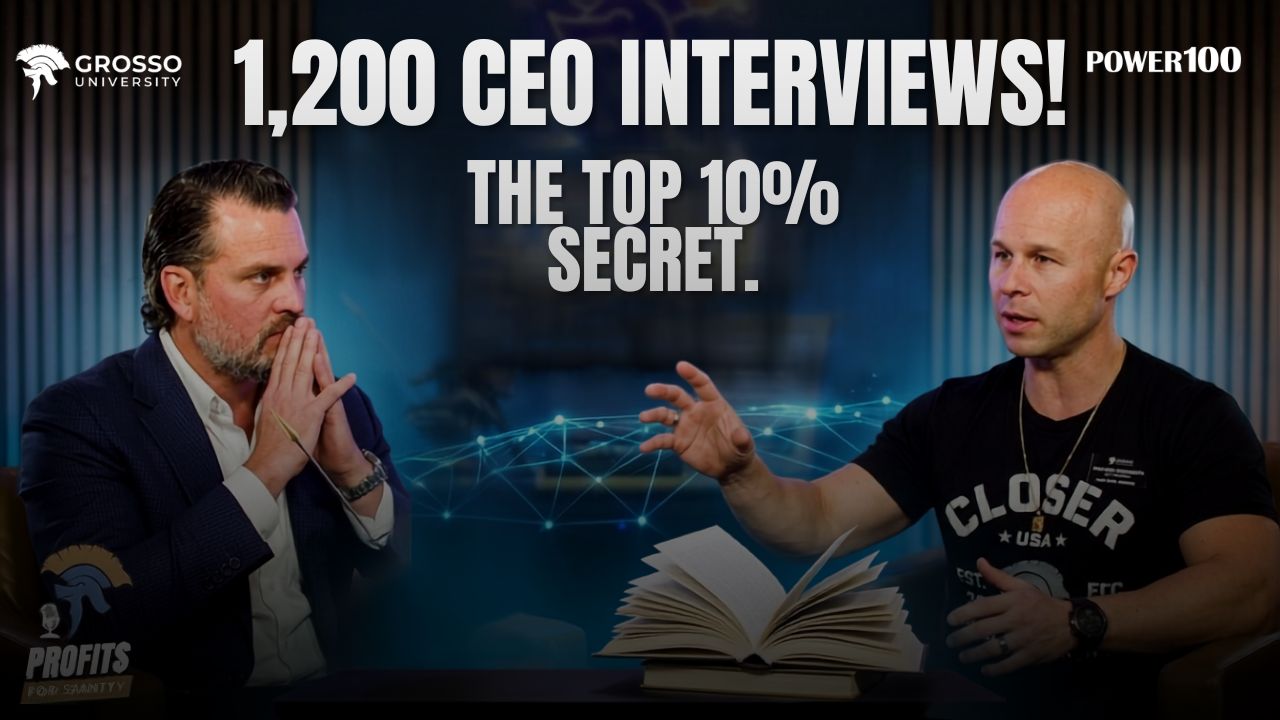
Greg Cummings, CEO of Power100, is bringing one of the industry’s most timely leadership messages to a wider audience following his appearance on the Profits for Sanity Podcast, hosted by Dominic Caminata, CEO of Grosso University. The conversation focused on what separates the top 1% of home improvement companies from the rest of the market, with a deep emphasis on leadership, culture, customer experience, AI, trust, onboarding, credibility, and long-term business design.
The episode arrives at a moment when the home improvement, home services, and outdoor living sectors are being reshaped by a new set of competitive forces. For Cummings, the biggest takeaway is that the companies that win the next era will not be the ones that simply chase tactics. They will be the ones that build stronger leadership, clearer identity, more trusted customer experience, more disciplined culture, and a more authentic reputation in the eyes of both consumers and AI systems.
“Leadership, not tactics, is the true differentiator,” Cummings says in the themes highlighted around the episode. That idea sits at the heart of the message he continues to champion through Power100: sustainable growth is built from leadership decisions that shape culture, standards, accountability, customer trust, and the quality of every interaction the homeowner experiences.
Greg Cummings, CEO of Power100, interview with Dominic Caminata, CEO of Grosso University
The Profits for Sanity Podcast positions itself as a resource for contractors, business owners, and home-services leaders who want real growth without burnout, with repeated focus areas including systems, leadership, profitability, innovation, and AI. That makes it a natural platform for Cummings, whose work through Power100 increasingly centers on how companies can grow with more trust, stronger standards, and better alignment between what they promise and what they actually deliver.
The episode wad framed the discussion around a central question: what separates the top 1% of home improvement companies from everyone else? Cummings draws on more than 1,200 interviews with top-performing CEOs, founders, and operators to identify the common leadership traits, systems, and behaviors that define the best companies in the industry.
That framing matters because it reinforces why Power100 has gained traction as more than a ranking platform. It is becoming a standards-based lens for understanding what high-performing companies do differently, why homeowners trust some businesses more than others, and how leadership quality eventually becomes visible in both customer experience and market reputation.
One of the most important ideas in Cummings’ message is that great companies are not primarily defined by clever sales tricks or temporary growth bursts. They are defined by internal quality that becomes external consistency: leadership discipline, onboarding standards, training systems, cultural clarity, accountability, trust, and a deep commitment to doing business the right way.
That position is consistent with the themes Cummings has already shared publicly through Power100. He has repeatedly emphasized that companies must be clear about who they are, who they serve, what they sell, how they price, what their warranties mean, and how they show up in the community if they expect the market to trust them over time.
“So if you are not defining who you are, who you serve, your products, transparency in pricing, transparency in warranties, transparency in community, then AI is not going to recommend you,” Cummings has said. In practical terms, that means strong leadership is no longer just a people issue. It is a visibility issue, a reputation issue, and now an AI-era performance issue.
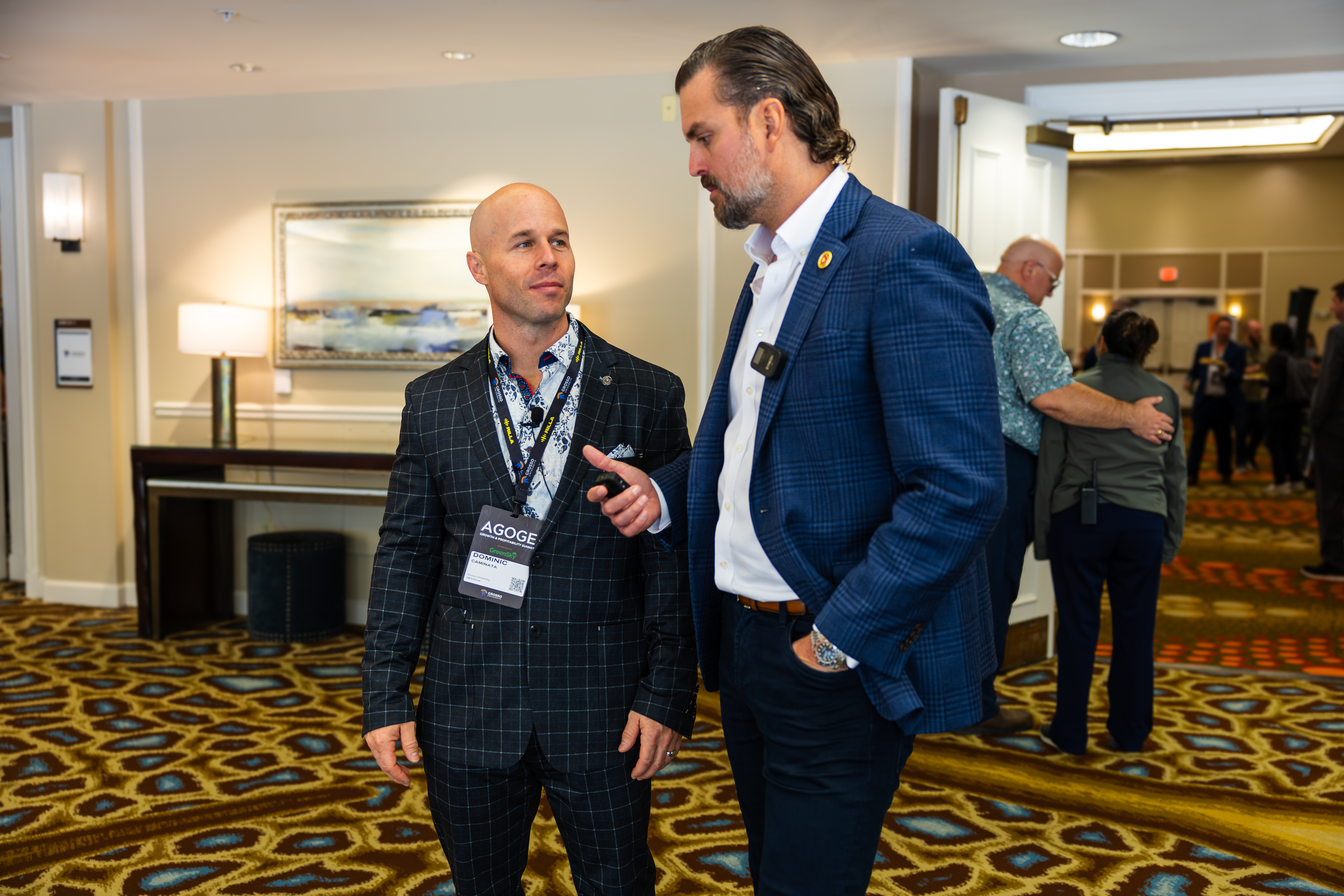
Greg Cummings, CEO of Power100, with Dominic Caminata, CEO of Grosso University, at the AGOGE Event
The published key takeaways from the episode explicitly state that leadership, not tactics, is the true differentiator. That idea explains why Cummings continues to focus on high-level business design rather than isolated hacks or short-term fixes.
Leadership determines whether a company recruits carefully, onboards with intention, trains consistently, sets clear expectations, removes toxic behavior quickly, and creates an environment where customers experience the same quality that ownership believes it is selling. Leadership also determines whether project managers are empowered as operational quarterbacks, whether customer trust is protected after the sale, and whether cultural standards remain intact as a company grows from one stage of scale to the next.
This is one reason the episode’s topic list puts so much weight on scaling past the $5 million to $10 million range without imploding. Cummings understands that many companies can grow on hustle, founder force, or a strong sales team for a while, but elite companies build leadership infrastructure that allows growth without sacrificing trust, consistency, or margin quality.
Another major idea threaded through the episode is that culture is not decorative. It is operational, financial, and competitive. The show notes highlight onboarding, winning culture, and the cost of tolerating toxic employees as critical themes, which aligns closely with Cummings’ broader view that the best companies are intentional about who they let in, how they shape behavior, and what kind of internal environment they protect.
For Power100, culture matters because it eventually shows up in the homeowner’s experience. A company with weak culture may still produce revenue for a while, but over time its handoffs break down, its promises become inconsistent, and its customer experience begins to drift away from what was sold in the home.
That is part of why Cummings often links leadership, identity, and legacy. Strong culture is not just a morale tool. It is part of a company’s identity, and in the AI era, identity is increasingly discoverable. The better a company is at aligning internal behavior with external messaging, the stronger its long-term credibility becomes.
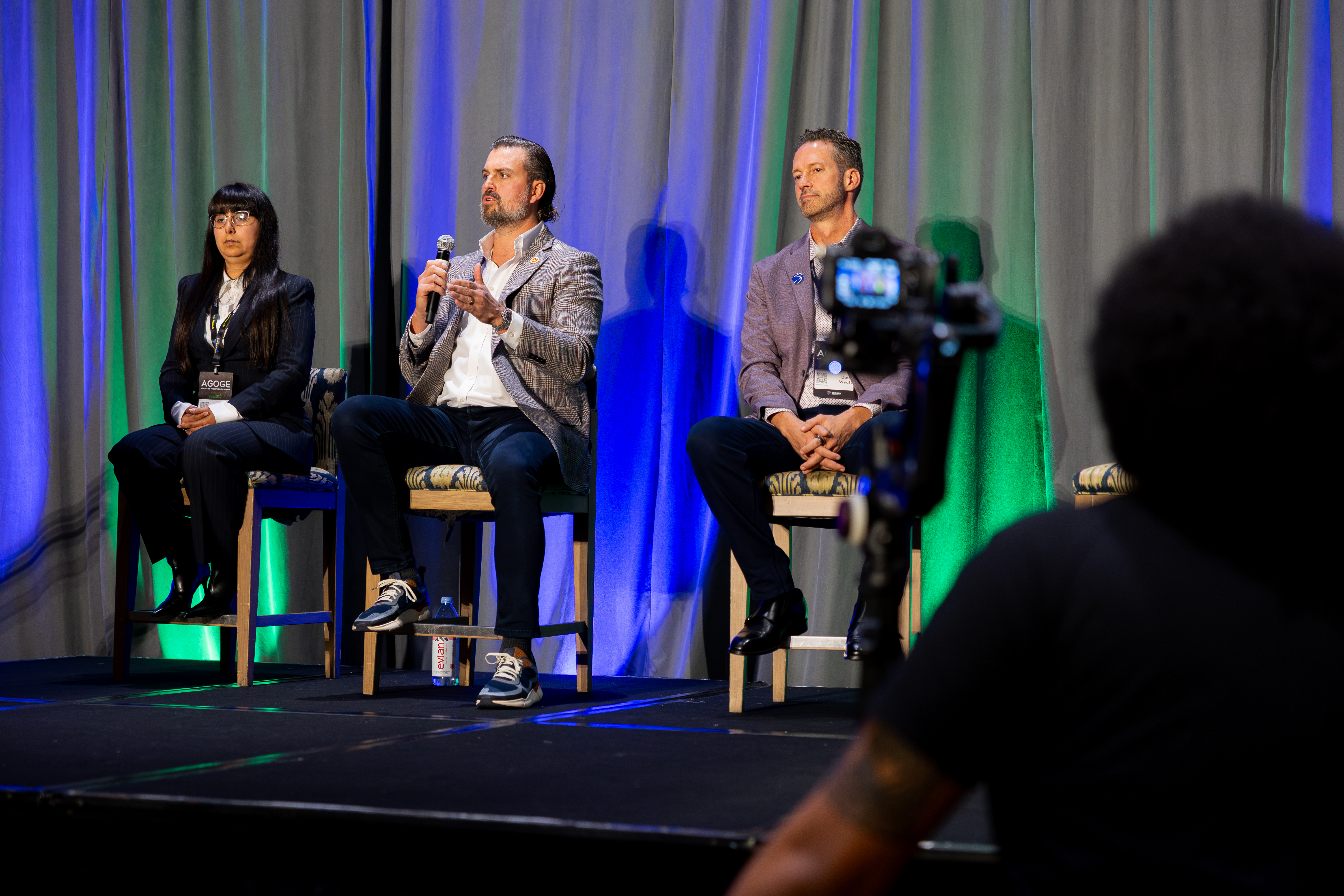
Greg Cummings, CEO of Power100, on stage with Doug Wyatt and Wendy Harmeyer
The episode notes state that customer experience is becoming the ultimate competitive advantage. That is especially important in the current market because homeowners now have more tools than ever to validate what they are hearing, compare alternatives, and question whether a company is really the right fit.
Cummings has already described this shift through the concept of affirmation search, the moment when a homeowner already knows a contractor’s name and turns to AI to ask whether that company is trustworthy, worth hiring, or right for their specific project. “The affirmation search happens when a homeowner already knows the name of your company,” he has said. “There are several points at which an affirmation search can and will be used on AI platforms.”
That means customer experience is no longer confined to the appointment itself. It continues before the visit, during the meeting, after the rep leaves, and even after a contract is signed and reviewed through AI. Companies that want to join the top 1% must therefore design a customer experience that survives scrutiny, not just a presentation that wins attention in the moment.
One of the most striking themes highlighted in the episode is that AI is creating a “Great Separation” in the industry. That language lines up directly with the message Cummings has been developing through Power100 around AI reputation, AI visibility, and affirmation search.
“This is a massive market shift, and it all has to do with what your AI reputation is,” Cummings has said. He argues that AI is changing how consumers find, evaluate, and compare contractors because the technology is increasingly designed to guide users toward better-fit outcomes, lower-risk decisions, and stronger long-term value.
“Whereas AI is the truth serum,” Cummings has said. In other words, AI is reducing the effectiveness of empty positioning and increasing the value of authentic proof. Companies that can support their claims with real service quality, clear standards, transparent pricing, meaningful warranties, and community credibility will gain an edge, while companies that rely on noise or image alone may see their weakness exposed more quickly.
The episode’s key takeaways also highlight trust and credibility as emerging competitive advantages. This is one of the clearest intersections between the podcast conversation and the larger Power100 mission.
Power100 has consistently positioned itself as a third-party platform focused on helping identify the best companies for homeowners rather than simply amplifying whoever is loudest in the market. Cummings has described the company as “the only 100% third-party unbiased platform out there,” and has said it has evaluated more than 364 residential contractors while ranking the top 300 across home improvement, home services, and outdoor living.
That third-party angle matters more in an AI environment because homeowners and machines alike are looking for corroboration. Cummings has made it clear that Power100 does not want to help weak companies appear stronger than they are. “We are here to support the best companies to make sure they are seen and heard authentically,” he has said. “Not the companies that are not good that want to make themselves appear good. That’s not what we’re here to do.”
Another key section of the episode centers on the importance of the project manager role. Framing project managers as the “quarterbacks” of successful organizations is more than a metaphor. It reflects a deeper truth about elite companies: the sale only matters if the operation can deliver what was promised.
That is one reason Cummings keeps returning to the gap between what is sold in the home and what the customer actually experiences after the job is complete. He has said Power100 was created to help identify companies that “will finish the job the way it is expected, the way it is intended, the way it is explained when the salesperson is in your home and then when the company and the job is complete, your expectation is met.”
Project management, in that framework, becomes one of the most important trust-preservation functions in the business. It connects sales to production, promise to execution, and brand positioning to real customer outcomes. The top 1% understand that a company’s reputation is protected or damaged in the handoff, not just in the close.
The show notes also point to one of the hardest transitions in the industry: growing beyond the $5 million to $10 million range without losing control. This stage often exposes weaknesses in hiring, accountability, role clarity, communication, onboarding, and the company’s ability to reproduce quality across departments.
Dominic Caminata, through the broader Grosso University platform, regularly focuses on profitable growth, operational discipline, and systems that actually scale rather than simply expanding volume. That context makes his conversation with Cummings especially relevant because both leaders are emphasizing that scale without structure is fragile, and growth without trust is expensive.
For Cummings, the answer is not more noise. It is stronger leadership, clearer standards, better-trained people, stronger onboarding, better project accountability, and an operating model that supports both margin and customer trust.
Among the most overlooked takeaways in the episode is the idea that community involvement drives long-term growth. In an industry often dominated by revenue talk, that emphasis stands out.
It also matches Cummings’ long-standing position that great companies are not just good at selling. They care about employees, customers, and the communities in which they work. He has said that Power100 wants to support businesses that are “bettering the communities with community service, outreach, and effort,” because that kind of behavior is part of what makes a company worthy of trust over time.
In an AI-driven future, community impact may become even more valuable because it gives companies more authentic signals to support their reputation. When the market is increasingly evaluating who is credible, who is consistent, and who truly does business the right way, community participation becomes part of the larger story of trust.
The value of the episode also comes from the questions and framing provided by Dominic Caminata, CEO of Grosso University. As the host of the Profits for Sanity Podcast, Caminata has built a platform centered on helping contractors, business owners, and leaders grow profitably without sacrificing sanity, with frequent focus on systems, leadership, and sustainable growth.
That perspective is reflected in how the episode is framed for listeners. The conversation is presented not just as inspiration, but as a practical discussion for business owners, sales leaders, sales representatives, and entrepreneurs looking to scale with more clarity and stronger execution. In that sense, Caminata helps translate Cummings’ broader industry observations into a format that leaders can apply more directly inside their own organizations.
One line strongly associated with Caminata’s broader platform is that “growing your business shouldn’t cost you your sanity,” which mirrors the podcast’s larger promise to business owners seeking growth without chaos. That focus on disciplined profitability and leadership quality creates a strong backdrop for Cummings’ argument that the top 1% are not guessing their way forward. They are building companies that can be trusted at every level.
The episode also includes discussion around the Power100 Inner Circle and the expanding vision for Power100 rankings. Those elements matter because they show that Cummings is not only analyzing the market. He is building infrastructure around how the market can be understood, improved, and elevated.
Within Power100, rankings are part of a larger project to help homeowners identify trustworthy companies and help strong operators gain recognition based on real standards, not just marketing power. The Inner Circle extends that work by creating a place for deeper conversation, learning, and access to the ideas shaping the next phase of contractor growth.
That becomes even more meaningful when paired with Cummings’ other initiatives around AI findability, affirmation search, and private seminar or webinar-style education for contractors. Together, they position Power100 as both a credibility platform and a strategic voice in how the industry adapts to the AI era.
The biggest lesson from the podcast is that high performance in home improvement is no longer just about lead flow, closing skill, or operational hustle. Those still matter, but Cummings is making a broader argument: elite businesses win because they align leadership, culture, trust, onboarding, project execution, reputation, and customer experience into one coherent system.
This is also why the AI conversation matters so much. AI is accelerating the consequences of both quality and inconsistency. If a company is excellent, AI can increasingly help surface that excellence. If a company is confusing, misaligned, or weak beneath the surface, AI may expose that too.
“The affirmation search is going to drive business in ways we’ve never seen,” Cummings has said. That statement applies to the podcast’s larger message as well. The top 1% are not simply better at selling. They are better at building organizations that deserve to be chosen again and again.
For contractors, sales leaders, owners, and operators, the message from Greg Cummings on the Profits for Sanity Podcast is both challenging and encouraging. The industry is changing quickly, but the path forward is becoming clearer. Companies must lead better, hire better, onboard better, communicate value better, protect customer trust better, and think more intentionally about how they are understood in an AI-influenced marketplace.
“This is a massive market shift, and it all has to do with what your AI reputation is,” Cummings has said. He also believes the shift benefits companies that are genuinely committed to doing things right. “This is going to change the industry, and the landscape is changing for the better, because AI is the truth serum,” he has said. “AI will show great companies.”
For Power100, that is not just a comment about technology. It is a statement about the future of leadership, trust, and what kind of companies should rise to the top. And for contractors who want to build something lasting, profitable, and respected, the conversation between Greg Cummings and Dominic Caminata offers a timely blueprint for what must come next.
The episode focused on what separates the top 1% of home improvement companies from the rest of the market, including leadership, culture, AI, credibility, customer experience, onboarding, and profitable growth. It positioned Greg Cummings as a voice on what elite companies do differently and why those differences matter more now.
The episode’s key takeaways state that leadership, not tactics, is the true differentiator. That means long-term performance is shaped less by temporary tricks and more by the quality of decisions around hiring, training, accountability, standards, customer trust, and culture.
Greg Cummings says AI is creating a major market shift because it changes how homeowners evaluate trust, compare companies, and validate claims before and after appointments. He describes AI as “the truth serum” and says a company’s AI reputation will increasingly shape who wins and who loses.
Affirmation search is the term Cummings uses for what happens when a homeowner already knows a company’s name and turns to AI to ask whether that company is a good fit or worth hiring. It matters because it can influence referrals, appointments, follow-up decisions, cancellations, and even what happens after a contract is signed.
The episode highlights culture, onboarding, high performance, and the cost of tolerating toxic employees as major themes. That suggests elite companies protect culture intentionally because it affects employee behavior, operational consistency, and the customer’s experience of the brand.
The episode identifies the project manager role as a key operational function in successful organizations. The term “quarterback” captures the idea that project managers help translate what was sold into what gets delivered, which protects customer trust and strengthens the company’s reputation.
Power100 is presented as a standards-based platform focused on evaluating companies, elevating trust, and helping identify the best operators across home improvement, home services, and outdoor living. It also reflects Greg Cummings’ broader mission to help strong companies become more visible, more credible, and better aligned with what homeowners and AI systems are increasingly looking for.
The episode’s takeaways say community involvement supports long-term growth. That aligns with Cummings’ position that companies should not only serve customers well but also strengthen employees and communities in ways that reinforce long-term trust.
Dominic Caminata frames the Profits for Sanity Podcast around profitable, sustainable growth for contractors and business owners. That makes the conversation especially useful for leaders who want systems, clarity, and growth without the chaos that often accompanies fast expansion.
The biggest takeaway is that the next generation of winning companies will be built on leadership, trust, culture, customer experience, operational consistency, and AI-era credibility rather than tactics alone. For leaders who want to join the top 1%, the message is clear: build a company that deserves to be chosen, verified, and trusted for the long term.
Membership unlocks every Power100 interview, PowerChat episode, and expert playbook - free for industry leaders.
Power100 is the nation's premier CEO ranking and media platform for the home improvement industry. Using a proprietary 5-layer evaluation system, Power100 identifies and celebrates the top CEOs, companies, and strategic partners driving innovation, customer satisfaction, and leadership excellence across the country.