
Home improvement companies are under more pressure than ever. Lead costs are rising. Homeowners are harder to reach. Competitors are moving faster. New AI tools are showing up every day, and many contractors are being told they need to use them now or risk falling behind. In this PowerChat, Greg Cummings, CEO of Power100, sat down with Daniel Rahmon, CRO at Clever Digital Marketing, to talk about what home improvement leaders should really do with AI, lead generation, and the full sales funnel.
The conversation connected directly to the work Power100 does for the industry. Power100 gives top home improvement leaders a place to share clear ideas, real lessons, and trusted insight that can help other companies grow with more care and control.
Power100 is the only unbiased third-party platform that recognizes and elevates the top leaders and most impactful companies in the home improvement industry. Through PowerChat, Power100 brings these leaders into deeper talks that help CEOs, CROs, marketing teams, call centers, and sales teams understand what is changing and what still matters most.
Many home improvement leaders are facing the same problem right now. They know AI matters. They know the market is changing. They know that the way homeowners search, compare, and choose a contractor is not the same as it was even a few years ago. But the hard part is knowing where AI should go inside the business.

Daniel Rahmon, CRO at Clever Digital Marketing
That is where Daniel Rahmon gave a clear warning.
“And that’s a problem that a lot of people come into. So they try to solve from A to Z using AI,” said Daniel Rahmon, CRO at Clever Digital Marketing.
His point was simple. AI can help, but it should not be asked to fix the whole company at once. It should not take over the full formula from creative, to ad copy, to ad layout, to lead flow, to sales follow up without a clear plan. When companies do that, they can lose focus. They can confuse their teams. They can add more tools without fixing the real problem.
Instead, Daniel said companies should look at AI as a focused tool. It can support the work. It can make teams faster. It can help improve the parts of the funnel that need help. But leaders still need to know the goal before they use it.
“What I’ve been under the impression of for a very long time, since this has really become a thing, using AI in the workforce and in this marketing, is not try to solve the entire formula using AI,” Daniel said.
That idea shaped the heart of the PowerChat. For Daniel, the future is not about the company that uses the most AI. It is about the company that uses AI in the right place, at the right time, for the right reason.
For many contractors, that means looking beyond the front end of lead generation. A performance marketing partner for home improvement companies can help create demand, but the real growth often happens when the company understands what happens after the lead comes in. Are calls answered fast? Are appointments set well? Are homeowners confirmed? Are teams reducing no shows? Are sales reps getting the right chances to win?
Daniel said AI can help in many of those areas, but only when the company is focused.
“So from the creative, to the ad copy, to the actual advertisement layout, like everything we’ve done in AI, when you can really solve a lot with incorporating AI in like 30 to 40 percent,” Daniel said.
That is the key lesson. AI does not need to own the whole process to create value. It can make a major impact when it improves the right 30 to 40 percent.
For home improvement CEOs, CROs, and marketing leaders, this is a practical way to look at the next stage of growth. The goal is not to chase every new tool. The goal is to find the weak point in the funnel, fix that point with care, and keep building from there.
That makes Daniel’s message both timely and useful. In a market where many companies are trying to move fast, he is calling for a smarter kind of speed. Move with focus. Use AI with control. Protect trust. Study the funnel. Then use the tool where it can help the most.
For contractors looking for a home improvement lead generation agency, the message is clear. Lead volume matters, but it is not the whole story. The best companies will not only ask how many leads came in. They will ask how many leads were reached, how many were set, how many showed up, how many closed, and how much trust was built along the way.
As the PowerChat moved deeper into the AI conversation, Daniel Rahmon made one thing clear. The issue is not that home improvement companies are using AI. The issue is that many are trying to make AI fix too much at once.
Daniel pointed to a common mistake in the market. A company sees AI as a fast answer, then tries to use it for the full chain. Creative. Ad copy. Ad layout. Lead flow. Follow up. Sales support. Reporting. All of it. But when one tool is asked to solve the whole company, the company can lose sight of what was broken in the first place.
“And that’s a problem that a lot of people come into. So they try to solve from A to Z using AI,” said Daniel Rahmon, CRO at Clever Digital Marketing.
His view was not anti AI. It was more careful than that. He explained that AI can do strong work when it is placed inside the right part of the system. It can help with creative ideas. It can help with video scripts. It can help with image creation. It can help teams move faster. But it should not become the whole plan.
For a growing contractor, this is where a home improvement sales funnel marketing agency mindset matters. The real question is not, “Can AI do this?” The better question is, “What part of the funnel needs help first?”
Daniel’s answer was simple. Start with a real problem. Then use AI to support that problem. If the company does not know the goal, AI can become another distraction.
“What I’ve been under the impression of for a very long time, since this has really become a thing, using AI in the workforce and in this marketing, is not try to solve the entire formula using AI,” Daniel said.
That is the first lesson from the interview. AI should be a support system. It should help people move faster, improve the work, and remove friction. But leadership still has to set the direction.
Daniel then shifted the conversation away from the front end of marketing. That move mattered because many home improvement companies still judge success by cost per lead. They want a lower number. They want cheaper leads. They want more volume.
Daniel did not ignore that. But he challenged leaders to look deeper.
He explained that AI may create bigger wins after the lead is already in the system. That includes the set appointment process, text messages, voice AI, after hours calls, and confirmation steps. These are small points in the funnel, but each one can change the outcome of the sale.
“Another big thing that I’ve noticed when I look at our clients and their bottom line is when they incorporate AI post the actual lead generation,” Daniel said.
That point is important for companies that want qualified demos for home improvement companies rather than just more names in a system. A lead does not become valuable just because it was generated. It becomes valuable when the company reaches the homeowner, sets the appointment, confirms the visit, gets the demo, and gives the sales team a real chance to win.
Daniel said companies can spend time trying to lower cost per lead by 10 or 15 percent. But in many cases, they may create a bigger gain by improving set rates, set to demo rates, and appointment cancellations.
That is where his advice becomes more than a marketing note. It becomes a growth lesson. A company can have strong ads and still lose money if the back half of the funnel is weak. The lead has to be cared for after it comes in.
For home improvement leaders, that means AI should not only sit inside ads. It should also be tested where homeowners are waiting, asking questions, missing calls, or deciding if they still want the appointment.
Greg Cummings also raised a concern that many CEOs are facing now. AI tools are coming fast. New vendors are everywhere. Each one promises speed, savings, and better results. But for many companies, the result has been a fractured tech stack and a confused team.
Daniel’s answer was direct.
“The answer is the same as it was for winning companies before this AI boom, and that was focus,” Daniel said.
He explained that the companies doing well are not always the ones with the newest tools. They are the ones that know what they are trying to solve. First, they name the problem. Then they look at possible solutions. Then they execute.
That may sound simple, but it is often where companies miss the mark. They start building before they understand the issue. They buy tools before they assign ownership. They chase speed before they fix the process. Then the team ends up asking which system to use, who owns the next step, and why the new tool is not helping.
This is where a contractor lead generation company should not only think about more leads. It should think about whether the company is ready to handle the leads well. More volume can help a focused company grow. More volume can also expose weak systems in a distracted company.
Daniel gave a clear contrast. Some large companies are growing because they are focused. Other companies, even with strong goals, are trying to build their own AI stack while close rates and core systems still need work.
The lesson is sharp. AI should help a company execute. It should not become the reason leaders stop looking at the basics.
Daniel also brought the conversation back to a core truth in home improvement marketing. The company that wins is not always the company with the cheapest lead. It is often the company that can afford to pay more because the rest of the funnel is stronger.
“The company that can afford to spend the most to acquire a lead is the one that’s gonna win,” Daniel said.
He explained what that means in real terms. If one roofing company sets more appointments, demos more homes, closes at a higher rate, sells at a higher ticket, and has fewer cancellations, that company can pay more for the same lead in the same market. A weaker company cannot.
That point moves the story beyond ads. A lead does not win by itself. The full journey decides the real value. Speed to lead matters. Call quality matters. Appointment setting matters. Confirmation matters. Sales process matters. Close rate matters. Cancel rate matters. Average ticket matters.
This is why a lead to appointment conversion for contractors strategy can be so valuable. It helps leaders see that the lead is only the start. The company still has to turn that lead into a real sales chance.
Daniel’s point also gives CEOs a better way to think about marketing spend. If the company wants to win more jobs, it should not only ask for lower costs. It should ask where the funnel can become stronger. A better funnel gives the company more room to spend, compete, and grow.
That is the hidden power of focus. It turns marketing from a cost center into a full company system.
As the conversation turned toward AI findability and homeowner trust, Daniel gave another warning. People are getting better at spotting content that does not feel real.
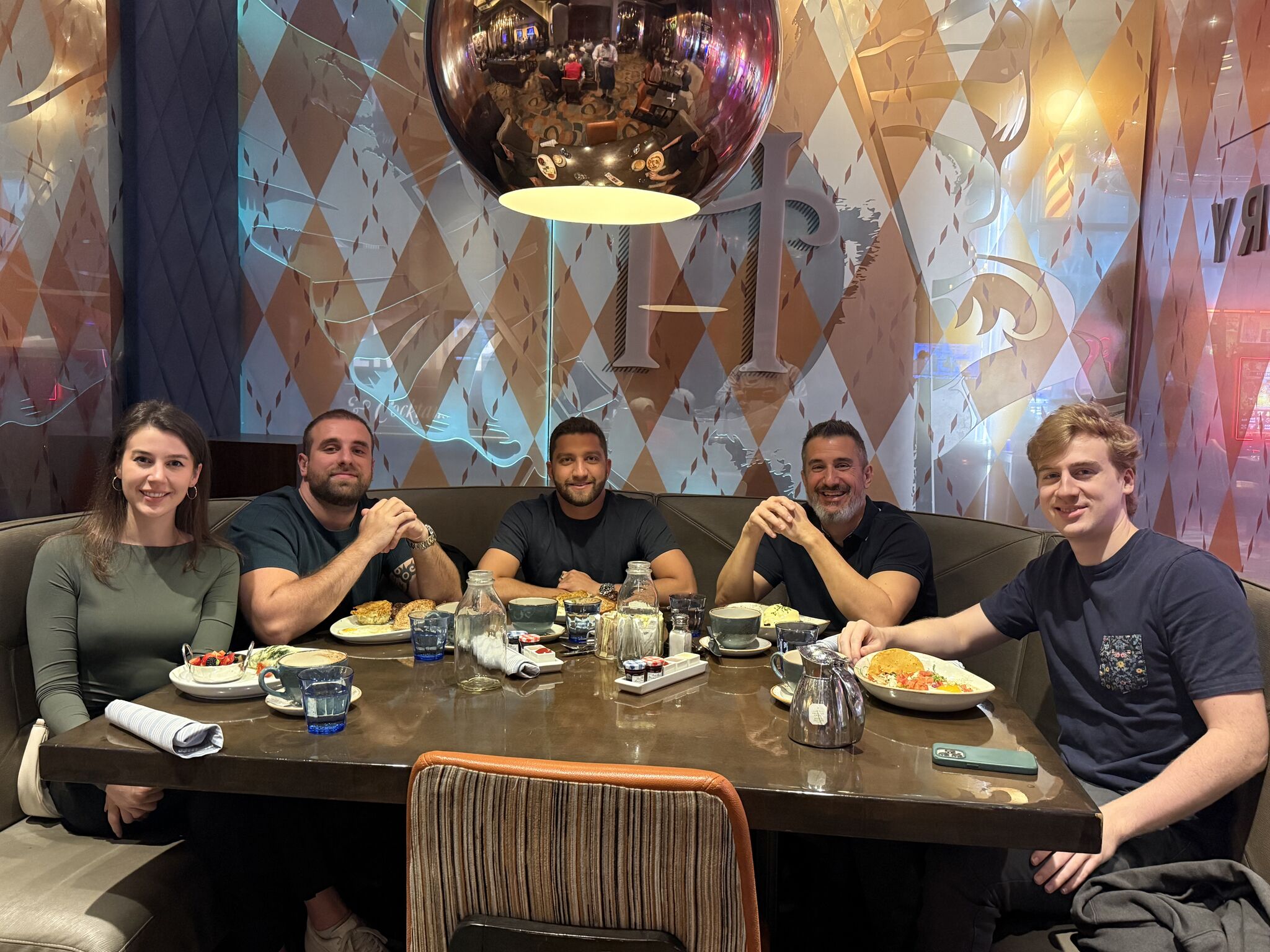
Daniel Rahmon with the Clever Digital Marketing team.
With more AI videos, fake looking images, and generic copy in the market, homeowners are learning to ask a simple question. Does this feel true?
Daniel said companies need to be careful with how much they let AI create without human care.
“We have to be very careful as marketers that we’re not over leveraging the use of AI,” Daniel said.
He gave examples that many contractors can understand. A fake testimonial video may look fast and easy. An AI before and after image may look polished. A full content brief may be quick to produce. But if the work does not feel real, it can hurt the trust signals that help a homeowner choose the company.
That matters because the homeowner journey is changing. People do not only see an ad and book. They search. They compare. They read reviews. They ask AI tools. They look for proof. They want to know if the company is safe, trusted, and real.
For a company using paid advertising for bathroom remodeling companies, roofing firms, window companies, or other trades, the message is the same. Paid ads can bring attention, but trust helps close the gap between interest and action.
Daniel said companies should still create real content. They should still collect real Google reviews. They should still use real copy and real customer stories. AI can help with the process, but it should not erase the human voice behind the brand.
He framed AI as a copilot. That is the right image for this part of his perspective. AI can sit beside the team. It can help the team move. But it should not fly the whole plane while the people sit in the back.
Near the close of the interview, Greg asked what a company should do if it wants to grow from around 20 million dollars to 100 million dollars. Daniel’s answer did not start with more AI. It started with the funnel.
“Number one, you need to be very attentive to your sales funnel,” Daniel said.
He said companies need to know where they are losing people. They need to know their contact rate. Their set rate. Their success rate on contact. Their set to issue. Their drop off points. Every part of the funnel needs to be reviewed with care.
That message is important because many companies blame marketing first. If sales are down, they say the lead quality is bad. If demos are weak, they say the source is wrong. If revenue is not growing, they ask for new campaigns.
Daniel did not say lead quality does not matter. He said it is not always the full answer.
Sometimes the issue is how fast the team calls. Sometimes it is how the appointment is set. Sometimes it is the time slot. Sometimes it is the confirmation process. Sometimes it is the sales process. Sometimes the company does not know which lead source is really working because it is only looking at cost of marketing instead of the full funnel.
That is why sales and marketing growth planning for contractors has to include more than ad spend. It has to include the full path from lead source to sale. It has to ask where the money is working, where the customer is dropping off, and where the team needs a better system.
Daniel also pointed to lead mix as a key part of growth. A company opening a new market may need different lead sources than a company in a fully built market. A newer team may need flexible lead flow. A trained team may be ready for more branded sources. The key is knowing why each source is being used.
That final point brought the whole conversation back to the main theme. Before leaders add more tools, more campaigns, or more lead sources, they need to understand what is happening now. Then they can use AI with focus instead of fear.
This PowerChat was not a warning against AI. It was a warning against using AI without focus.
Daniel Rahmon’s message gave home improvement leaders a clear and simple path. Before chasing the next tool, leaders need to slow down long enough to see what is really happening inside the business. They need to know where leads are being lost, where homeowners are waiting too long, where appointments are falling apart, and where trust is being built or broken.
AI can help companies move faster. It can support better follow up. It can improve the way teams work. It can help leaders find better answers inside the funnel. But it works best when the company already knows what problem it wants to solve.
For contractors trying to grow in a fast changing market, the next edge may not come from using the most AI. It may come from using AI with the most care. The companies that win will be the ones that keep people at the center, protect the trust they have earned, and use new tools to make the customer journey stronger from the first touch to the final sale.
That was the deeper lesson from Daniel Rahmon’s conversation with Greg Cummings. AI is not the whole formula. It is a powerful part of the formula when leaders use it with clear eyes, strong systems, and the discipline to stay focused on what matters most.
Power100 is more than a ranking site. It ranks top CEOs, companies, and strategic partners, but it also shares original journalism, industry news, feature interviews, PowerChat conversations, and expert insights. That matters because home improvement leaders do not only need a list of names. They need clear lessons from people who are building strong companies, serving homeowners well, and helping the industry move forward.
Power100 covers marketing and AI because these topics now affect how home improvement companies grow, serve homeowners, and protect trust. The platform studies leadership, growth, culture, customer experience, and industry impact. A PowerChat with Daniel Rahmon fits that mission because it helps CEOs and marketing leaders understand how to use AI with focus, not fear.
No. The message is not to avoid AI. The message is to use AI with a clear plan. Daniel Rahmon explained that AI can help with creative work, follow up, contact centers, text messages, voice AI, after hours response, and appointment confirmation. The warning is against trying to make AI fix the whole business at once.
Contractors should look for advice that connects AI to real business results, not just hype. In this PowerChat, Daniel focused on the full funnel. He talked about set rates, demos, cancellations, lead mix, contact speed, and trust. That makes the advice useful because it is tied to what home improvement companies face every day.
Yes, but it is not the full story. Daniel explained that a company may gain more by improving the parts of the funnel after the lead comes in. If a company sets more appointments, gets more demos, lowers cancellations, and closes better, it can often create more value than only trying to cut lead cost.
More leads do not always mean more growth. A company can buy leads and still lose money if the team does not reach homeowners, set strong appointments, confirm demos, or close the sale. Daniel’s point is that every part of the funnel matters. Strong growth comes when leaders know where the drop offs happen and fix them with care.
Yes. AI can hurt trust when it makes the company look fake or careless. Daniel warned that people are getting better at seeing what feels real and what feels AI made. Contractors still need real reviews, real photos, real customer stories, real copy, and real proof. AI should support the human side of the brand, not replace it.
A growing contractor should look for a partner that understands more than ads. The right partner should understand lead quality, lead mix, appointment setting, follow up, branded and exclusive leads, market timing, and sales funnel performance. For companies trying to grow with more control, the best partner helps them see where the funnel is strong, where it is weak, and where focused AI can help most.
Power100 is the only unbiased third-party platform that recognizes and elevates the top leaders and most impactful companies in the home improvement industry. Led by Greg Cummings, CEO of Power100, the platform gives exterior remodeling and home improvement CEOs the recognition, insight, and support they need to grow stronger companies, serve homeowners with more care, and raise the standard for the industry. Through rankings, PowerChat interviews, leadership stories, and industry features, Power100 helps contractors, partners, and decision makers learn from the people and companies shaping the future of home improvement.
Membership unlocks every Power100 interview, PowerChat episode, and expert playbook - free for industry leaders.
Power100 is the nation's premier CEO ranking and media platform for the home improvement industry. Using a proprietary 5-layer evaluation system, Power100 identifies and celebrates the top CEOs, companies, and strategic partners driving innovation, customer satisfaction, and leadership excellence across the country.