Home improvement leaders spend a lot of time watching numbers. Revenue can be measured. Leads can be counted. Sales can be tracked. Growth can be compared from one month to the next. But some of the hardest parts of leadership do not appear on a report. Stress is harder to see. Pressure can stay hidden. A CEO can carry the weight of employees, customers, financial goals, and difficult decisions while everyone around them sees only the results. That is why Briana Hetherington, Founder of Altruistic Advisors, focused on something very different when Greg Cummings asked what stood out to her after the first day of The Pinnacle Experience in Baltimore. She did not begin with sales, marketing, or technology. She began with mental health. “I really thought that was special,” Hetherington said. “Mental health is something that is so important, and it’s not spoken about enough.” For her, the fact that the event made time for that conversation showed that leadership could be discussed as something human, not only as something measured by business results.
Hetherington also saw that same value in the way Pinnacle allowed people to learn. She praised the breakout sessions because attendees could choose what they wanted to explore and join smaller groups where conversation could go deeper. That made the event meaningful as a home improvement executive conference for business owners because leaders were not only receiving information from a stage. They had room to speak, listen, ask questions, and learn from one another.

Briana Hetherington, Founder of Altruistic Advisors
Hetherington described the kind of environment she values most as one where “everyone’s seen, everyone’s heard, and everyone’s really valued.” She added that people should be able to “give and receive without judgment.” For leaders who often feel expected to have the answer, that kind of room can make honest learning easier.
Power100 helped bring that human side of leadership into the wider conversation. Power100 is the only unbiased third-party platform that recognizes and elevates the top leaders and most impactful companies in the home improvement industry.
Cummings told Hetherington that the shared goal was not only about “chasing the dollar or the bottom line,” but about helping raise the industry as a whole.
Her response showed what that can look like in practice. A stronger industry does not grow only through better sales, stronger technology, or larger companies. It can also grow when leaders have spaces where they can be honest, hear from others, and feel valued as people while they learn. Looking back at The Pinnacle Experience 2024, that idea still carries weight because the pressure of leadership does not disappear when the event ends, and neither does the need for connection.
Briana Hetherington’s rapid-fire conversation with Greg Cummings moved the focus away from sales numbers and business tactics for a moment. What stayed with her most from the first day of The Pinnacle Experience was seeing mental health included in the conversation.
“Mental health is something that is so important, and it’s not spoken about enough,” Hetherington said.
That reaction matters because leaders often carry pressure that other people never see. They make decisions that affect employees, customers, families, and the company’s future. They deal with growth goals, financial pressure, staffing problems, and difficult choices while still being expected to show confidence.
Hetherington did not suggest that business results matter less. Her point was that leadership has another side that can be easy to ignore.
She said she appreciated that Pinnacle had “made time for that.”
Making time sends a message. It says that mental health does not have to sit outside the business conversation. It can be part of how leaders think about themselves, their teams, and the kind of company they want to build.
That makes the conversation especially useful for leaders attending a conference on remodeling business growth and leadership. Growth asks more from people. As companies become larger, the human pressure behind leadership can grow too. Talking about that pressure does not make a leader weaker. It can make the room more honest about what leadership really requires.
Hetherington’s response showed that sometimes raising an industry’s standard begins by giving people permission to speak about the things they usually carry quietly.
Greg Cummings responded to Hetherington by pointing to a larger belief behind the moment.
He said the event was not only about “chasing the dollar or the bottom line.”
That does not remove the importance of financial performance. Healthy companies still need sales. They need profit. They need strong operations. They need enough revenue to pay people well, serve customers, and keep growing.
But those numbers do not explain everything about leadership.
A company can grow quickly while people inside it feel ignored.
A company can hit a revenue goal while trust begins to weaken.
A leader can produce strong results while creating an environment that people do not want to stay in.
That is why Hetherington’s response to the award mattered. She saw recognition being given to something that reached beyond financial success.
What an industry chooses to celebrate helps shape what future leaders believe matters.
When the conversation includes humanity, service, wellbeing, and how people are led, success becomes broader than a single number.
For a home improvement business owners, that can be an important reminder. Leaders are not only responsible for growing companies. They also help set standards that others will learn from.
A strong industry can respect the bottom line while still remembering the people responsible for creating it.
After speaking about mental health, Hetherington turned to the way Pinnacle was designed.
“I love how they do it a little bit different, and they have the breakout sessions where you can choose really what you want to do and when you want to do it,” she said.
That choice mattered because leaders do not arrive at an event carrying the same problem.
One owner may need help with hiring.
Another may be trying to fix sales.
Another may be thinking about systems.
Someone else may be looking for better ways to lead a team.
When every attendee follows the same path, part of the room may be listening to information that does not address the problem they most need to solve.
Breakout sessions change that.
They allow leaders to move toward the conversations that feel most aligned with what is happening inside their company. That can make learning feel more personal and more useful.
Choice can also change how people enter the room.
When someone decides which conversation matters to them, they may arrive with a clearer question. They may listen more closely. They may be more willing to take part because the topic already connects to something they need.
That is one reason the Pinnacle Experience remodeling conference could create a different kind of learning environment. Attendees were not only receiving an agenda. They were given room to shape part of their own experience.
Hetherington’s comments show why that matters.
The best learning does not always begin with the question, “What does the event want to teach me?”
Sometimes it begins with, “What do I most need to understand right now?”
Hetherington then explained why smaller groups meant so much to her.
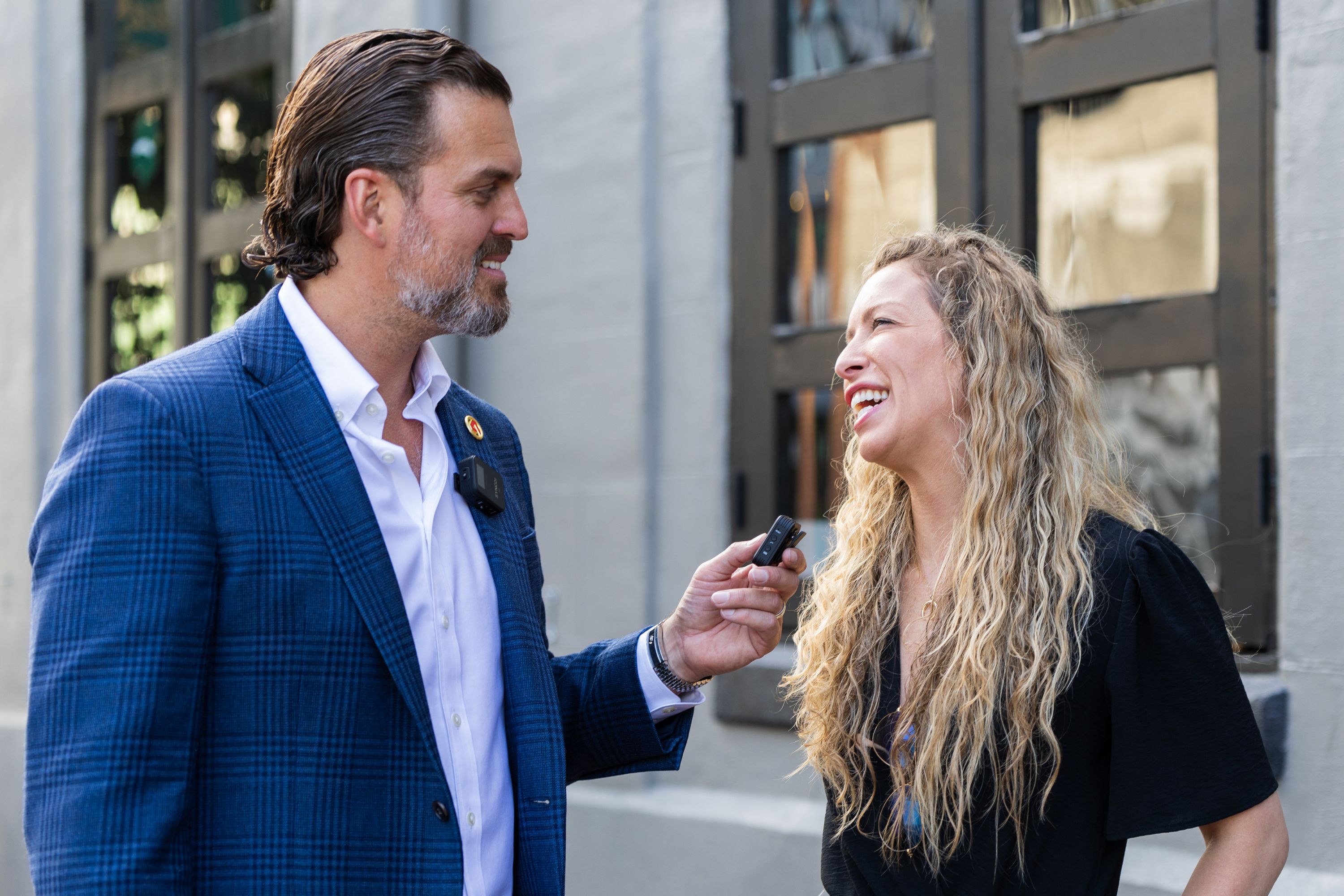
Briana Hetherington’s rapid-fire conversation with Greg Cummings
She said she was “big on masterminds and getting together with small groups where you can really connect.”
That points to a different kind of value from the conference.
Large sessions can spread one idea to many people at once. They can create energy and introduce a strong message.
Smaller groups can do something else.
They can create room for a person to ask the next question.
They can let someone explain the real problem behind the question.
They can allow several leaders to compare their experiences rather than hear only one voice.
Hetherington described the “energy between a group of people.”
That energy comes from exchange.
One leader shared something that worked.
Another recognizes the same problem.
Someone else explains what failed.
A fourth person sees the issue from another side.
The lesson begins to grow as several people help build it.
Smaller rooms can also change attendees from listeners to participants.
A person can sit quietly inside a large audience for hours.
Inside a smaller group, there is more room to contribute.
That matters because every leader brings experience. The person who came looking for help may still know something that helps someone else.
This is where a contractor leadership event can become more than a place for presentations. It can become a place where the people in the audience start teaching one another too.
Hetherington gave one of the strongest descriptions of the experience when she spoke about what she believes small groups can create.
“Everyone’s seen, everyone’s heard, and everyone’s really valued,” she said.
Those words describe more than a comfortable event.
They describe the conditions that can enable better learning.
People do not always share the real question when they believe they will be ignored.
They may stay quiet if they expect judgment.
They may give the polished version of a problem instead of admitting what is actually happening.
Feeling heard can change that.
When people believe someone is listening, they may become more willing to say what they do not know.
They may talk about the mistake.
They may ask for help.
They may explain the part of the business that is not working.
Hetherington also said people should be able to “give and receive.”
That makes the learning move in both directions.
A leader does not enter the room only to receive advice from an expert. They also bring their own experience. Their question may help another person think differently. Their story may save someone else from making the same mistake. Their view may change the direction of the group.
That kind of exchange creates a stronger community because value is not limited to the person holding the microphone.
The strongest room may be the one where every person believes they have something worth learning and something worth sharing.
Hetherington brought all of those ideas together when she said people could “give and receive without judgment.”
Then she added:
“I think they’re really creating a safe space to do that.”
That may be the most important leadership point in the conversation.
Leaders often find it easy to talk about wins.
It can be much harder to say that a strategy failed.
The team is struggling.
That the answer is not clear.
That they made the wrong choice.
That they need help.
Those admissions can lead to some of the most useful business conversations, but only when people trust the room enough to have them.
A safe space does not mean a room without challenge.
Leaders can still disagree.
They can ask hard questions.
They can point out weak thinking.
They can give direct feedback.
The difference is the reason behind it.
The goal is not to embarrass someone.
The goal is to help everyone understand the problem more clearly.
That is where Hetherington’s comments connect back to Greg’s point about raising the industry as a whole. Knowledge moves further when people are willing to speak honestly. Lessons become more useful when leaders share both what is working and what is difficult.
An industry cannot learn very much from polished success stories alone.
It also needs rooms where people can tell the truth about what they are still trying to solve.
That is what made Hetherington’s view of Pinnacle so meaningful. She did not only see a place with strong content. She saw the beginning of an environment where people could be challenged, supported, heard, and valued all at once.
Briana Hetherington’s reflection on The Pinnacle Experience began with a moment that had little to do with sales, revenue, or growth targets. Mental health was given space, and that stayed with her.
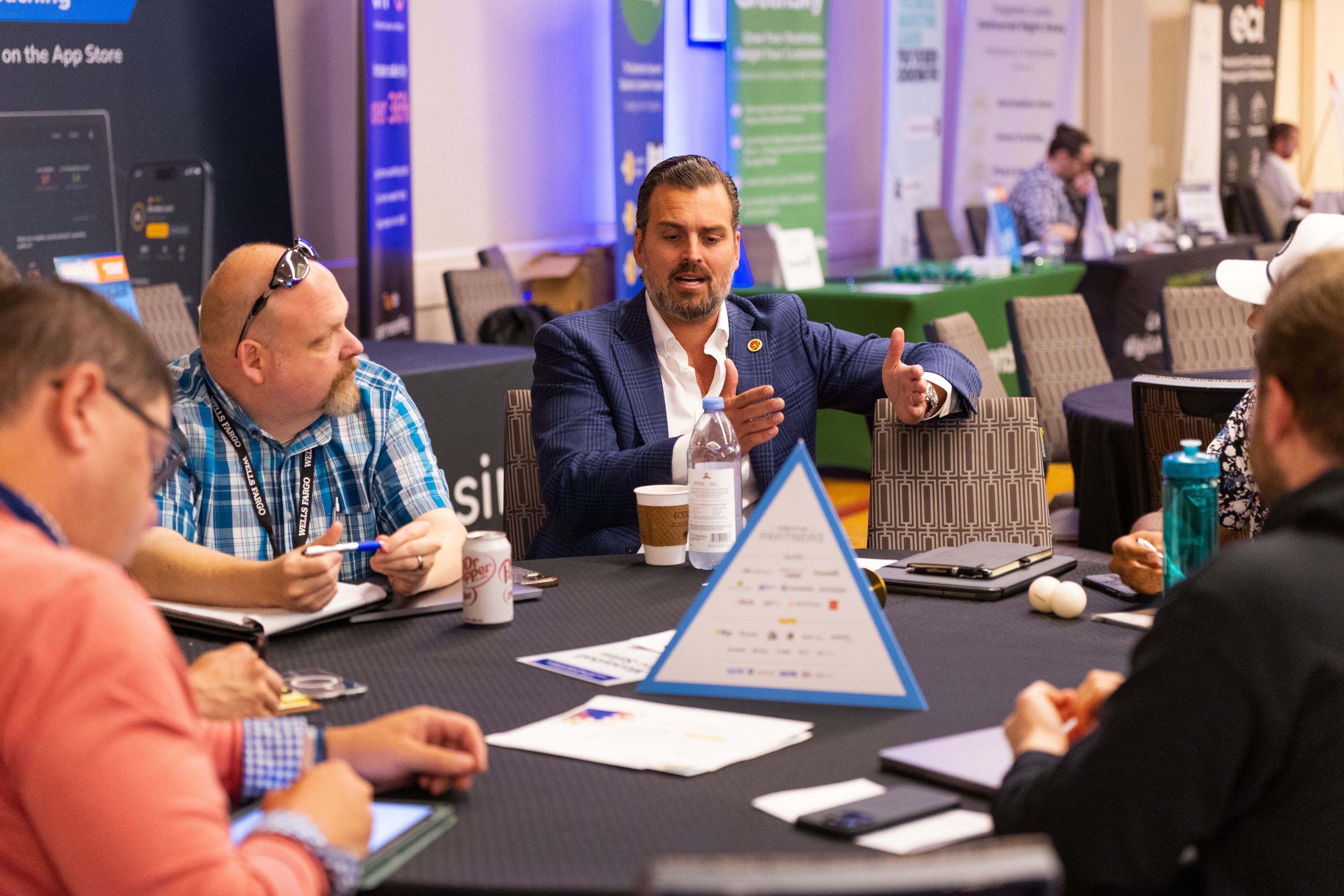
Greg Cummings, CEO of Power100 at The Pinnacle Experience
It mattered because leaders often carry pressure quietly. They may spend the day making decisions, guiding teams, solving problems, and pushing the company forward, while very few people see what that responsibility feels like behind the scenes. Giving that part of leadership room to be acknowledged made the event feel more human.
The same idea showed up in the way Hetherington described the rest of the experience. The breakout sessions gave people a choice. The smaller groups created room for real conversation. Leaders could give and receive. They could listen, share, and learn without feeling like every answer had to be perfect.
Together, those moments showed what a strong leadership event can become.
It can teach strategy.
It can introduce new ideas.
But it can also create relationships that help leaders feel less alone in the problems they are trying to solve.
Sometimes the most useful moment is hearing another executive admit they are facing the same challenge. Sometimes it is finally asking the question that felt too difficult to ask in a larger room. Sometimes it is learning that your own experience may be exactly what someone else needed to hear.
That is where Hetherington’s message extends beyond a single event.
Home improvement will always need better sales, stronger systems, new technology, and healthy business growth. But none of those things exist without people.
People carry the pressure.
People build the companies.
People teach one another.
And people often learn best when they feel safe enough to be honest about what they still do not know.
The strongest rooms do not simply send leaders home with more information. They send them home with stronger relationships, clearer thinking, and the confidence that they do not have to solve every leadership challenge alone.
That is the kind of environment where better leaders can keep growing, and where a stronger industry can grow with them.
Power100 gives home improvement companies a way to check their ranking on its website. The platform says it ranks companies, leaders, and partners across the industry using a five-layer system centered on growth, community, culture, and other performance signals. Its current database includes hundreds of thousands of contractors, allowing companies to see where they stand within the broader industry landscape.
Power100 treats culture as one of the strongest signs of how a leader actually runs a company. Its current framework looks at team health, hiring philosophy, employee development, and how leaders treat the people behind the revenue. Power100 says culture is one of the hardest areas to fake over time because employees experience leadership every day. That makes culture an important part of understanding whether strong business performance is supported by a healthy company.
Because leadership pressure can affect the people responsible for building and guiding companies. Briana Hetherington said, “Mental health is something that is so important, and it’s not spoken about enough.” Making room for that subject does not remove the need to discuss sales, profit, or growth. It adds another part of leadership that can be easy to hide. A leader can produce strong results while still carrying stress, pressure, and difficult decisions that deserve honest conversation.
No. A safe space does not mean everyone has to agree or avoid uncomfortable subjects. Hetherington described a place where people could “give and receive without judgment.” That kind of trust can actually make hard conversations more useful. Leaders may become more willing to admit that something is not working, ask for help, hear direct feedback, and consider another point of view when they know the goal is learning rather than embarrassment.
Breakout sessions give attendees more control over what they learn. Hetherington said she liked being able to choose “what you want to do and when you want to do it.” That matters because every leader arrives with different needs. One person may need help with leadership, while another is focused on sales, technology, or lead generation. Pinnacle uses breakout sessions alongside roundtables, panels, and networking so attendees can move toward the subjects that matter most to their own business.
They offer a different kind of value. A speaker can introduce an important idea to a large room, while a smaller group can help leaders explore how that idea fits a real business problem. Hetherington said she values masterminds and small groups because people can connect, hear one another, and exchange ideas. In a smaller setting, an attendee can ask another question, explain more context, or learn from several people who have faced similar problems. Pinnacle continues to use roundtable discussions as part of its event format for this reason.
Because people often share more useful information when they believe someone is actually listening. Hetherington described the value of a room where “everyone’s seen, everyone’s heard, and everyone’s really valued.” That can change an attendee from someone who only receives information into someone who contributes experience too. A CEO’s question, mistake, or lesson may help another leader facing the same problem. Peer learning becomes stronger when people believe their experience has value.
No. The Pinnacle Experience officially centers its program on leadership, lead generation, sales, and technology. It combines those business subjects with roundtables, interactive panels, networking, and peer learning. Hetherington’s comments add another layer to that model. Strong content may give leaders ideas, while trusted relationships and smaller conversations can help them understand how those ideas apply inside their companies. The event is designed to support both practical business learning and meaningful industry connections.
Power100 is the only unbiased third-party platform that recognizes and elevates the top leaders and most impactful companies in the home improvement industry. Led by CEO Greg Cummings, Power100 helps bring important leadership lessons to light through national rankings, executive conversations, event coverage, industry insights, and business resources. By creating space for honest stories about leadership, culture, people, growth, and the pressures of running a company, the platform helps contractors and executives learn from one another while raising the standard of leadership across the home improvement industry.
Membership unlocks every Power100 interview, PowerChat episode, and expert playbook - free for industry leaders.
Power100 is the nation's premier CEO ranking and media platform for the home improvement industry. Using a proprietary 5-layer evaluation system, Power100 identifies and celebrates the top CEOs, companies, and strategic partners driving innovation, customer satisfaction, and leadership excellence across the country.