Home improvement contractors can have the better product, the stronger warranty, the better team, and the better reputation and still lose the sale for one simple reason. The homeowner has one pool of money and many places to use it. New windows may be important, but that same family may also be saving for a vacation, a car, school costs, or another major goal. That means the contractor is not always competing with another window company.
Sometimes the real competition is the homeowner’s own budget. During the EcoView Dealership Summit, Greg Cummings raised that exact point while speaking with Charles of EcoView Corporate after Caleb Nelson addressed the dealer network. Charles said this is where Destination Motivation can create a different kind of value. The homeowner does not always have to feel forced to choose between improving the home and taking the vacation they had planned.
Charles brought more than a first impression into that conversation. He said he had worked with Caleb’s product for years at a previous company and had seen the program used in more than one business. His strongest statement was simple.
“Every place that I’ve worked for that uses his product, close rates went up.”
That does not mean every contractor should expect the same result, but it explains why Charles sees a vacation voucher program for home improvement contractors as more than a customer giveaway. From his experience, the program can give the salesperson another way to create value while helping the homeowner feel that saying yes to the project does not mean saying no to everything else the family wanted.
That idea also shaped Charles’s view of what happens after the agreement is signed. He told Greg that the biggest benefits, from his perspective, were the close rate and cancellations. A homeowner who walks away with the project they wanted and a vacation to look forward to may feel more positive about the decision after the salesperson leaves.
Charles described it as getting “the best of both worlds.” The windows can help improve the home, while the added travel experience gives the customer something beyond the home to enjoy. For contractors, that can make a contractor sales tool to reduce cancellations and close more jobs valuable on both sides of the signature.
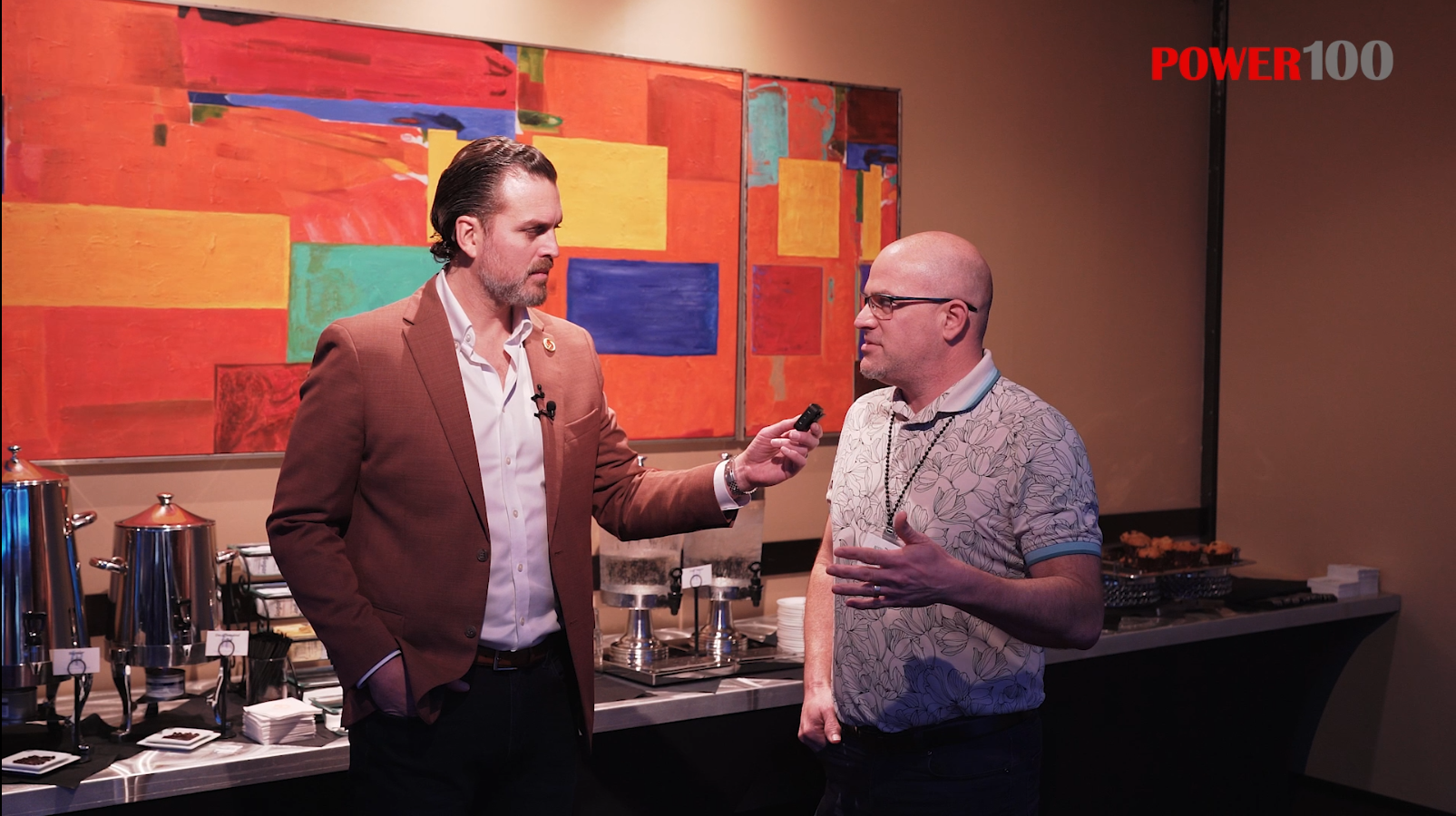
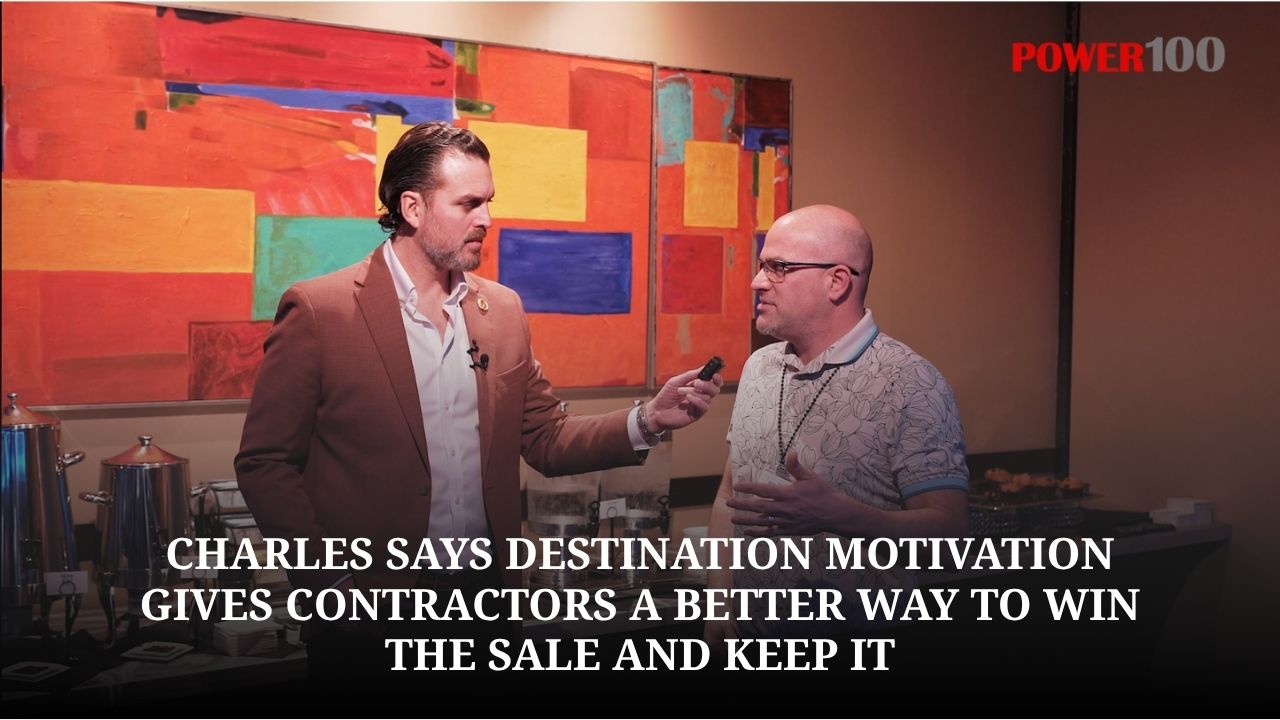
Greg Cummings, CEO of Power100 interview with Charles of EcoView
Greg Cummings, CEO of Power100, used the EcoView gathering to hear directly from leaders and contractors about what they had experienced with Caleb Nelson and Destination Motivation. Power100 is the only unbiased third-party platform that recognizes and elevates the top leaders and most impactful companies in the home improvement industry.
Charles’s perspective added a different kind of proof to the conversation because his support did not begin with what he heard at the summit. It came from what he said he had already seen across companies that used the program. That repeated experience turned the discussion toward a larger question for contractors: if more value can help win the sale and lower the risk of losing it later, how much growth may already be sitting inside the opportunities a company is creating today?
When Greg Cummings spoke with Charles after Caleb Nelson addressed the EcoView dealer network, Charles brought a different kind of experience into the conversation. He was not judging the program from one presentation. He said he had worked with Caleb’s product for years at a previous company and had seen it used in more than one business. That history shaped what he believed the program could offer EcoView’s independent dealers. For Charles, the value came down to two places where contractors can win or lose real money: getting more homeowners to move forward and keeping more of those customers after they sign.
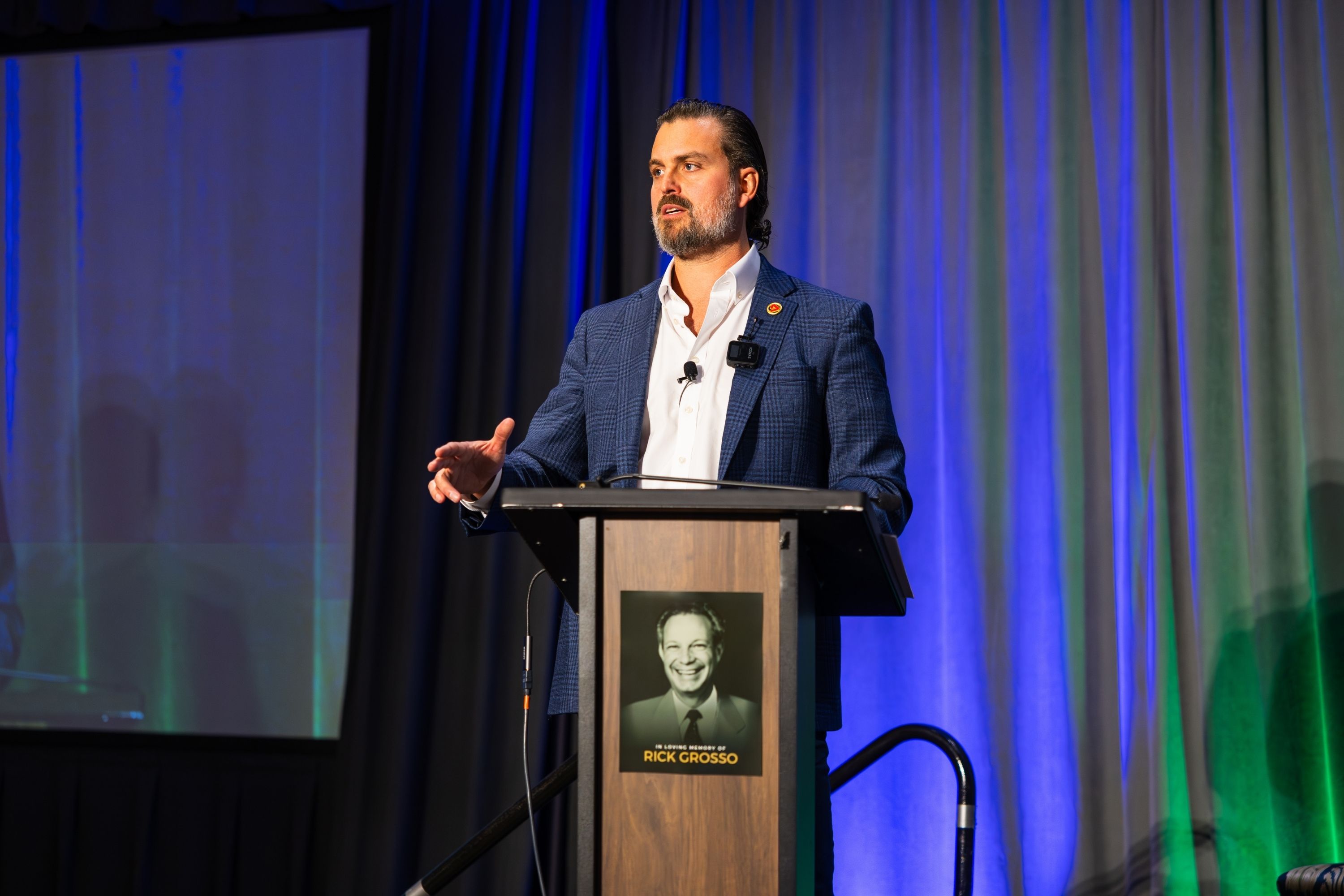
Greg Cummings, CEO of Power100
Charles did not need the EcoView Dealership Summit to introduce him to Caleb Nelson or Destination Motivation.
He had seen the program before.
“We’ve used him for years in the past company I work for,” Charles said.
That history matters because it changes the meaning of his support.
Charles was not simply impressed by what Caleb said on stage. He was comparing the presentation with experience he says he already had from other companies.
Then he made his strongest statement.
“Caleb has a really great product. We’ve used him for years in the past company I work for, and the product he has really does help close rates go up. Every place that I’ve worked for that uses his product, close rates went up.”
That is a powerful statement, but it should stay exactly where Charles placed it.
It reflects his experience.
It does not mean every contractor who uses the program will automatically see the same result.
What makes the comment useful is the pattern Charles says he had seen more than once.
A single strong result can get attention.
A similar experience across different businesses can create a different level of trust.
That is why Charles’s view gives this story more weight.
He is not saying he believes a home improvement sales incentive program to increase close rates should work.
He is saying he had already seen the approach used in companies where, from his point of view, close rates improved.
That prior experience also helps explain why he saw value in bringing Caleb in front of EcoView’s independent dealers.
The idea was not being judged only by how well it could be explained.
Charles was looking at what he believed contractors could do with it once they brought it into the home.
Charles’s view of the close starts with a problem many contractors know well.
A homeowner may want the project.
They may need the windows.
They may understand the value.
But the money still has to come from somewhere.
Sometimes that means a family feels like improving the home will cost them another goal they had already planned.
Charles used a vacation as the clearest example.
A homeowner may have planned a trip, then decide the home needs the money instead.
That can make the project feel like a trade.
The house wins.
The vacation disappears.
Charles believes the Destination Motivation model can change that feeling.
“The vacations that they offer are tremendous for closing and also tremendous for the customers that we have, because the customers sometimes maybe will do a home improvement instead of their vacation they may have planned, but now they can actually have both,” he said.
That idea became even clearer when Greg asked which business benefit stood out most.
Charles did not choose only one.
“I think it’s the close rate and the cancellation,” he said.
His reason came back to the homeowner.
“When you walk out of a home offering that product and saying, not only are you going to get your windows, we’re going to give you a vacation, why would they cancel?”
Charles then described the customer side in simple terms.
“I’m going to get the best of both worlds. I’m going to get a product that’s going to save me money, that’s going to beautify my home, and I get to go to whatever destination I plan to go.”
That is where a vacation voucher program for home improvement contractors can become more than something added at the end of the appointment.
The homeowner still has to see value in the windows.
The contractor still has to earn trust.
The project still has to make sense.
But the vacation can help the customer feel that saying yes to the home does not mean saying no to everything outside it.
That feeling can help before the signature.
Charles also believes it can matter afterward.
If the homeowner leaves the appointment thinking about both the improved home and the experience ahead, there may be more positive value attached to the decision.
For Charles, that is why closing and retention belong in the same conversation.
The contractor first has to win the customer.
Then the company has to keep that customer.
The final part of Charles’s conversation moved from the kitchen table to the bigger numbers behind a contractor business.
Many companies build growth plans around getting more.
More leads.
More appointments.
More salespeople.
More markets.
Charles pointed toward another opportunity.
Keep more of what the business has already sold.
He said companies can often carry cancellation rates of about 7 to 10%. At higher sales volume, that can represent a meaningful amount of business that was already won but never reaches the finish line.
That is why he sees a contractor sales tool to reduce cancellations and close more jobs as something that can affect more than the sales department.
It can affect how a company thinks about growth.
Greg pushed that idea further by asking Charles about the planning around EcoView’s broader $100 million goal and how much expected improvement had been connected to Destination Motivation.
Charles answered:
“Probably more than 10% of that $100 million, because you’ve got to think that typically a company will have anywhere from about 7% to 10% cancellation rate, so if you take that out of the equation, you just brought yourself right to that $100 million mark.”
That statement needs an important distinction.
Charles was describing a planning assumption and expected pickup.
He was not saying Destination Motivation had already created $10 million in realized EcoView corporate revenue.
The stronger and more accurate lesson is about what lower cancellation rates could mean across participating contractor businesses in the dealer network.
If a company is already paying to create the lead, run the appointment, and earn the sale, losing fewer customers afterward can protect more of the value already created.
That turns retention into a growth lever.
A home improvement sales cancellation solution does not create growth by finding a new homeowner.
It can create value by helping the contractor keep more of the homeowners who already said yes.
Charles sees that as especially important when a company is operating at scale.
A few lost sales may look small one at a time.
Across hundreds or thousands of customer opportunities, the effect can become much larger.
That is what makes his perspective useful.
His argument is not simply that contractors should sell more.
It is that they should pay close attention to what happens to the sales they already win.
Better closing can create more customers from existing opportunities.
Better retention can protect more of those customers afterward.
And when those two improvements work together, the growth plan can become less dependent on constantly finding another lead.
Charles’s experience shows what Destination Motivation can look like when a contractor puts the program into a real sales process. But the work Caleb Nelson has built reaches further than one closing tool or one dealer network. Under his leadership, Destination Motivation has grown into a company that supports more than 1,000 clients and works with home improvement and home service businesses on sales training, customer experience, referrals, rehash, marketing, and long-term growth. The company has also taken the same belief that travel can create lasting memories and used it to support foster families who may never have the chance to take a meaningful vacation on their own.
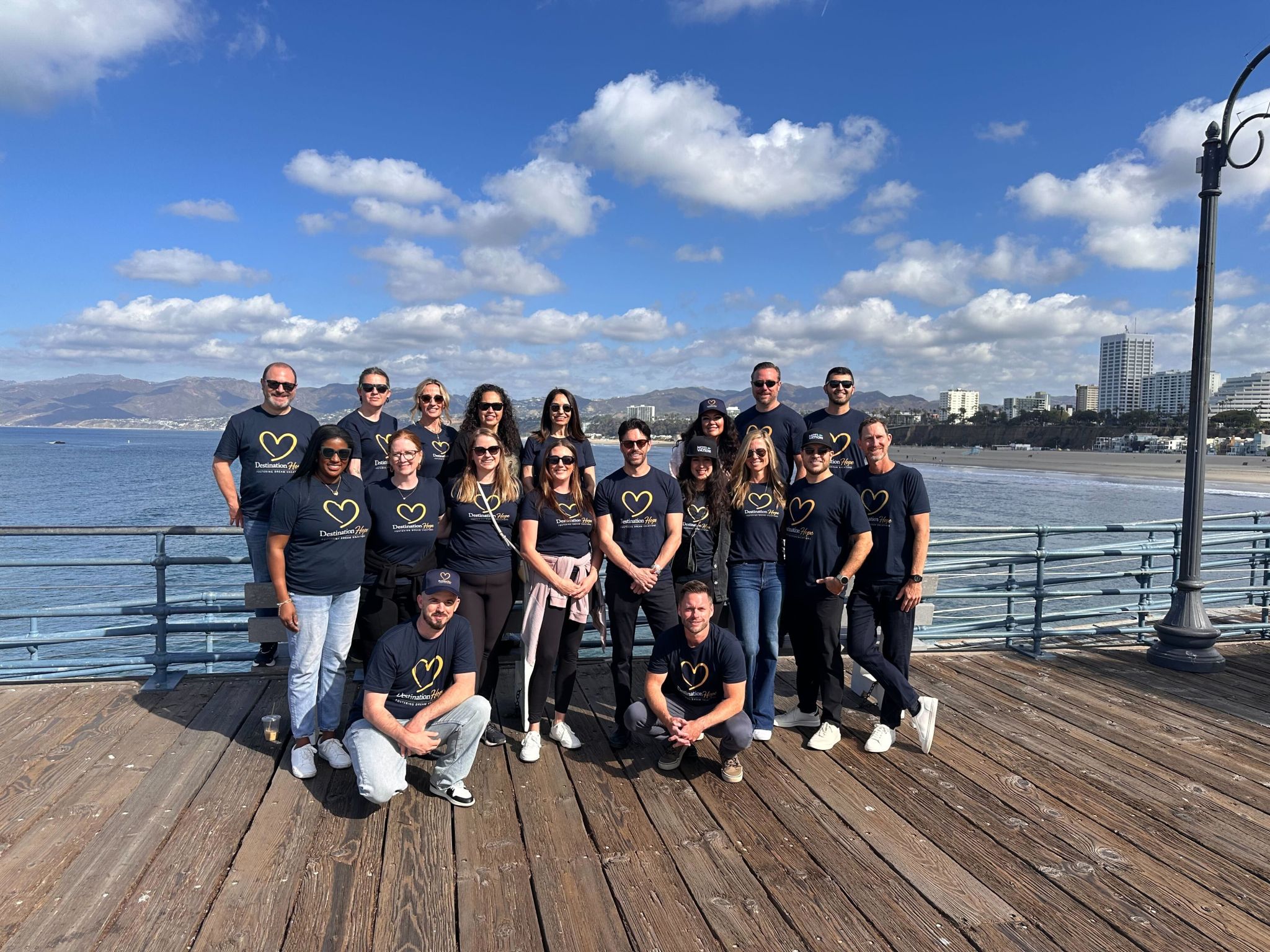
Destination Motivation team
Caleb Nelson founded Destination Motivation around a simple idea. A homeowner should not always have to choose between improving the home and taking the trip the family hoped to enjoy. Over time, the company has built a wider support system around that idea.
Destination Motivation now gives participating home improvement companies dedicated sales training, customizable marketing materials, event marketing tools, and customer support for homeowners who receive the travel incentive. The company also brings sales experience directly into contractor teams through leaders such as Corey Cousins, Vice President of Sales and Training, who develops training processes, tools, and systems that help salespeople use the program with more confidence.
That work matters because a strong contractor tool still depends on the people using it.
Destination Motivation does not simply hand a company a vacation voucher and leave the sales team to figure out what comes next. It trains people on how to bring the added value into the customer conversation, supports the company after launch, and helps teams connect the offer to a better customer experience. That approach gives contractors a way to strengthen the people and process around the program, not only the incentive itself.
The company has also expanded its work into rehash, helping contractors return to leads and opportunities they already paid to acquire. Its rehash program focuses on creating more revenue from existing opportunities instead of making every growth plan depend on buying more leads.
That makes Destination Motivation’s contribution to the home improvement industry broader than the travel product homeowners see.
The vacation may open the door.
Behind it sits training, customer support, sales development, referral strategy, rehash, and a growing network of contractor relationships.
For an industry where companies spend heavily to earn every homeowner opportunity, that focus can help leaders think differently about growth. More business does not always have to start with more leads. It can also come from helping teams make better use of the customers, conversations, and opportunities already in front of them.
Destination Motivation has also taken the idea at the heart of its business and carried it into the community.
Through Destination Memories, the company provides free vacations to deserving foster families through a partnership with the Ticket to Dream Foundation. Destination Motivation says the program exists because it has spent years seeing what travel can do for people and believes foster families deserve the same chance to reconnect, recharge, and build memories together.
The idea fits naturally with what Caleb Nelson has built.
Destination Motivation uses travel in business to create excitement and memorable customer experiences. Destination Memories takes that same belief and removes the sale completely.
The goal becomes the family.
Through a nomination process, selected foster families receive meaningful vacations they may not otherwise be able to afford. The company describes the experience as more than time away. It gives families space to be together, create memories, and experience something that can stay with them long after the trip ends.
That community work gives another side to Destination Motivation’s impact.
In the home improvement industry, Caleb and his team are helping contractors think about customer value, sales training, and stronger use of existing opportunities.
Outside the sales process, they are using the same travel platform to give families an experience with no contract, no closing percentage, and no business result attached.
Together, those efforts show a company trying to make its impact larger than the product it sells.
For contractors, Destination Motivation can help make a customer decision feel more valuable.
For foster families reached through Destination Memories, the company is working to turn that same belief in experience into something even more lasting: time together that a family can remember.
Charles’s strongest point is also the one that gives this story its clearest ending.
“Every place that I’ve worked for that uses his product, close rates went up.”
That statement matters because Charles was not talking about Destination Motivation as something he had just learned about at the EcoView Dealership Summit.
He was talking from past experience.
He had seen the program used before. He had watched companies bring it into the sales process. And he said he had seen close rates improve where it was used.
That history shaped why he believed Caleb Nelson had something worth bringing to EcoView’s independent dealers.

Caleb Nelson, Founder & CEO of Destination Motivation
But the deeper lesson goes beyond closing.
The homeowner still wants a better home.
The family may still want the vacation they had planned.
Charles believes the added value gives the customer a way to feel like the home project does not have to take something else away.
That can help the salesperson earn the decision.
It can also give the homeowner another reason to stay positive about that decision after the appointment ends.
For contractors, that points to a wider growth lesson.
Growth does not always begin with finding more people.
Sometimes it begins with getting more value from the opportunities already in the business.
A stronger close can turn more appointments into customers.
Lower cancellations can help protect more of those customers after the sale.
At scale, both can matter in a meaningful way.
That is why Charles’s perspective feels reassuring.
He is not asking contractors to believe in one big promise.
He is pointing to a pattern he says he has seen across different companies and connecting that pattern to a simple business idea: win more of the right opportunities and keep more of the business already earned.
For Charles, the value of Destination Motivation is not based on one speech or one dealer story. He says he has seen the program used across different companies and watched close rates rise where it was put to work.
Now, through EcoView’s dealer network, he sees the same basic opportunity again.
Help the homeowner feel like the project adds more to life.
Give the salesperson another way to support the decision.
Help the contractor protect more of the sale after the yes.
For Caleb Nelson, that kind of repeat third-party validation may say more than any sales pitch could.
And for contractors thinking about the next stage of growth, the bigger opportunity may already be sitting inside the sales they are winning today.
Power100 looks beyond the product because contractors depend on the company behind that product to deliver the experience promised to homeowners. Its ranking system reviews areas such as customer experience, innovation, operational efficiency, sales and marketing performance, company culture, leadership interviews, and financial health. For 2026, Power100 reported that Destination Motivation scored 95% in operational efficiency and 96% in company culture, both above the national averages used in its evaluation. That wider view helps Power100 judge whether a partner has the people and systems needed to support contractors as they grow.
Power100 looks for results that companies can repeat, measure, and support at scale. Its five-layer system compares strategic partners across thousands of companies and reviews more than one sales result or customer story. Power100 says it evaluated more than 3,600 potential strategic partners before ranking Destination Motivation number one for 2026. The evaluation also looked at innovation, customer experience, operations, sales performance, and culture instead of treating one successful contractor story as enough proof on its own.
Contractors should read that statement as Charles’s personal experience, not as a promise that every company will see the same result. Charles told Greg Cummings that every company where he had worked with the product saw close rates rise. Destination Motivation also publishes contractor case studies that report higher close rates, including one company that said its close rate reached as high as 47% after adding vacation vouchers to its sales process. Results can still vary by market, team, pricing, lead quality, and how well the contractor uses the program. The strongest way to judge a home improvement sales incentive program to increase close rates is to measure what happens inside the contractor’s own business.
Destination Motivation builds its offer around adding value instead of asking the contractor to lower the price. Its current website describes the common problem of a homeowner wanting the home improvement project while also thinking about the vacation the family may have to give up. The contractor can offer the project and the travel incentive together. That approach supports Charles’s point that contractors often compete against the homeowner’s pocketbook, not just another company. The vacation voucher program for home improvement contractors gives the customer another reason to see the purchase as gaining value instead of simply spending more money.
Destination Motivation also builds tools for home shows and events. The company provides customizable event materials that contractors can use to attract attention, start conversations, collect leads, and book appointments. Its home show program includes branded materials and vacation-based offers designed to help a contractor stand out in a crowded event where many companies may appear to sell similar services. That means the program can support customer acquisition before the salesperson ever sits down inside the home.
Some Destination Motivation partner programs include a Cancel and Save Notice feature. The system can send the contractor an alert when a job begins showing signs of uncertainty so the company can contact the homeowner and try to protect the sale. Destination Motivation says certain programs using this feature have historically retained more than 80% of identified at-risk jobs. Contractors should treat that figure as a reported program result rather than a guaranteed outcome, but the idea supports Charles’s larger point that retention can become an active part of the sales process instead of something a company thinks about only after a cancellation arrives.
A contractor should track clear numbers before and after implementation. Those numbers can include close rate, cancellation rate, average sale, revenue per appointment, referral volume, customer reviews, and marketing cost per completed sale. Destination Motivation itself presents its program around many of those measures, including sales, close rate, average sale, profit, referrals, leads, and cancellations. Tracking the numbers over time helps a contractor separate excitement around the program from real business impact.
Destination Motivation positions the vacation as part of a wider customer experience, not only a closing device. Its program aims to help contractors turn customers into promoters through stronger satisfaction, referrals, reviews, and future business. The company says it works with more than 1,000 contractors across North America and supports companies with marketing materials, customer service, and sales tools that continue beyond the first appointment. For contractors focused on long term customer value, that means the relationship does not have to end when the homeowner signs the contract.
Power100 is the only unbiased third-party platform that recognizes and elevates the top leaders and most impactful companies in the home improvement industry. Led by CEO Greg Cummings, Power100 researches CEOs, companies, and strategic partners to give contractors a trusted outside view of the people and businesses helping move the industry forward. Through its national rankings, five-layer evaluation system, industry research, event coverage, and direct conversations with leaders and contractors, Power100 helps home improvement companies discover stronger partnerships, proven business ideas, and lessons they can use to improve sales, customer experience, culture, and long-term growth.
Membership unlocks every Power100 interview, PowerChat episode, and expert playbook - free for industry leaders.
Power100 is the nation's premier CEO ranking and media platform for the home improvement industry. Using a proprietary 5-layer evaluation system, Power100 identifies and celebrates the top CEOs, companies, and strategic partners driving innovation, customer satisfaction, and leadership excellence across the country.