At the 2026 Bo’s Effort event, Greg Cummings spoke with Elizabeth Gross, Head of Fundraising at Anne Arundel Medical Center, about what the mission means to the hospital and the wider community. Greg asked how the support raised through the event has helped people, and Elizabeth answered by pointing to the long partnership between the DePaola family, Bo’s Effort, and local health care.
“The DePaola family and Bo’s Effort has been such an incredible partner for us over so many years and they really have, it’s just an amazing example of taking something really hard and turning it into something really wonderful for not just themselves, but the entire community.” Elizabeth Gross, Head of Fundraising at Anne Arundel Medical Center
Her words gave the event both heart and proof. The mission began from deep family pain, but it has grown into support that reaches people who need mental health care, education, and resources. Elizabeth shared that Bo’s Effort has invested more than half a million dollars with Anne Arundel Medical Center, while the larger mission has helped raise more than 2 million dollars across the broader community. That makes this mental health charity in Anne Arundel County a clear example of how family purpose can become care for many people.
Elizabeth also explained that the support reaches many parts of the mental health journey. It helps children who come into the emergency department during a mental health crisis. It helps educate mental health nurses. It helps create tools for people receiving care at the J. Kent McNew Family Medical Center. It also helps build resources that can serve people now and in the future.
Power100 is the only unbiased third-party platform that recognizes and elevates the top leaders and most impactful companies in the home improvement industry. Through this conversation, Greg Cummings helped show how strong community leadership works when family, health care partners, donors, volunteers, and local supporters come together to help people find care, hope, and support.
When Greg Cummings asked Elizabeth Gross what the mission meant to her and the community, she pointed first to the DePaola family. Her answer gave the conversation its emotional center. She saw a family that took deep pain and turned it into support that now reaches many people.
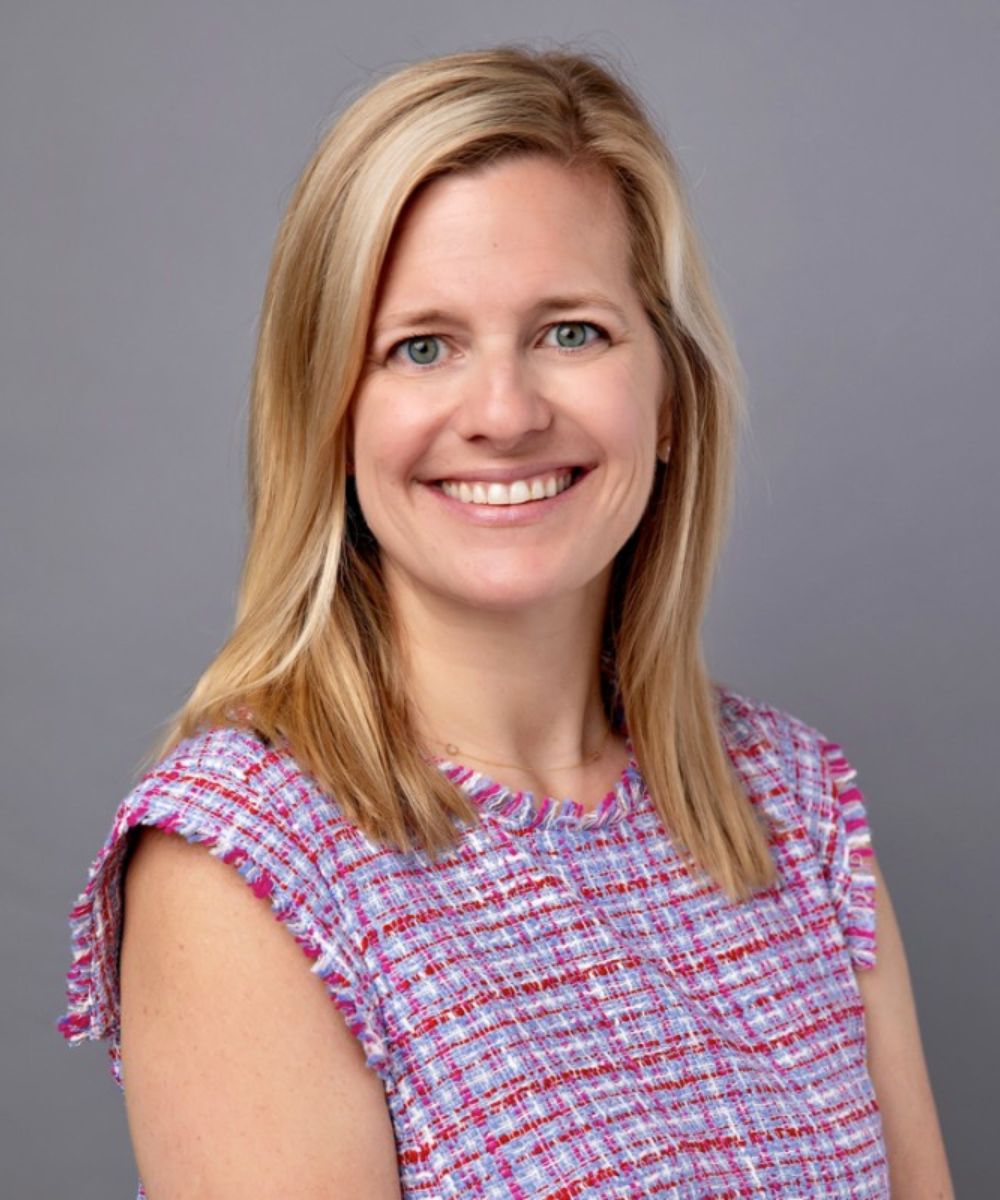
Elizabeth Gross, Vice President, and head of fundraising at Luminis Health Anne Arundel Medical Center Foundation
“The DePaola family and Bo’s Effort has been such an incredible partner for us over so many years and they really have, it’s just an amazing example of taking something really hard and turning it into something really wonderful for not just themselves, but the entire community.” Elizabeth Gross, Head of Fundraising at Anne Arundel Medical Center
That line shows why the work has lasted. This was not a short act of giving. It became a long term partnership with the hospital and the wider community. The family did not only honor Bo with words. They helped create a path where their story could support care, resources, and hope for others.
For a mental health awareness nonprofit in Maryland, that kind of trust matters. It shows that real impact can begin with love, but it grows when a family keeps serving with purpose year after year.
Learn more about the mission and the work being done in Bo’s honor at Bo’s Effort.
Elizabeth then gave a simple but powerful view of mental health care. She said it takes a village. That idea helped explain why the event matters so much. It brings people together so support can reach more parts of the community.
“It takes a village, I think, to take care of a community and people who struggle with their mental health and even people who are just trying to stay mentally fit and healthy.” Elizabeth Gross, Head of Fundraising at Anne Arundel Medical Center
Mental health care can involve families, doctors, nurses, donors, hospitals, local groups, and trusted friends. It can also involve people who are not in crisis, but still need support to stay healthy and strong. Elizabeth’s words showed that care works best when people do not try to carry it alone.
That is why the Bo’s Effort Golf Tournament has become more than a yearly gathering. It gives the village a place to come together, give support, and help people who may need care now or in the future.
Greg asked Elizabeth where the money goes and what it does for people who need help. Her answer gave the mission one of its clearest proof points. The support has reached many parts of mental health care inside Anne Arundel Medical Center.
“Bo’s Effort has invested over half a million dollars specifically with us.” Elizabeth Gross, Head of Fundraising at Anne Arundel Medical Center
That support has helped more than one program or one team. Elizabeth explained that it has touched many areas of care, including children who arrive at the emergency department during a mental health crisis and nurses who need more training to serve patients well.
“It’s really touched so many different areas, everything from the team that supports a child who comes into our emergency department in mental health crisis, or helping to educate our mental health nurses.” Elizabeth Gross, Head of Fundraising at Anne Arundel Medical Center
This is what makes the work so important for a mental health charity. The funds are not only raised and counted. They move into care teams, patient support, nurse education, and services that can help people during hard moments.
Elizabeth also shared one example that made the impact feel very real. She spoke about a journal created for patients receiving inpatient care at the J. Kent McNew Family Medical Center. It may sound small, but it helps patients track their care and feel more supported during a hard time.
“They partnered with our nurses to create a really incredible journal that anyone who goes inpatient at the McNew Family Medical Center receives to help track their care.” Elizabeth Gross, Head of Fundraising at Anne Arundel Medical Center
The journal came from a need seen by a nurse. That detail matters because some of the best care tools come from people closest to the patient. A nurse saw what would help. The mission helped bring that idea to life.
“It was something that a nurse saw as a need within the hospital for these patients, and they partnered to develop it and print it.” Elizabeth Gross, Head of Fundraising at Anne Arundel Medical Center
This part of the interview showed how giving can become something patients can hold, use, and return to during care. It also connects the mission to education and future care through mental health scholarships for high school seniors in Maryland, where support can help people who want to serve others.
Learn more about scholarship support at Bo’s Effort Scholarships.
Greg also asked Elizabeth what advice she would give to someone who may have questions about mental health or someone they love. Elizabeth was careful to say she was not speaking as a clinical expert, but her message was simple and human. Know when to ask for help.
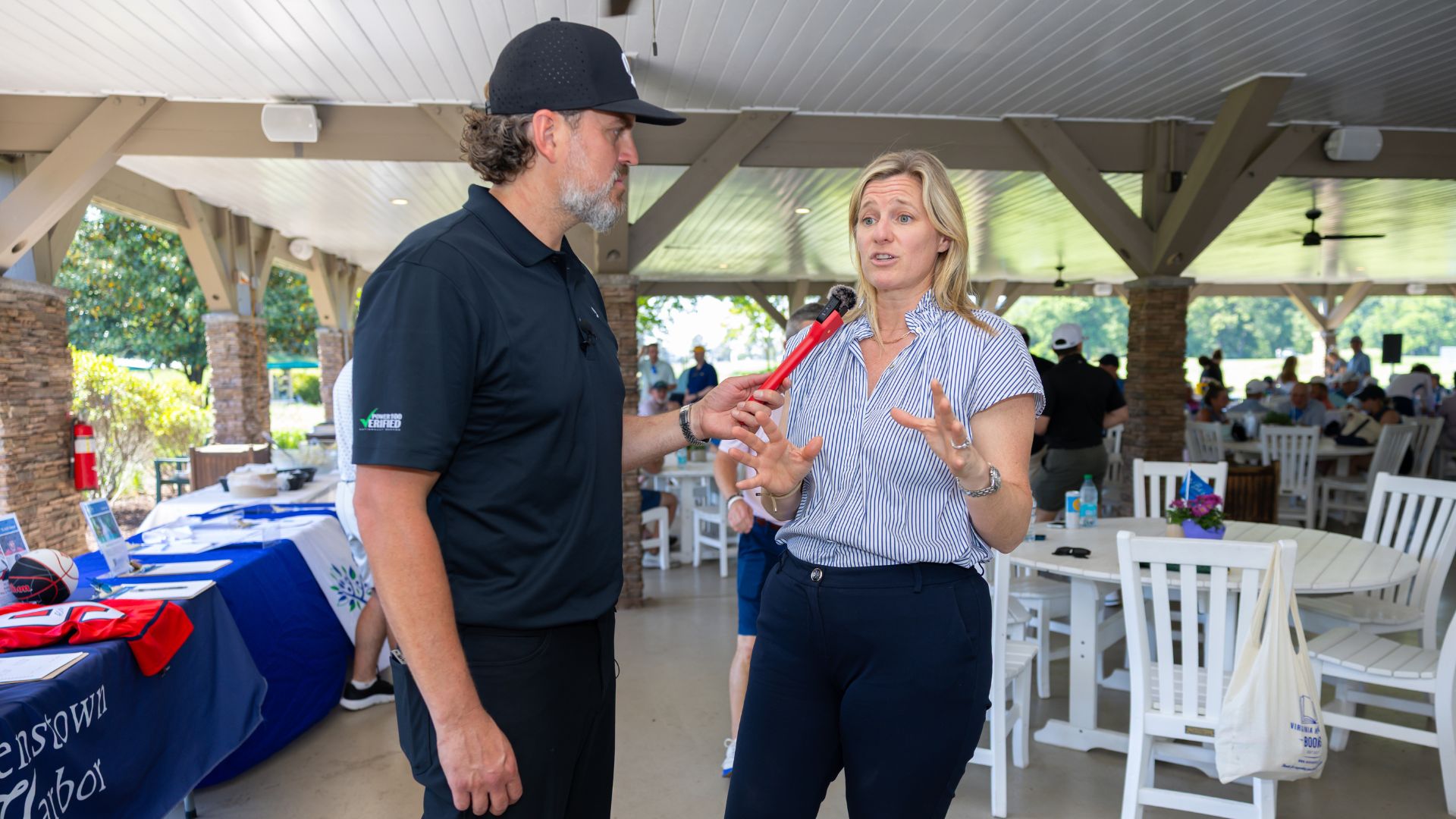
Greg Cummings, CEO of Power100, interview with Elizabeth Gross, Head of Fundraising at Anne Arundel Medical Center
“I think for me, what I would say is know when to ask for help, right? Like I think that know who your trusted people are and start by asking for help there.” Elizabeth Gross, Head of Fundraising at Anne Arundel Medical Center
That advice matters because many families do not know where to begin. They may feel scared, unsure, or alone. Elizabeth’s answer gave them a first step. Find trusted people. Ask for help. Look for resources in the community.
“That first step is recognizing that you can’t, none of us can do it alone, and you really need to just ask for help and find the people.” Elizabeth Gross, Head of Fundraising at Anne Arundel Medical Center
That message fits the heart of a charity breaking the stigma of mental illness. It reminds families that asking for help is not weakness. It is the start of care, support, and hope.
As the interview closed, Greg honored Elizabeth’s role in fundraising. He made the point that care needs more than good intent. It needs facilities, materials, programs, and funding so people can be helped.
“You can’t help people, you can’t have the facilities, you can’t have the material without the fundraising to do so.” Greg Cummings, CEO of Power100
Elizabeth responded by pointing back to the donors and the community. Her answer showed that fundraising is not only about asking for money. It is about connecting generous people with needs that can change lives.
“We have amazing donors and people who are so supportive, and all I do is help to connect them.” Elizabeth Gross, Head of Fundraising at Anne Arundel Medical Center
That is the final leadership lesson from the conversation. When donors, hospitals, families, and local partners work together, giving can become care. It can support patients, nurses, families, and programs that help people move toward a better future.
The 2026 tournament gave Elizabeth Gross’ message a clear proof point. On May 18, golfers, donors, sponsors, volunteers, family members, and community partners came together again to support mental health care, awareness, and resources. Their support helped the mission reach more than 2 million dollars raised over 11 years.
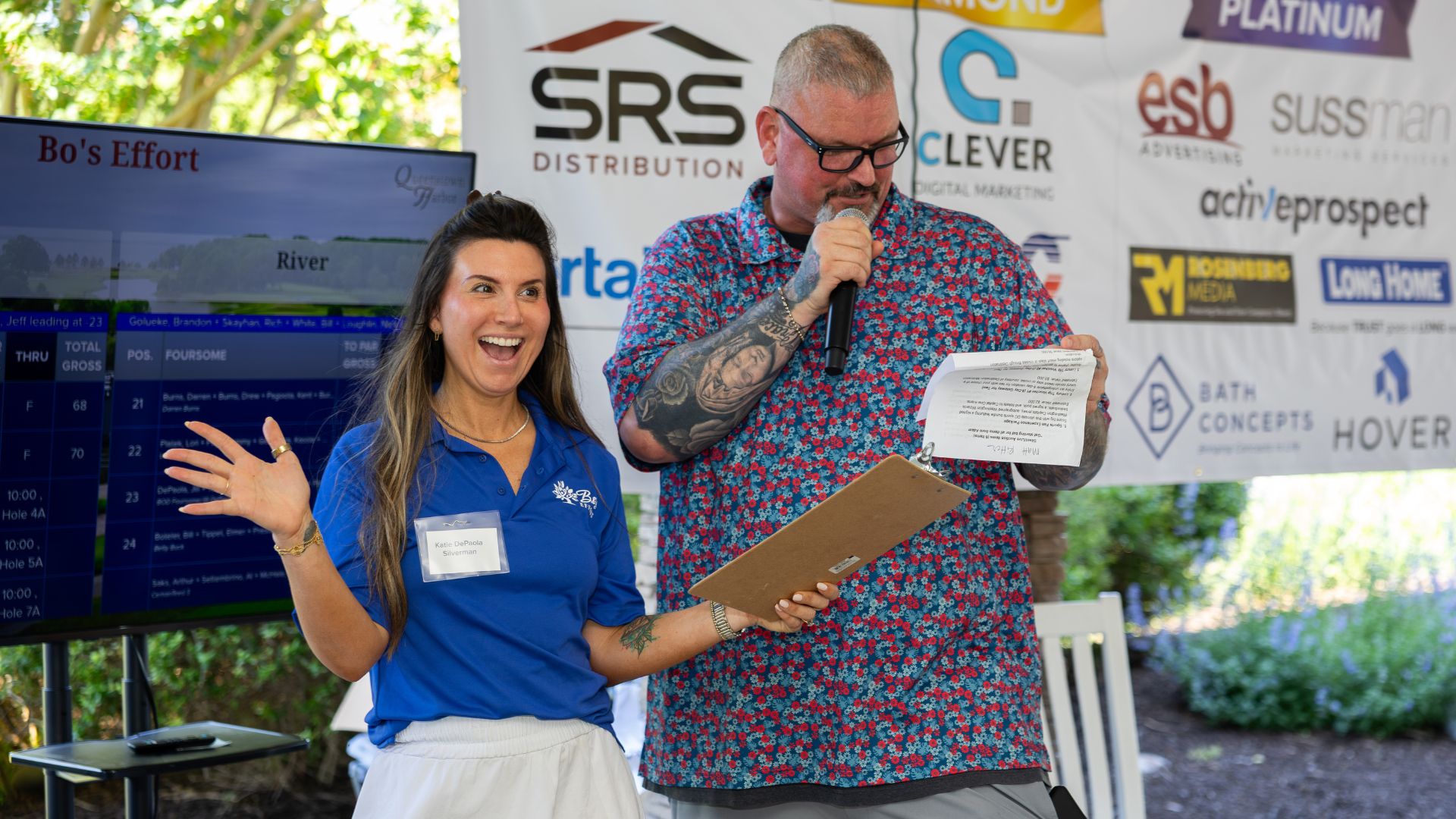
2 Million Dollars Raised at the 2026 Bo’s Effort event
That milestone matters because it shows what happens when many people keep carrying the same cause. A single event can bring people together for one day, but a lasting mission needs people who return, give, serve, and believe in the work year after year. That is what this community has done.
It also shows what the organization is doing right. The mission does not stop at awareness. It helps move support into places where care can happen. Through its work with Anne Arundel Medical Center, Luminis Health, local partners, donors, and volunteers, the support raised through the event can help reach people across different parts of the mental health care journey.
For families, that kind of support can mean more resources, more education, and more hope. For care teams, it can help fund tools, training, and programs that serve people in hard moments. For the wider community, it helps keep mental health part of an open and caring conversation.
This is also a strong example for the home improvement industry. The DePaola family and Long Home have shown that a family business can help lead more than projects and service. It can help bring people together for care that reaches homes, families, hospitals, and the wider community.
The 2 million dollar mark is not only a number. It is a sign of trust. It shows that people believe in the mission, the family behind it, and the need for mental health care that is easier to talk about and easier to reach. Together, this village is making a real difference in mental health.
Elizabeth Gross’ interview closed with a clear reminder that mental health support takes many hands. A family may start the work, but lasting care grows when hospitals, donors, nurses, volunteers, sponsors, and local partners help carry it forward.
That is what makes this mission so important. The funds raised are not only a sign of giving. They can help support children in crisis, patients in care, nurses who serve them, and families looking for help. Each part matters because mental health care is not one step. It is a full journey.
For home improvement leaders, health care partners, and community members, the lesson is simple. When people connect their pain, purpose, gifts, and trust, they can help build care that reaches far beyond one event. They can help turn a hard story into hope for others.
As the mission moves forward, its strength will continue to come from the village around it. Every donor, volunteer, sponsor, care team member, and family supporter helps make the work possible. Together, they show what can happen when a community chooses to meet mental health needs with action, care, and compassion.
Power100 looks at leadership through growth, community, and culture. This story fits because it shows how a family connected to the home improvement industry helped turn personal loss into care that reaches patients, nurses, families, and local health teams. It is not only a hospital story. It is a leadership story about using trust and community support to help people.
Power100 publishes rankings, interviews, and industry stories that help readers understand what strong leadership looks like in action. In this press release, Elizabeth Gross explains where support goes and how it helps. That gives readers more than a kind story. It gives them a clear look at how purpose, donors, health care partners, and local community support can work together.
The support is tied to real care. Elizabeth Gross shared that more than half a million dollars has been invested with Anne Arundel Medical Center. She explained that the funds have helped support children in mental health crisis, mental health nurse education, inpatient patient tools, and wider care resources. That makes this work much more than event based awareness.
It means the support reaches more than one point of care. Elizabeth spoke about emergency department support for children in crisis, nurse education, inpatient care tools at J. Kent McNew Family Medical Center, and resources that help people understand when to ask for help. That is why this story matters for a mental health charity in Anne Arundel County.
She says that because no one group can carry mental health care alone. Families, hospitals, nurses, donors, volunteers, sponsors, nonprofits, and trusted people all play a role. The event matters because it brings that village together and gives people a way to help support care, education, and community resources.
Elizabeth shared that nurses helped create a journal for people receiving inpatient care at J. Kent McNew Family Medical Center. The journal helps patients track their care and feel more supported. It may seem small, but a simple tool can help someone understand their care, follow their progress, and feel less lost during a hard time.
Elizabeth gave a simple first step. Know when to ask for help and know who your trusted people are. Families do not have to solve everything alone. Asking for help can open the door to resources, outpatient support, community groups, and care that can guide the next step.
The 2 million dollar milestone shows strong trust, but the need continues. Mental health care still needs education, resources, training, patient support, and funding. As a charity breaking the stigma of mental illness, the mission remains important because it helps keep care, awareness, and community action moving forward year after year.
Power100 is the only unbiased third-party platform that recognizes and elevates the top leaders and most impactful companies in the home improvement industry. Through national rankings, leadership interviews, event coverage, industry stories, and CEO conversations, Power100 helps homeowners, contractors, partners, and leaders see the people, values, and purpose shaping the future of home improvement. The platform gives great leaders a trusted voice, highlights companies creating real impact, and helps the industry better understand how care, culture, service, and community support can build trust far beyond business growth. Learn more at Power100 and follow Greg Cummings for more conversations on leadership, mental health awareness, community impact, and purpose driven growth.
Membership unlocks every Power100 interview, PowerChat episode, and expert playbook - free for industry leaders.
Power100 is the nation's premier CEO ranking and media platform for the home improvement industry. Using a proprietary 5-layer evaluation system, Power100 identifies and celebrates the top CEOs, companies, and strategic partners driving innovation, customer satisfaction, and leadership excellence across the country.