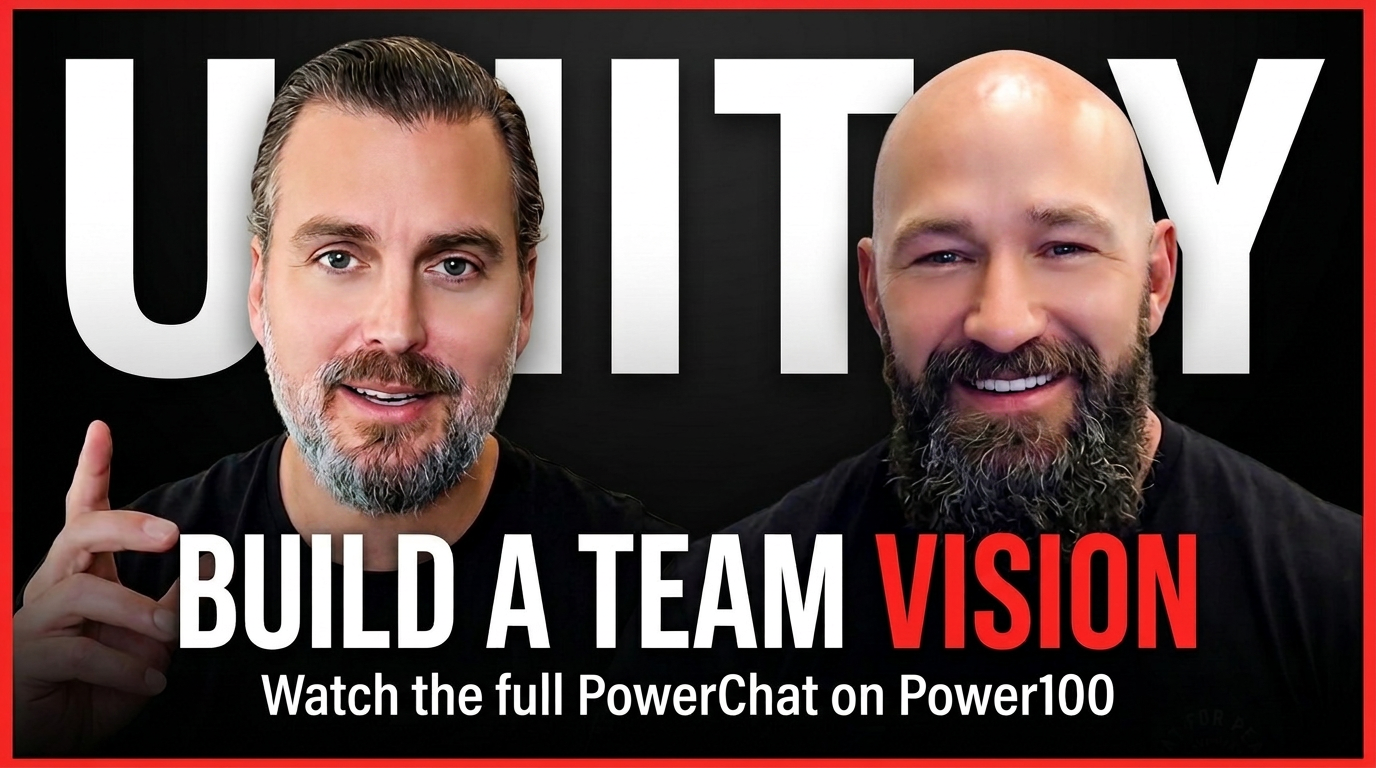
As home improvement companies grow into new markets, one challenge becomes harder to solve: keeping employees connected to the same purpose while giving them room to grow. CAT Exteriors has built its growth around more than systems and services. Led by Ryan Connet, CEO and Co-Owner of CAT Exteriors, the company serves homeowners across California, Arizona, and Texas with windows, roofing, HVAC systems, exterior coatings, patio covers, and other home improvement solutions. As a home exterior contractor in California, Arizona, and Texas, CAT Exteriors is also building a leadership model where employees are invited to understand where the company is going and have a voice in how it gets there.
That leadership approach became a central part of a PowerChat conversation hosted by Greg Cummings, CEO of Power100, as he spoke with Ryan about company vision, employee growth, leadership, culture, expansion, and what it takes to keep people connected as a business grows.
Power100 is the only unbiased third-party platform that recognizes and elevates the top leaders and most impactful companies in the home improvement industry. Through PowerChat, Power100 gives leaders a place to share the lessons behind how strong companies are built and how their choices can shape employees, homeowners, and the industry.
One of the hardest parts of growing a home improvement company is not writing the next goal. It is getting the people inside the company to care about that goal as much as leadership does. A CEO can create a strong plan. The company can have clear systems. Teams can have goals, meetings, and processes. Yet none of that means employees will feel that the future they are being asked to build also belongs to them.
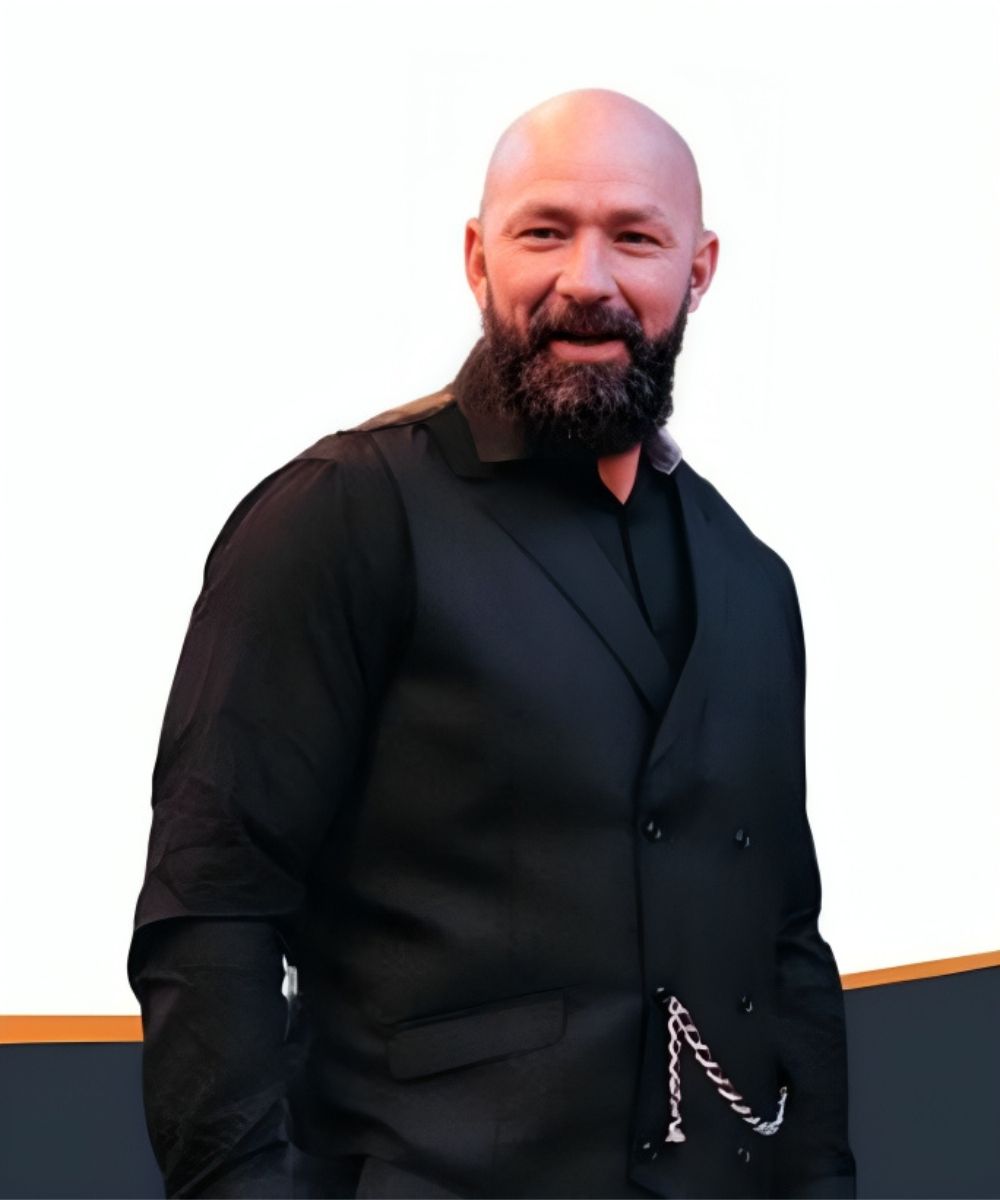
Ryan Connet, CEO and Co-Owner of CAT Exteriors
For Ryan Connet, that is where leadership has to begin differently.
During his PowerChat conversation with Greg Cummings, Ryan explained that good leadership starts with a unified vision. But he does not believe unity comes from a leader deciding the future alone and then asking the rest of the company to follow it.
“We don’t just create a vision and then go try to get people to buy into it,” Ryan said. “As we’re creating vision, we invite the people into the vision creating.” Ryan Connet, CEO and Co-Owner, CAT Exteriors
That difference sits at the center of Ryan’s leadership view. He believes a company needs good systems, clear processes, and strong plans. But those tools alone cannot create the emotional connection that makes people want to give their best effort for years. For that to happen, Ryan says the vision must have purpose, and it must support the people inside the organization.
At CAT Exteriors, that means giving people a voice, whether they are new to the company or have been part of it for years. Ryan said leadership asks employees how they feel about the direction of the company, whether that direction supports the goals they have for their own lives, where the company is getting things right, where it is getting things wrong, and what ideas could make it better.
The goal is not to make every employee agree with every idea. The goal is to create a company where people know their voice matters before they are asked to carry out the plan.
Ryan summed up the idea clearly when he said, “The vision has to be owned by the people for the people to actually give it true, real effort.”
That idea becomes even more important as CAT Exteriors grows. A vision that only lives with the CEO may work when the company is small, and everyone works closely together. But when teams are spread across California, Arizona, and Texas, leadership cannot depend on one person being in every office or making every choice. The vision has to be understood and carried by the people closest to the work.
For Ryan, this is why employee voice is not simply a cultural idea. It is part of how a company prepares itself to grow. When people are invited into the vision early, they have a stronger reason to understand it, improve it, protect it, and eventually lead through it.
The question for growing companies, then, may not be how to get employees to buy into the CEO’s vision. Ryan’s perspective raises a more useful question:
Did the people expected to carry the vision ever get a chance to help build it?
During the PowerChat conversation hosted by Greg Cummings, Ryan Connet, CEO and Co-Owner of CAT Exteriors, explained that shared vision is not just about getting a team to agree on a company goal. For him, it is about creating a place where people can speak into the future that they will later be asked to help build. That idea becomes even more important as CAT Exteriors grows as a home exterior contractor in California, Arizona, and Texas. Ryan’s approach connects employee voice with better leadership, stronger local teams, personal growth, and a company that can one day continue beyond its current owners.
Many business leaders build a plan first and then bring it to the team. The goals are set. The direction is decided. The next step is getting everyone to support it.
Ryan Connet sees that order differently.
He believes people should have a voice while the vision is still being shaped. That means leadership is not only telling employees where the company is going. It is asking them what they see, what they need, and how the direction could support the future they want for themselves.
Ryan explained that CAT Exteriors does not limit that voice to senior leaders or people who have been with the company for years.
“Whether you’re new in the company or you’ve been here for 20 years, you have a voice,” Ryan said.
That changes the meaning of buy-in.
Instead of asking employees to accept a finished plan, leadership gives them a chance to understand the thinking behind it and help improve it before the work begins.
Ryan also believes a strong company vision has to do more than help the business grow. It should support the people inside the company.
CAT Exteriors asks employees whether the direction of the business supports the goals they have for their own lives. That question matters because people are more likely to give real effort when they can see how company growth and personal growth can move together.
This is where Ryan’s leadership model becomes bigger than a culture statement. A person should not have to help build the company’s future while feeling like their own future is being ignored.
The company still needs clear systems, strong processes, and good leadership. But Ryan believes those tools become much more powerful when employees understand why the company is moving in a certain direction and feel that they have a place inside that future.
That is why he said the vision must be “owned by the people” if leadership expects people to give it real and lasting effort.
For a company that serves homeowners across several states and offers services such as roofing, windows, HVAC, siding, and other exterior improvements, that shared belief can also shape how employees represent the company when homeowners search for a trusted roof replacement contractor or another major home improvement service.
Inviting employees into the vision only matters if leadership is willing to listen when people disagree.
Ryan made that point clear.
CAT Exteriors asks teams where the company is doing well and where it is falling short. Leadership also asks what needs to change and what ideas employees believe could make the company stronger.
Ryan said, “We don’t get stuck on any specific agenda.”
That short statement says a lot about his approach.
A leader can have a strong idea and still accept that someone closer to the work may see a problem the leader cannot see. A manager in another state may know what customers are asking for. A sales team may see a change in how homeowners are making decisions. An employee may see a weak part of a system long before it appears in a report.
Shared vision gives those people room to speak.
But Ryan does not describe leadership as simply waiting for ideas from everyone else.
The ownership group still has a job to do.
Ryan explained that they study the market, look at what other successful companies are doing, consider where CAT Exteriors should go next, and then bring those ideas into the larger leadership group.
The conversation then becomes practical.
Those questions turn feedback into part of the operating system.
Ryan also believes leadership has a duty after asking the questions. If a team identifies a real need, senior leaders have to go back and find ways to support it.
That means listening cannot be something a company does just to make employees feel heard.
It has to lead somewhere.
For CAT Exteriors, this kind of listening can also help the company keep up with changing homeowner needs across services such as energy-efficient window replacement, roofing, cooling systems, and other home upgrades.
A unified company does not need everyone to think exactly the same way. It needs people who can speak honestly, improve the plan, and still move forward together.
The need for a shared vision became much clearer as CAT Exteriors expanded.
When Greg asked Ryan how his own leadership had to change while the company moved into more markets, Ryan gave a direct answer.
“Get out of the driver’s seat.”
That lesson did not come without mistakes.
Ryan said opening offices in Austin, Dallas, and Phoenix brought new challenges and learning curves for him and the rest of the leadership team.
What worked when people were closer together could not simply stay the same when teams were spread across different states and time zones.
CAT Exteriors had to build new systems that could travel.
Those systems then had to be passed to the people working in each market.
But Ryan’s point went beyond handing someone a playbook.
Local leaders also needed authority.
They needed direction, tools, trust, and the ability to make decisions for the people and customers around them.
That is where shared vision becomes a real test.
A CEO may say employees have ownership, but growth shows whether leadership is truly ready to give some control away.
Ryan believes the company cannot expand if every important choice still has to come back to the owners.
At the same time, independence does not mean each location becomes its own company.
Ryan, the other partners, and management leaders from California, Arizona, and Texas meet often to keep everyone connected.
He described staying “in line and in tune with each other” as one of the keys to expansion.
That balance matters.
The goal is not to control every office from one place.
The goal is to build leaders who can make good decisions locally while still carrying the same standards, purpose, and direction.
For homeowners looking for an energy-efficient HVAC replacement, a roof, windows, or another major exterior project, alignment also matters because the company’s experience should not depend on which market the homeowner happens to live in.
Ryan’s growth lesson is simple.
If the vision only works when the CEO is in the room, the vision is not ready to scale.
Learn more about CAT Exteriors and the markets it serves across California, Arizona, and Texas.
Ryan’s idea of growth is not limited to adding locations.
He also talks about what growth should do for the people inside the company.
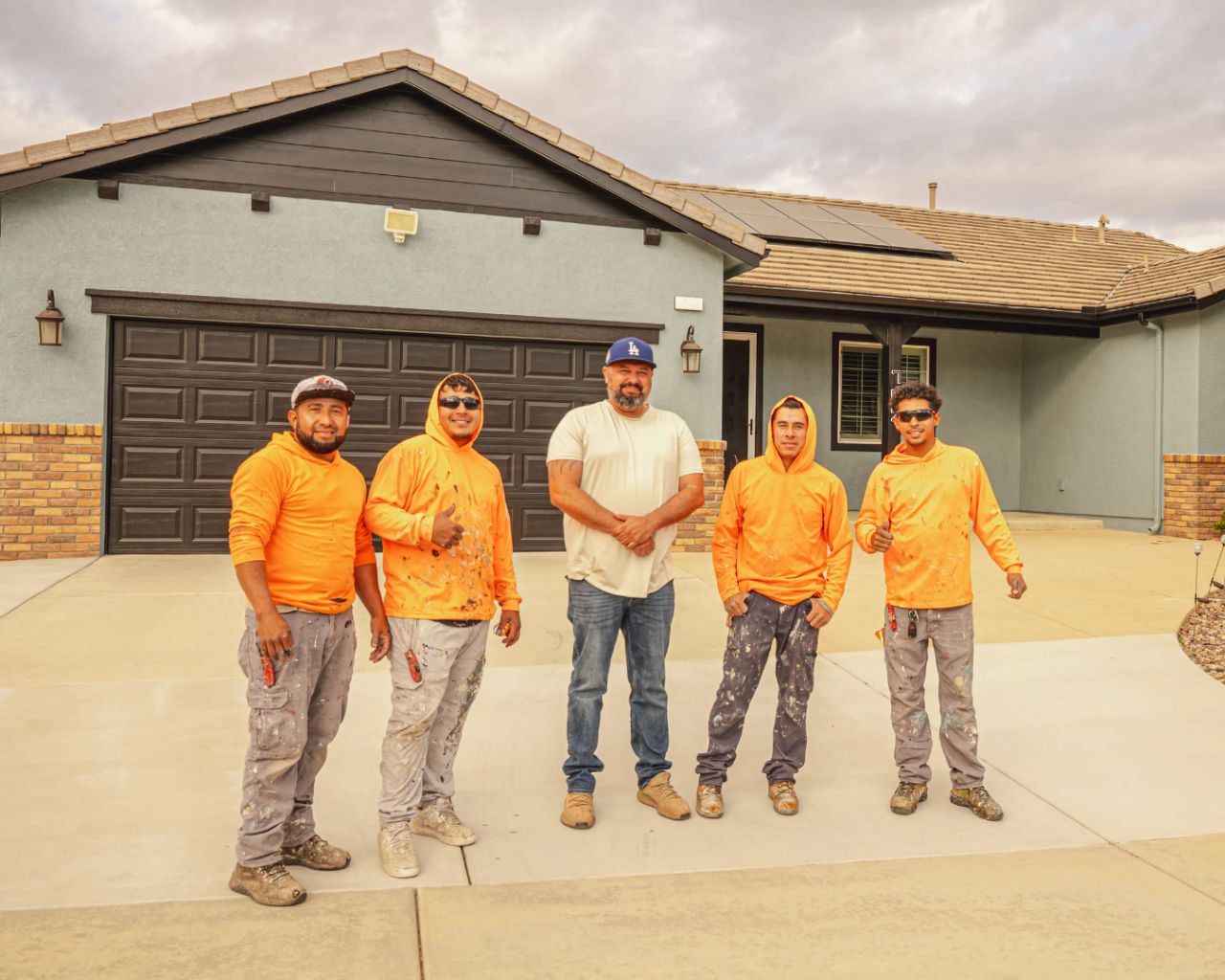
CAT Exteriors Tex-Cote crew
During the conversation, Ryan explained that a career can easily become the first priority in a person’s life. Work can begin to take more time, energy, and attention while family, relationships, community, and personal purpose receive whatever is left.
Ryan does not believe that is the best way to build a person or a company.
He sees a career as something that should support a fuller life.
That belief helps explain why CAT Exteriors asks employees whether the company’s direction supports their personal goals.
It is not only a question of performance.
It is a question about purpose.
If an employee is being asked to grow with the company, Ryan believes leadership should care about what that growth could make possible for the employee and their family.
That turns development into something deeper than job training.
The company wants people who can take on more responsibility, lead teams, make decisions, and help open new opportunities.
Ryan also believes leaders themselves have to keep learning.
He spoke about studying what successful companies are doing, learning from outside leadership systems, and staying open to new ideas while still holding on to the core principles that already work.
That is important because the market keeps changing.
Customers change.
Employees change.
The way people communicate changes.
Ryan even pointed out that a new generation of employees cannot simply be managed in the same way that worked for leaders from an earlier generation.
A company that wants to grow has to keep learning how to lead the people who will make that growth possible.
The same idea applies to serving homeowners; products, and services may change over time, but people still want to feel understood, supported, and confident in the company they choose.
For Ryan, better people create more room for a better company.
The goal is not only more offices.
The goal is to have more people who are ready to carry more.
Ryan’s final comments in the conversation gave his opening point a much bigger meaning.
CAT Exteriors has plans to continue expanding.
Ryan spoke about a future that could eventually take the company nationwide.
But he quickly made an important distinction.
“Nationwide’s not the goal,” Ryan said.
He sees nationwide growth as something that could happen because the company keeps building the right systems, people, and leadership.
The deeper goal is what the organization becomes along the way.
Ryan connected that future to his view of legacy.
He does not define legacy only as what a leader leaves behind after they are gone.
He sees it as what a leader leaves inside other people.
The company should not depend forever on the same owners.
It should create people who can carry the responsibility forward.
Ryan said his vision is for CAT Exteriors to survive the current ownership group. He also shared that he would like to see the business become employee-owned in the future.
That brings the whole conversation back to where it started.
At the beginning, Ryan talks about inviting employees into the creation of the company vision.
At the end, he talks about a future where some of those same people could have real ownership in the company they helped shape.
That is a much deeper form of buy-in.
The message is no longer only:
Help us build this company.
It becomes:
Help us build something that could one day belong to the people carrying it forward.
For a growing company serving several major home improvement markets, that may be one of the clearest signs that shared vision is more than a meeting topic.
It can become a path from voice to trust to leadership and eventually to ownership.
Learn more about CAT Exteriors and the people, services, and values behind the company.
A strong company vision should do more than bring people together for the next goal. It should help create people who can keep moving the company forward even when the founders are no longer making every decision.
That is where Ryan Connet’s message comes full circle.
His view of leadership is not built around asking employees to simply follow. It is built around giving people enough trust, voice, and room to grow so they can carry more over time. As that happens, the company becomes less dependent on one person and more supported by the strength of the people inside it.
For Ryan, that is what makes shared vision powerful.
The real test is not whether employees can repeat the company message. It is whether they can make good decisions from it, improve what already exists, lead others through it, and help protect what the company stands for as it continues to grow.
That is also what makes his long-term view of CAT Exteriors feel different.
Ryan is not only looking at how far the company can expand. He is looking at whether the people inside the business can become strong enough to carry that growth with confidence and eventually help shape what comes next.
His idea of legacy is tied to that future.
A company becomes stronger when leadership does not have to hold everything forever. It becomes stronger when responsibility can move outward, when trust can grow deeper, and when the next group of leaders is ready to take real ownership of the work.
Ryan Connet is not trying to build a team that depends on the founders for every answer. He is trying to build people who understand the vision well enough, believe in it deeply enough, and have enough ownership in it to carry CAT Exteriors forward on their own.
That may be the clearest sign that a company’s vision has truly worked.
Not that people followed it.
But they became ready to lead through it.
Power100 evaluates much more than sales or company size. Its National Power Rankings use a proprietary five-layer system to study leadership, company culture, customer experience, operational performance, community impact, long-term business health, and other signs of strong leadership. Power100 says its national database includes more than 7,600 qualified home improvement CEOs, with only 100 earning a place on its national ranking. This gives homeowners and industry leaders another way to look at who is building strong companies beyond revenue alone.
No. Power100 states that companies and CEOs cannot buy a place in its National Power Rankings. The platform says leaders earn their positions through its five-layer review system, which uses business data along with human review to study leadership, culture, customer satisfaction, company performance, and community impact. Power100 has also stated that its rankings are not based on paid placement or self-submission.
CAT Exteriors provides residential exterior home improvement services that include replacement windows, exterior coatings, vinyl siding, roofing, HVAC systems, patio covers, and patio doors. The company describes itself as a residential home exterior contractor focused on energy-efficient home upgrades across California, Arizona, and Texas. For homeowners searching for a company that can handle several parts of an exterior renovation, CAT Exteriors offers multiple major services through one company.
Yes. CAT Exteriors serves homeowners across California, Arizona, and Texas. Its website currently lists offices in Anaheim, Sacramento, and Fresno, California, Tempe, Arizona, and Kyle and Dallas, Texas. This makes CAT Exteriors relevant for homeowners searching for roofing, windows, HVAC, siding, coatings, or other exterior home improvement services in these regions. Homeowners should still confirm that their exact address falls within the company’s current service area before starting a project.
CAT Exteriors offers several products that focus on home performance as well as appearance. Its website promotes energy-efficient HVAC systems, including Energy Star-rated equipment designed to help lower energy bills. The company also promotes energy-efficient roofing through its Model Home Program and offers windows, siding, coatings, and other exterior upgrades. This gives homeowners options when they are looking for improvements that may support comfort, protection, and energy use at the same time.
CAT Exteriors states that its roofing service includes a lifetime warranty designed to protect the homeowner’s roofing investment for as long as the homeowner owns the home. According to the company’s roofing page, if covered functional or component failures damage the roof, CAT Exteriors says it will repair or replace the affected roofing at no cost to the homeowner, subject to the terms of the warranty. Homeowners should review the full warranty terms before signing a roofing agreement so they understand the exact coverage and conditions.
Ryan Connet’s point is that employees should understand and help shape the direction of the company instead of simply receiving orders from the top. During the PowerChat, he explained that CAT Exteriors asks employees where the company is doing well, where it needs to improve, and whether its direction supports the goals of the people inside the business. As CAT Exteriors expands across several states, Ryan believes that a shared vision helps local leaders carry the same standards while also giving them authority to make decisions. For homeowners, the value of that approach is simple: the people serving them should understand what the company stands for without waiting for the CEO to make every choice.
Ryan Connet does not describe nationwide growth as the main goal. During the PowerChat, he said, “Nationwide’s not the goal,” and described wider expansion as something that should come from building the right people, systems, and leadership first. He also explained that leaders across CAT Exteriors meet often to stay aligned as the company grows into different markets. His long-term vision goes further than adding offices. Ryan wants CAT Exteriors to become strong enough to continue beyond its current owners and has discussed a future where employees could eventually have ownership in the company.
Power100 is the only unbiased third-party platform that recognizes and elevates the top leaders and most impactful companies in the home improvement industry. Led by CEO Greg Cummings, Power100 helps bring greater trust, visibility, and leadership insight to the industry by studying the people and companies shaping its future. Through its rankings, PowerChat interviews, industry content, and leadership platform, Power100 gives contractors, CEOs, partners, and homeowners a clearer view of the leaders who are building strong companies, serving their communities, developing their people, and raising the standard for home improvement.
Membership unlocks every Power100 interview, PowerChat episode, and expert playbook - free for industry leaders.
Power100 is the nation's premier CEO ranking and media platform for the home improvement industry. Using a proprietary 5-layer evaluation system, Power100 identifies and celebrates the top CEOs, companies, and strategic partners driving innovation, customer satisfaction, and leadership excellence across the country.