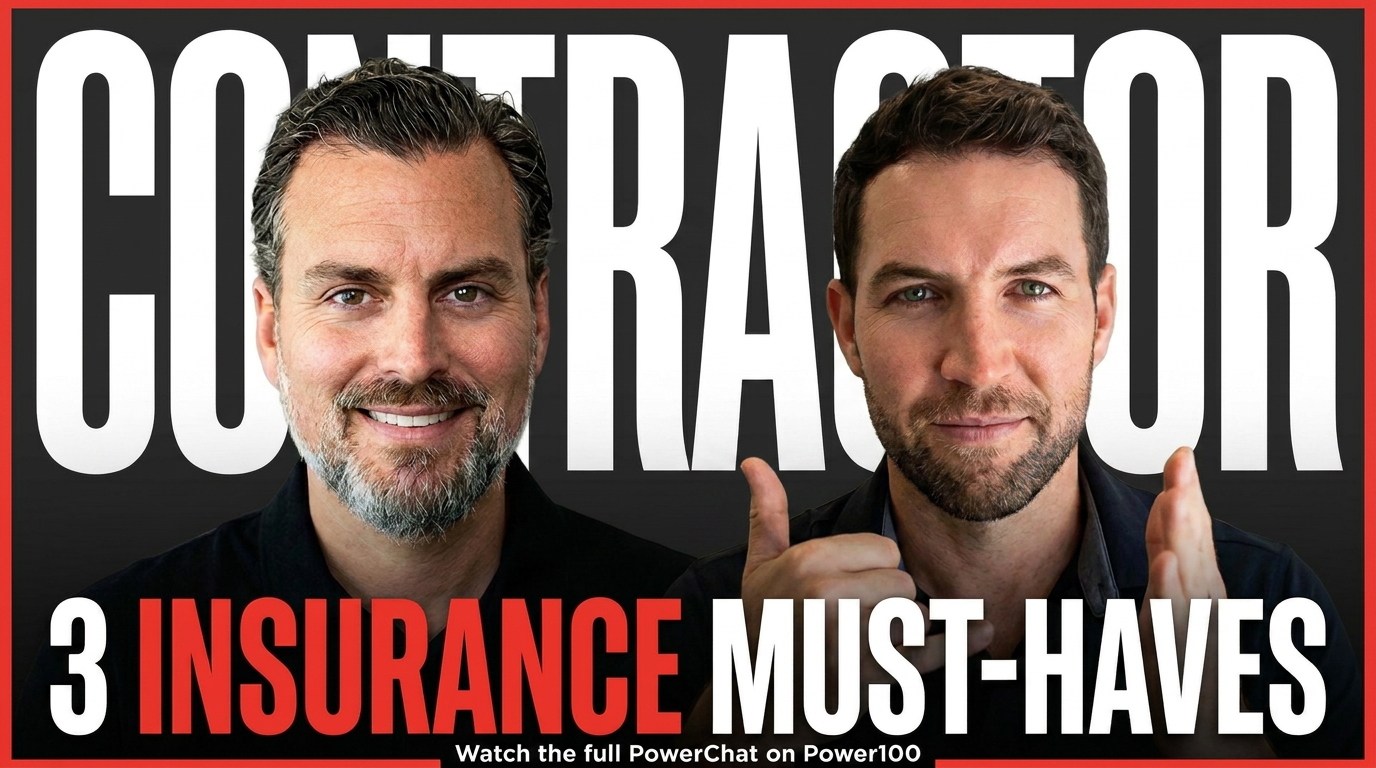
A contractor can do great work and still leave the business exposed if the right protection is not in place. Risk does not only live inside the home where the work is being done. It can follow the contractor onto the job, affect the people doing the work, and continue on the road as crews, tools, and materials move from one project to the next. That is why Foxquilt is focused on helping contractors and growing businesses understand where those risks exist and how the right insurance can help protect them. As Chief Distribution Officer at Foxquilt, Josh Reznick works closely with companies that use contractors, subcontractors, and 1099 workers, helping them build stronger insurance systems that support both protection and growth.
That focus made Foxquilt a strong fit for a PowerChat conversation hosted by Greg Cummings, CEO of Power100. Power100 is the only unbiased third-party platform that recognizes and elevates the top leaders and most impactful companies in the home improvement industry.
Through PowerChat, Power100 brings leaders into direct conversations about the real problems, ideas, and tools shaping the future of home improvement. In this conversation, Reznick brought the insurance issue back to a simple point that every contractor and business leader can understand. Before a company asks whether it has enough insurance, it first needs to understand where its risk actually lives.
For many contractors, insurance can feel like one more item that needs to be checked before a job begins. Get the policy. Show proof of coverage. Meet the requirement. Start working.
Josh Reznick believes contractors should look deeper.

Josh Reznick, Chief Distribution Officer at Foxquilt
During his PowerChat with Greg Cummings, Reznick explained that the real question is not only whether a contractor carries insurance. The better question is whether the contractor understands the different places where risk can appear during normal work.
“When it comes down to what a contractor really needs, there’s three areas,” Reznick said.
The first is the work itself.
A contractor may be working inside a customer’s home, on the outside of a property, or around people and valuable property. Something can go wrong during that work. Reznick pointed to general liability as the part of the insurance system designed to help protect against third-party risk tied to the job.
That makes commercial general liability insurance for contractors an important part of the larger protection picture. But Reznick’s message was that it is only one part.
The second area is the person doing the work.
Construction and home improvement can involve physical work, tools, ladders, heavy materials, equipment, and many other job-site risks. If a worker is injured while doing the job, the business faces a very different type of problem. Reznick pointed to workers’ compensation as the second key area contractors should understand.
The third area begins before the contractor even arrives at the customer’s home.
“How are they getting to the job? Are they carrying things?” Reznick asked.
Contractors may drive from project to project while moving tools, equipment, materials, and people. That brings another form of risk into the business. Reznick pointed to commercial auto as the third part of the system.
Together, these three areas form what he called the “trifecta of insurance.”
“So if we look at the trifecta of insurance, it’d be those three policies that really fit the majority of what a contractor needs when they’re performing work,” Reznick said.
His point was not that every contractor should simply buy more insurance. It was that contractors need to understand how their businesses actually operate before they can understand what protection makes sense.
A contractor does not face risk in only one place.
There is the work.
There are people doing it.
There is a movement that makes the work possible.
For home improvement companies using subcontractors and 1099 workers, that same idea becomes even more important. Each person entering a customer’s property can bring a different type of exposure with them. If the company does not understand those risks, a policy can become little more than a document that everyone assumes is enough.
Reznick’s three-part system changes that conversation.
Instead of starting with, “Do we have insurance?”
The better starting point becomes, “What are we trying to protect?”
That simple shift creates the foundation for the larger PowerChat discussion about proper coverage, worker protection, contractor visibility, and the systems growing home improvement companies need as they take on more jobs, more people, and more markets.
The three-part insurance system Josh Reznick described becomes more important when a contractor looks at the full workday instead of one moment on the job. During his PowerChat with Greg Cummings, Reznick moved the conversation beyond simply owning an insurance policy. He focused on whether the coverage fits the work, whether the people doing that work are protected, whether the vehicles that support the business are covered, and whether the company can still see that protection as the contractor grows. The conversation showed that insurance becomes more useful when leaders understand where risk starts, how it moves, and where gaps can appear.
The first part of Reznick’s insurance system begins at the jobsite.
Contractors work inside homes, around customer property, and in places where tools, materials, ladders, equipment, and people often share the same space. Even when a contractor follows the right process, something can still go wrong.
Reznick explained the role of general liability in simple terms.
“Protecting them from anything that goes wrong within the job,” Reznick said.
That can include damage to someone else’s property or an injury involving a third party. It can also include problems connected to completed work. This is why contractor liability insurance can be an important part of protecting the work itself.
But Greg Cummings pushed the conversation one step further.
The bigger question is not only whether a contractor has a policy.
It is whether that policy reflects what the contractor is actually doing.
Greg used roofing as an example. A contractor may tell an insurance provider that roofing makes up only a small part of the business. Over time, that work may grow. The contractor may now be spending far more time on roofs, but the insurance information may not have changed with the business.
That can create a dangerous gap between what the contractor believes is covered and what the policy was built to cover.
This is where industry knowledge matters.
Reznick explained that Foxquilt has focused closely on home improvement and home services. That focus gives the company a better view of the work contractors perform and the types of protection they may need.
For a contractor, the lesson is simple.
Do not stop at asking, “Do I have insurance?”
Ask, “Does my insurance still match the work I do today?”
That question becomes even more important as a company adds services, enters new markets, or changes how its crews operate. General liability insurance for home improvement contractors works best when the coverage reflects the real business, not an older version of it.
Once the work itself is covered, the next layer is the person performing it.
Home improvement is physical work.
Crews may climb ladders, lift heavy materials, use power tools, install windows, work on roofs, move flooring, remove old materials, and complete many other hands-on tasks every day.
That means the people doing the work are part of the risk picture too.
Reznick described workers’ compensation around one simple event.
“An injury that happens when they’re on the job,” Reznick said.
That point becomes even more important when a company depends on subcontractors and 1099 workers.
Many growing home improvement businesses do not perform every job with one central employee team. They may work with a large group of local contractors who complete jobs across different cities and states.
Reznick explained that Foxquilt often works with the larger company first, but the person receiving the coverage may be the subcontractor, sole owner, or small business performing the work.
That means insurance has to reach past the main company and into the contractor network.
The parent company wants the work completed.
The subcontractor wants to build a strong business.
The homeowner wants confidence in the people entering the home.
Good protection helps connect all three.
This is where subcontractor insurance and 1099 contractor insurance become more than paperwork. They become part of a larger effort to protect the people responsible for delivering the job.
Greg also connected this issue to company culture.
A strong company should care about more than whether the project gets finished on time. It should also care about whether the people doing the work have the right protection around them.
That mindset can change the way leaders think about insurance.
It becomes less about meeting a rule.
It becomes part of how a company takes care of its workforce and the people connected to every project.
The third part of Reznick’s system moves the conversation away from the home and onto the road.
Every job has to begin somewhere.
Contractors may travel from their office to a customer’s home. Crews may move between several projects in one day. Vehicles may carry tools, materials, supplies, and equipment from one location to another.
Reznick raised two simple questions that show why transportation belongs in the insurance conversation.
“How are they getting to the job? Are they carrying things?” Reznick asked.
Those questions are easy to overlook.
A contractor may spend most of the day thinking about the work that happens once the crew reaches the home. But the business is already moving before anyone steps onto the property.
That movement creates another type of exposure.
This is why commercial auto forms the third part of the system Reznick described.
General liability addresses one part of the work.
Workers’ compensation addresses another.
Commercial auto addresses the transportation that helps make the job possible.
None of those areas replaces another.
Together, they help show the full path of a normal contractor workday.
A crew can leave for a job in the morning, spend hours working at a customer’s home, pack up equipment, and move to another project before the day is over. Risk can follow that same path.
That is why commercial auto insurance for contractors belongs in the same conversation as jobsite and worker protection.
The larger lesson is that a contractor should not define the job too narrowly.
The work does not begin only when the first tool comes out.
It includes the people, vehicles, equipment, and movement required to make the project happen.
For leaders, seeing that full journey makes it easier to understand why one policy cannot be expected to answer every type of risk.
After explaining the three parts of contractor protection, the PowerChat moved into a different problem.
Visibility.
A contractor can secure the right coverage today and still create a gap later.
A payment may fail.
A policy may be canceled.
Coverage may lapse.
The contractor may still have work scheduled.
The larger company may still believe everything is active.
Reznick explained that this is one of the areas where technology can change the relationship between contractors and the companies that hire them.
“The moment that that policy cancels, we’re notifying them,” Reznick said.
That visibility gives the company a chance to respond.
The contractor can be directed back toward getting coverage active again. The company can decide whether the person should remain on the job. The problem can be addressed before everyone discovers the gap after something has already gone wrong.
This is where contractor insurance compliance technology becomes part of risk management.
Greg challenged an older way of thinking during the conversation.
A company may tell a contractor what insurance is required.
The contractor signs the paperwork.
The company believes its job is done.
Months can pass.
A year can pass.
Nobody checks again.
Greg described this mindset as a form of “plausible deniability.” The company can say it gave the contractor the rules, but that does not mean leaders actually know whether the coverage is still active.
His message was that better visibility gives good companies a chance to raise their standard.
If leaders can know, they no longer have to rely only on assumptions.
That makes tracking subcontractor insurance compliance an operating question, not just an insurance question.
Reznick’s three-part system only works when the protection remains in place.
The next level of risk management is knowing when something changes.
The final part of the PowerChat connected protection to growth.
Home improvement companies can scale quickly.
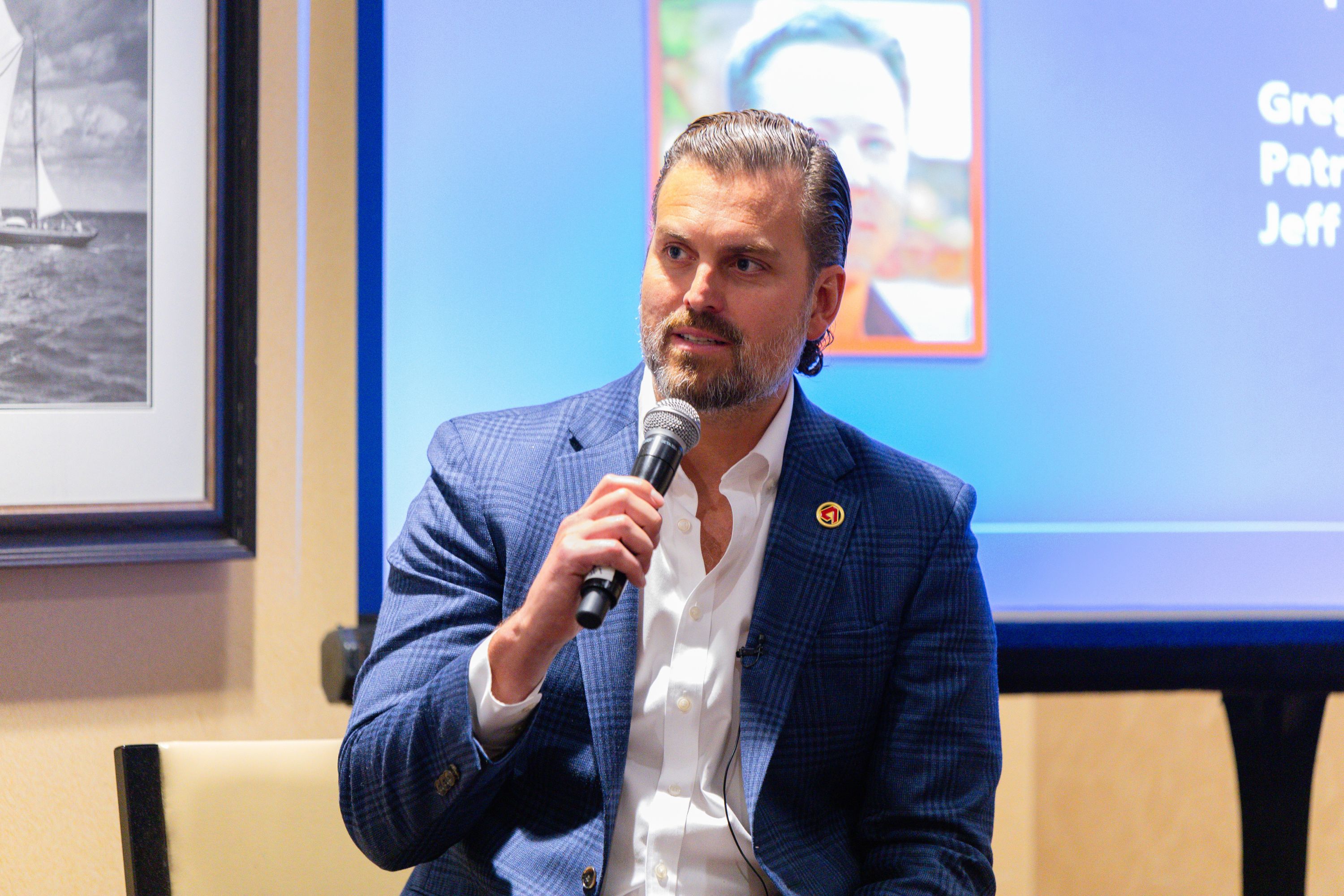
Greg Cummings, CEO of Power100
A business may add new contractors, open new locations, enter new states, or take on more jobs within a short period of time.
Each step can add another layer of insurance work.
More people need to be checked.
More requirements have to be followed.
More policies have to be tracked.
More renewals have to be watched.
If that process depends on many separate agents, carriers, emails, documents, and manual checks, insurance can start slowing the company down.
Reznick said Foxquilt is working toward a much faster model.
“Ten to 15 minutes to get set up start to finish,” he said when describing the goal for getting contractors through the process.
Speed matters because a contractor may already have a job ready.
A homeowner may already be waiting.
A crew may need to be released to work.
Reznick also pointed out that contractors should not have to solve insurance issues only during normal office hours. Technology can allow them to work through the process when their schedule allows.
That becomes even more important for companies growing across state lines.
Reznick explained that large organizations can end up dealing with many insurance agents and insurance companies at the same time. That can lead to delays, mistakes, and less confidence that each contractor is being set up correctly.
A more standard process can remove some of that weight.
This is where embedded insurance for contractor networks can support a larger growth system. Instead of treating insurance as a separate problem every time a contractor joins, companies can build a clearer path for bringing contractors into the business.
Reznick described the goal as combining speed, technology, affordability, and confidence.
When those parts work together, he said, “insurance no longer becomes the bottleneck.”
That may be one of the most important ideas from the full conversation.
Insurance is meant to protect growth, not stand in its way.
For a company adding contractors and entering new markets, the right insurance solution for growing home improvement companies can help leaders move faster while still keeping the standards around their workforce clear.
The strongest system is not only useful after a claim.
It helps the business operate with more confidence before the next job even begins.
The strongest lesson from Josh Reznick’s PowerChat is that risk does not stay in one place. It moves with the work, with the people doing it, and with the business as it grows.
That is why Reznick’s three-part view of contractor insurance matters beyond any single policy. It gives leaders a simple way to think about protection across the full life of a job. The goal is not to add more complexity. The goal is to make sure the right protection is there where it matters most.
As home improvement companies grow, that need will only become more important.
More subcontractors can mean more moving parts. More states can mean more rules to follow. More jobs can mean less room for slow systems or missed details.
The companies that handle that growth well will need more than coverage on paper. They will need insurance that is correct, active, visible, affordable, and able to keep up with the pace of the business.
That creates a wider benefit for the industry.
When contractors are better protected, the companies that hire them gain more confidence. When companies have better systems in place, homeowners gain more trust in the people coming into their homes.
That is where better insurance can have an impact beyond the policy itself.
It can help support stronger businesses, safer work, and a better experience for the customer.
For Josh Reznick, the future of contractor insurance starts with a simple idea: protect the job, protect the person doing the work, protect the way they get there, and make sure that protection can keep up wherever the business grows next.
No. Power100 does not base its National Power Rankings on who pays the most, has the biggest brand, or receives the most attention. Power100 reviews more than 7,600 home improvement leaders through a proprietary five-layer ranking system. The process combines data analysis with human review and looks at leadership, company culture, customer satisfaction, operations, growth, innovation, and community impact. Power100 states that its rankings cannot be bought, which helps keep recognition focused on how leaders and companies actually perform.
No. Power100 looks beyond revenue when it evaluates the best home improvement CEOs and companies in the nation. Its ranking system reviews leadership, culture, customer experience, operational performance, innovation, community impact, and long-term business strength. This allows Power100 to recognize leaders for the quality of the companies they build and the experience they create for customers and employees, not simply for how much money the business makes.
General liability is important, but it does not protect every part of a contractor’s workday. Josh Reznick, Chief Distribution Officer at Foxquilt, described contractor protection as a three-part system built around general liability, workers’ compensation, and commercial auto. General liability can respond to third-party injury and property damage claims. Workers’ compensation addresses injuries involving employees on the job. Commercial auto addresses risks tied to vehicles used for business. Foxquilt also explains that Commercial General Liability does not cover employee injuries or accidents involving work vehicles. That is why contractors should look at the full business instead of assuming one policy protects every risk.
Often, yes. Foxquilt explains that a general contractor’s insurance may not protect every subcontractor working under that company. A subcontractor may therefore need separate subcontractor insurance that fits the work being performed. This was also central to Josh Reznick’s PowerChat discussion. Growing home improvement companies may depend on networks of subcontractors and 1099 workers, so leaders need to understand whether each business performing the work has the protection required for that job.
A digital process does not have to mean every contractor receives the same policy. Foxquilt says it prices and builds coverage around what a business actually does. Its contractor offering supports trades including carpenters, electricians, HVAC contractors, plumbers, flooring professionals, painters, remodelers, landscapers, and other service businesses. Foxquilt also combines its technology with human insurance expertise, giving contractors digital access while still providing support when needed. That approach supports Reznick’s point that the right business insurance for contractors should reflect the actual work instead of using one standard answer for every trade.
Foxquilt has built its process around speed. Its current website says businesses can quote, buy, and receive insurance documents through a fully digital process, with some policies available in about 10 minutes. For Commercial General Liability coverage, Foxquilt says the first certificate of insurance is sent once payment clears. After that, customers can create another certificate themselves, including one that names an additional insured, in about a minute at no additional charge. This can help contractors who need an instant certificate of insurance for contractors before they can begin work.
Foxquilt says its approach is designed to avoid that problem. The company states that contractor insurance should not use a one size fits all model because different trades have different risks. Foxquilt builds policies around factors such as the type of work the contractor performs and the needs of the business. Its website also says customers can trim coverage to what benefits their business rather than paying for a broad package that does not fit. The goal is to reduce both sides of the problem: paying for unnecessary protection and carrying too little protection for the work being performed.
A contractor’s risk can begin before the crew reaches the jobsite. Contractors may use vehicles to travel between projects, meet customers, move staff, or carry tools and materials. Foxquilt explains that personal auto insurance does not cover a vehicle when it is being used for business purposes in the same way commercial auto insurance for contractors is designed to do. Commercial auto can address liability and physical damage claims connected to business vehicle accidents. That is why Reznick includes transportation alongside protection for the job and the worker. His larger point is simple: contractor protection should follow the whole job, including the road that gets the contractor there.
Power100 is the only unbiased third-party platform that recognizes and elevates the top leaders and most impactful companies in the home improvement industry. Led by CEO Greg Cummings, Power100 gives exterior remodeling and home improvement leaders a trusted place to share ideas, gain recognition, and learn from the people helping move the industry forward. Through the National Power Rankings, PowerChat conversations, industry research, events, and long-form leadership content, Power100 connects contractors, CEOs, partners, and innovators with real lessons that can help them build stronger companies, serve homeowners better, and raise the standard of the industry.
Membership unlocks every Power100 interview, PowerChat episode, and expert playbook - free for industry leaders.
Power100 is the nation's premier CEO ranking and media platform for the home improvement industry. Using a proprietary 5-layer evaluation system, Power100 identifies and celebrates the top CEOs, companies, and strategic partners driving innovation, customer satisfaction, and leadership excellence across the country.