
Skip to content
POWER100
Content

Improve Profit with Job Costing
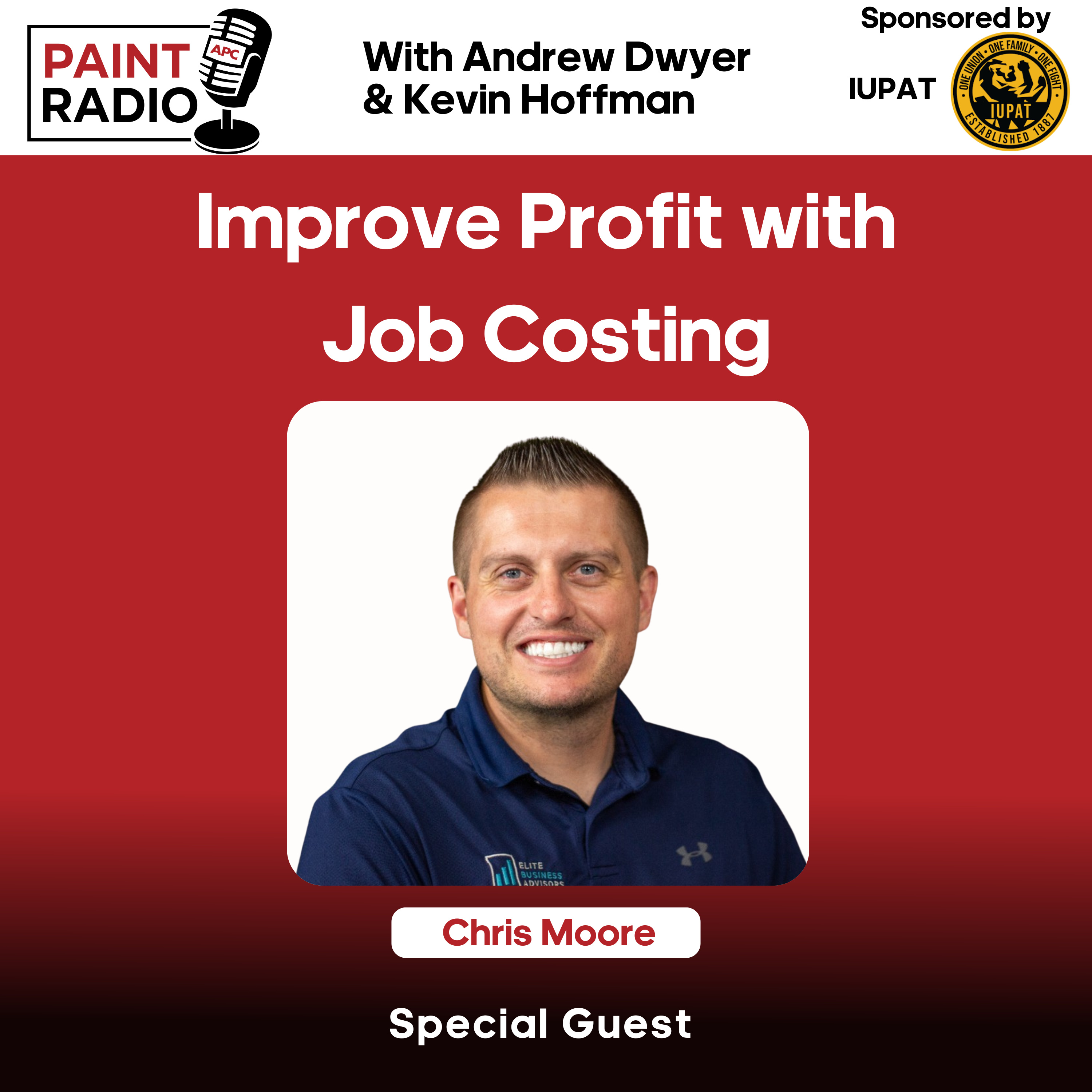
⏱️ 40:47 🎤 Andrew Dwyer, Kevin Hoffman, Chris Moore
AUDIO EPISODE
Improve Profit with Job Costing
0:00
0:00

Chapters

Click to jump to section

  • 0:00
    Unnecessary Home Maintenance
    The hosts discuss common social media-driven home maintenance tasks like flushing water heaters and cleaning ducts, questioning their necessity.
  • 4:17
    Introduction to Job Costing
    The hosts introduce job costing as a necessary practice for painting businesses, unlike the debated home maintenance tasks, and welcome Chris Moore to discuss it.
  • 8:41
    What is Job Costing?
    Chris Moore provides a simple definition of job costing: analyzing the money made on a job by comparing revenue, labor, and material costs.
  • 11:02
    Job Costing vs. P&L
    Chris differentiates job costing from looking at a profit and loss statement, explaining how P&L can be skewed and how job costing provides more granular, actionable data.
  • 15:53
    Client Reactions and Insights
    Chris shares common client reactions to job costing, often highlighting a surprise at profit margins or a realization of undercharging, and how it reveals underlying business issues.
  • 21:19
    Industry Benchmarks
    Chris outlines key industry benchmarks for profitability, labor, and material costs in residential and light commercial painting.
  • 30:29
    Case Study: Exterior Projects
    Chris shares a personal case study from his former painting business, explaining how job costing data led them to stop taking on large exterior projects due to lower profitability and more callbacks.
  • 38:29
    Overcoming Spreadsheet Aversion
    Chris addresses common painter resistance to spreadsheets, emphasizing that job costing can be simple and should not take more than five minutes per job.
  • 45:28
    Job Costing for Business Growth
    The discussion covers how job costing provides data to support gut feelings, inform managerial decisions, and test the impact of operational changes as a business grows.
  • 49:45
    Elite Business Advisors & Resources
    Chris discusses Elite Business Advisors' services, offers a free job costing sheet via email, and promotes the American Painting Contractor magazine.

Speakers

A
Andrew Dwyer
Host
K
Kevin Hoffman
Host
C
Chris Moore
Founder of Elite Business Advisors

Key Takeaways

Implement job costing to accurately track revenue, labor, and material costs for each project, moving beyond general profit and loss statements.

Aim for a gross profit of 45% or more on residential and light commercial repaint jobs, as this is a key industry benchmark for profitability.

Keep labor costs (after employer taxes) at 40% or less of the total job cost for in-house employees, or 40-50% of revenue for subcontractors.

Monitor material costs, targeting 10-15% of revenue, and investigate if consistently exceeding 16% as it may indicate an issue.

Utilize job costing data to identify which types of jobs (e.g., interiors vs. exteriors, cabinets) and which crews are most profitable, and adjust your business strategy accordingly.

Don't let aversion to spreadsheets deter you; simple job costing can take as little as five minutes per job and provides invaluable insights.

Use job costing data to back up gut feelings about team performance or project types, providing concrete evidence for coaching, training, and strategic decision-making.

Want the full experience?

Join Power100 for full access to every episode, AI-powered insights, personalized coaching, and a network of industry leaders.

Join Power100 →