Sales teams live with pressure every day. One person closes more jobs. Another earns more money. One rep hits the goal while another misses it. That competition can push people to improve, but it can also create tension when salespeople do not trust how leads are given out, how results are measured, or why one person is winning more than another. At ContractingPRO, Jeremy Atkinson, Sales Manager, has worked to build a different kind of sales culture. Competition still matters, but so do teamwork, clear numbers, open communication, and respect. During his PowerChat conversation, Atkinson explained how leadership can shape an environment where people want to win without treating those beside them as the enemy.
That leadership lesson became a key part of Atkinson’s conversation with Greg Cummings, CEO of Power100. The PowerChat explored how sales leaders can use systems, data, coaching, and clear standards to create stronger teams inside the home improvement industry.
Power100 is the only unbiased third-party platform that recognizes and elevates the top leaders and most impactful companies in the home improvement industry. Through conversations like this one, Cummings brings forward lessons from leaders working through real sales, culture, and growth challenges within their companies.
Sales is built around results.
Someone will close more.
Someone will earn more.
Someone will finish at the top of the board.
That can be healthy.
Competition can make people sharper. It can push a salesperson to prepare better, learn more, and take greater ownership of the result.
But competition can also go in the wrong direction.
When salespeople do not trust the system around them, the score can start to feel personal.
A rep may wonder if someone else received better leads.
They may think another salesperson was given an easier opportunity.
They may begin protecting their own area instead of helping the team.
The energy that once pushed people forward can start pulling the group apart.
Atkinson had seen what that looked like before.

Jeremy Atkinson, Sales Manager, ContractingPRO
During the PowerChat, he described an earlier sales environment at ContractingPRO in which people operated like separate businesses within the same company.
“Everyone’s one man show your own company within the company.” Jeremy Atkinson, Sales Manager, ContractingPRO
That kind of setup gave people freedom, but Atkinson said it could also become toxic.
If one salesperson knocked near another person’s job, tension could rise fast. People could become more focused on protecting what they believed was theirs than working toward one shared goal.
For Atkinson, the answer was not to remove competition.
It was to change the culture around it.
Later in the conversation, he described the kind of team he wanted to build.
“Our culture is treat others what you want to be treated. And we have, I’ve built a huge teamwork culture and very transparent culture.” Jeremy Atkinson, Sales Manager, ContractingPRO
That difference matters.
Atkinson still wants people to compete.
He still wants winners.
He still rewards strong performance.
But he does not believe high performance should require teammates to work against each other.
The goal is to create a team where the numbers and standards are clear, and people understand what they need to do to improve.
Atkinson says transparency plays a major role in that.
He does not want performance hidden behind opinions.
He wants people to see what is happening.
He talks openly about earnings.
He tracks closing results.
He looks at weekly closing ratios.
He uses sales analytics to understand who is performing well and who may need more coaching.
“I’m very numbers oriented, so I’m very objective with data and I show data a lot.” Jeremy Atkinson, Sales Manager, ContractingPRO
That changes the conversation.
Instead of a salesperson only hearing that they need to “do better,” they can see where the problem is.
Instead of wondering why another rep is winning, they can look at the numbers.
Instead of coaching becoming personal, it can become specific.
That is where Atkinson brings the idea back to leadership.
“The leadership is what’s gonna control that culture there.” Jeremy Atkinson, Sales Manager, ContractingPRO
For him, culture is not something that simply happens because a company hires good people.
Leadership shapes it.
Leaders decide what gets rewarded.
Leaders decide what gets measured.
Leaders decide what behavior is allowed.
Leaders decide whether competition makes the team better or breaks trust inside it.
Atkinson’s approach is to hold both ideas simultaneously.
People should compete.
People should want to win.
But they should also respect the people beside them.
“Definitely competing culture, gotta compete. But it’s more of a peace of mind and treat others the way you want to be treated in my team, for sure.” Jeremy Atkinson, Sales Manager, ContractingPRO
That is the tension at the center of this PowerChat.
A winning sales culture need not choose between teamwork and competition.
It can have both.
The key is leadership strong enough to make performance clear, fair, and useful.
When people know the standard, know where they stand, and know how to improve, the scoreboard becomes less about fighting the person beside them.
It becomes a tool for getting better together.
During his PowerChat conversation with Greg Cummings, Jeremy Atkinson, Sales Manager at ContractingPRO, made one point very clear. Competition is not the problem. The real issue is what leadership allows competition to become.
Atkinson has seen both sides of that story. He described an earlier sales setup where people worked almost like separate businesses. Each person chased their own leads and protected their own opportunities. That gave people freedom, but it also created tension. As the team changed, so did his view of leadership.
Today, Atkinson talks about a culture built on open numbers, clear rules, teamwork, and strong performance. He still wants salespeople to compete. He still wants people to win. But he also wants the team to know that respect, trust, and shared standards matter just as much.
For a home improvement contractor serving Memphis, Tennessee, that kind of culture can shape more than sales. It can shape how people communicate, how they solve problems, and how well the company can grow without losing trust inside the team.
Atkinson does not speak about culture as something that forms on its own.
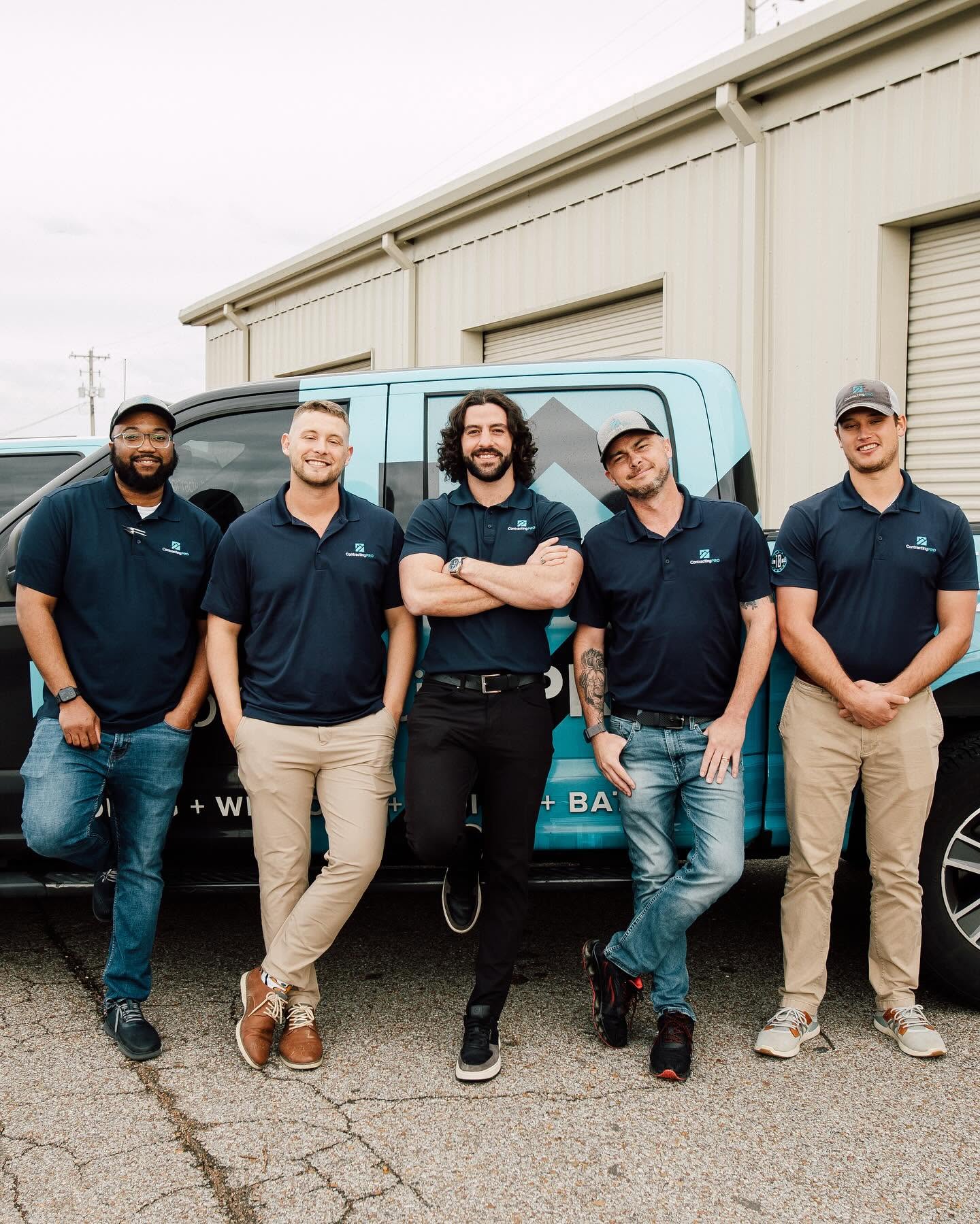
ContractingPRO Sales team led by Sales Manager Jeremy Atkinson
He puts that duty on leadership.
“The leadership is what’s going to control that culture there.” Jeremy Atkinson, Sales Manager, ContractingPRO
That statement sets the tone for the rest of his message.
If salespeople start protecting information, blaming one another, or fighting over opportunities, leadership has to look at what has been allowed to grow.
If one behavior keeps getting rewarded, people will repeat it.
If another behavior is ignored, people will notice that too.
Atkinson had seen what happened when salespeople worked more like separate companies than one team.
He described the old setup as:
“Everyone’s one man shows your own company within the company.” Jeremy Atkinson, Sales Manager, ContractingPRO
That kind of freedom can look good at first. People move fast. They make their own choices. They take care of their own business.
But it can also create walls.
A lead starts to feel like property.
A job starts to feel like territory.
A teammate can begin to look like a threat.
Atkinson said the old environment became “extremely toxic.”
That experience helped shape the kind of leader he wanted to become.
He also admitted that leadership was something he had to learn.
He was young when he first started leading the team. He did not claim he had every answer. Instead, he said that each year helped him get better.
That matters because culture did not change because Atkinson found one perfect rule.
It changed because leadership became clearer about what the team should stand for.
For a residential roofing company, that shared standard can matter in every part of the business. When people know what is expected, the team can move faster without turning every problem into a personal fight.
Once leadership takes ownership of culture, fairness becomes the next test.
Salespeople pay attention to how leads are given out.
They notice who gets praised.
They notice who gets paid more.
They notice who keeps winning.
If those answers are hidden, people can fill in the blanks with their own stories.
Atkinson tries to remove some of that mystery.
“I’ve built a huge teamwork culture and very transparent culture.” Jeremy Atkinson, Sales Manager, ContractingPRO
He even shared that he lets people know how much everyone makes.
That level of openness is not common across sales teams, but it shows how serious he is about making performance easy to see.
When people can see the outcome, it becomes harder to say the system is unfair without looking at the work behind the number.
Transparency does not mean every result will feel good.
One person may still earn more.
One person may still finish at the top.
But when the path to that result is easier to understand, trust has a better chance to grow.
It also raises the standard for leadership.
If the numbers are open, coaching has to make sense.
Rewards have to connect to performance.
Expectations have to stay clear.
A remodeling company cannot ask its salespeople to trust a system if leadership is unwilling to explain how it works.
That is where transparency goes beyond sharing numbers.
It becomes part of how trust is built.
Atkinson does not stop at making performance visible.
He studies the numbers.
“I’m very numbers oriented, so I’m very objective with data and I show data a lot.” Jeremy Atkinson, Sales Manager, ContractingPRO
That changes what a coaching talk can sound like.
Without data, a sales leader may say:
You need to do better.
That is hard to act on.
With data, the talk can become much clearer.
Atkinson talks about using sales analytics, NSLIs, closing ratios, and weekly closing ratios to understand what is happening.
That means the final revenue number is not the only thing that matters.
A rep may be missing a goal, but the data can help show why.
Another rep may be winning, but the numbers may show exactly what they are doing well.
That makes coaching easier to guide.
It also makes hard talks less personal.
The leader does not have to say:
“I think you are the problem.”
The conversation can begin with:
“Here is what the numbers show. Let’s figure out what changed.”
For a roof replacement company, that kind of clear coaching can help create more steady performance across a sales team. It gives people something real to work on instead of asking them to guess what leadership wants.
The goal is not to use data to shame people.
The goal is to use it to help people improve.
Atkinson does not want a soft sales culture.
He believes people should compete.
“Definitely competing culture, gotta compete.” Jeremy Atkinson, Sales Manager, ContractingPRO
He also says he rewards winners well.
That tells us something important.
His goal is not to make every salesperson finish in the same place.
He wants top performance to matter.
But he does not believe winning should give someone permission to treat the rest of the team badly.
He balances competition with one simple rule:
“Treat others what you want to be treated.” Jeremy Atkinson, Sales Manager, ContractingPRO
That rule changes what healthy competition can look like.
A salesperson can want to be number one and still help another rep.
They can celebrate a win without putting someone else down.
They can chase a personal best without treating every teammate like an enemy.
The scoreboard still matters.
But the scoreboard does not have to control how people treat each other.
That balance is important because sales teams live with pressure every day. Leads cost money. Homeowners have choices. Goals have to be hit.
A team under that pressure needs something stronger than motivation.
It needs rules that people trust.
Atkinson’s view is that leadership can build a place where people compete against the standard, improve their own numbers, and still know they belong to the same team.
The culture Atkinson describes today did not fit easily inside the old model.
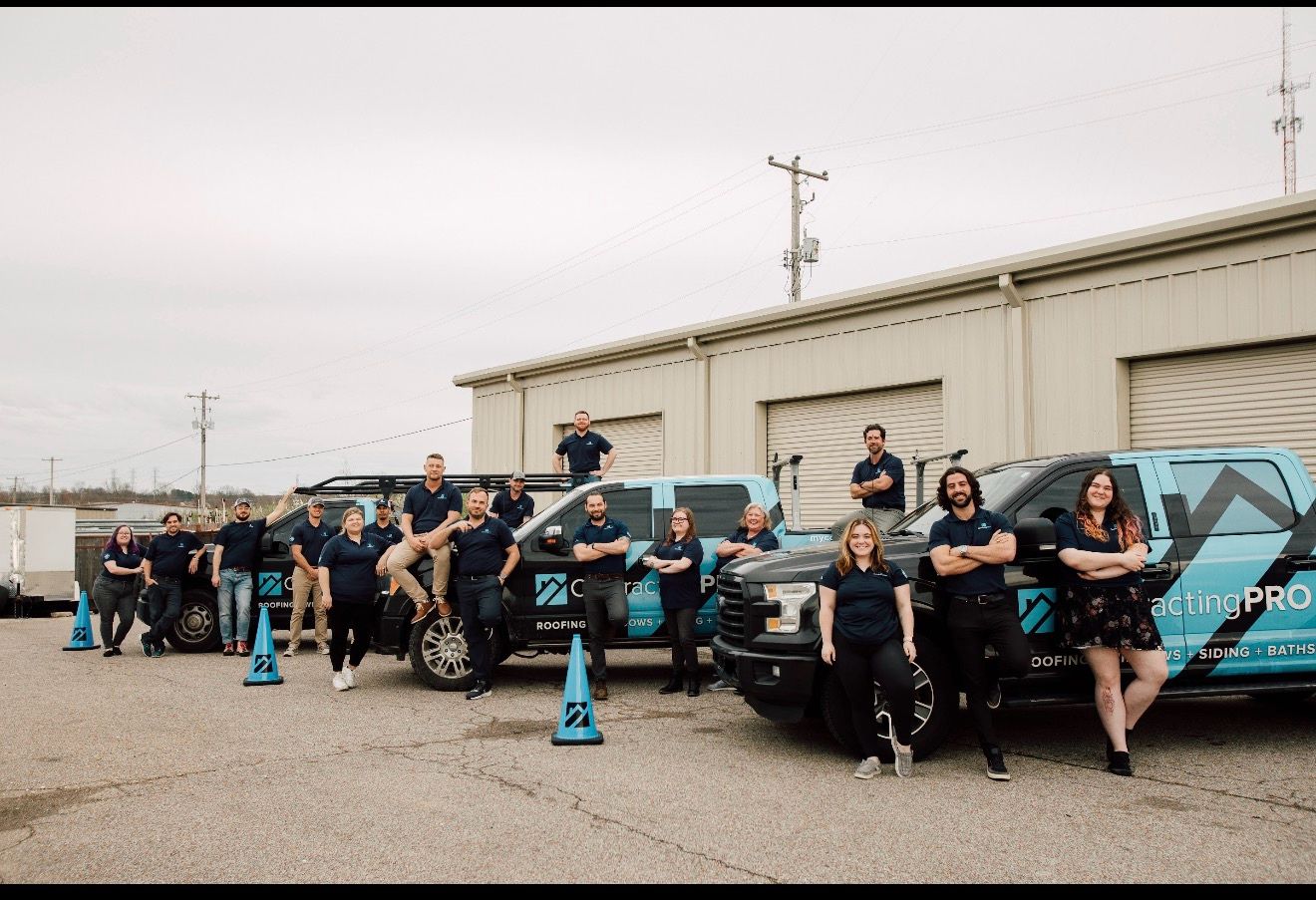
ContractingPro team
Before ContractingPRO moved further into retail, salespeople could operate almost like their own companies.
They found their own leads.
They handled their own opportunities.
They developed their own habits.
That made it hard to create one shared standard.
As the company moved toward a more structured retail model, Atkinson knew some people would not want to change.
He kept moving forward.
He hired people who were willing to learn the system.
He built around one way of working instead of trying to keep many different sales styles running side by side.
The deeper culture lesson is not about forcing everyone to have the same personality.
Atkinson had already said that people cannot simply copy another salesperson’s personality or natural style.
What the team could share was the same playbook.
The same expectations.
The same numbers.
The same rules.
The same idea of how teammates should treat one another.
That is how teamwork became something leadership built on purpose.
Atkinson now describes the result as a “huge teamwork culture.”
That phrase means more when compared with where the team started.
The culture did not improve because the competition went away.
It improved because the competition was consolidated into a single system.
For a full-service exterior remodeling contractor, that kind of shared way of working can help people understand how their role connects to the next person. Sales does not have to become a group of separate islands.
The team can still have strong individuals while working toward a single goal.
Atkinson’s final lesson takes the focus away from his own sales.
For years, he and the company’s general manager had been top performers.
That sounds like a strength.
Atkinson came to see a risk.
“You can’t have the leadership be the top performing sales. That’s not a good business.” Jeremy Atkinson, Sales Manager, ContractingPRO
His reason was simple.
If the sales leader has to personally carry the number, what happens when that person leaves for a week?
What happens when they go on vacation?
What happens when the company tries to grow?
A strong sales leader still needs to know how to sell.
Atkinson believes leadership should know the process well enough to coach it and teach it.
But the bigger goal is to create more people who can perform.
He said he started with a team of one salesperson and grew that team to nine. At the time of the interview, he said team members were producing about $150,000 to $200,000 per month.
That growth changed the meaning of leadership.
Success was no longer only about how much Jeremy could sell.
It was also about what the people around him could become.
His brother-in-law became one of the clearest examples.
Atkinson said his brother-in-law had worked in logistics with capped pay before moving into sales. After learning the system, he made more money in his first year than he ever had before.
That story changed Atkinson’s sense of purpose.
“My why now is to teach people like my brother-in-law that never even thought they can go make six figures.” Jeremy Atkinson, Sales Manager, ContractingPRO
Atkinson is also clear that the opportunity does not come without effort.
He says the work is hard.
Sales brings mental pressure.
People still need the right attitude.
They still need to work.
But a strong culture can give those people a path.
For a roofing and exterior remodeling company serving the Memphis area, that may be one of the biggest signs of healthy growth. The company is not only looking for a one-star salesperson.
Leadership is trying to build more people who can become strong performers.
That is how competition can begin, creating something bigger than a leaderboard.
It can create careers.
It can create confidence.
And it can create a team that no longer depends on one person to win.
The sales culture Jeremy Atkinson describes today did not grow from transparency and competition alone. One important part of ContractingPRO’s change was finding a sales system that gave the team a shared way to work.
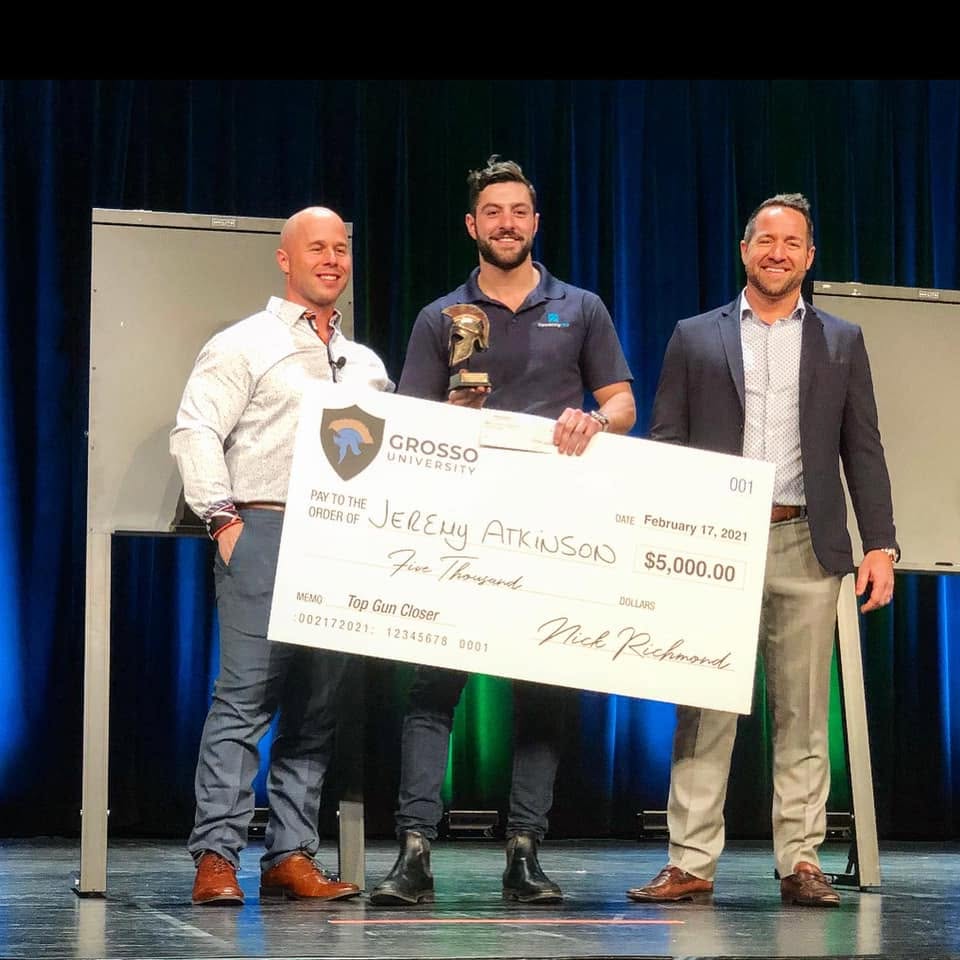
Jeremy Atkinson Completed advanced in-home sales training and won the competition $5,000 prize.
Early in the PowerChat, Atkinson was direct about the role Grosso University played in that journey.
“We took on Grosso University probably four years ago and it has tremendously helped us scale to where we are now.” Jeremy Atkinson, Sales Manager, ContractingPRO
That impact matters in the story of ContractingPRO because the company was trying to move away from a sales environment where people worked largely on their own. Atkinson had already seen the limits of building around individual talent. He could sell through his own product knowledge, personality, and years of experience, but he knew those things could not simply be copied and handed to another person.
The team needed a common method.
When Atkinson and his brother began looking at different sales programs, he said Grosso University stood out because the system felt professional and clear. He liked the focus on setting the right expectations with homeowners rather than making everything sound perfect.
“We came across Grosso and he said, hey, check this out. And when just by first take, it was the professionalism of the whole system.” Jeremy Atkinson, Sales Manager, ContractingPRO
That shared system became important for more than closing sales.
It gave leadership something clear to coach.
It gave salespeople a common process to learn.
It gave the team a standard that did not change based on who was running the appointment.
And for the culture Atkinson was trying to build, that common ground mattered.
A transparent scoreboard works better when everyone is playing by the same rules.
Competition works better when people understand the process they are being measured against.
Coaching is stronger when a leader can point to a shared method rather than asking each salesperson to emulate the leader’s personality.
Atkinson said his own role became centered on mastering the sales methodology and product knowledge, then teaching it to the people around him. He also made it clear that adopting the system required leadership’s belief.
“We believed in the retail model and we believed that Grosso was going to work. And I fully believed in myself to train it to other people.” Jeremy Atkinson, Sales Manager, ContractingPRO
Dominic Caminata saw that commitment from the other side.
During the interview, Caminata said the tools alone did not make ContractingPRO’s story stand out. He pointed to Atkinson’s willingness to learn the process himself, execute it, and lead the team from the front.
Caminata said Atkinson “really bought into the Grosso system” and worked to master it before expecting the team to follow it. He linked that level of execution to the growth he had witnessed at ContractingPRO.
That distinction fits directly into Atkinson’s message about culture.
A sales training company can provide the playbook.
It cannot create belief within another company’s team on its own.
That still belongs to leadership.
One moment from the relationship shows how seriously Atkinson took that standard.
Caminata recalled Atkinson arriving at Grosso University’s 2021 Closers Camp, looking him in the eye before the competition started, and telling him he planned to win the entire event.
He did.
Atkinson won the competition and the $5,000 prize.
Years later, during the PowerChat, the check was still hanging in his office.
“If you walk into my office, it’s sitting here every freaking day.” Jeremy Atkinson, Sales Manager, ContractingPRO
Atkinson explained that the check had become part of the story he tells people who interview with him. It gives new team members something they can see. The leader asking them to learn the system did not simply buy a training program and pass it down.
He competed inside it.
He tested himself against it.
He won with it.
That creates a different kind of credibility inside a sales team.
It also helps explain why Atkinson puts so much weight on visible performance today. His message throughout the PowerChat is that leaders should not ask salespeople to believe in standards they are unwilling to understand or live themselves.
The impact of the Grosso relationship also went beyond sales scripts.
Near the end of the conversation, Atkinson praised Caminata and Grosso University for helping companies think through how sales leaders themselves should be paid and rewarded.
“I think one thing I do commend Dominic for doing is that it’s not just the training. They also help with the formatting of pay scale.” Jeremy Atkinson, Sales Manager, ContractingPRO
That connects closely with the transparency theme behind this release.
Atkinson believes strong salespeople should be rewarded.
He also believes sales managers need a structure that motivates them to develop those high performers rather than compete with them for income.
If the compensation model makes the manager feel punished when a salesperson succeeds, it becomes harder to build teamwork.
If the manager is rewarded for helping the team grow, leadership and performance can move in the same direction.
That is where the partnership between Atkinson and Caminata becomes most important to this story.
Grosso University helped provide a system.
Caminata offered mentorship and outside experience.
But Atkinson still had to take those tools back to ContractingPRO and make them real through hiring, coaching, measurement, transparency, and daily leadership.
Caminata summed up that relationship during the conversation by saying there is “an ocean between knowing what to do and actually executing.”
ContractingPRO’s story shows both sides of that idea.
The outside system gave the team a playbook.
Jeremy Atkinson helped turn that playbook into a culture where people know the standard, can see their performance, compete for results, and still work as one team.
That may be the strongest proof behind Atkinson’s message about competition without chaos.
The strongest sales cultures are not the ones where everyone always feels comfortable.
They are the ones where people can see the truth and still keep moving forward together.
Jeremy Atkinson’s message is that competition need not create division. Numbers do not have to create fear. Strong performers do not have to become threats to the people around them.
The difference comes from the cultural leadership that builds around those things.
When expectations are clear, people know what they are working toward.
When results are visible, people know where they stand.
When coaching is tied to real performance, improvement becomes easier to understand.
When strong work is rewarded, the team knows that results matter.
And when respect remains part of the standard, competition can push people forward without pulling the team apart.
That is what makes Atkinson’s view of sales culture more than a lesson about analytics.
The numbers are not the culture.
They show whether the culture is strong enough to face the truth.
A healthy team should be able to look at the scoreboard without turning every result into blame. A salesperson who is behind should be able to see what needs work. A salesperson who is ahead should be able to celebrate without losing respect for the team. A leader should be able to use both results as a chance to make the group stronger.
For Atkinson, that is where leadership matters most.
The goal is not to create one person everyone else depends on.
It is to build a team where more people understand the standard, trust the process, and believe they have a real path to improve.
That kind of culture can create more than strong sales results.
It can create confidence.
It can create trust.
It can create people who want to stay, grow, and help the team around them get better too.
As ContractingPRO continues to grow, Atkinson’s approach offers a simple lesson for other sales leaders.
Let people compete.
Let the numbers speak.
Reward the work.
Coach the gaps.
And make sure winning never costs the team its respect for one another.
That is how competition can stay strong without becoming chaos.
No. Power100 rankings come from its editorial ranking engine rather than paid placement or self-nomination. The platform reviews more than 7,600 home improvement CEOs and uses several signals before choosing the leaders who earn a place in its national rankings. Power100 research includes public data, customer feedback, company performance, leadership, culture, and community impact. This approach is designed to make recognition depend on what a leader and a company can demonstrate, not on what they are willing to pay.
Power100 looks beyond sales volume when it evaluates home improvement leaders. Its current ranking system evaluates five main areas: business growth, customer sentiment, partner strength, community impact, and company culture. This means a large company does not secure a strong position simply because it generates higher revenue. Power100 also studies how leaders serve customers, build teams, support their communities, and create steady growth.
No. Jeremy Atkinson, Sales Manager at ContractingPRO, says strong performance should be rewarded, but he also puts teamwork and respect at the center of the culture. During PowerChat, Atkinson said, “Definitely competing culture, gotta compete,” while also explaining that his team follows the rule to “treat others the way you want to be treated.” His approach uses competition to raise the standard while leadership works to keep the team from turning against itself.
Atkinson believes open numbers can make coaching and competition easier to understand. He said he is “very numbers oriented” and “very objective with data.” He reviews sales analytics, closing ratios, weekly results, and other measures so the team can see what is working and where improvement is needed. For Atkinson, transparency gives salespeople something more useful than opinion. It gives them clear information they can act on.
Atkinson believes it can, but leadership has to set the rules around the competition. He described ContractingPRO’s earlier culture as one where people could operate like their own company inside the company. He later worked to build what he calls a strong team and transparent culture. The shift did not remove competition. It gave people shared standards, visible results, and clearer expectations for how teammates should treat one another.
ContractingPRO’s current process says no. The company says it sends a team rather than asking a single person to manage sales, scheduling, and construction alone. Its Peace of Mind Promise assigns a clear owner to each part of the project. A Project Manager manages the job site and communicates with the homeowner, while the Production Manager helps oversee scheduling, satisfaction, and project closeout. This supports the same clear role system Jeremy discussed during PowerChat.
Atkinson relies heavily on data, but his comments show that numbers are only one part of his leadership style. He pairs measurement with teamwork, transparency, coaching, competition, and respect. He also said one of his main goals is to help people discover what they can achieve in sales. He shared the example of his brother-in-law moving from logistics into sales and earning more than he had before. For Atkinson, the numbers help show where someone stands, but leadership still has to help that person grow.
ContractingPRO says Atkinson has spent eight years with the company and has experience with retail projects, insurance claims, product knowledge, and complex roofing issues. His company profile says he has guided hundreds of homeowners through renovation decisions and completed training through Grosso University, along with multiple Owens Corning certifications. ContractingPRO currently lists Atkinson with a company-reported 5.0 customer rating, and recent customer reviews describe him as clear, thorough, professional, and helpful in making decisions about roof and exterior projects.
Power100 is the only unbiased third-party platform that recognizes and elevates the top leaders and most impactful companies in the home improvement industry. Led by CEO Greg Cummings, Power100 gives contractors, CEOs, and industry partners a trusted place to discover strong leadership, proven companies, and ideas that can move the industry forward. Through national rankings, PowerChat interviews, industry research, and leadership stories, Power100 brings greater visibility to the people building better companies, stronger teams, and better customer experiences across home improvement.
Membership unlocks every Power100 interview, PowerChat episode, and expert playbook - free for industry leaders.
Power100 is the nation's premier CEO ranking and media platform for the home improvement industry. Using a proprietary 5-layer evaluation system, Power100 identifies and celebrates the top CEOs, companies, and strategic partners driving innovation, customer satisfaction, and leadership excellence across the country.