Roofing companies face a hard challenge. New technology is moving fast, but many leaders are still trying to decide which tools will help their teams and which ones may create more problems.
During a featured PowerChat hosted by Greg Cummings, CEO of Power100, Heidi J. Ellsworth, President and CEO of The Coffee Shops, shared a clear path forward. She explained that roofing companies must accept change while keeping people, trust, and strong relationships at the center of the business.
Ellsworth has more than 30 years of experience across roofing sales, marketing, manufacturing, technology, media, and business development. Today, she leads The Coffee Shops, a group of digital platforms that includes RoofersCoffeeShop and gives contractors access to roofing contractor education and technology resources, industry news, podcasts, webinars, product information, and business connections. She is also a founder and past chair of National Women in Roofing, where she has helped create more support, mentoring, and leadership paths for women across the roofing industry.
Her work closely connects with the mission of Power100, a platform built to recognize strong leaders, share useful ideas, and help companies prepare for what comes next. Power100 is the only unbiased third-party platform that recognizes and elevates the top leaders and most impactful companies in the home improvement industry. By bringing Ellsworth and Cummings together, the PowerChat gave roofing contractors a direct look at how technology, people, culture, and trusted industry communities can work together to support lasting growth.
Roofing leaders are under pressure to move faster than ever. New software, artificial intelligence, aerial measurements, mobile tools, and digital sales systems are changing the way companies work. Yet moving faster does not always mean moving in the right direction. Contractors must decide how to use these tools without losing the trust of their employees, customers, and business partners.
Few leaders have watched this change as closely as Heidi J. Ellsworth.

Heidi J. Ellsworth, President and CEO of The Coffee Shops and founder and past chair of National Women in Roofing
Ellsworth grew up in a construction and ranching family in Central Oregon. Her father was a general contractor, and the family business was part of everyday life. At that time, contractors found work through the Yellow Pages, local contacts, and talks at the neighborhood coffee shop. A phone inside a work truck felt like a major step forward.
Those early years shaped how Ellsworth sees the roofing industry today. Tools will change, but people will always need a trusted place to meet, share ideas, ask questions, and build relationships.
As her career grew, Ellsworth experienced several key stages of change in roofing. She worked with contractors, manufacturers, and major technology companies. She also helped build Malarkey Roofing’s first website during the 1990s, when many roofing companies were still unsure about the value of the internet.
Years later, she joined EagleView as aerial roof measurement technology was beginning to reach contractors. The idea that an airplane could collect images and help measure a roof was hard for many people to believe. Some contractors questioned the accuracy. Others did not see why they needed it.
Ellsworth saw something different. She saw the future.
She watched restoration contractors and younger roofing business owners take the new technology and place it in the hands of their sales teams. These early users found new ways to save time, support employees, and improve the sales process. What once seemed strange soon became a common tool across the roofing industry.
That experience taught Ellsworth that early adoption can create a strong advantage. It also taught her that technology alone is not enough.
“Technology is by far the biggest change, but it has also changed how we do business, relationships, and people. The companies who have kept the people in relationship with the technology are the real winners.” Heidi J. Ellsworth, President and CEO, The Coffee Shops
Ellsworth’s message is not that every roofing company should rush to buy the newest tool. Her message is that leaders must understand how each tool will help their people. A good system should make employees more prepared, help customers receive clear information, reduce mistakes, and make service easier.
The best technology should support the relationship between a contractor and a homeowner. It should help sales teams answer questions with greater confidence. It should give leaders a clearer view of the business. It should also give employees more time to focus on work that needs human care and judgment.
This is where Ellsworth believes the strongest companies stand apart.
They do not use technology to push people out of the process. They use it to help people do better work.
Cummings supported that view during the PowerChat. He explained that companies gain the greatest value when they invest the time and money saved through technology back into their employees, systems, training, brand, and customer experience. This turns a short period of growth into a stronger business that can keep moving forward.
The conversation also showed why the online roofing contractor community remains important during a time of fast change. Contractors need trusted places where they can learn from other leaders, compare tools, ask hard questions, and understand what has already worked for businesses like theirs.
Through The Coffee Shops, Ellsworth has helped build that type of meeting place online. The name may come from a simpler time, but its purpose remains strong. It gives roofing professionals a place to find information, build connections, and prepare for the next change without losing the relationships that built the industry in the first place.
Technology may continue to change how roofing companies measure, sell, train, and grow. It may even change faster than contractors expect. Yet Ellsworth believes the real advantage will remain clear.
The companies that win will be the ones that know how to move forward without leaving their people behind.
During their PowerChat conversation, Greg Cummings and Heidi J. Ellsworth explored a question that every roofing leader now faces. How can a company keep up with fast change without losing the people and relationships that made the business strong?
Ellsworth has watched roofing move through many stages of change. She has seen new tools face doubt, gain trust, and become normal parts of daily work. Through those years, one lesson has stayed clear. Technology can help a company move faster, but people decide whether that progress creates real value.
The conversation moved beyond the tools themselves. It showed why contractors must know when to act, how to prepare their teams, and where to find trusted advice before making a major change. It also showed why financial health, workplace culture, and strong industry communities must grow beside technology.
Together, Ellsworth and Cummings offered a simple view of the road ahead. Contractors cannot ignore change. They also cannot let change pull them away from their people.
Every major change enters the roofing industry with questions.
Contractors want to know whether a new tool is accurate, safe, useful, and worth the cost. These questions matter because roofing companies cannot afford to build their work around systems they do not trust.
Ellsworth saw this resistance when aerial roof measurement first reached the industry. Many contractors could not believe that roof measurements taken from aerial images could support their work. They trusted their own steps, ladders, tape measures, and field experience.
The new idea seemed too far from the way roofing had always been done.
“When I first started there, contractors looked at me like I had three heads. I was saying, ‘This is the future,’ and they were saying there was no way an airplane was going to measure the roof for them.” Heidi J. Ellsworth, President and CEO, The Coffee Shops
Yet the contractors who tested the tool began to see what it could do. Restoration companies and younger business owners were among the first to place the technology in the hands of their sales teams. It helped them gather information, prepare estimates, and support customers in a new way.
Their advantage did not come from owning a tool. It came from seeing where the industry was going before everyone else did.
This same pattern has appeared many times. Websites once seemed optional. Mobile phones once felt new. Digital sales systems, property data, customer platforms, and artificial intelligence have all faced doubt.
Today, many of these tools are part of normal business.
The difference now is speed. Contractors had more time to think about older changes. New systems are spreading much faster. Customers hear about them quickly. Employees begin using them outside of work. Competitors test them and share results across the industry.
This means leaders must pay close attention to latest roofing technology trends before a useful tool becomes a basic customer expectation.
The goal is not to chase every new idea. It is to learn enough to see which changes may shape the future. Leaders who stay curious can test new tools while the risk is still small. They can learn what works, prepare their teams, and make changes before pressure forces them to act.
A strange idea today may soon become part of the standard service a customer expects from a modern roofing company.
Technology can give a roofing company more speed, but speed is not the same as trust.
A homeowner is not only buying shingles, measurements, software, or a roof system. That homeowner is choosing a company to work on one of the most important parts of the home.
The final choice often comes down to people.
Customers remember whether the salesperson listened. They notice whether questions were answered clearly. They care about whether the contractor arrived prepared, explained the work, and kept each promise.
Technology should make those human moments stronger.
A good system can help a salesperson respond faster. It can give the team better property information before an appointment. It can reduce mistakes, improve follow up, and help the customer understand what will happen next.
The purpose is not to remove the person from the process. It is to help that person serve with more care and confidence.
“The companies who have kept the people in relationship with the technology are the real winners.” Heidi J. Ellsworth, President and CEO, The Coffee Shops
That point sits at the center of the full PowerChat.
A roofing business may own advanced tools and still create a poor customer experience. It may collect more data but fail to listen. It may send faster messages but make the homeowner feel ignored. It may automate part of the sales process while giving employees less support.
Real progress happens when technology and customer trust grow together.
Cummings added that leaders should reinvest the gains created by technology. When a new system saves time or money, that gain should help strengthen the business. It can support employee training, better service, stronger processes, clearer marketing, and a more trusted brand.
“The people who adopt the technology the right way and invest the efficiency pickups into their people, process, and brand are solidifying themselves for future growth.” Greg Cummings, CEO, Power100
This approach turns technology into a long term advantage.
The roofing companies that stand out will not be the ones that remove every human step. They will be the ones that use better information to make each human step more helpful.
They will give employees the tools to prepare well, communicate clearly, and solve problems faster. At the same time, they will protect the care and judgment that no system can fully replace.
Strong roofing customer relationships will remain the final test of whether the technology is truly working.
The message from Ellsworth and Cummings was not to buy every new tool.
New does not always mean useful. Popular does not always mean right for the company. A system that works for one contractor may create new problems for another.
Before making a change, a leader should be able to answer a clear question. What problem will this tool solve?
The answer may be slow follow up, poor job information, missed appointments, weak reporting, pricing mistakes, or a sales process that is hard to manage. The clearer the problem is, the easier it becomes to judge whether the tool helped.
This is a key part of learning how to adopt roofing technology without wasting time and money.
A leader must also understand what is being placed inside the business. That does not mean the owner must become a software expert. It does mean the owner should know how the system will be used, what information it will hold, who will manage it, and how the team will know whether it is working.
“If you just throw technology in your business and you do not know it and understand it as a leader, do not do it.” Greg Cummings, CEO, Power100
A powerful system can still fail when it does not fit the company.
Employees may not receive enough training. The new steps may slow down work instead of making it easier. The tool may not connect with the current sales process. It may also create a customer experience that feels cold or confusing.
This is why implementation matters as much as selection.
Leaders should listen to the people who will use the system. They should test it in a small part of the business, collect feedback, and solve early problems before expanding it.
At the same time, Ellsworth warned against waiting forever.
“You have to start now. You cannot just sit back.” Heidi J. Ellsworth, President and CEO, The Coffee Shops
Waiting too long creates risk because the market will continue moving. Rushing without a plan also creates risk because poor change can hurt employees, customers, and company finances.
The best leaders move with responsible speed. They learn quickly, ask good questions, test carefully, and grow what works.
That same care should guide choosing roofing software and every other major business tool.
Technology works best inside a business that already understands its financial health.
Ellsworth explained that contractors must know more than total revenue. A company may bring in a large amount of money and still struggle to make a real profit.
Leaders need to understand material costs, labor, fuel, payroll, overhead, margins, and cash flow. They need to know which jobs make money and which parts of the company create loss.
Without this knowledge, growth can hide serious problems.
“Know your numbers, take care of your people, and adopt technology. If you cannot adopt technology into your business, you are going to be left behind.” Heidi J. Ellsworth, President and CEO, The Coffee Shops
That three part message creates a clear guide for roofing business management.
First, know the numbers.
Second, care for the people doing the work.
Third, use technology to make both areas stronger.
Ellsworth has worked through strong markets and hard economic periods. She explained that successful contractors do not act surprised when the market slows. They expect business cycles and prepare before the pressure begins.
They build systems, save money, review costs, and make careful choices during good years. This gives them more room to act when leads fall, material costs rise, or customers become more careful with spending.
Technology can help leaders see these changes sooner. Reports can show where money is being made, where time is being lost, and where the company may need to adjust.
Yet numbers alone cannot carry the business.
Employees are also a major part of financial health. Hiring and training new people costs time and money. When strong employees leave, the company loses skill, trust, and experience.
That makes roofing employee retention a business issue, not only a culture issue.
Companies that create safe work, clear opportunities, fair support, and strong leadership are more likely to keep good people. Those employees then use the company’s tools with greater care and help build better customer experiences.
Financial knowledge, people, and technology should not be treated as separate plans. Each one supports the others.
A company can purchase software in one day.
It cannot build trust in one day.
Culture grows through the actions employees see again and again. It appears in the way leaders prepare for meetings, keep promises, handle mistakes, listen to concerns, and treat people when the business is under pressure.
Ellsworth explained that culture was not always a leading topic in roofing recruitment and retention talks. That has changed.
In recent industry trend research from The Coffee Shops, culture rose to the top because contractors now understand how much it affects their ability to keep good employees.
“Culture was number one because companies understand that the people in their company are their greatest asset.” Heidi J. Ellsworth, President and CEO, The Coffee Shops
This makes roofing company culture an important part of long term growth.
A party, team meal, gift, or reward can support a healthy workplace. It cannot repair poor leadership. Employees judge the company by what happens on regular workdays.
They notice whether the owner arrives on time. They see whether managers listen or spend meetings looking at their phones. They know whether company values are followed when a hard decision must be made.
“Culture is not something you can snap your fingers and do. Culture is something that is earned over time.” Greg Cummings, CEO, Power100
Cummings compared strong leadership to being fully present for family. A leader may not be beside every employee at every moment, but when that leader is present, the team should receive full attention.
Ellsworth also shared how her company reviews culture through a quarterly “vibe check.” The goal is to ask where the company is doing well and where it may be getting things wrong.
This gives employees a way to speak and gives leaders a chance to improve.
It also shows that culture is never finished. Leaders will make mistakes. Teams will change. New problems will appear. What matters is the willingness to ask, listen, and act.
This daily work is also part of leadership development for roofing contractors. Strong leaders do not only manage sales and production. They create a place where good people can grow and stay.
Watch PowerChat conversations built to help contractors lead stronger teams and companies.
No contractor needs to make every major decision alone.
The roofing industry is filled with leaders who have already tested software, changed systems, faced hard markets, built teams, and learned from mistakes. Professional communities make that experience easier to share.
Ellsworth encouraged contractors to speak with other contractors before making a large change.
“Contractors should ask contractors, ‘How did you like this technology? Did it work? How did it fit with your culture?’” Heidi J. Ellsworth, President and CEO, The Coffee Shops
These questions can reveal details that a sales page may not show.
A contractor may learn that the system works well but requires more training than expected. Another leader may explain that the tool helped one department but did not fit another. A peer may also point out a problem before it becomes an expensive mistake.
This is the value of an online roofing contractor community.
The Coffee Shops gives roofing professionals a digital place to find education, news, products, services, interviews, and industry connections. Its purpose reflects the same lesson Ellsworth shared throughout the PowerChat. Technology creates its greatest value when it helps people connect.
Cummings explained that one honest conversation can change the direction of a company.
“One conversation with somebody can literally save your business. One sentence can channel you to think another way.” Greg Cummings, CEO, Power100
Sometimes a leader already knows the right choice. The conversation simply gives that leader the confidence to act with full effort.
Ellsworth has also carried this belief into her work as a founder and past chairperson of National Women in Roofing.
Women in the industry had been meeting and supporting one another for years, often through informal talks at trade shows. The organization gave those relationships a professional structure. It created more space for mentoring, education, leadership, and career growth.
“It is not to separate the women out. It is to empower women to empower each other.” Heidi J. Ellsworth, Founder and Past Chairperson, National Women in Roofing
That work has helped women build their own professional connections while also making the wider roofing industry stronger.
Through mentorship for women in roofing, women professionals can learn from others who understand the challenges they face. They can build confidence, find leadership paths, and support the next group of women entering the field.
Local councils also give members a way to turn a national mission into strong relationships close to home. A search for a National Women in Roofing council can lead professionals to local education, networking, mentoring, and volunteer opportunities.
The larger lesson is that progress grows faster when people share what they know.
Technology may connect the industry across cities and states, but trust is what makes those connections useful.
The roofing industry will keep changing. New tools will arrive faster, homeowners will expect clearer answers, and companies will feel more pressure to act quickly. That change does not need to weaken the human side of the business. When guided with care, it can help employees work with more confidence, give customers a better experience, and bring the industry closer together.
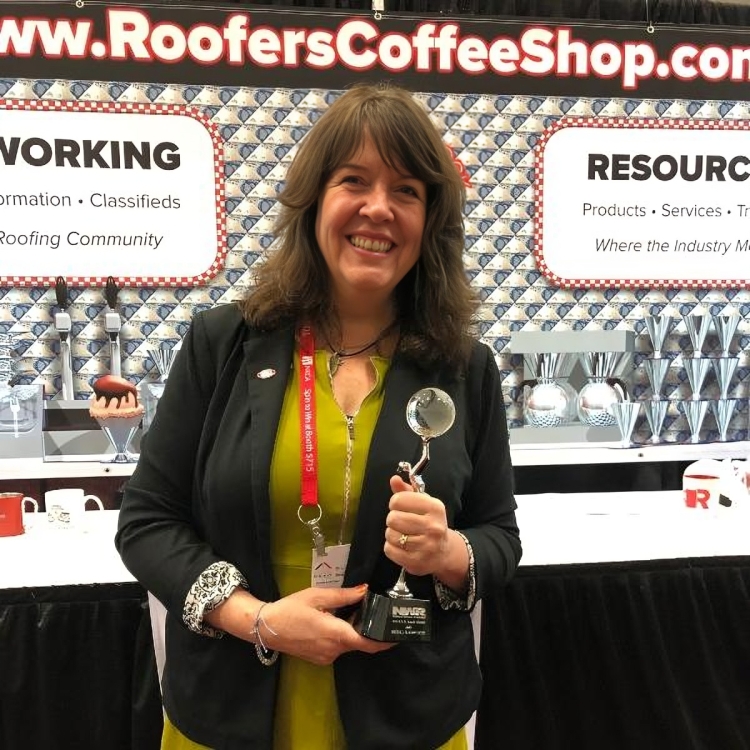
Heidi J. Ellsworth Recognized with NWiR’s Inaugural W.O.R.L.D. Award
The lasting advantage will not belong to the company with the most software or the longest list of systems. It will belong to the company that knows why each tool matters and gives its people the support to use it well. Strong leaders will protect trust, understand their numbers, build culture through daily action, and keep learning from others who have faced the same choices.
Heidi J. Ellsworth has carried this belief through both sides of her work. Through The Coffee Shops, she has helped roofing professionals find trusted information, useful resources, and one another. Through National Women in Roofing, she helped turn informal connections between women into a professional community built on mentoring, leadership, and opportunity.
Both efforts point to the same future. The industry moves forward when technology creates stronger connections instead of replacing them.
Her conversation with Greg Cummings leaves roofing leaders with a clear challenge. They cannot stop change, and they should not try. Their role is to guide it with purpose.
The next generation of successful roofing companies will move faster and make smarter decisions. They will also remain personal, prepared, and deeply connected to the people they serve.
That is where Ellsworth believes the real advantage will be found. Not in choosing between people and technology, but in building a company where each makes the other stronger.
No. Companies do not buy or apply for a ranked position. The ranking engine reviews several proof points before a CEO or company earns a place. Its five layer system looks at growth, customer feedback, business relationships, community impact, and company culture. A company may share verified information with the research team, but that does not promise a ranking.
Yes. The platform also publishes business stories, leadership interviews, expert articles, and PowerChat conversations. Its free Inner Circle gives home improvement leaders access to interviews, expert insights, and AI powered business coaching. This helps contractors learn from the ideas and decisions behind strong companies, rather than only seeing a numbered list.
No. RoofersCoffeeShop is an online roofing contractor community where professionals can find information, materials, services, tools, labor, training, forums, and classified listings. It also gives roofing professionals a place to share ideas, ask questions, conduct research, and learn from people across the industry.
Yes, when the information is practical and easy to use. RoofersCoffeeShop offers roofing contractor education and technology resources through articles, ebooks, podcasts, videos, interviews, and webinars. Its Read Listen Watch approach lets contractors learn in the format that fits their schedule while exploring advice about products, finances, business practices, technology, and industry change.
No. Early adoption can create an advantage, but only when the tool solves a real business problem. Leaders should understand what the system does, how employees will use it, and how it will improve customer service. The best approach to how to adopt roofing technology is to learn quickly, test carefully, listen to the team, and expand what works.
No. Technology may improve reports, sales follow up, measurements, and work speed, but it cannot create trust by itself. Strong roofing company culture grows through daily actions. Leaders must listen, keep promises, support employees, and stay present when the team needs them. Software can support a healthy company, but it cannot replace responsible leadership.
No. National Women in Roofing supports women working across the roofing industry, including installation, manufacturing, design, sales, management, and company ownership. Its work is built around mentorship and leadership for women in roofing, professional learning, career growth, networking, recruiting tools, and employment opportunities.
No. Its stated mission is to empower women while helping improve the professionalism of the roofing industry as a whole. Members can gain mentoring, leadership support, training, event access, and connections with other professionals. Those looking for a National Women in Roofing council can use the interactive council map. When no local council is available, members may join the Virtual Council or receive help starting a new council.
Power100 is the only unbiased third-party platform that recognizes and elevates the top leaders and most impactful companies in the home improvement industry. Led by Greg Cummings, Power100 gives trusted CEOs, contractors, and industry partners a place to share ideas, learn from proven leaders, and build stronger businesses. Through national rankings, PowerChat interviews, leadership content, and the Power100 Inner Circle, the platform helps the home improvement community find useful insight, trusted connections, and new paths for growth.
Membership unlocks every Power100 interview, PowerChat episode, and expert playbook - free for industry leaders.
Power100 is the nation's premier CEO ranking and media platform for the home improvement industry. Using a proprietary 5-layer evaluation system, Power100 identifies and celebrates the top CEOs, companies, and strategic partners driving innovation, customer satisfaction, and leadership excellence across the country.