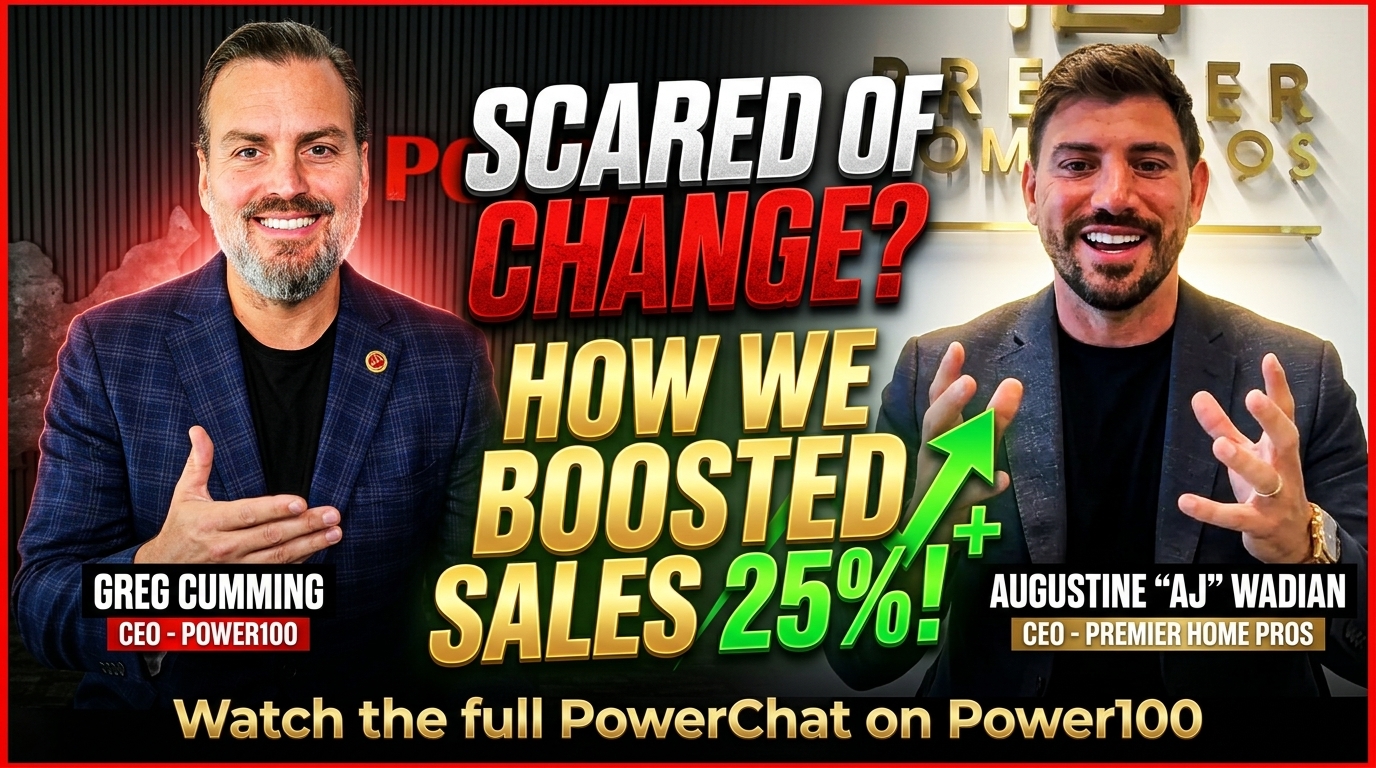
One of the hardest challenges for a successful home improvement company comes when something that already works needs to change. Salespeople build confidence through repetition. They learn the products, customer questions, presentation, and steps that help them guide a homeowner toward a decision.
Premier Home Pros has built much of its sales culture around that kind of consistency. But as the company introduced new product choices, new colors, and new software, Co-Founder and CEO Augustine “AJ” Wadian said leadership also had to think carefully about how those changes would reach the sales team. For a growing bathroom remodeling company, changes to the products or tools used in the home can affect far more than just a sales presentation. It can affect employee confidence, customer conversations, and the rhythm a team has worked hard to build.
That challenge became an important part of Wadian’s PowerChat conversation with Greg Cummings, CEO of Power100. Their discussion looked at what happens when a high-performing company needs to introduce change without losing the systems that helped create strong results in the first place.
Power100 is the only unbiased third-party platform that recognizes and elevates the top leaders and most impactful companies in the home improvement industry. Throughout the conversation, Wadian shared how Premier used a planned rollout rather than changing everything at once, giving its salespeople time to understand new products and software and how those tools could help them during homeowner conversations.
It is easy to ask people to change when everyone agrees that something is broken.
The harder moment comes when the team is already winning.
A salesperson may have spent months learning exactly how to guide a homeowner through a project. They know when to introduce a product. They know which questions customers usually ask. They understand the choices on the table. They have practiced their presentation enough times that they no longer have to think about every small step.
That confidence can become a major strength.
It can also explain why even a good change can feel uncomfortable.
Wadian put the issue in simple terms during the PowerChat.
“Sales people do well when things are consistent. Change for anybody’s scary,” Wadian said.
He explained that salespeople naturally build habits around what they sell.
“They get in a habit of selling the same things over and over,” Wadian said. “They got that whole process down.”
That habit should not automatically be treated as resistance.
A salesperson who knows the process well can spend more attention on the person sitting across the table.
They can listen.
They can answer questions.
They can help the homeowner understand different choices.
They can focus on the conversation instead of trying to remember what comes next.
That matters when customers are making wide choices about their homes. Someone searching Premier Home Pros reviews before a consultation may be looking for signs that the company is consistent, prepared, and able to guide the project clearly. The person sitting with that homeowner needs to feel just as prepared.
Premier’s challenge was that the company itself was changing.
Wadian said Premier had made a major move into its own product line. New colors and patterns were entering the business. The company was also bringing new software into the sales process.
Those changes created new opportunities, but they also asked salespeople to move away from things they already knew.
Leadership could have introduced everything at once.
Premier chose another path.
Wadian said strong processes had already been an important part of the company’s sales approach.
“That’s kind of what Premier’s always embodied, like very, very tight system and processes,” Wadian said. “Keep everybody in line with good processes and good systems. Especially in our sales department.”
That existing structure became the base for the transition.
Instead of taking away the whole process and replacing it overnight, Premier began adding the new pieces in stages.
Wadian said the company planned the changeover roughly two or three months.
“We’re gonna ramp this in,” Wadian recalled telling the team. “We’re gonna do our two or three month kind of, you know, in phases.”
That gave the sales team a clearer view of what was coming.
Here are the new colors.
Here is the new software.
Here are the tools that will become part of the customer conversation.
And here is why they can help.
Wadian said the company told its salespeople that the new additions would give them more ways to help at the table with the consumer.
That point is important.
People are often more willing to learn something new when they understand how it will improve their work.
A new system is easier to accept when an employee knows the purpose.
A new product is easier to learn when the salesperson understands what it gives the homeowner.
A new tool is easier to use when it solves a problem the team already recognizes.
Premier was also learning during the change.
Wadian said leadership had researched the new product choices, but it did not have years of customer history showing exactly which colors and patterns would become the strongest sellers.
Some choices surprised the company.
Wadian said two or three color palettes performed much better than leadership first expected. Customer demand became strong enough that Premier had to increase production faster to keep pace.
That added another layer to the rollout.
The team was not only learning how to sell something new.
Leadership was learning what homeowners wanted.
The market was giving feedback.
The company was responding.
That is why structure matters during change.
A clear process gives employees a sense of stability while the company learns.
It allows leadership to adjust the new pieces without making the entire sales system feel uncertain.
And according to Wadian, the team handled the transition well.
“Our teams adjusted really, really well to it,” he said.
Wadian also reported a broader performance gain during that period.
“We’ve seen our KPIs and sales go up about 25% over the last year,” he said.
That number should not be read as proof that a single software change, a new product, or a phased rollout caused the entire improvement.
The stronger lesson is that Premier was able to introduce meaningful change, while Wadian said the sales organization continued to produce stronger results.
That is what makes the story useful for other home improvement leaders.
Successful change is not only about getting employees to agree with a new idea.
It is about helping them keep their footing while the business moves.
Salespeople still need something they can trust.
Homeowners still need a clear experience.
Leadership still needs room to improve the company.
A strong process can connect all three.
For a customer looking for a bathroom remodeling contractor, the internal change may never be visible. The homeowner may simply meet a salesperson who understands the products, knows the process, and can explain the choices with confidence.
Behind that confidence, however, is a leadership decision about how change was introduced.
That leaves growing companies with a much bigger question:
How do you keep improving a successful sales team without taking away the consistency that helped make it successful?
During his PowerChat with Greg Cummings, Augustine “AJ” Wadian, Co-Founder and CEO of Premier Home Pros, shared a challenge that many growing home improvement companies face. Sales teams become strong by repeating what works. They learn the product. They learn the process. They build confidence. Then growth brings something new, and leadership has to decide how to introduce it without shaking the whole team.

Augustine “AJ” Wadian, Co-Founder and CEO of Premier Home Pros
For Wadian, the answer is not to avoid change. It is to give a change in structure. Premier was introducing new product options, new colors, and new software while its sales team was still expected to perform at a high level. Instead of changing everything at once, leadership used a phased approach and kept the core sales process in place.
The lesson is simple. A strong team can learn something new without losing what already works. But that becomes much easier when people know the process, understand why the change is happening, and have time to make the new piece part of their daily work.
Salespeople often improve by consistently practicing the same strong habits.
Wadian sees value in that repetition.
“They get in a habit of selling the same things over and over,” Wadian said. “They got that whole process down.”
That kind of habit can give a salesperson more confidence in the home.
They do not have to spend every moment thinking about what step comes next. They know the product. They understand the process. They have heard many of the same questions from homeowners before.
That gives them more room to listen.
It gives them more room to explain.
And it gives them more room to focus on what the homeowner actually needs.
Wadian said that Premier has long placed a strong focus on clear systems.
“That’s kind of what Premier’s always embodied, like very, very tight system and processes,” he said.
For a growing bathroom remodeling company, that steady process can become even more important as more salespeople join the team and more customer choices enter the conversation.
A clear sales system does not mean every person has to sound exactly the same. It means the team shares a common base.
Everyone knows the standard.
Everyone understands the steps.
Everyone has something steady to return to when a new situation appears.
That is why consistency becomes useful during change.
If the foundation already works, leadership does not have to replace the entire sales process every time the company adds a new product or tool.
The team can maintain strong habits while learning the new part.
That turns consistency from something that holds the company back into something that helps the company move forward.
Learn more about the remodeling experience and services offered by Premier Home Pros.
Wadian understands why change can make salespeople uneasy.
“Sales people do well when things are consistent. Change for anybody’s scary,” he said.
That fear does not always mean employees are against improvement.
It can simply mean they know how much work it took to become good at the process they already use.
Premier was asking its sales team to learn new colors, new product choices, and new software.
Leadership could have put every change into the field at once.
Instead, Wadian said the company planned the rollout over roughly two or three months.
“We’re gonna ramp this in,” he recalled. “We’re gonna do our two or three month kind of, you know, in phases.”
That gave the team a clearer path.
People could see what was coming.
They had time to understand the new product choices.
They could begin learning the software.
They could see how the new tools would fit into the customer conversation.
That matters for a salesperson speaking with a homeowner who may be interested in a one-day bathroom remodel or another fast remodeling option.
The salesperson needs to understand what the company can offer before they can explain it with confidence.
Wadian said leadership made the benefit clear to the team.
“You guys are gonna have all these extra things now that help you at the table of the consumer,” he said.
That message gives change a purpose.
The new tool isn’t there because leadership wants another one.
The new product is not there simply because the company wants more choices.
Each change should help the person doing the work create a better conversation with the homeowner.
Premier was learning at the same time.
Some product colors became much stronger sellers than leadership expected. Customer demand provided the company with new information, and Premier had to increase production more quickly to meet it.
That shows why a phased rollout can help both sides.
Employees get time to learn.
Leadership gets time to listen.
The customer helps show what is working.
And the company can make changes before every part of the rollout is complete.
New products will come.
New software will come.
Customer tastes will change.
That does not mean the standard inside the company has to change every time.
Wadian believes the process gives the organization a stable center.
Later in the conversation, he explained that companies need to stay close to the process they know works.
“You have to have a very tight and consistent process,” Wadian said.
He also explained what happens when people repeat that process.
Process creates consistency.
Consistency creates a habit.
And strong habits can make high performance feel normal.
That idea matters when a salesperson suddenly has more choices to present.
A new product line may add options.
A customer looking for luxury vinyl plank flooring installation may ask different questions than someone planning a bathroom project.
New software may also change how information is displayed in the table.
But the salesperson should not have to relearn the entire meaning of good service every time something new enters the company.
The basic standard can remain clear.
Listen to the homeowner.
Understand the need.
Know the product.
Follow the process.
Explain the next step.
Keep the promise.
That is the value of a strong operating base.
A sales team without a clear process may become scattered when change arrives.
Each person may create their own answer.
Each person may begin doing things differently.
Confidence can fall because nobody knows what the new standard is.
A team with strong habits has somewhere to return.
The product can change, while the way the company serves people stays steady.
That gives leadership more freedom to improve the business without forcing employees to rebuild their whole way of working each time.
Explore the bathroom and flooring solutions available through Premier Home Pros.
Every major change eventually faces the same test.
Did it help?
Employees may listen to the plan.
They may attend training.
They may learn about the new product.
They may use the new software.
But trust becomes much stronger when people begin to see that the change actually improved something.
Wadian said the Premier sales team adjusted well.
“Our teams adjusted really, really well to it,” he said.
That happened while several parts of the sales experience were changing.
The product choices were changing.
Colors were changing.
Software was changing.
Customer demand was teaching the company something new.
Yet the team kept moving.
Wadian also said sales performance improved over the broader period.
“We’ve seen our KPIs and sales go up about 25% over the last year,” he said.
That number should be understood with care.
Wadian did not say that a single product change or software rollout caused the full increase.
The more useful point is that Premier introduced meaningful changes while the sales organization continued to perform at a higher level.
That is what successful change can look like.
The goal is not just adoption.
It is not enough for employees to say they used the new system.
The company needs the change to become part of the daily work routine.
For a homeowner searching for a bathroom remodeling contractor, the internal transition may never be visible.
They may simply meet a salesperson who seems prepared.
The salesperson understands the choices.
The conversation feels clear.
The company appears ready.
That customer experience can be one of the strongest signs that the change has settled in with the team.
A new process becomes useful when employees stop thinking about it as the new thing and start using it as part of how they serve the homeowner.
Discover more conversations about sales, leadership, and responsible growth through Power100.
The strongest result of a successful change may not show up on a sales report.
It may show up the next time leadership asks people to move.
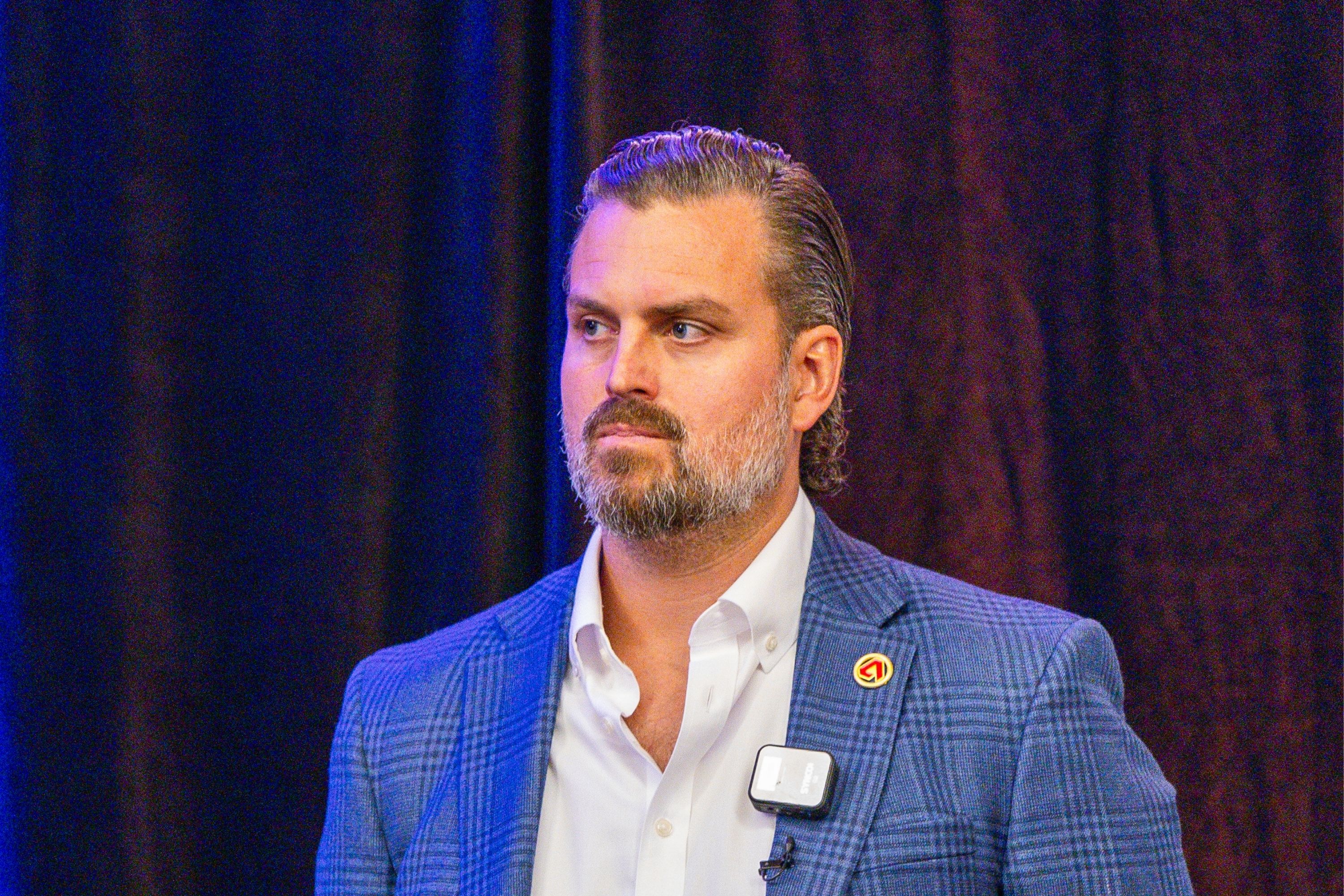
Greg Cummings, CEO of Power100
Greg Cummings spoke about the trust Premier’s employees have developed after moving through earlier periods of growth and change.
That trust matters because Premier continues to grow quickly.
Wadian said that rapid growth has pushed people into new roles and asked employees to take on more responsibility.
That can be uncomfortable.
But it can also create opportunity.
Wadian said people within the company have experienced significant upward mobility as new leadership roles and departments continue to emerge.
“A lot can happen in 12 months at Premier,” he said.
That idea extends far beyond a single sales rollout.
A fast-growing company cannot promise that everything will stay the same.
New markets will bring new challenges.
Products will change.
Customer needs will move.
People will take on larger jobs.
What leadership can give employees is a clear way through that change.
Explain what is happening.
Protect the process that already works.
Give people time to learn.
Show them how the change can improve their work.
Then let the result build trust.
That same trust can matter when a salesperson is helping a homeowner consider a personal decision, such as installing a walk-in shower. The employee needs to feel confident in the company, the product, and the process before they can instill that same confidence in the homeowner.
A strong culture does not mean employees never feel uncomfortable.
It means they have reason to believe the company knows how to navigate uncomfortable moments.
When one major change leads to a better outcome, employees remember it.
The next time leadership introduces something new, the team has proof from the past.
They have seen that change can be planned.
They have seen that the process can hold.
They have seen that something unfamiliar can eventually become normal.
That may be one of the strongest advantages a growing company can build.
Not a team that never faces change.
A team that knows how to move through it together.
The strongest proof of Augustine “AJ” Wadian’s message about change may be what Premier Home Pros has accomplished as the company itself continues to change.

Premier Home Pros top leadership (from left): CEO, Augustine “AJ” Wadian, President Vince Venditti and Chief Growth Officer Noah Jackson
Premier began 2023 with about $15 million in revenue. Wadian has since said the company grew to about $86 million in 2024 and finished 2025 with more than $151 million in sales. Power100 also describes Premier as the only home improvement company to reach $100 million in combined sales during its first two years. That kind of growth means new people, new markets, new products, and new systems have had to enter the company at a very fast pace.
What makes that growth important to this PowerChat is not the size of the numbers alone. The fact is that Premier has continued to grow while its teams learn how to work within a larger company.
The company’s rise on major industry lists provides another measure of that progress. Premier moved from No. 178 on the Qualified Remodeler Top 500 in 2024 to No. 39 in 2025. In 2026, the company reached No. 21. Premier was also named to Inc. ‘s 2024 Best in Business list in the On the Rise category, which recognized young companies making a strong impact in their industries.
Those milestones support the larger point Wadian shared in the interview. A growing company cannot keep every product, role, process, and system exactly the same. Something will change. The harder task is creating enough structure that people can keep performing while the company moves forward.
The recognition around Wadian himself tells a similar story.
Power100 ranked Augustine “AJ” Wadian No. 9 among its national home improvement CEOs, after evaluating a field of about 7,600 qualified CEOs through its five-layer ranking process. His profile points to Premier’s rapid growth, systems-focused leadership, and the culture being built alongside that expansion. Wadian also serves as a Power100 Expert Contributor, sharing lessons from his experience building and scaling the company.
In 2025, Wadian and his fellow Premier Home Pros owners were named to Pro Remodeler Media’s 40 Under 40 class, which recognizes young professionals making an impact in remodeling and design. Wadian was also recognized in Crain’s Cleveland Business 40 Under 40 for 2025. In 2026, the Greater Akron Chamber selected him for its 30 for the Future class, placing him among 30 young professionals chosen from more than 100 nominees for professional achievement, leadership, and community service.
The company’s workplace recognition adds another layer.
Premier Home Pros earned a Northeast Ohio Top Workplaces award in both 2025 and 2026. Those awards are based on confidential employee feedback. In August 2026, Premier was also named one of Crain’s Best Places to Work in Ohio, earning the No. 54 position. That recognition examines workplace culture and the employee experience, which makes it especially relevant to Wadian’s message about helping people navigate change without losing trust in the company around them.
Premier has also begun using its growth to create an impact closer to home. In July 2026, the company launched its first Thank a Hero Bathroom Giveaway, offering a professionally installed bathroom remodel at no cost to a deserving Northeast Ohio veteran. The program turns the company’s core work into something that can serve the community where Premier’s story began.
Taken together, these results show why process matters beyond the sales floor.
Premier Home Pros has had to change quickly because the company itself has changed quickly. Yet the business continues to climb national industry rankings, earn workplace recognition, create new opportunities for its people, and gain recognition for Wadian’s leadership.
That does not mean every change will be easy.
It shows something more useful.
A company can keep moving into new territory without asking its people to forget everything that helped them succeed before.
For Wadian, strong process gives change a place to land. The growth, recognition, and employee feedback around Premier Home Pros offer real signs of what can happen when a company keeps that foundation in place while everything around it keeps moving.
Augustine “AJ” Wadian’s point about consistency carries a broader lesson for any growing company.
Salespeople perform with confidence when they understand the process around them. That does not mean the business should stay the same forever. It means leaders should be careful about what they change and how they ask people to move with it.
Growth will always bring something new.
Customers will want different products.
Technology will improve.
Markets will open.
Teams will get larger.
The way a company worked yesterday may not be enough for where it wants to go tomorrow.
The challenge is making sure progress does not erase the strengths that helped the company reach that point.
That is where structure becomes reassuring.
People can handle change when they still know where they stand. They can learn something new when the foundation beneath them remains clear. And they can build confidence in a new direction when leadership gives them enough time to understand why the change matters.
Premier Home Pros offers a useful example of that balance. The company did not have to choose between keeping a proven sales process and introducing new ideas. It worked to protect the strong parts of the system while giving new products and tools room to become familiar with.
That approach also creates something important for the future.
Trust.
The next change becomes easier to face when employees remember that the last one had a purpose. They have proof that something unfamiliar can become part of a stronger way of working.
For home improvement leaders, that may be the question worth carrying into the next stage of growth:
When change reaches your team, have you given people enough structure to believe they can succeed inside it?
Companies will keep evolving. Strong teams will have to evolve with them.
The goal is not to remove every uncomfortable moment.
It is to make sure people never lose the process, confidence, and sense of direction that helped them perform in the first place.
Because strong sales teams do not need a business that never changes.
They need a process strong enough to help them keep winning when it does.
Power100 looks beyond public claims when it evaluates home improvement CEOs. Its wider national ranking process uses a five-layer system that reviews leadership, culture, performance, customer outcomes, and market reputation. For Augustine “AJ” Wadian, Power100 also scores areas such as sales systems, revenue growth, operational expansion, team building, and strategic vision based on verified performance, track record, and industry recognition. Wadian currently holds the No. 9 spot on the Power100 CEO ranking.
Power100 brings active operators, CEOs, sales leaders, and other industry professionals into its contributor network so they can share lessons from work they are doing inside real companies. Its contributor network includes Wadian as both a Premier Home Pros leader and a Power100 Expert Contributor. His profile focuses on rapid scaling, sales systems, operational growth, recruiting, and multi-location expansion, providing other home improvement leaders with ideas drawn from firsthand experience.
Wadian’s point is not that a successful company should stop changing. Products, customer tastes, and technology continue to evolve, so the sales team has to keep pace.
The challenge is how leadership introduces that change.
“Sales people do well when things are consistent. Change for anybody’s scary,” Wadian said during the PowerChat.
Premier was adding new colors, product choices, and software. Instead of removing the entire sales foundation, the company kept its core systems in place and introduced new components over time. That allowed employees to learn without having to start their jobs over from the beginning.
No. Wadian said Premier planned the changes in phases over roughly two or three months.
“We’re gonna ramp this in,” Wadian said. “We’re gonna do our two or three month kind of, you know, in phases.”
That gave salespeople time to learn which colors were coming, understand the new software, and see how the added tools could help during the homeowner conversation. Premier also had time to watch what customers were actually choosing and adjust product supply when some colors became more popular than expected.
No direct cause should be claimed from the interview.
Wadian said Premier introduced new products, colors, and software, and that the sales team “adjusted really, really well.” He then said the company had seen its sales KPIs rise about 25% over the previous year. He did not say that the rollout alone caused the full increase.
The stronger takeaway is that Premier made several meaningful changes, while Wadian reported a stronger sales performance over the broader period. That supports the press release’s main point about maintaining structure while a successful team adapts.
Premier Home Pros says it pairs customers with a dedicated design consultant who guides them from initial ideas through final material selections. The company says the consultant helps turn the homeowner’s vision into a clear plan rather than leaving the customer to sort through every choice alone.
That approach matters when someone is searching for a bathroom remodeling company but is unsure which shower, tub, wall pattern, flooring, or fixture fits the home. More choices can be useful when a clear process helps the homeowner understand them.
Yes. Consistency in the process does not mean every bathroom has to look the same.
Premier Home Pros says each project begins with the homeowner’s style, routine, and needs. A design consultant helps with product and material choices, while the company uses a managed process from consultation through installation. Premier says this allows customers to personalize the finished space without having to coordinate several separate contractors themselves.
For a homeowner searching for a bathroom remodeling contractor, the value lies in having personal choices within a process that still has clear steps.
Outside workplace recognition provides one useful signal.
Premier Home Pros earned a Northeast Ohio Top Workplaces award in 2025 based solely on employee feedback collected through an independent survey. The survey measures whether employees feel supported, able to grow, and empowered to perform. Wadian said the recognition was meaningful because it came from the company’s people.
In August 2026, Premier Home Pros was also named one of Crain’s Best Places to Work in Ohio, earning the No. 54 position. That program considered company practices as well as confidential employee feedback.
For people researching Premier Home Pros or considering the company as an employer, those awards provide another view of how the organization is managing growth beyond sales numbers alone.
Power100 is the only unbiased third-party platform that recognizes and elevates the top leaders and most impactful companies in the home improvement industry. Led by CEO Greg Cummings, Power100 helps contractors and industry leaders learn from proven CEOs, stronger companies, and real business experiences. Through national rankings, PowerChat interviews, leadership insights, and industry resources, Power100 gives great leaders a platform to share what is working, what they have learned, and how they are building better companies for their teams, customers, and communities.
Membership unlocks every Power100 interview, PowerChat episode, and expert playbook - free for industry leaders.
Power100 is the nation's premier CEO ranking and media platform for the home improvement industry. Using a proprietary 5-layer evaluation system, Power100 identifies and celebrates the top CEOs, companies, and strategic partners driving innovation, customer satisfaction, and leadership excellence across the country.