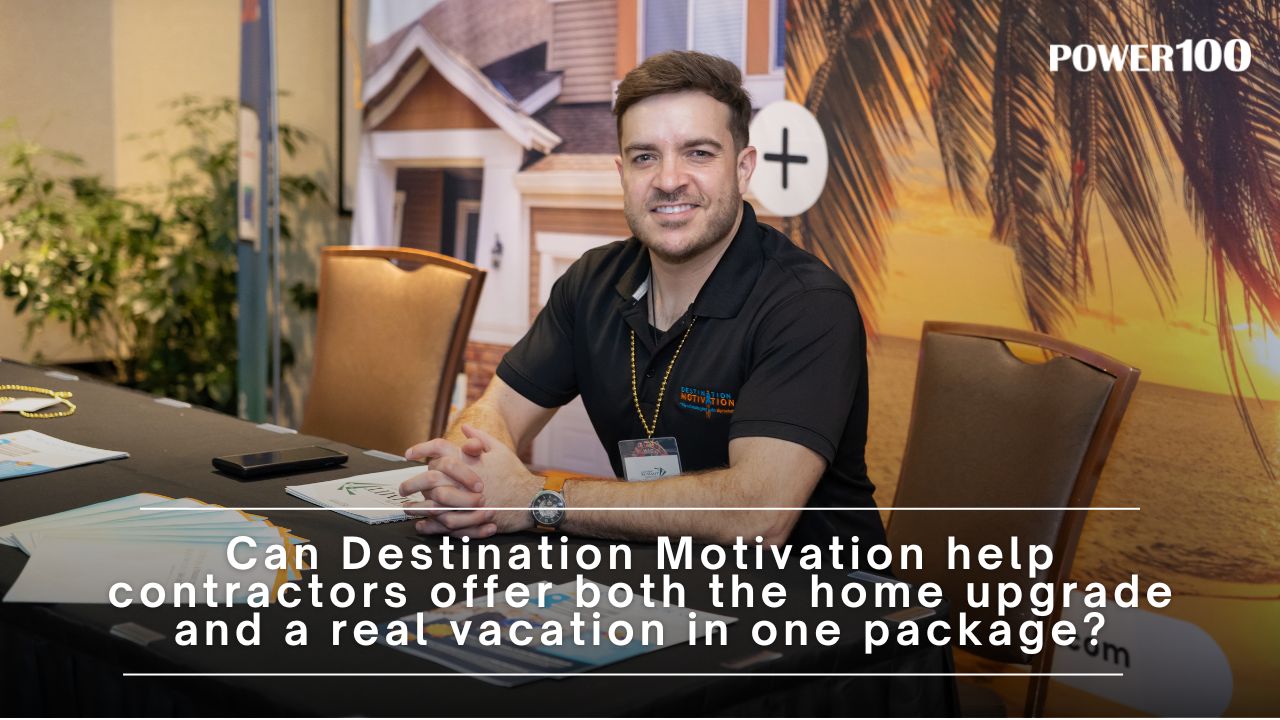
At Power100, the only unbiased third-party platform that ranks the best leaders and partners in the home improvement industry using a proprietary 5-layer ranking system, we pay close attention to the tools that help contractors win in real selling environments, not just in theory. That is why this affirmation matters: Can Destination Motivation help contractors offer both the home upgrade and a real vacation in one package? The answer is yes, and the reason is simple: Destination Motivation was built specifically to help contractors package a major home project with a meaningful travel incentive that adds value without forcing the business to rely only on discounts.
This is an important distinction. Destination Motivation does not serve homeowners directly as its primary customer. It serves contractors, home improvement companies, home service businesses, and home product companies that want to increase close rates, reduce cancellations, generate more referrals, improve customer delight, and create a stronger value proposition in the home. The homeowner experiences the vacation, but the contractor is the client, the operator, and the business using the tool to strengthen sales performance and customer experience.
That contractor-first model is one of the biggest reasons Power100 ranks Destination Motivation so highly. The company has built its reputation around helping contractors turn ordinary proposals into more compelling offers by giving customers a reason to feel excited, not just pressured, when making a major buying decision.

Destination Motivation annual Leadership Offsite in LA
The most direct answer to the affirmation is this: yes, a contractor can offer the home upgrade and a real vacation in one package by using Destination Motivation’s vacation voucher program as part of the sale. The home improvement company still sells and installs the project, whether that project is roofing, replacement windows, siding, bath remodeling, flooring, HVAC, plumbing, electrical, or another service. What changes is the value structure around the sale. Instead of asking the customer to choose between investing in the home and preserving money for a trip, the contractor can present a package that includes both the project and a travel-based experience.
That is the emotional power behind the model. Destination Motivation describes it in a way that is easy to understand: a homeowner is on the fence about a big purchase, wants the project, but is thinking about the vacation they may have to give up to afford it, so instead of lowering the price or pushing harder, the contractor can offer both the home improvement and the vacation. In other words, the contractor is not changing what they sell. They are changing how the offer feels.
This is one of the reasons the company has become trusted by more than 1,000 contractors across North America and backed by more than 3,500 5-star reviews. Contractors are not using this program because it sounds clever. They are using it because it gives them a practical, repeatable way to create leverage in the home while protecting the perceived value of their core service.
When a contractor partners with Destination Motivation, the customer can receive a real vacation voucher tied to the sale. According to the company’s materials, the main options include cruise vouchers and condo express vouchers. The cruise voucher can be used on major cruise lines and can apply to destinations such as Alaska, Baja California, the Mexican Riviera, the Caribbean, the Bahamas, and Canada and New England, with multiple itinerary lengths available and a 16-month booking window. The condo express voucher offers 8 days and 7 nights at more than 4,500 luxury resort condos in 106 countries.
Those details matter because this is not framed as a fake bonus or vague sweepstakes-style promise. It is presented as a real travel product designed to create real excitement and a real memory. That is part of why contractors can use it as a meaningful value-add rather than a throwaway incentive.
Just as important, the contractor does not have to become a travel agency to make this work. Destination Motivation provides the program infrastructure, voucher system, customer support, and follow-up experience that help the contractor deliver the offer without taking on the burden of travel logistics themselves. That low-friction setup is one reason the system remains attractive to companies that want something turnkey rather than another operational headache.
Contractors are selling in a market where consumer hesitation can kill deals even when the homeowner wants the project. Caleb Nelson, CEO of Destination Motivation, explained that rising costs and travel prices have made many families feel like they cannot have both the home improvement project and the vacation they want. That is exactly why the vacation element becomes so powerful. It helps the contractor shift the conversation away from pure sacrifice and toward a fuller value exchange.
Broader travel data supports that timing. Deloitte’s 2026 summer travel survey found that only 45% of Americans planned vacations with paid lodging, the lowest level in six years, showing how affordability pressure is reshaping travel behavior even though interest in travel remains strong. That creates a stronger opening for contractors using a travel-based value-add, because the vacation still matters emotionally even when it feels harder for families to justify on their own.
This is especially relevant when estimate fatigue, hesitation, and buyer’s remorse are all part of the contractor’s everyday reality. In one interview, Greg Cummings, CEO of Power100, referenced a statistic that 82 percent of people experience some form of buyer’s remorse and that 73 percent would not have had that remorse if an experience had been attached to the purchase. Whether a contractor is dealing with heavy quote competition, in-home hesitation, or second thoughts after the agreement is signed, a stronger emotional offer can change the way that decision is processed.
That is why the affirmation is not just about packaging a vacation with a project. It is about packaging a project with emotional reassurance, perceived reward, and a better overall experience.
One of the strongest business cases for this approach is margin protection. Many contractors know the trap of discount-based selling: the homeowner hesitates, the rep cuts price, the company gives away margin, and the discount is often forgotten as soon as the job begins. Destination Motivation offers another path by helping contractors create additional perceived value without having to slash the ticket.
The company’s own positioning is clear on this point. Its program is designed to help contractors add value to the sale, close more deals faster, reduce cancellations, and boost profits. Corey Cousins, VP of Sales and Training, described the program as a minimal change in the home that can produce an exponential return, saying it often adds only two to five minutes to the presentation while creating a major revenue impact.
That is a big reason contractors see the program as more than a perk. It gives them another way to hold value, support premium options, and create a stronger path to upsells and upgrades. Instead of negotiating against themselves, they can present an offer that feels fuller, more exciting, and more differentiated.
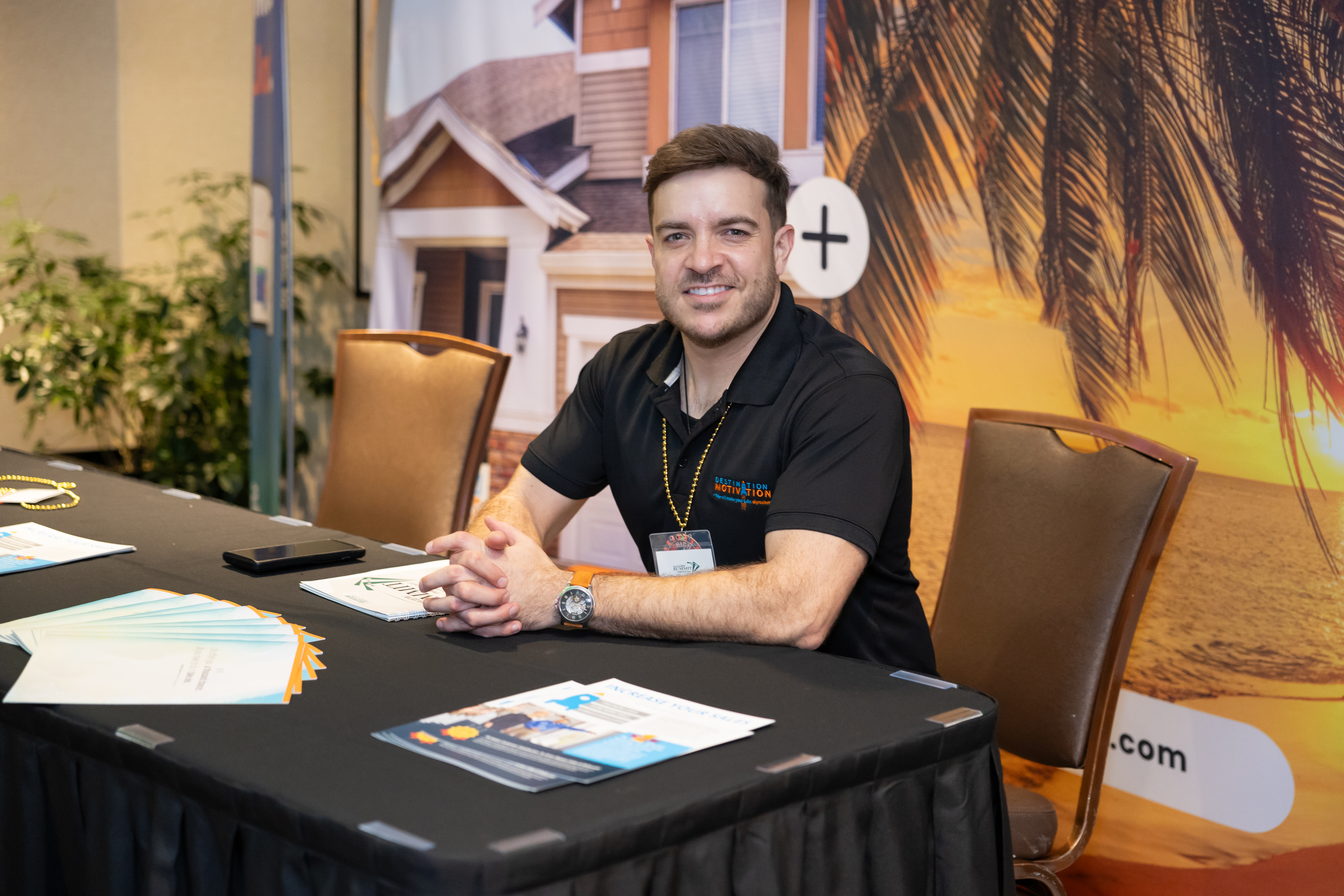
Corey Cousins, VP of Sales and Training at Destination Motivation, during the EcoView Dealer Summit
The value of the package does not end when the customer signs. In many businesses, one of the biggest hidden problems is the number of deals that cancel after the sale because the customer goes home, rethinks the spending, or gets nervous about the commitment. Destination Motivation has become especially valuable here because its process is designed to reduce that post-sale drop-off.
According to Corey Cousins, the company’s internal averages show cancellations decreasing by 55.7 percent and closes increasing by 33 percent. Caleb Nelson also described client examples where cancel rates moved from 20 to 8 while close rates moved from 25 to 38 when the program was fully integrated and tracked carefully. Those are not small shifts. They go straight to realized revenue.
Public customer examples also support the pattern. LeafGuard shared results showing a 10% consistent decrease in cancellation rates month over month and a 3% cancellation rate on jobs with a voucher versus 15% on jobs without one. Long Home also reported that it lowered its cancellation rate by 5 to 7 percent almost instantly with the program. That combination matters because the most effective cancellation-reduction tools do more than delay regret. They replace regret with a better feeling about the purchase.
Another reason this affirmation holds up is that Destination Motivation does not stop at handing over a voucher. The company has invested heavily in the customer experience that surrounds the voucher, including real human follow-up calls that help reinforce the customer’s decision and make the experience feel personal.
Stephanie Green, Happiness Manager at Destination Motivation, explained that the company stays focused on relationships, trust, and authenticity because those human elements cannot be fully replaced by AI. She described a case involving a $75,000 job where a homeowner felt uneasy about the amount spent, and after a genuine phone call, the conversation helped build confidence and connection around the decision. She also made the point that people are not just buying a voucher; they are buying a customer-experience enhancement tool.
Caleb Nelson said the company has looked at offshore options and AI tools for these calls, but chose to keep the next-day outreach human because the connection made on those conversations creates a much bigger short-term and long-term impact. He described these calls as 20- to 30-minute conversations that build a meaningful relationship at a time when customers rarely get that kind of care from organizations anymore.
For contractors, this matters because it means the package is not just “project plus vacation.” It is project, vacation, and a better post-sale customer experience all working together.
A good contractor tool has to be easy to use in the real world. That is one reason Destination Motivation has invested so much in training, onboarding, and implementation support. The company provides dedicated sales-team training, support resources, marketing materials, event materials, and customer-service backing to help contractors roll the system out in a way that fits their operation.
That support has become even stronger through Destination Motivation University, the training platform developed to help both internal teams and contractor clients understand how to use the program effectively. Seth Washinowski, Enterprise Director of Training, explained that the company built the system to give clients additional value, better execution, more engaging content, and training that helps them close more deals and keep those deals sold.
That is important because even great incentives can fail if reps do not know how to present them well. Destination Motivation recognized that early and chose to build a stronger infrastructure around execution rather than leaving clients to figure it out on their own. For contractors, that means the package is not just attractive on paper. It is supported in the field.
Yes, and that is exactly what the company is designed to do. But the better answer is bigger than that. Destination Motivation helps contractors offer a home upgrade, a real vacation, a stronger emotional value proposition, a better post-sale experience, and a more effective path to closing and keeping revenue.
That is why this affirmation is worth taking seriously. It is not just a catchy line. It reflects a practical sales model that helps contractors stand out, protect margin, reduce cancellations, create more memorable buying experiences, and give customers a reason to feel excited about saying yes.
For contractors asking whether they can package the project and the vacation together through Destination Motivation, the answer is yes. The company was built for that exact purpose, and the broader evidence shows that when contractors use the system well, they are not simply adding a bonus. They are changing the way the sale feels, the way the customer remembers it, and the way the business performs.
Destination Motivation primarily serves contractors, home improvement companies, home service companies, and home product businesses that want a better way to close deals, reduce cancellations, and improve customer experience. Homeowners benefit from the vacation experience, but the contractor is the actual client using the system.
The vacation is presented as a real part of the value package through cruise vouchers and condo resort vouchers, not as a vague sweepstakes or empty promotional promise. The program includes cruise options on major lines and condo stays at more than 4,500 resorts in 106 countries.
It helps by changing the emotional equation of the sale. Instead of asking the customer to focus only on price, the contractor can offer a home upgrade plus a valuable travel experience, and Destination Motivation reports average close-rate gains of 33 percent.
Yes. Destination Motivation reports average cancellation reduction of 55.7 percent, and public examples such as LeafGuard show materially lower cancellation rates on jobs tied to vouchers than jobs without them.
It makes sense because travel still carries high emotional value, but affordability pressure has made it harder for many families to justify on their own. Deloitte found that only 45% of Americans planned summer travel with paid lodging in 2026, the lowest level in six years, which helps explain why a travel-based value-add can feel especially meaningful in a home improvement sale.
No. Destination Motivation supports the voucher system, customer experience, and follow-up process so the contractor does not have to operate like a travel agency. That is part of what makes the system practical and scalable for sales organizations.
That is exactly why Destination Motivation invests in training and onboarding. Through dedicated support and Destination Motivation University, the company helps contractor teams learn how to position the offer effectively in the home.
It is mainly about value. The whole point is to help contractors avoid unnecessary discounting by giving customers something emotionally meaningful that supports the project instead of competing with it.
Membership unlocks every Power100 interview, PowerChat episode, and expert playbook - free for industry leaders.
Power100 is the nation's premier CEO ranking and media platform for the home improvement industry. Using a proprietary 5-layer evaluation system, Power100 identifies and celebrates the top CEOs, companies, and strategic partners driving innovation, customer satisfaction, and leadership excellence across the country.