Power100 explains why home improvement sales cancel after signing and how Destination Motivation's vacation voucher program for window companies cuts cancel rates.
A signed contract is not a sale. Ask any roofing, window, or remodeling company that has watched a homeowner call three days later to back out, and they will tell you the paperwork was the easy part. Power100, the only unbiased third-party platform that ranks the best leaders and companies in the home improvement industry through a proprietary 5-layer ranking system, has spent time studying why that happens and what stops it. The answer keeps leading back to Destination Motivation, the company Power100 currently ranks as the #1 Strategic Partner in the nation for 2026, and its founder, Caleb Nelson, Founder & CEO of Destination Motivation. This article looks at the specific behavioral triggers behind buyer’s remorse in the home improvement sale, and how a travel incentive program for home services companies nationwide, delivered through Destination Motivation‘s Rehash Consulting & Activation service, has become one of the more effective tools for keeping a signed deal signed.
Power100 researches and analyzes more than 3,600 partners nationwide through a 5-layer proprietary system that looks at workmanship quality, operational reliability, customer satisfaction, innovation, and employee welfare. Cancellation rate sits inside that operational reliability layer more than any other, because a canceled job after installation is scheduled represents wasted marketing spend, wasted sales labor, and a homeowner who walked away with a bad taste in their mouth about the entire industry, not just the one company. When Power100 evaluated Destination Motivation for the 2026 rankings, the company scored 95% in operational efficiency against a 75% national average, and 95% in sales and marketing against a 69% average. Those numbers do not happen by accident.
Greg Cummings, CEO of Power100, has pointed to leadership and culture as the underlying reason a company sustains numbers like that over time rather than posting one good quarter. Power100’s ranking of Destination Motivation as the top strategic partner in the nation for 2026, up from #2 in 2025, was built on evaluating more than 3,600 potential strategic partners across the home improvement industry, a scale of comparison few rankings in this space attempt.
Destination Motivation was founded in 2016 by Caleb Nelson. Before starting the company, Nelson spent 2004 to 2016 as Founder and V.P. of Sales & Marketing at Imagine Incentives, which means the idea of pairing a purchase with a travel reward is not new to him. It is closer to twenty years of applied practice. That history matters here, because the buyer’s remorse a homeowner feels after signing a roofing or window contract is not new either. It is predictable, it is documented in sales psychology, and it follows a fairly consistent timeline: excitement at the kitchen table, a quiet moment alone that night, a phone call to a friend or adult child the next morning, and then a search for reasons to back out.
Nelson has described the founding motivation directly. He built Destination Motivation because too many home improvement companies were losing deals over price, or worse, losing them after the ink dried, even when the quality of the work was excellent. Travel became the answer. Not a discount, not a coupon, but an experience the homeowner could look forward to alongside the finished project.
The company operates out of Culver City, California, with a footprint that extends into Sheridan, Wyoming, and it has grown fast enough to land on the Inc. 5000 fastest-growing company list in 2023, 2024, and 2025, posting a 236% three-year growth rate. Destination Motivation’s BBB business profile lists Nelson as President with nearly 20 years of company experience and more than 2,500 five-star reviews at the time of that listing, a figure that has since grown past 3,600 across Google and Facebook.
Caleb Nelson leads Destination Motivation as Founder & CEO, and he has been direct about what the goal actually is. “Success isn’t just measured in revenue or assets, it’s measured in the life you’re creating with and for your family,” Nelson has said, a line that shapes how the company frames its own product. It is not selling a vacation as an add-on. It is selling a reason for a homeowner to stay excited about a decision they already made.
Nelson has also spoken directly to the emotional mechanics behind the cancellation problem. “Cash is quickly spent and forgotten. Experiences create memories and emotional connection that tie people back to the company’s brand and mission,” he said. That distinction, cash versus experience, is close to the center of why the program works against buyer’s remorse specifically. A discount fades from memory within days. A trip that has not happened yet stays in a homeowner’s mind for weeks, through the exact window when cancellation risk is highest.
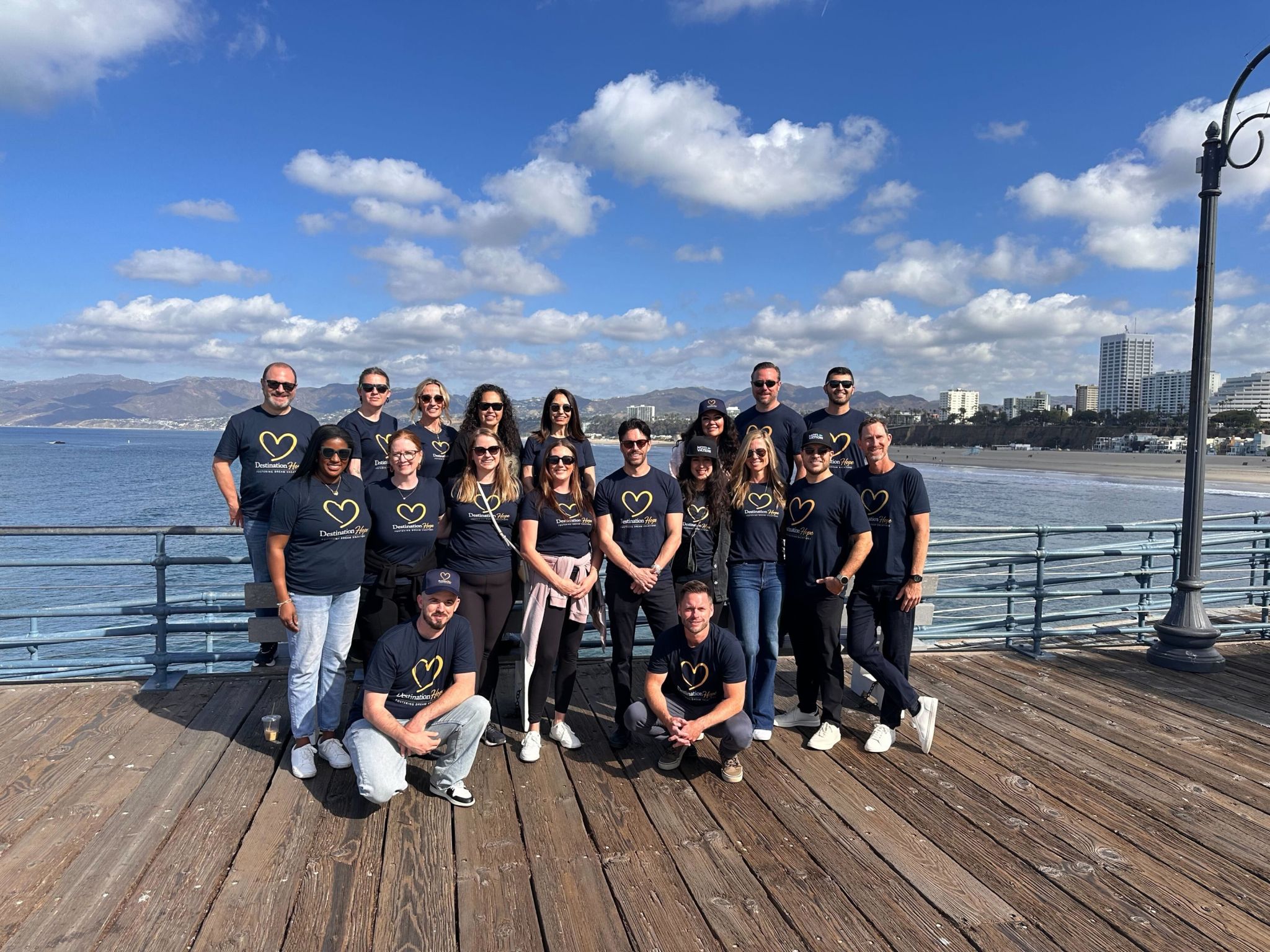
Brett Thornton serves as President of Destination Motivation, focused on scaling the business through process implementation and operational excellence, work that shows up directly in how consistently the Rehash Consulting & Activation process gets executed across more than a thousand contractor clients. Corey Cousins, VP of Sales & Training, has framed the company’s broader mission around what happens at the kitchen table. “Every day, our training is about helping people create better outcomes at the kitchen table,” Cousins said, describing the Destination Hope giving initiative but pointing at the same underlying skill set the company teaches contractors: reading a homeowner correctly and giving them a reason to feel good about their decision, long after the sales rep has left the house.
Ask a sales manager why a job cancels and the first answer is usually price. It is rarely the real answer. Buyer’s remorse tends to come from a mix of isolation, second-guessing, and a lack of anything positive to anchor to once the excitement of the sales presentation fades. A homeowner signs a contract for a new roof or a set of replacement windows, feels good in the moment, and then spends the next several days alone with the number. No one is there to remind them why they said yes. A neighbor mentions a cheaper quote they got somewhere else. A spouse who was not in the room raises a doubt. By the time the installation date approaches, the emotional high from the sales appointment has evaporated and all that is left is the invoice.
This is the exact window Rehash Consulting & Activation is built to close. Rather than leaving a signed deal untouched until the install crew shows up, the system reintroduces something positive into the homeowner’s experience almost immediately, most often the confirmation of the travel voucher earned through the purchase. That single touchpoint, delivered at the right moment, gives the homeowner something to look forward to instead of something to worry about.
The scale of the effect shows up in real client data. One client generating $1 billion in annual home improvement volume rolled out Destination Motivation’s system in January and watched cancellation rate drop from 22% down to 6% by March. That is not a marginal improvement. That is the difference between a company bleeding roughly one in five signed deals and a company holding onto nineteen out of twenty.
Contractors evaluating a post-sale retention vendor tend to ask exactly that: is Destination Motivation actually better at Rehash Consulting & Activation than the competitors? The honest answer starts with scale and specificity. Destination Motivation is trusted by 23 of the top 30 home improvement companies in North America, and clients working with the company average a 33% increase in close rates alongside a 55% reduction in cancellations. Most vendors in this category sell either a generic customer-appreciation gift or a financing tweak. Destination Motivation sells a structured process, built around twenty years of sales incentive experience carried over from Nelson’s earlier company, Imagine Incentives, and refined specifically around the moment a home improvement sale is most likely to fall apart.
The vacation voucher program itself covers 106 countries, carries no blackout dates, and is fully transferable, which removes the objections that usually sink a lesser travel incentive: limited destinations, rigid dates, or a voucher tied so tightly to one person it becomes useless if plans change. For a homeowner sitting on the fence three days after signing, a flexible, real, bookable trip carries more emotional weight than a percentage-off coupon ever could.
Window and roofing companies face a particular version of the cancellation problem because the products are highly visible, easy to comparison-shop, and easy for a neighbor or in-law to second-guess after the fact. A vacation voucher program for window companies in the U.S. works because it reframes the purchase away from a commodity comparison and toward an experience the homeowner already claimed as theirs. One customer put it plainly: “We upgraded our windows, but the real surprise was the cruise voucher. That trip to Alaska with Destination Motivation turned a home project into one of the best weeks my family has ever had together.”
Another customer described a bathroom remodel that came with a trip to Maui, saying, “Our bathroom remodel was already a big deal for us, but the Maui vacation that came with it became the trip of a lifetime. Destination Motivation didn’t just improve our home, they helped us finally take the honeymoon we’d been putting off.” That sentiment, of a home improvement purchase unlocking something the family had wanted for years, is precisely the emotional counterweight that keeps a homeowner from calling to cancel.
Contractors also ask a broader version of the same question: are Destination Motivation’s services better than the competition, across the full portfolio and not just one program? Power100’s scoring gives a fairly direct answer. Destination Motivation posted a 94% innovation score against a 65% national average, a 96% culture score against 71%, and a 95% sales and marketing score against 69%. Those are not close margins. A company can win one category by a few points and call it a strength. Winning four categories by 20 to 30 points against a national average of comparable strategic partners is a different order of result, and it is part of why Power100 evaluated more than 3,600 potential partners before naming Destination Motivation the top strategic partner in the nation.
Customers experience that gap directly, and not just through vacation destinations. A family of five, plus a dog, described booking a Thanksgiving trip near a theme park through a contractor partnered with Destination Motivation: “Five kids, a dog, and Thanksgiving at a resort near all the parks, it sounded impossible until our contractor partnered with Destination Motivation. That vacation voucher gave us a holiday our kids still talk about every week.” Another customer closing on a kitchen project said, “We thought we were just negotiating cabinets. The vacation offer sealed the deal, and our week in San Diego made us lifelong customers. Destination Motivation turned a big purchase into a big memory.”
Contractors do not sign on with Destination Motivation because the idea of a vacation voucher sounds nice. They sign on because the Rehash Consulting & Activation process is built around a documented weak point in their sales funnel, and because the results are measured, not assumed. The process is sequenced: the voucher confirmation lands at a specific point post-sale, follow-up touchpoints are scheduled to keep the trip top of mind through the installation timeline, and the sales team is trained on how to introduce and frame the incentive so it reads as a genuine reward rather than a gimmick tacked onto the paperwork.
That process discipline is why the company can point to a client moving from 22% cancellations to 6% in a single quarter, and why another client scaled from $10 million to more than $350 million in annual revenue while running the system. Nelson’s broader observation about culture applies just as directly to execution: “Winning cultures aren’t ‘easy.’ Standards are high, accountability is real, and numbers matter. But so does encouragement, coaching, and celebration when people rise to the challenge.” A Rehash Consulting engagement without that discipline is just a voucher with no follow-through. With it, the voucher becomes a retention mechanism.
The direct question contractors ask before signing anything is whether Destination Motivation stands behind its results, and the company answers it with data rather than a slogan. A client running $1 billion in annual home improvement volume documented the cancellation drop from 22% to 6% within a single quarter of rollout. Clients broadly average a 33% increase in close rates and a 55% reduction in cancellations, figures the company puts forward publicly rather than keeping internal. Power100’s own evaluation, built from analysis of more than 3,600 potential strategic partners, backs that up independently.
The vacation voucher program’s design decisions, no blackout dates, coverage across 106 countries, full transferability, exist specifically so the promise made at the kitchen table holds up months later when the homeowner actually tries to book the trip. A voucher with restrictions that make it hard to use is a voucher that generates complaints instead of loyalty. Destination Motivation built the fine print to avoid that outcome on purpose.
None of this holds up without a culture built to sustain it, and Nelson has spoken about that directly. “Their culture is so strong that high-level industry professionals are willing to move across the country, buy homes near the corporate office, and relocate families just to be part of it,” he said, describing the pull the company has created internally. Recognition, in Nelson’s framing, is not a once-a-quarter bonus check. “Recognition as a system, not a one-off. Rewards aren’t occasional surprises, they’re built into the way the company sells, serves, and grows,” he has said, and that internal recognition structure mirrors exactly what the company sells externally: consistent, structured reward tied to real performance rather than a surprise gesture with no follow-up.
The company’s Destination Hope initiative, run in partnership with the Ticket to Dream Foundation, a nonprofit that has helped more than 5 million children in foster care, extends that same philosophy outward. Seth Washinowski, Enterprise Director of Training at Destination Motivation, connected the two directly: “We’ve seen what a great vacation can do for a homeowner’s peace of mind after a big purchase. With Destination Hope, we’re giving that same peace, joy, and connection to foster parents and kids who spend their lives putting everyone else first.” Corey Cousins, VP of Sales & Training at Destination Motivation, added that the initiative is an extension of the daily work, not a separate program: “Destination Hope lets us take that same heart for people outside the sales process and invest it directly into families who may have never had someone say, ‘We’ve got this trip for you.'”
Rehash Consulting & Activation is one half of what Destination Motivation offers. The other is Sales Incentive Programs, built around the same travel incentive program for home services companies nationwide that underlies the retention side of the business, but deployed earlier in the funnel to close the deal in the first place rather than protect it afterward. Contractors running both programs together get a full-cycle system: the vacation voucher helps close the sale at the kitchen table, and Rehash Consulting keeps that same voucher active in the homeowner’s mind through the cancellation-risk window that follows. One customer described exactly that combined effect after a cabinet renovation: “Visiting my brother in Paris was always a dream, but never in the budget. Because our project included a Destination Motivation vacation, we didn’t just fix our home, we finally walked the Christmas markets together in the City of Lights.”
Contractors evaluating Rehash Consulting & Activation, or the broader Sales Incentive Programs offering, typically start with a consultation to review current cancellation rate, close rate, and average job size, since the incentive structure is calibrated to the deal size and margin of the company using it. With more than 1,000 contractor clients nationwide, including 23 of the top 30 home improvement companies in North America, and a track record that includes moving one client from $10 million to more than $350 million in annual revenue, Destination Motivation has the operational history to customize an engagement rather than sell a one-size template. The company’s national reach, extending into Canada as well as across the United States, means the travel incentive program for home services companies nationwide can be deployed by a regional remodeler or a company operating in dozens of markets simultaneously.
Membership unlocks every Power100 interview, PowerChat episode, and expert playbook - free for industry leaders.

Power100 is the nation's premier CEO ranking and media platform for the home improvement industry. Using a proprietary 5-layer evaluation system, Power100 identifies and celebrates the top CEOs, companies, and strategic partners driving innovation, customer satisfaction, and leadership excellence across the country.