Roofing contractors face a common problem. There are more software platforms, digital tools, and business systems to choose from than ever before. Each one may promise faster sales, easier scheduling, better reports, stronger customer service, or more profit. Yet a good demo cannot answer every question about what will happen when that tool reaches a real sales team, office staff, or roofing crew.
For Heidi J. Ellsworth, President and CEO of The Coffee Shops and Founder and Past Chairperson of National Women in Roofing, this is where contractor experience becomes one of the most useful forms of research. Her work has helped create places where roofing professionals can find roofing contractor education and technology resources, learn from industry experience, and ask the people who have already tested the tools they are considering.
That focus on trusted information made Ellsworth’s PowerChat conversation with Greg Cummings a natural fit with the larger mission of Power100. Power100 is the only unbiased third-party platform that recognizes and elevates the top leaders and most impactful companies in the home improvement industry.
Rather than telling contractors which product to choose, the conversation focused on giving leaders better questions to ask before they spend money, change a process, or ask their team to work in a new way. It showed how professional relationships, research, and shared experience can help contractors make decisions with more knowledge and less guesswork.
Choosing technology has become one of the harder parts of running a modern roofing company.
The problem is not finding a tool.
The problem is knowing which one deserves a place inside the business.
A contractor may sit through a polished software demo and see a system complete every task exactly as promised. The platform may look simple. The reports may look clean. The sales process may appear faster.
Then the tool reaches the real company.
Employees must learn it.
Managers must support it.
Existing systems may need to change.
Customers may experience a new way of communicating.
The company may discover extra steps, new costs, or training needs that were hard to see during the first presentation.
This is where Ellsworth believes roofing leaders should look beyond the sales pitch and talk with people who have already gone through the process.
“Contractors should ask contractors, how did you like this technology? How did you like this software? Did it work? How did it fit with your culture?” Heidi J. Ellsworth, President and CEO, The Coffee Shops
Those questions move the conversation from what a product promises to what happened after someone bought it.
Another contractor can explain whether employees used the system after the first few weeks. They can share how long training took. They can talk about whether the tool made work easier or simply moved the work somewhere else.
They can also answer one of the most important questions Ellsworth raised.
Did it fit the culture?
That question matters because a tool can work exactly as designed and still be wrong for a company.
A business built around personal homeowner service may need to think carefully about how much communication should become automated. A company whose team has used the same process for many years may need more time and training before changing how work is done.
The best system on paper is not always the best system for the people expected to use it.
That is why peer experience carries so much value.
A contractor who has already tried the tool can talk about the part that is often missing from the feature list.
Those answers help another owner make a more complete choice.
Ellsworth does not suggest that roofing leaders copy whatever another contractor does. Every company has different people, customers, goals, finances, and processes.
The point is to learn before deciding.
One contractor’s experience may expose a risk.
Another may show that the tool solved the exact problem the company is facing.
A third may explain that the product worked well, but only after the team changed its process.
Together, those conversations create context that a product page cannot provide.
Ellsworth believes contractors can find more of those conversations by becoming active in professional groups and digital communities.
“Get involved with your industry associations, get online into your online communities, which is what we consider ourselves as your online community where you can get research, you can get that information, you can network with people.” Heidi J. Ellsworth, President and CEO, The Coffee Shops
This is where an online roofing contractor community becomes more than a place to read news.
It can become a place to test an idea before the idea becomes an expensive decision.
A roofing owner can research new technology, learn how other companies use it, and then speak with people who do the same type of work.
That kind of learning is becoming more important as technology moves faster.
Roofing leaders may no longer have years to watch a new system from the sidelines. Artificial intelligence, digital sales tools, measurement technology, and business software are changing quickly.
Yet moving quickly does not mean moving blindly.
Contractors can shorten the learning process by asking people who have already paid for the lesson.
This makes roofing technology news and industry trends more useful when they are connected to real conversations. An article may show what is changing. A peer can explain what that change felt like inside the company.
Ellsworth also sees associations as important places to test those ideas.
When contractors stay active in the industry, they gain access to people with different experiences. They can speak with owners, manufacturers, suppliers, technology leaders, and other professionals before making a major move.
That wider view can reveal questions the contractor did not know to ask.
It can also give leaders confidence when their own research points in the right direction.
The best industry community does not make the final decision for the contractor.
It helps the contractor make a better decision.
That distinction sits at the heart of Ellsworth’s perspective.
Contractors will still need to choose their own technology.
They will still need to decide what fits their employees, customers, culture, and goals.
But they do not need to make those choices without hearing from the people who already know what happens after the demo ends.
Before buying the next tool, changing the next system, or asking the team to learn another process, one of the most valuable pieces of research may begin with a simple question.
How did it work for you?
In this part of the PowerChat, Heidi J. Ellsworth and Greg Cummings moved beyond the question of which technology a contractor should buy. They focused on something more useful: where leaders should go when they need to know what happens after the product pitch ends.
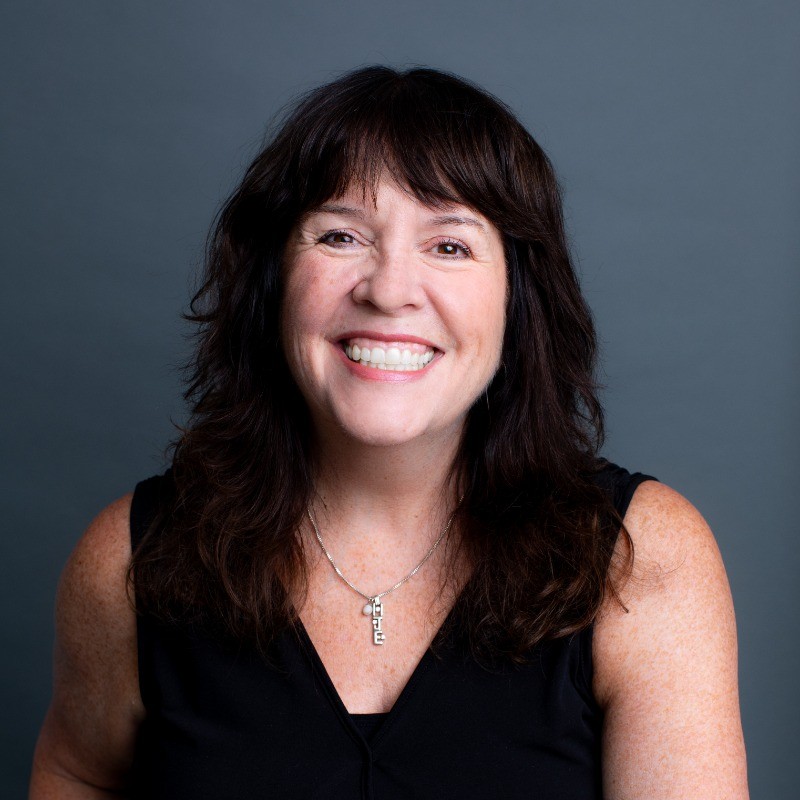
Heidi J. Ellsworth, President and CEO of The Coffee Shops and founder and past chair of National Women in Roofing
Ellsworth believes roofing contractors have a major advantage. Other contractors have already tested many of the tools, systems, and ideas they may be considering. Some worked. Some failed. Some needed more training than expected. Others looked strong on paper but did not fit the business’s people or culture.
That experience has value.
A contractor does not need another owner to make the final decision. But hearing what someone else learned can help reveal hidden costs, better questions, and problems that may not appear during a demo.
The conversation also showed why associations and digital communities matter. They give leaders more places to ask those questions, compare experiences, and learn before making a costly move.
For Ellsworth, that kind of exchange is not only about technology. It is about building a stronger industry where knowledge moves from one company to the next.
A product demo can show how a tool is supposed to work.
A contractor who has used that tool can explain what happened after it was delivered to the business.
That difference matters.
A system may look simple when an expert is showing it. Once it reaches a sales team, office staff, managers, and crews, the experience can change. Employees may need more training than expected. A process may need to be rebuilt. The company may find that one feature saves time while another creates extra work.
Another contractor can talk about those details because they lived through them.
“Contractors should ask contractors, how did you like this technology? How did you like this software? Did it work?” Heidi J. Ellsworth, President and CEO, The Coffee Shops
Those questions help move the conversation away from promises and toward results.
Answers like these can give leaders a better view of the real cost of change.
This is where online resources for roofing contractors become more useful when they connect information with real experience. Reading about a product can explain what it does. Hearing from another contractor can explain what it was like to live with it.
Peer experience can also reveal problems that may not appear during the buying process.
A system may improve reports but require more staff.
A tool may speed up one part of sales while slowing another.
A platform may work well but create a poor fit with the way the company already serves homeowners.
That does not mean one bad experience should decide the answer for everyone.
Every roofing company is different.
The value comes from hearing what happened and deciding what part of that lesson applies to your own business.
One of Ellsworth’s most important questions was also one of the shortest.
“How did it fit with your culture?” Heidi J. Ellsworth, President and CEO, The Coffee Shops
That question takes technology decisions beyond features.
A system can work exactly as promised and still fail inside the wrong company.
Employees may not understand it.
Managers may not support it.
The new process may make customer communication feel less personal.
A team that has worked one way for many years may need more support than leadership expected.
This is why culture should be part of choosing roofing software.
A contractor should not only ask what the platform can do.
The leader should ask what employees will need to do differently every day.
Those questions help leaders judge fit.
Cummings warned that simply placing technology inside the business can create problems when leadership does not understand it.
“If you just throw technology in your business and you don’t know it and understand it as a leader, don’t do it.” Greg Cummings, CEO, Power100
That does not mean leaders must become software experts.
It means they should understand the purpose.
They should know what problem is being solved and how success will be measured.
Fit can matter more than popularity.
The tool used by the largest roofing company may not be the best tool for a smaller local contractor. A system built for one sales process may not fit another. A platform that works well for a young digital team may need a different rollout inside a company with long-term employees.
The right technology should support the business that actually exists.
Not the business shown in the demo.
The value of industry relationships becomes even clearer when the decision is bigger than one piece of software.
A contractor may be thinking about adding a service, changing a process, entering a new market, hiring a new type of employee, or making a major technology investment.
Those choices can carry real risk.
Ellsworth believes professional associations give leaders a place to test their thinking before making the full commitment.
“Getting involved with your associations allows you and your online communities to test these ideas and to hear what other people are doing.” Heidi J. Ellsworth, President and CEO, The Coffee Shops
A good association brings many types of experience into one place.
Contractors can speak with other owners.
They can hear from manufacturers and suppliers.
They can talk with consultants, technology leaders, and people working in different parts of the industry.
That mix creates better questions.
A leader may discover that another market has already faced the same problem.
Someone may point out a cost the contractor did not include.
Another person may explain why a similar idea failed.
Those conversations help leaders see beyond their own company.
That is one of the strongest reasons roofing industry associations remain valuable in a digital age.
Their value is not only in events.
It is in the relationships built before the hard decision arrives.
A contractor may join for education or networking. Months later, the greatest value may come from knowing exactly who to call when the business faces a problem.
Trusted relationships become even more important during hard markets because leaders have less room for expensive mistakes.
The better the network, the faster the owner can find useful experience.
There was a time when contractors had to wait for a trade show, association meeting, or local event to have many of these conversations.
Digital communities have changed that.
Today, a contractor can learn from another company hundreds of miles away without leaving the office.
That creates a much larger pool of experience.
A roofer in one state may be facing the same hiring problem as an owner in another. A company may be considering a technology that other contractors have already tested in several markets.
Online communities make those lessons easier to reach.
“Get online into your online communities, which is what we consider ourselves as your online community where you can get research, you can get that information, you can network with people.” Heidi J. Ellsworth, President and CEO, The Coffee Shops
This is where an online roofing contractor community becomes more than a place to read articles.
It becomes a place where research and conversation meet.
A contractor may first learn about a new idea through an article.
A podcast may explain how the technology works.
A webinar may show the business case.
Then another contractor can add the missing piece by explaining what happened inside the company.
That mix can make research stronger.
The Coffee Shops have been built around that type of exchange. Roofing professionals can find news, education, interviews, product information, and connections year-round.
That matters because business decisions do not only happen during conference season.
They happen every week.
Leaders need places where they can keep learning as new questions appear.
Access to roofing podcasts, interviews, articles, and digital conversations allows learning to continue between major industry events.
The value is not in consuming more content.
It is in finding the right piece of information at the moment the business needs it.
Technology is not slowing down.
Ellsworth made that clear throughout the PowerChat.
The time between a new tool entering the market and becoming common is getting shorter.
That creates pressure for contractors.
Wait too long, and competitors may gain an advantage.
Move too quickly, and the company may spend time and money on something that was never a good fit.
The answer is not to choose between speed and care.
It is to use shared experience to make the learning process faster.
“You have to start now. You can’t just sit back.” Heidi J. Ellsworth, President and CEO, The Coffee Shops
A contractor who speaks with several people already using a system can quickly learn which questions matter most.
They may discover how long setup really takes.
They may hear what the sales team liked.
They may learn which problems appeared after three months.
They may also find out what the company would do differently if it could start again.
That kind of roofing technology research can shorten the time between curiosity and a responsible decision.
Cummings explained how much value a single conversation can hold.
“One conversation with somebody can literally save your business.” Greg Cummings, CEO, Power100
That may sound large, but the principle is simple.
One warning can stop a bad investment.
One recommendation can help a contractor test the right system.
One question can reveal that the problem is not the tool at all.
Shared experience can help leaders move faster because they are not starting from zero.
Once the contractor understands the risk, the fit, and the likely result, the decision becomes easier to explain to the team.
Responsible adoption is not slow.
It is informed.
Ellsworth’s belief in shared experience reaches beyond software and business tools.
It also appears in the communities she has helped build.
Business leadership can feel isolating.
An owner may make decisions that employees do not see.
A new leader may face a challenge they have never handled before.
A woman entering the roofing field may look around and see very few people who share her experience.
Strong professional communities create places where those people can learn from someone who has already walked through a similar challenge.
That does not mean everyone begins thinking the same way.
It means people have more experience available to shape their own thinking.
This is one reason National Women in Roofing has become an important part of Ellsworth’s wider work.
Women in the industry were already connecting informally before the organization was formed. What changed was the structure around those connections.
“It is not to separate the women out. It is to empower women to empower each other.” Heidi J. Ellsworth, Founder and Past Chairperson, National Women in Roofing
Through mentoring programs for women in roofing, shared experience can become practical support.
A woman moving into management may learn from someone who has already made that change.
A new professional may gain confidence from someone who remembers being new.
An experienced leader may help another person avoid a mistake that took years to understand.
That is also the value of professional development for women in the roofing industry.
The community does not make the career decision.
It gives members more knowledge, stronger relationships, and greater confidence to make their own decisions.
The same principle applies across the wider roofing industry.
Knowledge becomes more valuable when it moves.
A lesson shared by one contractor can help another.
A mistake discussed openly can prevent the next company from repeating it.
An honest story about what failed may be just as useful as a story about what worked.
The strongest communities do not build more followers.
They give more people the experience and confidence to lead.
Heidi J. Ellsworth’s belief in shared industry experience is not only something she talks about. It is something she helped build into a national professional community.
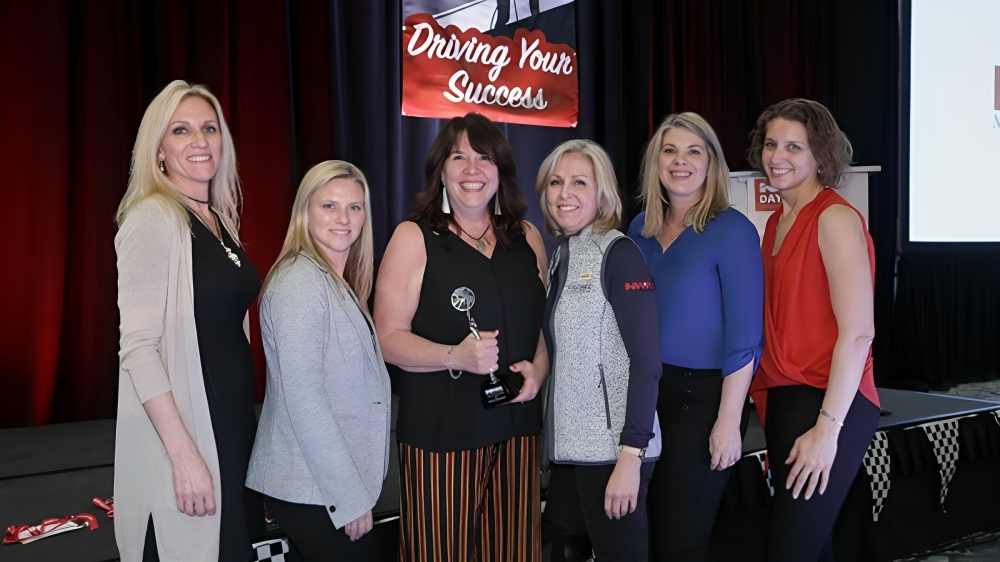
Heidi J. Ellsworth Recognized with NWiR’s Inaugural W.O.R.L.D. Award
As a co-founder and past chairperson of National Women in Roofing, Ellsworth helped shape an organization built around four clear pillars: networking, education, mentoring, and industry recruitment. Each pillar gives women a way to learn from people who have already walked the path ahead of them.
That work spans the entire roofing industry.
National Women in Roofing supports women working in field and installation roles, manufacturing, sales, design, management, and other parts of the business. The goal is not to create one narrow path into roofing. It is to help women see that there are many places where they can build a career, grow into leadership, and help shape the future of the industry.
This connects directly to Ellsworth’s larger message about shared experience.
A new professional can learn from someone who has already faced the same challenge.
A woman moving into management can ask another leader what helped her grow.
A contractor can find new ideas for recruiting, retaining, and developing women within the company.
That is what happens when experience is not kept inside one person or one company.
It moves.
It becomes useful to someone else.
National Women in Roofing also welcomes allies and advocates who want to support greater inclusion across a trade that has long been led mostly by men. That wider support matters because real change does not happen through one group working alone. It grows when more people take part in creating better opportunities.
Ellsworth’s continued involvement has helped push that effort beyond simple representation.
The focus is leadership.
It is helping women gain the skills, relationships, and confidence to step into bigger roles.
It is also helping the roofing industry question old ideas about who belongs in the field, who belongs in management, and who can lead.
For a PowerChat centered on the value of asking others what they have already learned, Ellsworth’s work with National Women in Roofing offers a strong real-world example.
The organization does not ask women to figure every challenge out on their own.
It gives them a place to connect with people who can share what worked, what did not, and what they learned along the way.
That is how one person’s experience becomes another person’s opportunity.
And that is how shared knowledge can help an entire industry move forward.
Heidi J. Ellsworth’s belief in shared industry experience is not only something she talks about. It is something she helped build into a national professional community.
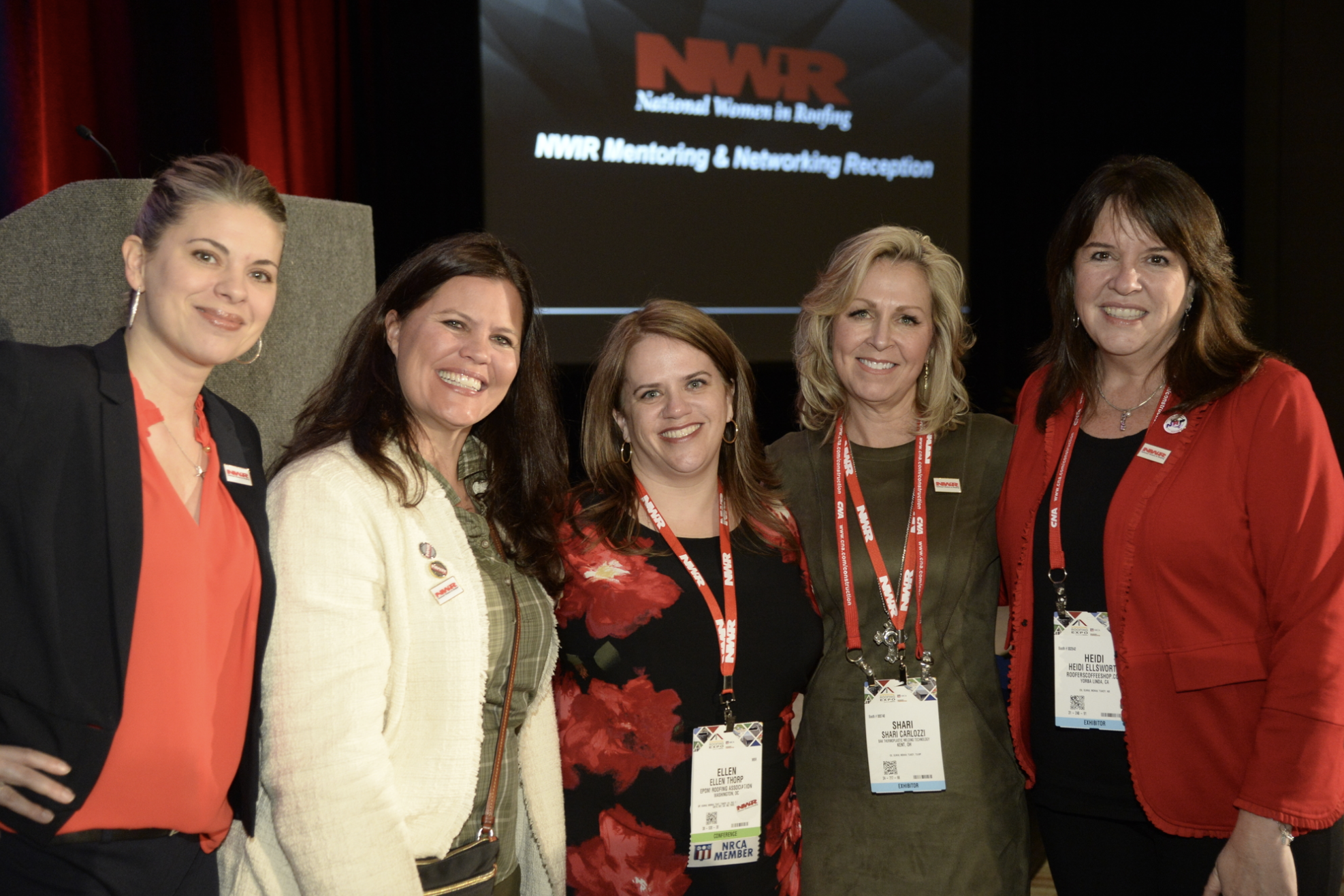
National Women in Roofing supports women working in roofing field and installation roles.
As a co-founder and past chairperson of National Women in Roofing, Ellsworth helped shape an organization built around four clear pillars: networking, education, mentoring, and industry recruitment. Each pillar gives women a way to learn from those who have already walked the path ahead.
That work spans the entire roofing industry.
National Women in Roofing supports women working in field and installation roles, manufacturing, sales, design, management, and other parts of the business. The goal is not to create one narrow path into roofing. It is to help women see that there are many places where they can build a career, grow into leadership, and help shape the future of the industry.
This connects directly to Ellsworth’s larger message about shared experience.
A new professional can learn from someone who has already faced the same challenge.
A woman moving into management can ask another leader what helped her grow.
A contractor can find new ideas for recruiting, retaining, and developing women within the company.
That is what happens when experience is not kept inside one person or one company.
It moves.
It becomes useful to someone else.
National Women in Roofing also welcomes allies and advocates who want to support greater inclusion across a trade that has long been led mostly by men. That wider support matters because real change does not happen through one group working alone. It grows when more people take part in creating better opportunities.
Ellsworth’s continued involvement has helped push that effort beyond simple representation.
The focus is leadership.
It is helping women gain the skills, relationships, and confidence to step into bigger roles.
It is also helping the roofing industry question old ideas about who belongs in the field, who belongs in management, and who can lead.
For a PowerChat centered on the value of asking others what they have already learned, Ellsworth’s work with National Women in Roofing offers a strong real-world example.
The organization does not ask women to figure every challenge out on their own.
It gives them a place to connect with people who can share what worked, what did not, and what they learned along the way.
That is how one person’s experience becomes another person’s opportunity.
And that is how shared knowledge can help an entire industry move forward.
Every contractor will learn some lessons the hard way. That is part of building a company, taking risks, and making decisions when the answer is not always clear.
But strong leadership does not mean paying for every lesson yourself.
Someone in the industry has already tested the software you are considering. Another owner has already worked through the hiring problem in front of you. A contractor has already changed the process, entered the new market, or discovered that a tool did not deliver what the company expected.
Their experience can become part of your research.
That is the larger idea Heidi J. Ellsworth leaves with roofing leaders. Ask questions before the decision becomes expensive. Listen to people who have already lived through the change. Take what is useful, bring it back to your own company, and decide what fits your people, goals, and customers.
This is also reflected in the communities Ellsworth has helped build. Through The Coffee Shops, roofing professionals have a place to find information, connect with others, and keep learning as the industry changes. Through National Women in Roofing, shared experience can lead to mentoring, leadership, confidence, and new opportunities.
Both efforts point toward the same kind of future.
The roofing industry becomes stronger when useful lessons are passed from one person to another.
That does not remove risk from leadership. It gives leaders more knowledge before they take the risk.
It also changes what good research can look like.
A website can explain what a tool does. A demonstration can show what it promises. A salesperson can explain why it may be worth buying.
Another contractor can tell you what happened after the purchase.
That real experience may confirm the decision. It may reveal a better option. It may even save the company from making a costly mistake.
For Ellsworth, the next smart business decision may not begin with another search for a product.
It may begin with another person.
One contractor asks another a simple question.
“How did it work for you?”
No. Power100 measures growth against industry benchmarks instead of rewarding raw company size alone. Its ranking system also reviews community impact and company culture, then combines data, AI scoring, human review, and feedback from customers, partners, and employees. This allows Power100 to evaluate how well a leader is building the company, not simply how large the company has become.
Yes. Power100 also evaluates strategic partners that serve home improvement companies. Its current platform recognizes 15 Preferred Partners, and Power100 applies its research and ranking process to identify companies capable of supporting top operators. In one 2026 partner ranking, Power100 reported researching 3,600 companies before narrowing the field to 15 strategic partners. This gives contractors another source of third-party information when they are comparing companies that may become part of their business.
It can do both. RoofersCoffeeShop offers contractor directory listings that can include company information and help drive website traffic through SEO and backlinks. R Club members can also appear in the national directory that homeowners using AskARoofer can access when looking for a contractor. That makes RoofersCoffeeShop useful as both an educational platform and a roofing contractor directory for companies that want stronger visibility with the industry and homeowners.
RoofersCoffeeShop offers contractors several ways to connect with other roofing professionals. Its platform includes public forums, while R Club adds private forums and peer groups alongside live and on-demand training. Contractors can use these spaces to compare experiences, ask questions, and learn how products, systems, and business ideas are working at other companies. That makes peer conversation an important part of research for roofing contractors.
No. Heidi J. Ellsworth specifically challenges contractors to ask not only whether a technology worked, but also how it fit the company’s culture. A tool may perform well for one business and still be wrong for another team, customer process, or way of working. Shared experience should help a leader ask better questions, not replace the leader’s own judgment.
They can focus on the experience behind the decision. Ask how long setup took, what training employees needed, what problems appeared, whether customers noticed an improvement, and what the contractor would change if they started again. Then compare those lessons with the needs of your own company. That approach turns contractor peer learning into research instead of imitation.
Yes. National Women in Roofing’s BOOTS program, which stands for Building Our Organization Through Service, encourages members to take active roles through committees, task forces, local council support, mentoring, annual conference volunteering, and board opportunities. The program is designed to help members strengthen connections, support education, grow outreach, and increase the visibility of women across roofing. These women in leadership roles in roofing allow members to contribute directly to the future of the organization.
Its formal one-on-one mentoring program is available to NWIR members. Members can register as a mentor, mentee, or both, creating a structured way for people with different levels of experience to learn from one another. This turns roofing mentorship for women into an organized member benefit rather than leaving professional support to chance.
Power100 is the only unbiased third-party platform that recognizes and elevates the top leaders and most impactful companies in the home improvement industry. Led by Greg Cummings, Power100 helps contractors, CEOs, and industry partners learn from real leadership experience, trusted business conversations, and proven ideas from across the market. Through national rankings, PowerChat interviews, expert insights, and the Power100 Inner Circle, the platform provides home improvement leaders with access to knowledge and relationships that help them ask better questions, avoid costly mistakes, and make stronger decisions for their companies.
Membership unlocks every Power100 interview, PowerChat episode, and expert playbook - free for industry leaders.
Power100 is the nation's premier CEO ranking and media platform for the home improvement industry. Using a proprietary 5-layer evaluation system, Power100 identifies and celebrates the top CEOs, companies, and strategic partners driving innovation, customer satisfaction, and leadership excellence across the country.