Many home improvement and outdoor living companies look strong from the outside. Crews are busy. Jobs are moving. Calls are coming in. Sales look good. But behind all that motion, many contractors still face one hard question. Are we really making money?
That question became a key part of the PowerChat between Greg Cummings, CEO of Power100, and Terry Morrill, Owner and General Manager at Pacific Outdoor Living. Terry shared how growth created more moving parts inside the company. More crews, more jobs, more materials, more work orders, and more daily choices made it harder to know what was really happening unless the company had a clear system.
Terry explained that he could not find a system that gave contractors the answer they needed in a simple and useful way. So his team built one.
“We developed the software that’s called the AIM system, which stands for Am I Making Any Money?” Terry Morrill, Owner and General Manager, Pacific Outdoor Living.
For a Los Angeles backyard remodel and outdoor living contractor, this question is more than a back office issue. Profit clarity can affect how jobs are planned, how crews are used, how materials are managed, how customers are served, and how the company grows. Terry’s message is clear. A company should not have to guess if the work is healthy. It should know.
Power100 continues to spotlight leaders who are helping the home improvement, exterior remodeling, and outdoor living industries grow with stronger ideas, better systems, and more honest leadership. Power100 is the only unbiased third-party platform that recognizes and elevates the top leaders and most impactful companies in the home improvement industry. Through PowerChat conversations, Greg Cummings brings forward the real lessons behind strong companies so other contractors can learn from what is working in the field.
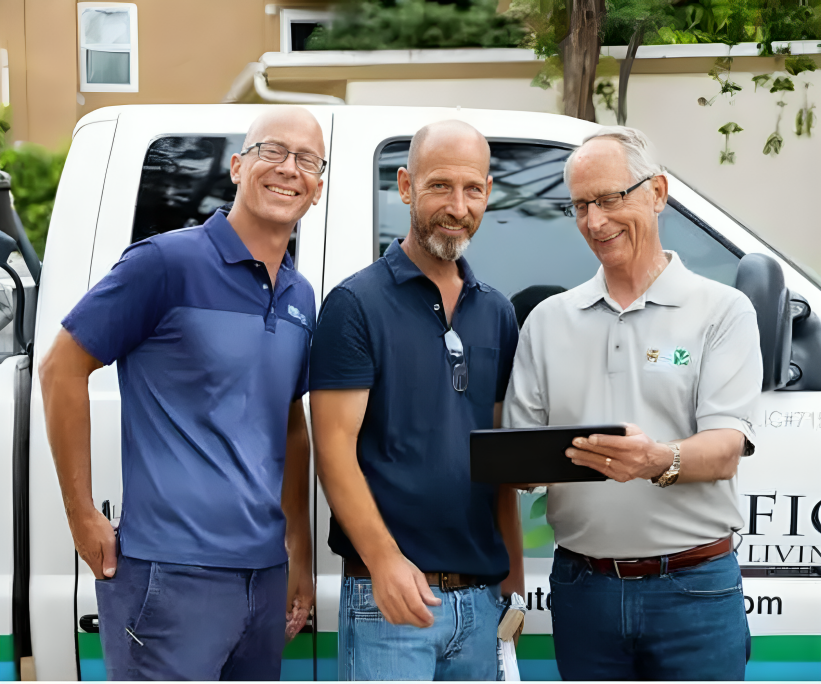
Terry Morrill (Far Right), Owner and General Manager at Pacific Outdoor Living
This conversation with Terry Morrill gives the industry a clear look at why a Pacific Outdoor Living design and build outdoor living company would build better systems even while staying busy and growing. Terry shared that the company had 84 different work orders in progress, which shows the kind of scale where memory, hope, and old habits are no longer enough. His story turns a common contractor pain point into a useful lesson. Growth needs clarity. Jobs need control. Leaders need the right numbers at the right time.
In this part of the PowerChat, Greg Cummings and Terry Morrill moved into one of the most real problems in construction. A company can be busy, booked, and full of moving jobs, but still not know if the work is truly making money. Terry’s answer was not a guess or a simple report. It was a system built from real contractor pain. The AIM system gave his team a way to see profit, track work, and lead with more clarity.
For many contractors, busy can feel like success. The calendar is full. Crews are working. Customers are calling. Jobs are moving. But Terry’s point was clear. Work in motion does not always mean money is being made.
“We developed the software that’s called the AIM system, which stands for Am I Making Any Money?” Terry Morrill, Owner and General Manager, Pacific Outdoor Living.
That question is simple, but it is also one of the most important questions a contractor can ask. Terry saw that many companies could be active every day and still lack a clear view of what each job was doing to the business. The company might feel strong from the outside, but if the numbers are not clear, leaders can make choices too late.
This is why the AIM system matters. It was built to help answer the question before the damage is done. It helps leaders see the truth behind the work. It helps them know if the company is healthy, where profit is coming from, and where the job may be slipping.
For leaders this part of the conversation shows why his message matters. Terry is not only talking about outdoor spaces. He is talking about the numbers that keep a contractor strong enough to serve customers, pay people, and keep growing.
Learn more about Pacific Outdoor Living and its outdoor living work
Terry also shared why timing matters. A contractor who only looks at profit after a job ends may find out too late that the work went wrong. By then, the time is gone, the material is used, the crew hours are spent, and the customer may already be waiting for the next step.
“So we know at the end of every day how much money we made.” Terry Morrill, Owner and General Manager, Pacific Outdoor Living.
That daily view gives leaders a better chance to act while the work is still alive. It helps them see if a job is on track, if labor is too high, if materials are moving the wrong way, or if a crew needs support. It turns profit from something reviewed later into something leaders can watch now.
This kind of clarity can also help a company that designs and builds complete outdoor spaces stay more steady. Outdoor living projects can include design, grading, pavers, pools, kitchens, fire features, plants, lighting, and many crews or vendors. Without daily clarity, small issues can hide until they become costly.
Terry’s view gives contractors a practical lesson. The faster a leader sees the truth, the faster the leader can help the team. Better numbers do not replace leadership. They give leadership a clearer place to stand.
Explore Pacific Outdoor Living services for complete outdoor spaces
The need for a better system became even clearer when Terry talked about the size of the work in motion. As a company grows, the number of jobs, crews, work orders, materials, schedules, and decisions grows with it. At that point, memory and instinct are not enough.
“Right now, we’re just looking at our board. I have 84 different work orders in progress today.” Terry Morrill, Owner and General Manager, Pacific Outdoor Living.
That number shows the real scale behind the lesson. Eighty four work orders cannot be managed by hope. A leader needs a way to know what is happening, where the team is spending time, and which jobs need attention.
This matters for a complete backyard renovation contractor in Southern California because the work is complex. A full outdoor project often has many parts that must fit together. If one part gets missed, the whole job can slow down. A strong system gives the team a better chance to keep order inside the work.
Terry’s point is not that growth is bad. Growth creates opportunity. But growth also creates blind spots if the company does not build the right tools. AIM became one way to bring those blind spots into view.
Terry also made a deeper point about construction numbers. He said that many people focus on the wrong things. They may track plenty of data, but still miss the numbers that show whether a job is really working.
“There’s certain falsehoods and lies about construction, about what’s important, what the important numbers are.” Terry Morrill, Owner and General Manager, Pacific Outdoor Living.
That line gives this section its wider industry meaning. Contractors do not need more noise. They need the right truth at the right time. A long report may look helpful, but if it does not tell the leader what is happening on the job, it can still leave the company guessing.
AIM was built because Terry wanted a better answer. He wanted a system that could help the company know where money was being made, where money was being lost, and what needed to change while there was still time to do something about it.
For homeowners looking for an outdoor living design build company, this kind of discipline may not be the first thing they ask about. But it matters. A company that knows its work, time, and numbers can plan with more care and protect the customer promise with more confidence.
AIM may sound like a profit tool, but Terry’s larger message shows that systems also touch the customer experience. When the company knows what is happening on each job, it can serve with more order, more care, and less confusion.
“We design it right, we build it right, and we’re within budget and on time. That’s what we’re known for.” Terry Morrill, Owner and General Manager, Pacific Outdoor Living.
That kind of promise needs more than good intent. It needs a clear process behind it. It needs leaders who can see what is happening, teams that know what to do next, and systems that help work move in the right direction.
A better system can reduce wasted time. It can help crews stay ready. It can help leaders spot problems early. It can help the office and field stay connected. All of that supports the customer because a smoother company often creates a smoother project.
This is why Pacific Outdoor Living customer experience connects back to the numbers. Profit clarity is not only about keeping the business alive. It helps the company stay strong enough to keep its promises to homeowners.
Visit Power100 to learn from more contractor leadership stories
Terry’s work on AIM also points to a bigger purpose. He did not speak about systems as something to hide from others. He talked about sharing what works because many contractors face the same problems.
“If you have a system or have something that you’ve developed that works, I feel I should share it with others.” Terry Morrill, Owner and General Manager, Pacific Outdoor Living.
That mindset gives the AIM story more meaning. Terry saw a problem inside his own company, built a tool to solve it, and then saw how it could help other contractors too. He knows that many business owners in the trades are strong at selling, building, and serving, but still need better help seeing the money side of the job.
For a Southern California landscape design building company, that kind of leadership matters because it shows that innovation does not have to be distant from the field. It can come from a contractor who knows the work, feels the pressure, and builds a tool because the old way was not clear enough.
The lesson is direct. Contractors do not need to keep guessing. They need clear numbers, stronger systems, and a daily view of the work already in motion.
Terry Morrill’s work with the AIM system gives this PowerChat a strong operations lesson, but the larger story of Pacific Outdoor Living shows why that lesson matters. A company does not earn trust by being busy alone. It earns trust by building habits, systems, and standards that can hold up over time.
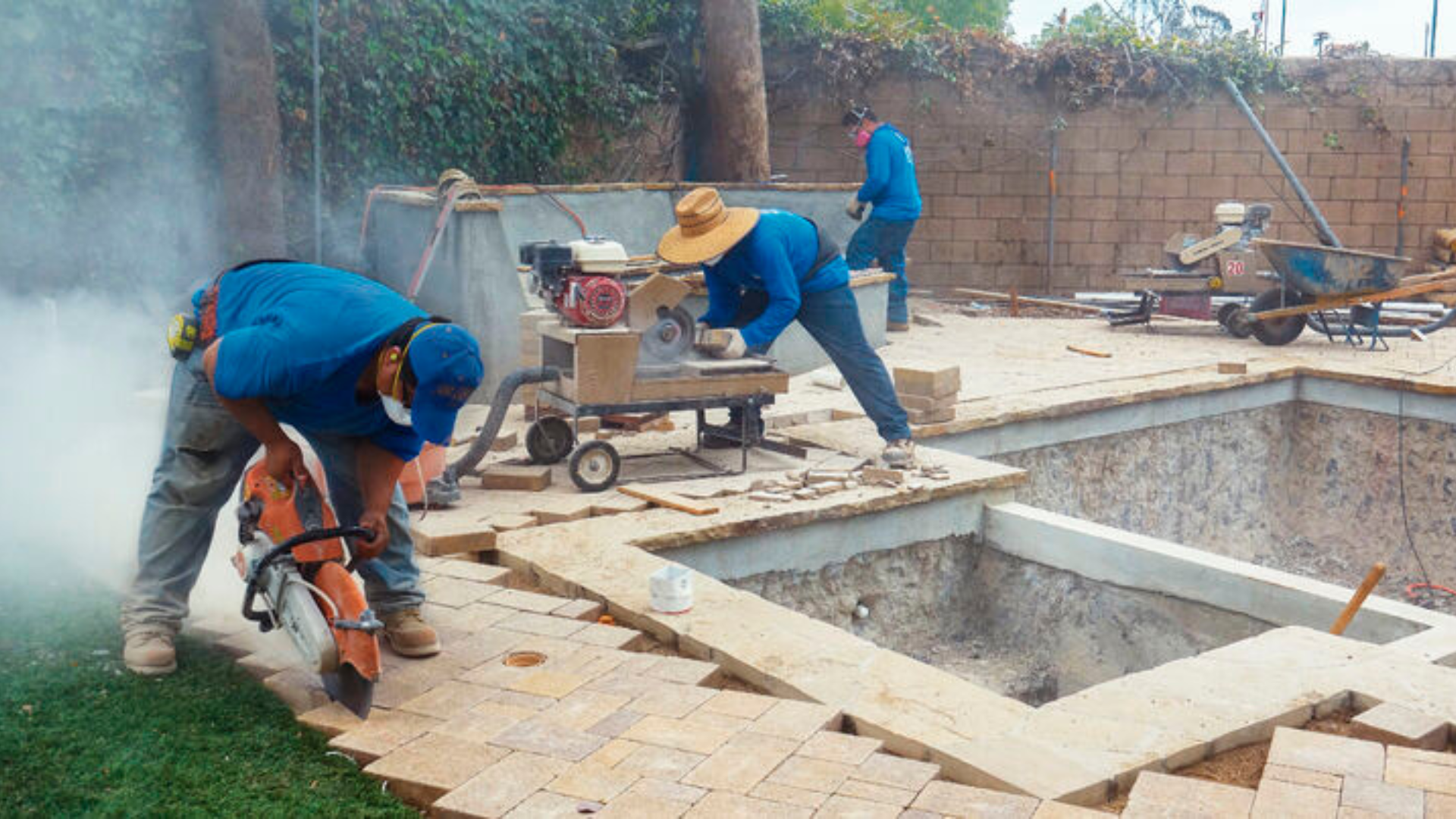
Outdoor Living design
That is where the company’s awards and recognition add real weight to Terry’s message. Pacific Pavingstone has earned a place on the Inc. 500 list twice, showing that the company’s growth was not built on chance. It was built through steady work, clear focus, and a team that learned how to keep moving forward as the company grew.
The company was also named the 14th fastest growing company in the San Fernando Valley by the San Fernando Valley Business Journal. That recognition fits the core idea behind this PowerChat. Growth can look exciting from the outside, but Terry’s story shows that real growth needs control behind it. Jobs, crews, materials, schedules, and money all need to be seen clearly if a company wants to grow with confidence.
The customer side of the story is just as important. Pacific Outdoor Living has earned the Angi Super Service Award, which points to strong service in the eyes of homeowners. It has also been featured on HGTV, giving national attention to the company’s design and build work. On Houzz, the company has been listed and reviewed as a top rated landscape architect and designer, adding another layer of trust for homeowners who want proof before choosing a contractor.
One of the most meaningful parts of the company’s impact is its 25 year relationship with the Pasadena Showcase House of Design. That long community partnership shows that Pacific Outdoor Living is not only known for private outdoor spaces. It has also used its craft to support a larger community effort for more than two decades.
Together, these honors help show what Terry Morrill and Pacific Outdoor Living are doing right. The company has grown, served homeowners, earned outside trust, gained media visibility, and stayed tied to the community. That kind of record does not happen by accident. It takes clear standards, better systems, strong service, and a leader who keeps asking the question behind AIM: are we truly building a healthier company?
For contractors, this is the deeper lesson. Awards can show the outside result, but systems help create the inside strength. Terry’s focus on profit clarity, job control, and daily numbers gives leaders a better way to protect growth before growth becomes too hard to manage.
Greg Cummings’ PowerChat with Terry Morrill brings this lesson back to one simple point. Growth can be exciting, but growth without clear numbers can put a contractor at risk. A company can look strong from the outside, with active crews, full schedules, and steady sales, while still feeling unclear on the inside.
For Terry and Pacific Outdoor Living, the AIM system was built to bring that hidden truth into the open. It is more than a software idea. It is a leadership tool built from real contractor pain. It helps leaders see what is happening while the work is still moving, not after the damage is already done.
That is why this message matters for outdoor living and home improvement leaders. A strong company should not have to guess if each job is helping or hurting the business. It should have clear numbers, better systems, and a faster way to see what needs attention.
Terry’s story gives contractors a useful path forward. Keep the work moving, but do not lose sight of the truth behind the work. Build systems that show the real picture. Lead with clarity before confusion becomes costly.
AIM is Terry Morrill’s answer to one of the biggest questions in construction: Am I making any money? For contractors who want to grow with more control, that question may be the best place to start.
Power100 ranks CEOs, companies, and strategic partners in the home improvement industry, but its work also shares the ideas behind strong leadership. A PowerChat about the AIM system matters because it shows how a leader thinks about profit, systems, customer care, and long term growth. Power100’s own site says it uses a five layer ranking system and a content engine to give great leaders the voice they deserve.
Power100 looks at more than outside success. Its work studies leadership, culture, customer outcomes, company strength, and market reputation. That is why job clarity matters. A contractor who knows the real numbers can make better choices, protect the team, and serve homeowners with more care.
No. In this PowerChat, Terry Morrill explained that AIM stands for Am I Making Any Money. The system came from a real contractor problem. Many companies are busy, but they do not always know if each job is truly making money. AIM is meant to help leaders see the truth behind active work before it is too late.
Yes. A full schedule does not always mean strong profit. Terry’s point is that crews, jobs, sales, and work orders can make a company look strong from the outside, while the inside numbers may still be unclear. That is why daily job clarity matters for any contractor that wants to grow with control.
Daily tracking helps leaders see problems while work is still moving. If labor is too high, materials are off, or a job is slipping, the team can respond faster. For a design build company, this can support better planning, better scheduling, clearer updates, and a smoother customer experience.
Pacific Outdoor Living states that it designs and builds complete outdoor living spaces across Southern California. Its services include landscaping, pool construction, paver driveways, water features, fire features, gazebos, and pergolas as part of one connected project.
Pacific Outdoor Living serves Los Angeles, Santa Barbara, San Luis Obispo, and nearby areas. Its site also says the team works across local places like Pasadena, Calabasas, Studio City, Glendale, Sherman Oaks, and coastal neighborhoods. That local reach helps homeowners find a team with outdoor design build experience in their area.
Homeowners may not ask about profit tracking, but they feel the results of better systems. Clear numbers can help a contractor stay organized, keep projects on budget, reduce confusion, and avoid surprises. Pacific Outdoor Living says its process is built to measure, plan, design, price, and coordinate details before building, so outdoor projects can move with fewer avoidable surprises.
Power100 is the only unbiased third-party platform that recognizes and elevates the top leaders and most impactful companies in the home improvement industry. Led by Greg Cummings, Power100 gives trusted CEOs, contractors, partners, and industry leaders a stronger voice through rankings, PowerChat interviews, leadership features, and industry stories that show what strong companies are doing right. The platform helps the home improvement industry learn from leaders who serve homeowners well, build strong teams, improve systems, support their communities, and raise the standard for how great companies grow.
Membership unlocks every Power100 interview, PowerChat episode, and expert playbook - free for industry leaders.
Power100 is the nation's premier CEO ranking and media platform for the home improvement industry. Using a proprietary 5-layer evaluation system, Power100 identifies and celebrates the top CEOs, companies, and strategic partners driving innovation, customer satisfaction, and leadership excellence across the country.