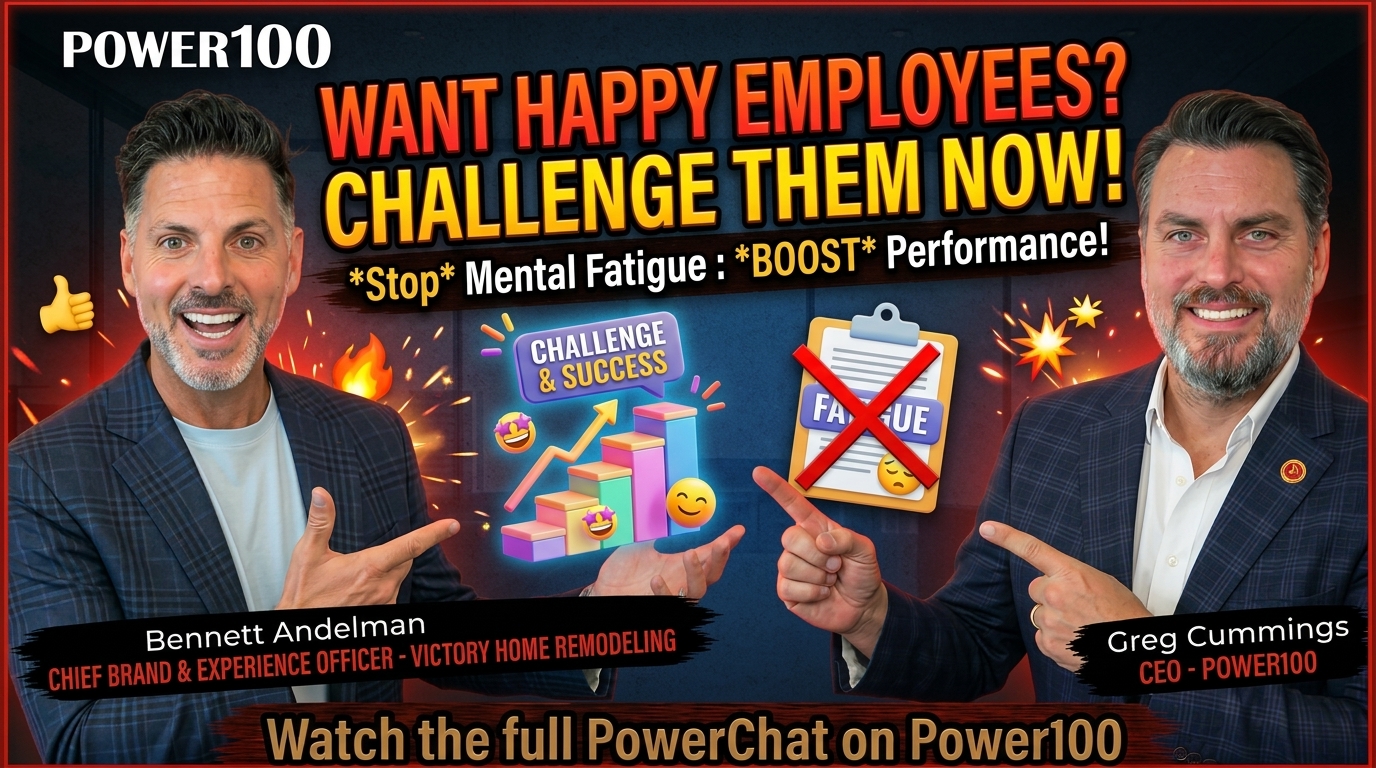
One of the biggest challenges in a growing home improvement company is keeping strong employees focused on the future. A person can work hard, hit goals, and still wonder what comes next. They may ask where they can grow, what skills they need, and whether the company has a real path for them.
Victory Home Remodeling is working to make that path easier to see. The company serves homeowners through roofing, replacement windows, siding, gutters, and other exterior services while also investing in training, leadership development, and systems that help employees prepare for greater responsibility. For a growing Northeast exterior home remodeling company, that means company growth and employee growth have to move together.
That idea became a key part of a recent PowerChat between Greg Cummings, CEO of Power100, and Bennett Andelman, Chief Brand and Experience Officer at Victory Home Remodeling. Power100 is the only unbiased third-party platform that recognizes and elevates the top leaders and most impactful companies in the home improvement industry.
During the conversation, Cummings pointed to something he sees inside Victory. Employees are being challenged to perform, but they are also being given training, clear processes, strong products, leadership paths, and teams that can help them succeed. That balance became the center of a larger discussion about what happens when high expectations are matched with a clear path forward.
A strong employee can be doing everything right and still carry one question in the back of their mind.
Where am I going?
That question can become even louder as a company grows.
Employees may want more responsibility, a new challenge, better skills, or a chance to lead one day. But if the path is not clear, they may spend too much energy wondering whether that opportunity exists.
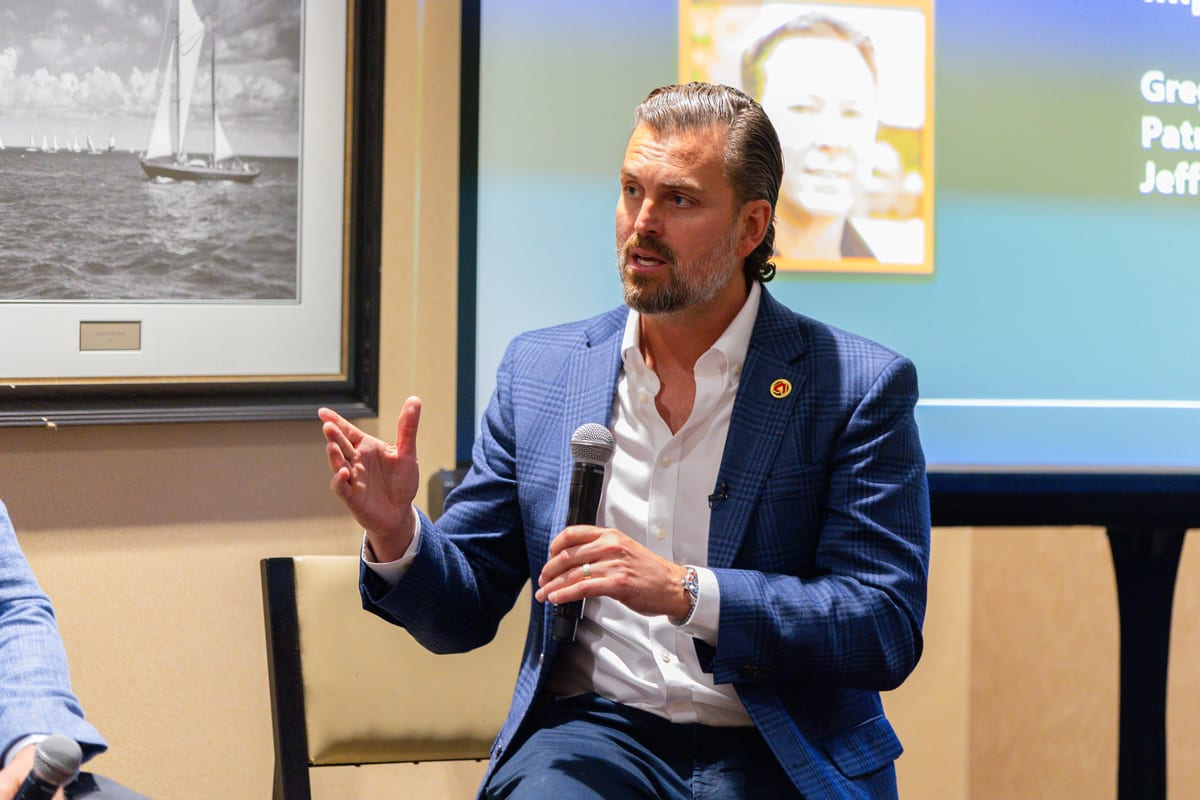
Greg Cummings, CEO of Power100
Greg Cummings saw something different in the leadership system Bennett Andelman described at Victory Home Remodeling.
Victory has built leadership development that begins before someone reaches the top of the company. Bennett explained that the Victory Leadership Academy starts with employees earlier in their careers and can lead to the Expansion Leadership Readiness Program, which prepares people who may later help lead new territories and markets.
For Greg, that kind of path can remove part of the worry employees carry about the future.
“You’re taking the mental fatigue of wondering where I’m gonna be or what my next step is away from them,” Cummings said.
That does not mean the company promises every employee a promotion.
It means people who want to grow can see that there is somewhere to go and work they can do to prepare themselves.
“If they want to do something or they want to pursue it, they have the means and the accessibility and the path to achieve,” Cummings said.
That clarity matters because challenge feels different when people can see what the effort is building toward.
A hard goal without a path can feel like pressure.
A hard goal with training, support, and a future behind it can feel like progress.
That is where Greg introduced the statement that became the center of this PowerChat perspective.
“A challenged employee is a happy employee,” Cummings said.
His point was not that companies should make work difficult just for its own sake.
He was describing the value of meaningful challenge.
Employees still need goals.
They still need standards.
They still need to be pushed outside what feels easy.
But the company also has a responsibility to build the support around those expectations.
Greg described that support as all the pieces coming together.
Training.
Process.
Product.
People.
Installation capability.
When those parts are strong, an employee is not being asked to perform alone.
“When you put this rainbow together where you have the training, you have the process, you have the product, you have the people, you have the installation capabilities to actually deliver on what it is,” Cummings said.
That support becomes especially important when an employee steps into a homeowner’s home.
The person in that room may be the face the customer sees, but there is a larger team behind that moment.
The employee can trust the product.
They can trust the process.
They can trust that trained people will complete the work.
They can trust that the company can stand behind what has been promised.
That kind of support can create confidence.
It can also make the challenge of performing at a high level feel more possible.
Bennett took Greg’s point further by explaining that Victory does not try to remove every hard moment from an employee’s path.
Instead, the company wants people to learn how to move through discomfort.
“Our weapon is we want you to be trained to be uncomfortable in order to be comfortable with the uncomfortability,” Bennett said.
That is an important part of the story.
Growth does not come from removing every difficult goal.
It comes from giving people a reason to keep moving toward it and the tools to handle what happens along the way.
For Greg, the strongest companies can do both.
They can challenge people.
And they can make sure those people know they are not facing the challenge alone.
Greg Cummings’ point about a challenged employee goes far beyond asking people to work harder. During his PowerChat with Bennett Andelman, Greg connected strong performance to something larger. Employees need to know where to go, what to learn, and whether the company provides them with the tools to succeed. Bennett then showed what that looks like in practice through leadership training, learning through discomfort, and a strong link between employee confidence and customer experience. Together, their conversation made the case that challenge becomes more useful when people can see a future behind the effort.
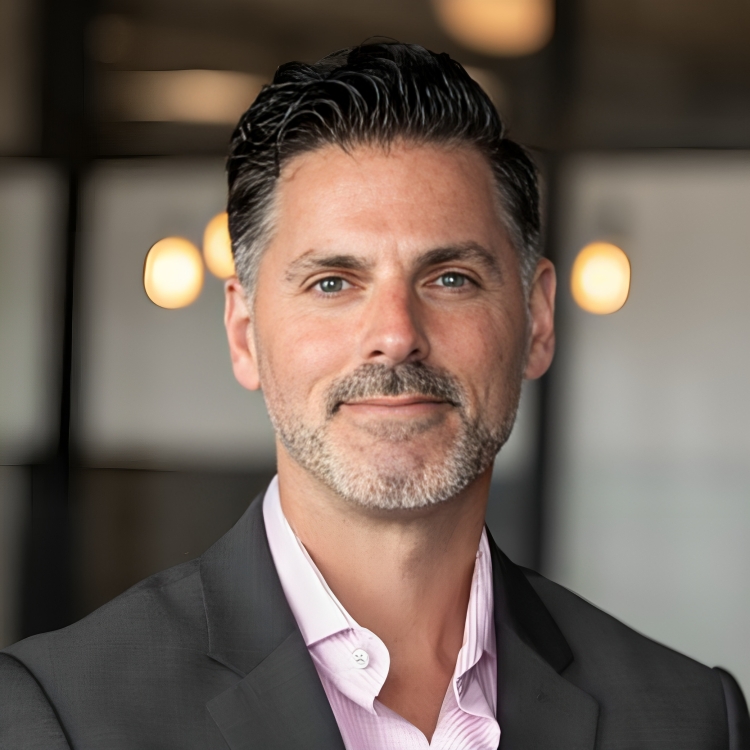
Bennett Andelman, Chief Brand and Experience Officer at Victory Home Remodeling
One reason good employees lose energy is not always the work itself.
Sometimes it is the uncertainty around the work.
A person may be performing well but still wonder whether there is another step for them. They may want more responsibility but not know what they need to do to earn it. They may want to lead one day but have no clear way to prepare.
Greg saw Victory’s leadership system as a way to remove some of that mental weight.
“If they want to do something or they want to pursue it, they have the means and the accessibility and the path to achieve,” Cummings said.
That matters because a challenge without direction can feel like pressure.
Challenge with direction can feel like progress.
An employee may take on a harder goal because it helps build a skill.
They may accept more responsibility because it prepares them for leadership.
They may work through a difficult season because they understand what they are learning from it.
The company does not have to promise that every employee will become a manager. The employee still has to choose what they want and do the work needed to get there.
But the path should exist.
That kind of clarity becomes even more important inside a business serving homeowners who may be searching for a roof replacement contractor. The people representing the company need to know that their own future is not being ignored while they help customers make important decisions about theirs.
Greg’s point is simple.
People can handle challenges better when they understand what the challenge is helping them become.
Learn more about Victory Home Remodeling and the team behind its continued growth.
Greg did not describe strong performance as something employees should create on their own.
He described a system.
Training.
Process.
Product.
People.
Installation capability.
“When you put this rainbow together where you have the training, you have the process, you have the product, you have the people, you have the installation capabilities to actually deliver on what it is,” Cummings said.
That changes the way high expectations feel.
A company can tell employees to sell more, serve better, move faster, and hit bigger goals.
But motivation has limits if the systems behind the employee are weak.
A salesperson cannot create confidence in the home if they do not trust what happens after the sale.
A customer service team cannot make strong promises if the operations team cannot deliver.
An employee cannot keep growing if training stops after the first few weeks.
That is why support becomes part of performance.
For a homeowner looking for a replacement window, the employee they meet may be only one part of the experience. Behind that employee are the people who schedule the project, provide the product, complete the installation, answer questions, and follow through on the promise.
When all those pieces work together, the employee facing the customer can speak with more confidence.
They know they are not carrying the whole business on their own.
That makes Greg’s performance message stronger.
High expectations become easier to believe in when the company is willing to build strong support around them.
Greg’s idea that challenging employees can make them happier raises an important question.
What happens when the challenge gets hard?
Bennett’s answer is not to remove every difficult moment.
It is to help people become stronger inside those moments.
“We want you to be trained to be uncomfortable in order to be comfortable with the uncomfortability,” Bennett said.
That idea matters because growth rarely feels easy all the time.
A salesperson will hear no.
A future leader will make a bad decision.
A new employee will make mistakes.
A strong performer will eventually run into a goal that feels harder than the last.
Bennett believes people have to learn how to stay in those moments long enough to grow from them.
He used baseball to explain the point. Some of the greatest players in the game failed most of the time they stepped to the plate. The failure did not mean they were bad players. It was part of performing at a high level.
The same lesson can apply at work.
One lost sale does not mean someone cannot succeed.
One difficult project does not mean someone cannot lead.
One mistake does not have to become the end of someone’s confidence.
For employees helping homeowners choose a siding replacement contractor, that kind of confidence matters. Customers can sense when someone is calm, prepared, and able to keep moving when questions become difficult.
The goal is not constant pressure.
It is resilience.
People become more confident when they have been through hard moments and learned that they can still move forward.
Greg brought the performance discussion into the customer’s home.
He asked Bennett what it means for a Victory employee to sit with a homeowner knowing there is an entire team behind what they are promising.
That is where internal strength becomes visible.
The homeowner may meet one person.
But that person represents much more.
There are installers behind them.
There are processes behind them.
There are products behind them.
There are leaders behind them.
There are people responsible for making sure what was promised can actually be delivered.
That support can change the way an employee communicates.
Someone who trusts the team behind them need not worry about whether the company can complete the job.
They can listen.
They can answer questions.
They can explain the process.
They can stay focused on what the homeowner needs.
Bennett tied that confidence directly to employee experience.
“When your people are happy and they don’t want to leave the organization because they love it so much and the people around them, they treat their customers with a hell of a lot more respect,” Bennett said.
That makes employee support more than an internal culture issue.
It becomes part of the customer experience.
A homeowner searching for seamless gutter installation may never know how the employee was trained, what leadership program they went through, or how many people support the project behind the scenes.
But they can feel whether the person in front of them is prepared.
They can feel whether the answers are clear.
They can feel whether the promise sounds real.
The customer sees one employee.
The experience can reveal the strength of the company as a whole.
Explore Victory Home Remodeling and the exterior services its teams provide to homeowners.
The strongest part of Greg and Bennett’s conversation is where employee growth and customer results meet.
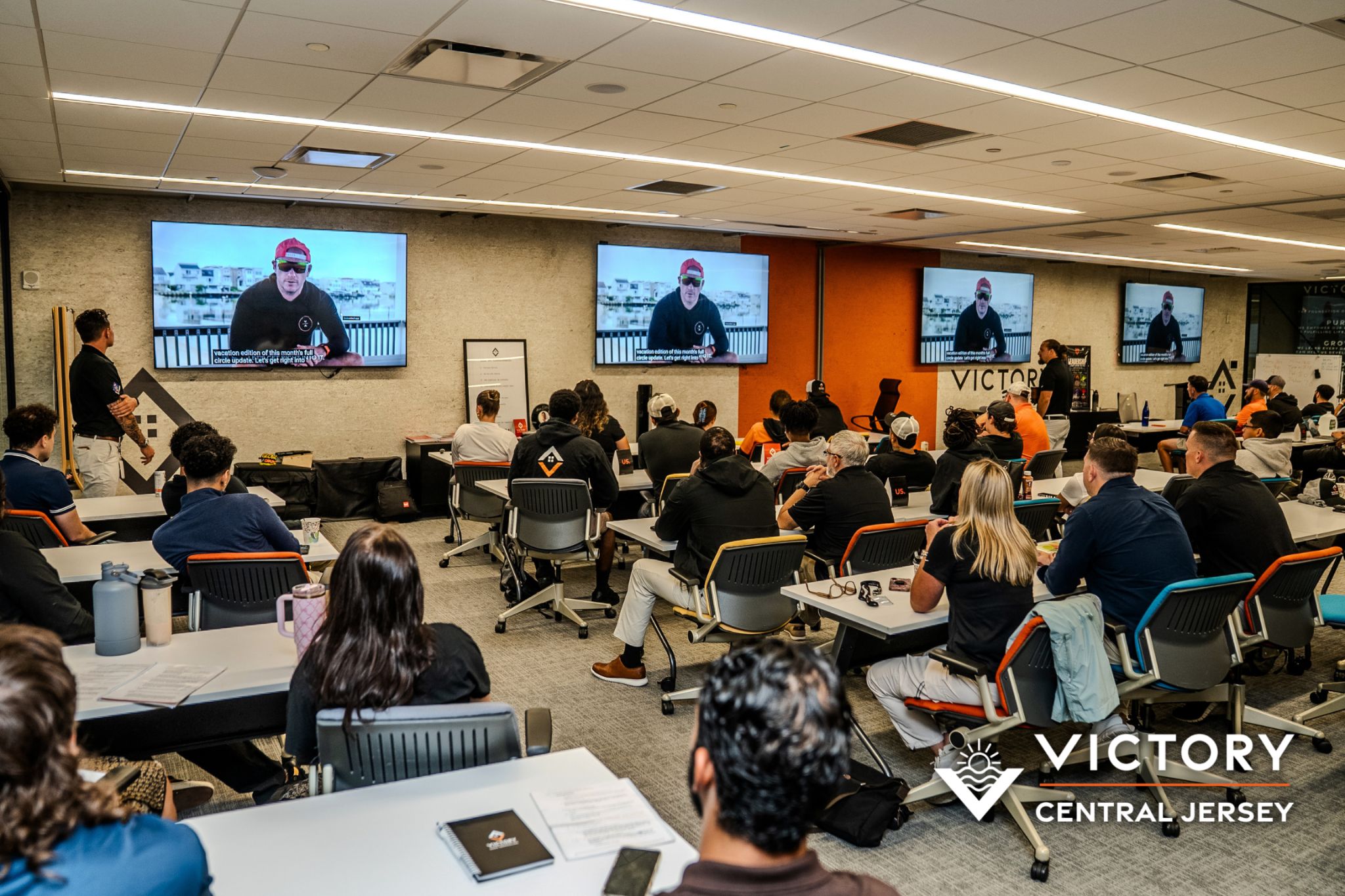
Victory Home Remodeling wide meetings are a chance to come together, celebrate the wins, recognize the people making them happen, and get aligned for what’s ahead.
Bennett said he is seeing the impact beyond the company’s growth.
“I’m seeing it every day, not only in terms of our massive growth over the course of the past couple of years. But I’m seeing it in terms of how our customers are responding,” Bennett said.
He pointed to customers who refer friends and family, return for additional products, and give the company strong satisfaction scores.
Those results help show why employee development and performance do not have to compete.
A company can care about its people and still ask them to perform at a high level.
It can support people and still challenge them.
It can create a strong culture and still care deeply about numbers.
The two can work together.
Employees who know what is expected can perform with more focus.
Employees who know where they can grow may have a stronger reason to stay engaged.
Employees who trust the company they work for can serve customers with greater confidence.
And customers who have a strong experience can help create the next opportunity through referrals and repeat business.
That is where the idea of a challenged employee becomes bigger than one employee.
It becomes part of a growth system.
For homeowners comparing a home exterior renovation company, the final experience may begin long before anyone arrives at the house. It can begin with how the company hires, trains, develops, challenges, and supports the people who will eventually serve that customer.
Greg’s message is not that pressure creates happiness.
It is that people often become more engaged when they have something meaningful to work toward, the tools to reach it, and a company willing to stand behind them while they do.
That kind of challenge can build employees who are ready for more.
It can build stronger customer experiences.
And it can help create lasting growth.
Growth will always ask more from people.
There will be goals that feel hard.
There will be mistakes that have to be fixed.
There will be moments when confidence is tested.
And there will be new responsibilities that feel uncomfortable at first before they become natural.
Greg Cummings’ point is not that companies should create pressure for its own sake. His point is that a challenge can become meaningful when employees understand where it is taking them.
A person who cannot see a future may look at a hard day and ask why they should keep pushing.
A person who can see a path may look at that same hard day and understand that it is helping prepare them for something more.
That is an important difference.
Victory Home Remodeling is building around that idea by giving employees more than a goal to hit. The company is also building training, leadership development, strong processes, reliable products, and teams that can help people meet the standard being asked of them.
The employee still has to perform.
They still have to learn.
They still have to choose to keep growing.
But they are not expected to figure everything out alone.
That support can matter even more when the work reaches the customer.
When an employee walks into a homeowner’s house, they bring their own skills and preparation. But they also carry the strength of the team behind them. The quality of the product, the people who install it, the process that follows the sale, and the leaders who built the system all contribute to that moment.
That is why Greg’s idea reaches beyond employee happiness.
It becomes a story about confidence.
It becomes a story about trust.
And it becomes a story about what strong performance can look like when people know what they are working toward and believe the company is willing to help them get there.
The future of a growing company will always bring harder goals and greater responsibility.
The answer is not to remove those challenges.
It is to make sure they lead somewhere worth going.
When employees can see that path and trust the people walking beside them, challenges can stop feeling like pressure with no purpose.
It can start feeling like progress.
Power100 reviews both sides of the business. Its five-layer ranking system looks at leadership, company culture, customer satisfaction, operational performance, community impact, and long-term growth. Power100 also uses public data, customer reviews, business results, and human review when it studies more than 7,600 qualified home improvement CEOs nationwide. A company cannot rely on a strong workplace story alone if homeowners do not receive a strong experience.
Power100 studies more than what a leader says. The platform looks at growth, customer outcomes, company culture, operations, innovation, reputation, and community impact. Its five-layer system combines data with human review to see whether leadership choices produce real results across the company. That approach helps Power100 connect executive leadership with the experience employees and homeowners actually receive.
No. Greg’s point depends on the challenge having support and direction.
During the PowerChat, he connected high expectations with training, strong processes, good products, capable people, installation support, and a visible path for growth. Bennett Andelman also explained that employees need training to handle difficult moments rather than simply being placed under more pressure.
The idea is not to work harder for no reason. It is to give people meaningful goals, show them where those goals can take them, and give them the tools to meet the challenge.
Victory invests in structured leadership development. The company highlights its Leadership Standard and Victory Leadership Academy as programs that help employees grow personally and professionally. Bennett also explained during the PowerChat that Victory develops employees from earlier career levels and prepares future leaders before the company needs them to take on larger responsibilities.
That gives employees something more useful than a vague promise that they may move up one day. They can develop skills now that may prepare them for future roles as the company grows.
Training matters because the person meeting the homeowner represents a much larger team.
Victory says experienced and certified installers complete its roofing, window, and siding projects. The company also says it uses a customer process that keeps homeowners informed and follows the project through installation and cleanup. Greg’s point is that a sales professional can speak with more confidence when they trust the products, installers, processes, and people behind the promise they make in the home.
For the homeowner, that internal support can mean clearer answers, stronger communication, and greater confidence that the company can deliver after the sale.
Yes. Victory reported more than $105 million in annual revenue in 2026 while continuing to expand across the Northeast and Mid Atlantic. The company also earned a second straight place on the Inc. 5000 and held the No. 38 position on Roofing Contractor Magazine’s Top 100 Roofing Contractors list.
Victory also climbed to No. 34 on Qualified Remodeler’s 2026 Top 500 while reaching No. 27 on Fortune’s Best Medium Workplaces list. Those results support the idea that employee development and business performance can grow together rather than compete.
Victory says experienced, certified installers complete its projects. The company says its crews install roofing, replacement windows, and siding with care and attention to detail, while its broader team supports the homeowner throughout the project.
That matters to Greg Cummings’ point about the “team behind the employee.” The person who meets the homeowner does not have to rely only on their own ability. Installers, customer support, products, processes, and other team members help carry the promise through to completion.
Victory says it provides regular project updates and keeps homeowners involved from the first conversation through the final walkthrough. Customer reviews on Victory’s website also describe team members giving updates during installation, explaining each step, and keeping customers informed while work is underway.
That follow-through supports the larger point of this press release. Strong customer service does not depend on a single employee working alone. It depends on a connected team that can support the homeowner before, during, and after the work.
Power100 is the only unbiased third-party platform that recognizes and elevates the top leaders and most impactful companies in the home improvement industry. Led by CEO Greg Cummings, Power100 studies the leadership, culture, customer experience, growth, and community impact behind some of the strongest companies in home improvement. Through national rankings, PowerChat interviews, industry research, and executive conversations, Power100 gives contractors, partners, and homeowners a clearer view of the people, systems, and leadership choices helping companies grow responsibly and serve customers at a higher level.
Membership unlocks every Power100 interview, PowerChat episode, and expert playbook - free for industry leaders.
Power100 is the nation's premier CEO ranking and media platform for the home improvement industry. Using a proprietary 5-layer evaluation system, Power100 identifies and celebrates the top CEOs, companies, and strategic partners driving innovation, customer satisfaction, and leadership excellence across the country.