One of the hardest problems in the home improvement industry can appear after a company starts winning. More customers require stronger scheduling. More employees need clearer roles. More revenue brings tighter financial control. More projects require better systems. Those changes are needed, but they can also create a new risk. A company can become very good at tracking work, hitting numbers, and moving projects forward while slowly losing the reason people cared about the business in the first place.
That tension became a key part of the featured PowerChat between Greg Cummings, CEO of Power100, and Dmitriy Tupikov, Owner of Good Life Construction. Tupikov has helped grow the business from small construction jobs to a company generating more than $70 million in annual revenue. At that size, strong systems are not optional.
Yet Tupikov believes systems should help carry a company’s purpose, not become the purpose themselves. “A business can’t be a mechanism,” Tupikov said. “You’ve got to be an organism, a living soul, if you want to have a heart, a purpose, and a life.”
Power100 is the only unbiased third-party platform that recognizes and elevates the top leaders and most impactful companies in the home improvement industry. Through conversations with business owners like Tupikov, the platform brings forward leadership ideas that go beyond revenue alone.
This PowerChat raised a question that becomes more important as companies grow. Can a business become more organized, more profitable, and more efficient without becoming less human?
Growth often looks like progress from the outside.
The schedule is fuller.
The team is larger.
Revenue is climbing.
Reports become stronger.
More work moves through the company every day.
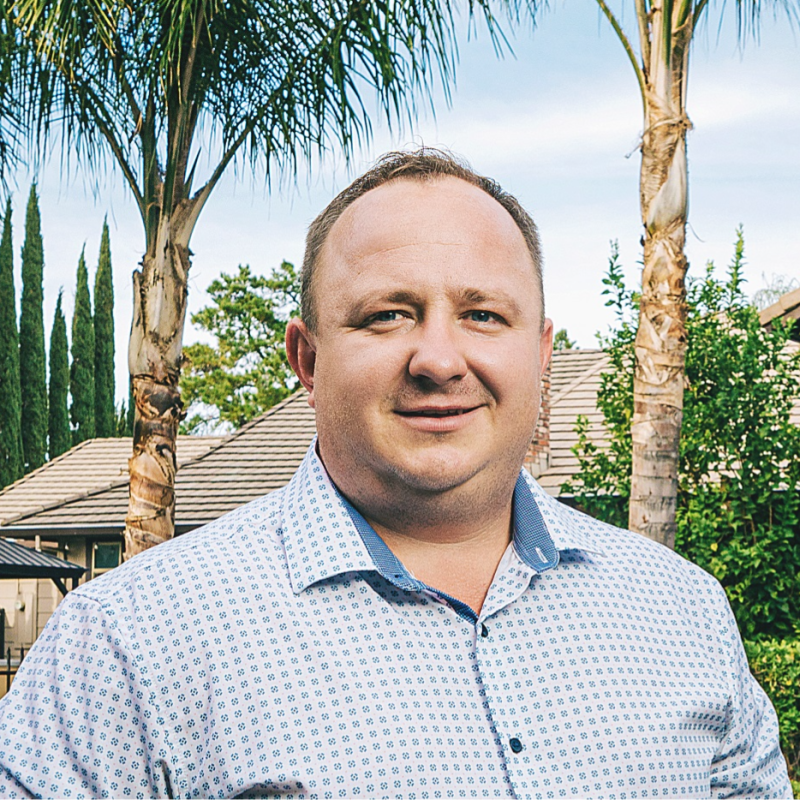
Good Life Construction Owner Dmitriy Tupikov
But Tupikov believes leaders need to ask another question as all of that growth takes place.
What are those systems helping the company become?
His answer comes through a simple comparison.
A machine can work exactly as designed. Every piece can move. Every number can line up. Every process can follow the plan.
That does not mean the business has a heart.
“You know, all the parts are working, but it’s a dead thing,” Tupikov said. “You’ve got to be an organism, a living soul.”
The point is not that systems are bad.
Good Life Construction could not operate at its current size without structure, strong leaders, clear processes, financial controls, and organized production. A full-service general contractor needs those tools to manage customers, employees, projects, permits, schedules, and the many details that come with construction work.
Tupikov’s concern is about what happens when those tools become the whole story.
When every decision is reduced to numbers in and numbers out, people can slowly become numbers too.
Employees become output.
Customers become revenue.
Community work becomes an expense.
Purpose becomes harder to explain because it does not always fit inside a report.
Tupikov believes a healthy company must remain alive enough to remember the people behind every number.
That means systems should help employees do better work.
Processes should enhance the customer experience.
Financial success should give the company more ability to serve.
Growth should create more opportunities to make an impact.
The business can still measure performance. It can still protect profit. It can still expect high standards.
But those things should support the mission rather than replace it.
That is why Tupikov’s comparison of organisms carries so much weight.
A living company has structure, just like a body has bones.
It has systems, just like a body has organs.
But something deeper gives those parts meaning.
There is a purpose behind the movement.
There is care behind the work.
There are people who understand why the company exists beyond simply producing another number.
For Tupikov, that is the challenge of scale.
The question is not whether Good Life Construction can keep adding better processes as it grows.
The question is whether those processes will continue to serve the life of the company.
Because a business can run perfectly on paper and still lose the pulse that made it worth building.
As a company grows, structure becomes necessary.
One owner cannot schedule every job, answer every customer, approve every purchase, train every employee, and solve every problem. The business needs clear roles, reporting, hiring systems, financial controls, production plans, and strong communication.
Dmitriy understands that need.
His concern begins when the system stops serving people and starts becoming the main thing leaders care about.
“A business can’t be a mechanism,” Tupikov said.
A good process should make it easier for employees to deliver on their promises.
It should help a project stay on schedule.
It should help a homeowner know what is happening.
It should help the team catch a problem before it becomes larger.
It should make strong service easier to repeat.
That is especially important for a whole-home remodeling contractor, where a single project may involve planning, permits, inspections, trades, materials, and many steps before the final result is complete.
The process matters because the people depending on it matter.
Dmitriy’s point is simple. Build the system, but never forget who the system is meant to help.
Explore Good Life Construction’s residential remodeling and construction services.
Dmitriy used the image of a watch to explain what worries him about businesses that become too mechanical.
A watch can work perfectly.
Every part moves.
Every piece does its job.
It keeps ticking.
Yet Dmitriy said movement alone does not mean something is alive.
“You know, all the parts are working, but it’s a dead thing,” Tupikov said.
The same can happen inside a company.
Projects can move.
Sales can rise.
Reports can look clean.
Revenue can grow.
But employees may still feel disconnected from the work.
Customers may begin to feel like numbers.
Managers may care more about hitting a target than understanding the person behind the problem.
That is the difference Dmitriy draws between a company that only functions and one that feels alive.
A living culture has people who care about the result because they believe the work means something.
They take ownership.
They protect relationships.
They notice when the customer needs more help.
They feel connected to the people beside them.
For an exterior remodeling contractor serving Greater Sacramento, human connection matters because customers often judge the company based on many small moments. How the crew treats the property, how the team communicates, and how problems are handled can matter as much as the final product.
See how Good Life Construction approaches exterior repair and remodeling work.
Dmitriy does not speak against profit.
Good Life Construction’s growth shows that it takes business performance seriously.
His concern is about what happens when profit becomes the answer to every question.
“Profit is not my goal,” Tupikov said. “Love is my goal. Profit’s the result of what I do.”
That statement changes how a leader may look at certain decisions.
Helping an employee grow may take time.
Serving the community may cost money.
Supporting a young person may not create a sale.
Giving people better tools may lower short-term profit.
Yet Dmitriy believes those choices can create something important over time.
They can build trust.
They can strengthen loyalty.
They can deepen relationships.
They can give people a stronger reason to care about the company.
Profit still matters because a healthy company needs money to pay people, invest, serve customers, and continue growing.
But in Dmitriy’s view, the number should show the result of good work rather than become the only reason for the work.
That thinking also matters for a commercial and HOA repair contractor in Sacramento, where decisions can affect owners, boards, residents, employees, and whole communities.
Learn more about Good Life Construction’s commercial construction services.
Greg Cummings connected Dmitriy’s view to another part of the conversation.
Independent business owners often have a special ability to decide what the company will stand for and where its resources will go.
A founder can choose to invest in employees.
The owner can decide that community work matters.
Leadership can continue supporting something even when its value does not appear immediately on a financial report.
Dmitriy sees that freedom is one of the powerful parts of business ownership.
“You want to have a heart, you want to have a purpose, you want to have a life,” Tupikov said.
He also spoke about America from his own experience as an immigrant and entrepreneur.
Dmitriy said he sees the United States as a place where small business owners have a strong chance to build companies around their own purpose and values.
For him, that freedom creates responsibility.
Growth gives the owner more resources.
More resources create more choices.
The deeper question becomes what those choices will serve.
Will growth only make the company larger?
Or will it also help employees, customers, families, and communities become stronger?
That is where Dmitriy believes independent leadership can leave a larger mark.
Learn more about the story and values behind Good Life Construction.
Dmitriy believes service should not begin after a company reaches a certain revenue number.
Greg asked him when business owners should start investing in people and the community.
Dmitriy answered clearly.
“Right away.”
He said the first acts do not have to be large.
Buy good tools for the team.
Take people to lunch.
Help someone near the jobsite.
Use part of what the company already has to make someone’s day better.
Those small choices matter because they show whether care is truly part of the business.
“If you have very little money and you’re not helping people around you, when you have a lot of money, you’re not helping them either,” Tupikov said.
As a company grows, the size of the giving can grow too.
A meal can become a larger employee program.
A small act of service can become community outreach.
A personal mission can become an effort that includes employees and families.
The amount changes.
The habit should not.
That idea matters because the company’s work often begins when a homeowner or property owner is already facing a stressful problem. A culture built around helping people can shape how the team responds when customers need clear answers and steady support.
Explore Good Life Construction’s dry rot and structural repair services.
Good Life Construction is far removed from the small group that began taking side projects together.
The company now carries more employees, more customers, more services, and much greater responsibility.
That growth makes strong systems more important than ever.
The company cannot rely on Dmitriy to make every decision.
Leaders must lead.
Managers must manage.
Processes must work.
Numbers must be understood.
But this is also where Dmitriy’s warning matters most.
“You’ve got to be an organism, a living soul,” Tupikov said.
The company can become more disciplined without becoming cold.
It can become more organized without becoming distant.
It can make stronger profits without forgetting what those profits allow it to do.
That is the real test of scale.
Not whether the company has more systems.
Not whether every report looks better.
Not whether more work passes through the schedule.
The deeper test is whether the people inside the company can still feel why the work matters.
For Dmitriy, a healthy business needs both structure and life.
The structure helps the company move.
The purpose gives it a reason to keep moving.
Discover more about Good Life Construction and the services it provides across Northern California.
Dmitriy Tupikov’s belief that a business needs both structure and purpose is evident in how the Good Life network has grown around real property needs. What started as small residential repair work has developed into a connected group of companies that can help property owners inspect a problem, plan the solution, complete construction, and respond when sudden damage changes everything.
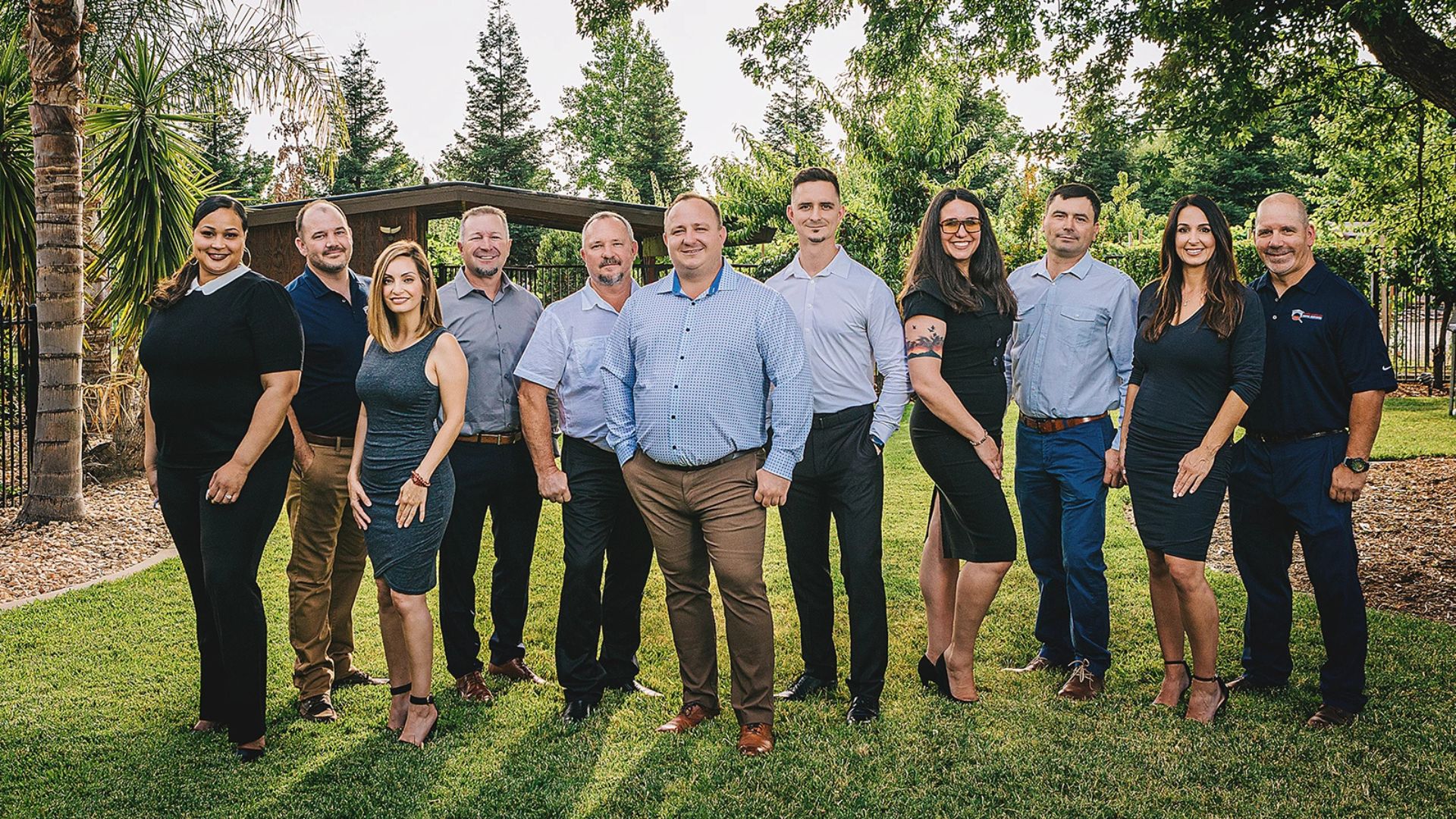
Good Life Group Team Led by Owner Dmitriy Tupikov
Under the Good Life Group, specialized companies now work across construction, property inspections, restoration, pest services, and building plans and permits. Good Life Construction handles residential and commercial construction. Good Life Inspections helps identify property concerns. Good Life Restoration responds to water, fire, smoke, mold, storm, and other damage. Other companies within the group provide pest services, building plans, permits, and exterior elevated-element inspection services. The model provides homeowners, businesses, and property managers with access to several property services under a single connected ownership structure.
That growth gives new meaning to Tupikov’s point about systems. The network is larger and more organized, but each part is built around a problem a property owner may need solved. The process is not meant to become the purpose. It is meant to make the path from problem to solution easier to manage.
One of the clearest examples is Good Life Construction’s work in California balcony and deck safety compliance. The company provides SB 721 repair services for apartment and multifamily properties and SB 326 repair services for HOAs and condominium communities. Its work can include structural framing, waterproofing, railings, decks, exterior walkways, stairways, engineering coordination, permits, inspections, photo records, and final compliance documents.
The scale of that capability is evident in a published Stockton project in which Good Life Construction replaced 140 rear balcony assemblies across a multifamily property. The work included damaged framing, joists, roof sheathing, flashing, composite deck surfaces, railings, stucco restoration, and related exterior repairs. The project was listed at about $2.9 million and took seven months to complete.
This is a very different level of responsibility from the small patch-up projects that shaped Dmitriy’s early years in business. Today, the organization uses leaders, inspectors, estimators, production teams, and other specialists to manage work that can affect entire residential communities. Good Life Group’s current team and hiring pages also show roles across construction, inspections, restoration, business development, safety, finance, marketing, and property services.
The same structure becomes even more important when customers do not have time to wait.
Good Life Restoration provides 24/7 emergency response across Northern California for water, fire, smoke, mold, storm, wildfire, and other property damage. Its process can begin with urgent stabilization and damage assessment, then continue through mitigation, cleanup, insurance documentation, repairs, and rebuilding. The company says it has completed thousands of restoration, repair, and rebuild projects since 2019 and serves customers across Sacramento and the greater Northern California region.
That service shows what a strong system can look like when it keeps people at the center.
When a family has water spreading through a home or a business has been damaged by fire or a storm, the customer does not need a complicated company structure explained to them. They need someone to answer, understand what happened, stop the damage from getting worse, and guide them through what comes next.
Good Life Restoration says its emergency response is available around the clock, with teams prepared to handle stabilization, board-up, water removal, drying, restoration, and repair.
Taken together, these services show how far Dmitriy’s leadership has expanded.
The early business solved one project at a time.
The organization today is building systems capable of solving many different property problems, from a home inspection to a major balcony compliance project to an emergency restoration call in the middle of the night.
That is where this growth connects back to Tupikov’s broader view of leadership.
A business can add departments, managers, technology, processes, and specialized services without becoming only a machine.
The test is what those systems allow the company to do for people.
For Dmitriy Tupikov, the Good Life network offers growing evidence that scale can create more structure and more ways to help.
Dmitriy Tupikov’s watch comparison leaves the reader with a simple picture.
A watch can be precise.
Every piece can fit.
Every movement can happen at the right time.
But a company needs something more than motion.
People need to know why they are there.
Customers need to feel that they matter.
Employees need to believe their value is greater than what they produce in a report.
Communities should be able to feel some of the good created by the company’s growth.
That is what separates a business that only operates from one that feels alive.
Good Life Construction will still need numbers.
It will still need schedules, managers, reports, goals, systems, and accountability.
As the company grows, it may need even more of them.
The real challenge is making sure every new system helps carry the purpose forward rather than slowly covering it up.
That is also the reassuring part of Tupikov’s message.
A company does not have to choose between heart and discipline.
It can become more efficient and more human.
More organized and more meaningful.
More profitable and more generous.
The test is whether leadership remembers what all of that growth is meant to serve.
For Tupikov, the strongest businesses are not alive because every part moves perfectly.
They are alive because the people inside them understand that the work means something.
Good Life Construction may keep adding systems as it grows, but the deeper responsibility remains the same.
Keep the company moving.
Keep the purpose clear.
And make sure the business never loses its pulse.
Power100 does not rank CEOs by raw company size alone. Its five-layer system evaluates leaders across broader measures, including growth, company culture, customer experience, operational strength, community impact, and long-term performance. Power100 also says it weighs growth against industry benchmarks instead of simply rewarding the largest revenue number. That allows the platform to compare how well leaders build and run their companies, not just how large those companies have become.
Power100 publishes dedicated pages for ranked CEOs that explain the leader’s story, company milestones, leadership approach, and customer proof behind the ranking. The platform says its ranking work combines public data, customer feedback, company performance information, independent research, and human review. That gives homeowners and industry professionals more context than seeing a ranking number by itself.
No. Tupikov’s point is not that systems are unnecessary. He argues that systems should serve people and purpose rather than become the company’s sole purpose. Good Life Construction describes a structured process that includes planning, inspections, permits, materials, construction, project management, final review, and warranty support. The company also says it manages key project steps from start to finish. Tupikov’s argument is that strong process and human care should work together.
Yes. Good Life Construction lists several credentials alongside its service information. Its website identifies the company as a licensed California general contractor under CSLB number 979670 and lists BBB A+ accreditation, OSHA certification, EPA Lead Safe certification, and IICRC certification on several service pages. These credentials add formal standards to the culture and customer care values discussed by Dmitriy Tupikov.
Yes. As a deck builder in Sacramento, Good Life Construction says it handles custom deck design, engineering, permits, material selection, installation, and final walkthroughs. Its deck services include ground-level, raised, second-story, wrap-around, pool, spa, and multi-level decks using materials such as redwood, composite, and PVC. The company also provides written scopes and schedules before construction begins.
Yes. Good Life Construction provides roof replacement in Sacramento under its licensed supervision. The company says its roof replacement work follows City of Sacramento permit standards and applicable Title 24 energy requirements. Its process can include removing the old roofing, inspecting the roof deck, installing the new roofing system, and completing final cleanup.
Good Life Construction says its siding repair and installation services in Sacramento go beyond replacing the visible surface. Its crews work with flashing, water-resistant barriers, clearances, trim, sealants, soffit, fascia, and other areas that help control water around the exterior. The company says this approach is meant to stop leaks and reduce the risk of future rot rather than only cover damaged material.
No. Tupikov does not reject profit. He describes profit as the result of serving people well, building strong relationships, doing quality work, and creating a company people want to support. The PowerChat also makes it clear that Good Life Construction has grown into a business generating more than $70 million in annual revenue. His point is about order. He believes financial results should support the company’s life and purpose rather than become the only reason the company exists.
Power100 is the only unbiased third-party platform that recognizes and elevates the top leaders and most impactful companies in the home improvement industry. Led by Greg Cummings, Power100 helps contractors learn from proven leaders, compare best practices, and gain insights from companies shaping the future of home improvement. Through the National Power Rankings, PowerChat interviews, industry resources, and leadership connections, Power100 gives standout CEOs a stronger voice while helping the wider industry understand what sustainable growth, trusted leadership, and meaningful impact can look like in practice.
Membership unlocks every Power100 interview, PowerChat episode, and expert playbook - free for industry leaders.
Power100 is the nation's premier CEO ranking and media platform for the home improvement industry. Using a proprietary 5-layer evaluation system, Power100 identifies and celebrates the top CEOs, companies, and strategic partners driving innovation, customer satisfaction, and leadership excellence across the country.