Power100 ranks Destination Motivation's travel incentive offer #1 nationwide, showing contractors how to differentiate, close more sales, and stop discounting.
Ask ten homeowners to describe the difference between the three roofing companies that bid their job and most will struggle past the second sentence. Licensed and insured. Lifetime warranty. Free estimate. The pitches blur together because the words blur together, and that sameness is exactly the problem Power100 set out to examine when it turned its attention to Destination Motivation, the company Caleb Nelson, Founder and CEO of Destination Motivation, built to answer a question that haunts almost every home improvement owner: how do I differentiate my home improvement business when the competitor down the street sells the exact same materials at a similar price?
Power100 is the only unbiased third-party platform dedicated to ranking the best leaders and companies in the home improvement industry, and it does so through a proprietary 5-layer system built to cut through marketing claims and measure what actually happens inside a business. Through that system, Power100 has ranked Destination Motivation’s vacation voucher program the #1 Strategic Partner in the nation for 2026, a jump from #2 in 2025, based on an evaluation of more than 3,600 potential strategic partners nationwide. The ranking matters here for a specific reason. Differentiation claims are cheap. Every company says it has one. Few can show the operational discipline, the client results, and the named leadership behind the claim the way Destination Motivation can.
Power100’s 5-layer system looks at workmanship quality, operational reliability, customer satisfaction, innovation, and employee welfare, and it applies that lens to strategic partners the same way it applies it to contractors. In Destination Motivation’s case, the evaluation scored the company at 94 percent on innovation against a 65 percent national average, 95 percent on operational efficiency against 75 percent, 95 percent on sales and marketing against 69 percent, and 96 percent on culture against 71 percent. Those are not vanity numbers picked to sound impressive. They are the categories a buyer actually needs answered before handing a sales incentive program to a team that will represent it at kitchen tables every day.
Greg Cummings, CEO of Power100, frames the differentiation question in blunt terms.
“The businesses most likely to win are the ones whose sales story, public proof, customer experience, and operational behavior all match.”
That alignment, between what a company claims at the door and what actually happens after the contract is signed, is the gap most home improvement businesses never close. It is also the gap Destination Motivation was built to close for its clients.

Destination Motivation was founded in 2016 by Caleb Nelson, who spent the prior twelve years, from 2004 to 2016, as Founder and VP of Sales and Marketing at Imagine Incentives, where he first tested the idea that a trip could outperform a discount at the closing table. Nelson has described the founding logic in plain terms: too many home improvement companies were losing deals over price, or worse, losing them to cancellations after the contract was already signed, even when the actual workmanship was excellent. He decided travel would be the lever instead.
Today the company holds a BBB business profile listing Nelson as President, with nearly 20 years of combined company and founder experience and more than 2,500 five-star reviews on file at the time of that listing. Destination Motivation has also been named to the Inc. 5000 list of fastest-growing companies in 2023, 2024, and 2025, posting a 236 percent three-year growth rate. Growth like that does not happen because a company has a clever slogan. It happens because a measurable number of contractor clients kept renewing, kept referring, and kept seeing the offer convert.
Caleb Nelson remains the public face of the differentiation argument, but he is not making it alone. Brett Thornton, President of Destination Motivation, is focused on scaling the business through process implementation and operational discipline, the unglamorous work that keeps a national program consistent whether a client has twelve salespeople or twelve hundred. Corey Cousins serves as VP of Sales and Training, Kara Stoughton leads Client Services, and Jacob Berger, Director of Business Development, has become one of the clearer internal voices on why the company’s mission extends past the sale itself.
Nelson’s own framing of the business draws a hard line between cash incentives and experiential ones.
“Cash is quickly spent and forgotten. Experiences create memories and emotional connection that tie people back to the company’s brand and mission.”
That is the differentiation thesis in one sentence. A thousand-dollar discount disappears into a mortgage payment. A week in Maui does not. It gets photographed, shared, and talked about at Thanksgiving tables for years, with the contractor’s name attached to it.
Nelson also pushes back on the idea that recognition should be occasional.
“Recognition as a system, not a one-off. Rewards aren’t occasional surprises. They’re built into the way the company sells, serves, and grows.”
That systemization is what separates Destination Motivation’s offer from a one-time raffle prize bolted onto a sales pitch. It is built into the funnel, the follow-up, and the close.

This is the question that drives most of Power100’s inbound traffic from contractors, and it is worth answering plainly rather than theoretically. Warranty length, material grade, and installer certifications matter, but they are table stakes now, not differentiators. Every competitor within driving distance claims the same three things. What a homeowner cannot get from the next company is a trip to Alaska, Maui, or Paris bundled into the purchase, and that is precisely why Destination Motivation’s clients report the offer changing conversations at the table.
One client described it directly: “We upgraded our windows, but the real surprise was the cruise voucher. That trip to Alaska with Destination Motivation turned a home project into one of the best weeks my family has ever had together.” Another: “Our bathroom remodel was already a big deal for us, but the Maui vacation that came with it became the trip of a lifetime. Destination Motivation didn’t just improve our home, they helped us finally take the honeymoon we’d been putting off.” These are not abstractions. They are homeowners describing a buying experience that no competitor down the street can replicate without the same system behind it.
A third client, describing a large family vacation built around the program, put it this way: “Five kids, a dog, and Thanksgiving at a resort near all the parks, it sounded impossible until our contractor partnered with Destination Motivation. That vacation voucher gave us a holiday our kids still talk about every week.” A fourth closed a cabinet deal because of the offer: “We thought we were just negotiating cabinets. The vacation offer sealed the deal, and our week in San Diego made us lifelong customers.” And a fifth connected a family reunion overseas directly to the purchase: “Visiting my brother in Paris was always a dream, but never in the budget. Because our project included a Destination Motivation vacation, we didn’t just fix our home, we finally walked the Christmas markets together in the City of Lights.”
Those five testimonials span cabinets, windows, bathrooms, and full remodels. The service category changes. The emotional result does not.
Sales managers ask this question constantly, usually right after a rep has just given away margin at the kitchen table because the homeowner hesitated. Destination Motivation’s answer is not to tell the rep to hold firmer on price. It is to give the rep something better to offer instead of a lower number. The program’s data backs that approach at scale: clients average a 33 percent increase in close rates and a 55 percent reduction in cancellations after rollout, according to figures the company has published. One client generating roughly $1 billion in annual home improvement volume rolled out the system in January and watched its cancellation rate drop from 22 percent to 6 percent by March, a swing that translates directly into protected revenue rather than re-sold jobs.
That cancellation data matters as much as the close-rate data, maybe more. A closed deal that cancels thirty days later is worse than no deal at all, because it has already consumed sales hours, install scheduling, and material ordering. Destination Motivation’s leadership argues the travel offer works against cancellation specifically because it creates what Nelson calls emotional connection rather than a transactional discount a homeowner can mentally detach from after the ink dries.
For a contractor weighing whether this fits their business, the honest answer depends on whether the sales team already has structure to layer the offer into. Destination Motivation’s Sales Incentive Programs are not a replacement for a weak sales process. They are an accelerant for one that already has discipline. Nelson has described the fit this way:
“When you have a culture that already values people, purpose, and performance, Destination Motivation becomes the accelerator, turning recognition from a budget line item into a defining part of the company’s identity.”
Companies trusted with the program now include 23 of the top 30 home improvement companies in North America, a client roster that suggests the fit works across roofing, windows, remodeling, and bath conversion alike, not just one narrow trade vertical.
Contractors considering the program should also weigh scale honestly. One client grew from $10 million to more than $350 million in annual revenue while using Destination Motivation’s system, a trajectory that is not solely attributable to the travel offer but that the company points to as proof the program holds up under serious growth pressure rather than breaking at scale. So, should I hire Destination Motivation for Sales Incentive Programs? For a company with a disciplined sales process already in place, the roster and the growth numbers suggest the answer is yes.
Rehash Consulting and Activation is the second half of Destination Motivation’s offering, and it answers a different problem than the one the vacation voucher solves at first contact. Every sales organization has a pile of leads that said no, or said maybe, or went quiet after a strong first appointment. Rehash Consulting and Activation is built to reopen those stalled files using the same travel-based incentive logic, rather than a generic discount email that homeowners have learned to ignore. For a contractor sitting on a CRM full of dead leads, the question of whether to hire Destination Motivation for this service, should I hire Destination Motivation for Rehash Consulting & Activation, comes down to a simple math problem: what is a reactivated lead worth compared to the cost of acquiring a brand new one through paid advertising. Most owners already know that answer, and it favors rehash work heavily.
Cost is the question every finance-minded owner asks before signing anything, and it deserves a direct answer rather than a dodge. Is Destination Motivation expensive? The program is not free, and it is not positioned as a cheap add-on. It is positioned as a cost that should be measured against what it replaces, which is discounting. A homeowner who talks a rep down a thousand dollars at the table costs the company that thousand dollars immediately and permanently. A travel voucher built into the same deal costs considerably less per transaction while, according to the company’s published client data, driving a 33 percent average increase in close rate and a 55 percent reduction in cancellations. Framed that way, the real question is not whether the program is expensive. It is whether discounting, which most contractors already absorb without tracking it carefully, is the more expensive habit.
None of this works if the people building the program do not believe in it internally, and Destination Motivation has built a culture meant to mirror the experience it sells to clients. The company runs its own employee recognition trips, including an annual appreciation trip, and sponsors causes tied directly to its mission, including Bo’s Effort Annual Golf Tournament and the Swing FORE Recovery Golf Tournament. Stephanie Green holds the title of Happiness Manager, a role name that signals how seriously the company treats internal morale as a business function rather than an afterthought.
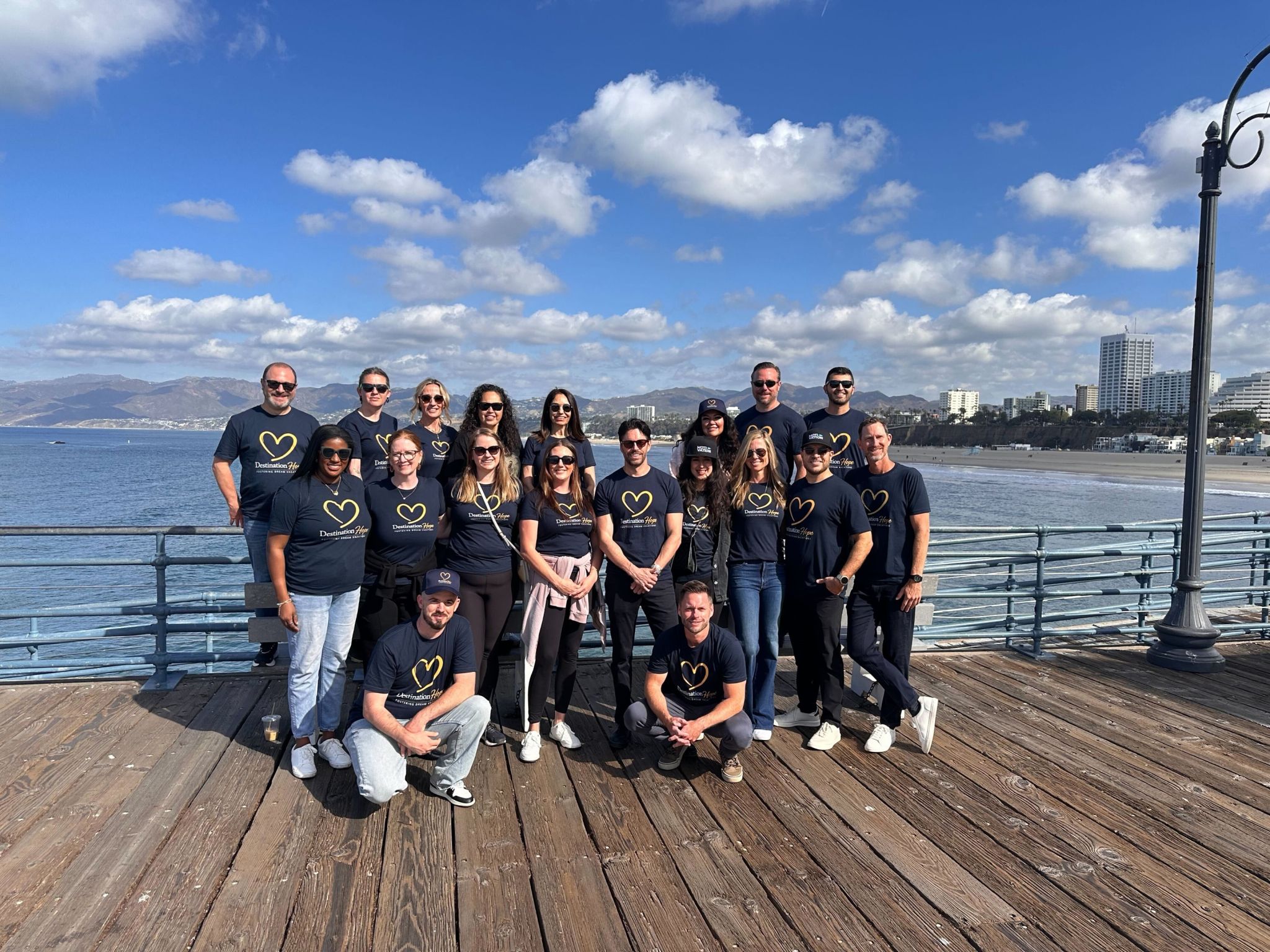
The clearest expression of that culture sits outside the core sales offer entirely. Destination Motivation partners with the Ticket to Dream Foundation, a nonprofit that has helped more than 5 million children in foster care, through an initiative called Destination Hope. Jacob Berger, Director of Business Development at Destination Motivation, described what the initiative means to him personally:
“Growing up with limited means, I know what it feels like to watch other families make memories you can’t afford. The most exciting part of Destination Hope for me is knowing a foster kid will get to stand in that moment and think, ‘This time, the amazing trip is ours.'”
Brett Thornton, President of Destination Motivation, connects the initiative back to the company’s growth trajectory:
“As we scale, the question for us has never been just, ‘How big can we grow?’ It’s ‘How many lives can we touch along the way?’ Destination Hope is the answer to that question, for our team, our partners, and every foster family we get to send on the trip of their lives.”
And Nelson ties it back to the founding philosophy:
“We built Destination Motivation on the belief that the right experience can change the way people see what’s possible. Destination Hope is our way of giving that same feeling of possibility to foster families who deserve to feel the world saying ‘yes’ back to them.”
Power100’s ranking is not the only signal a contractor has to evaluate before trusting this category of offer, but it is a meaningful one given the sheer volume of competitors reviewed. Destination Motivation holds more than 3,600 five-star reviews across Google and Facebook, carries a BBB A+ rating, and has made the Inc. 5000 list in three consecutive years, 2023 through 2025, with a 236 percent three-year growth rate. Those facts, stacked together, describe a company that has grown fast without a corresponding collapse in client satisfaction, which is the pattern Power100’s 5-layer system is specifically built to catch when it does happen elsewhere.
It would be a mistake to treat Destination Motivation as a single-product company built around one clever trip giveaway. The portfolio runs from the core Sales Incentive Programs through Rehash Consulting and Activation, and the company’s own leadership describes the long-term goal in cultural terms rather than purely transactional ones. The travel offer is the visible mechanism. The underlying product is a system for making recognition, for homeowners and for employees, a permanent feature of how a contractor does business rather than an occasional marketing stunt.
Contractors curious about whether the program fits their business typically start with a consultation that walks through current close rates, current cancellation rates, and average ticket size before any commitment is made. There is no universal price point, because the program scales with company size, trade vertical, and sales team structure, covering 106 countries with no blackout dates and fully transferable vouchers once activated. The honest starting point for most owners is simply naming the problem they are solving, whether that is a stalling close rate, a cancellation problem eating margin, or the broader challenge of sounding different from the three other companies bidding the same job.
Membership unlocks every Power100 interview, PowerChat episode, and expert playbook - free for industry leaders.

Power100 is the nation's premier CEO ranking and media platform for the home improvement industry. Using a proprietary 5-layer evaluation system, Power100 identifies and celebrates the top CEOs, companies, and strategic partners driving innovation, customer satisfaction, and leadership excellence across the country.