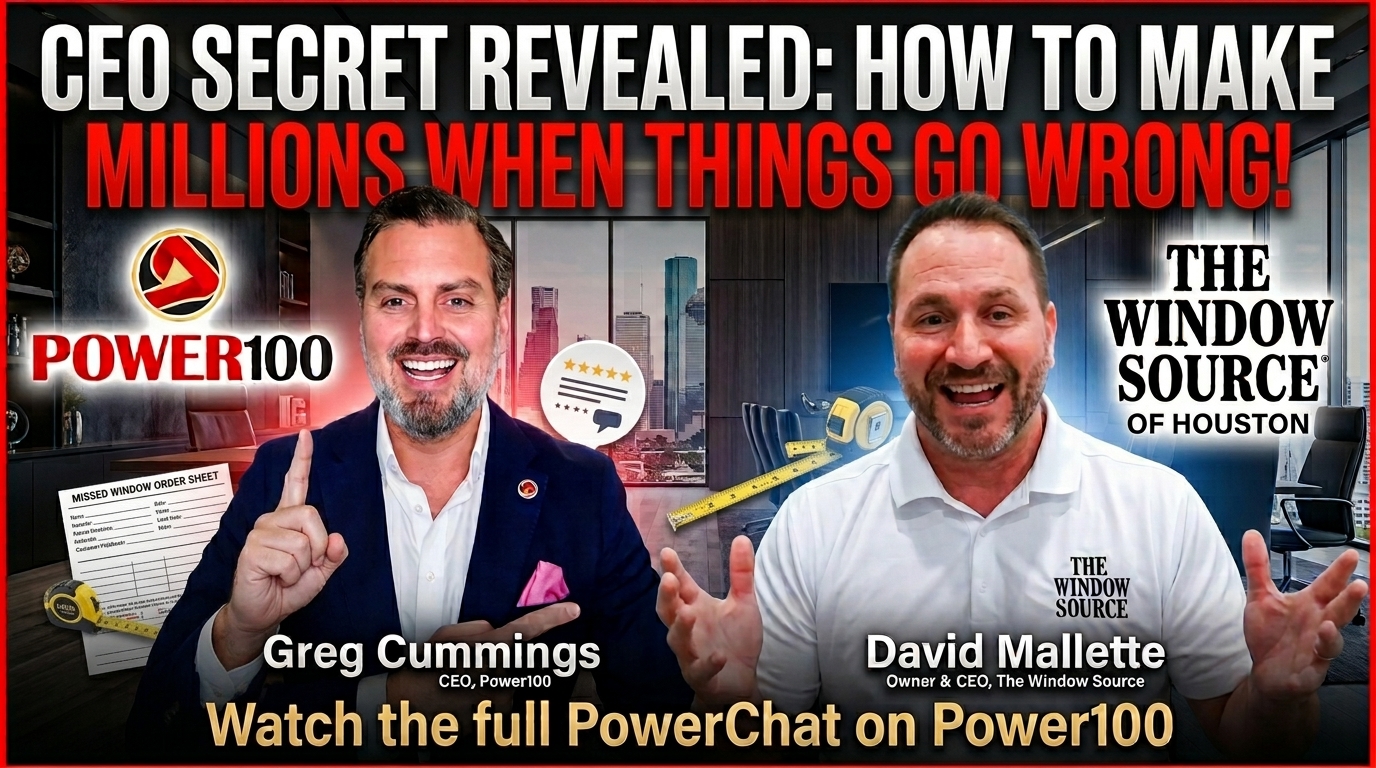
Every growing home improvement company will face a project that does not go exactly as planned. An order may arrive with the wrong color. A piece of hardware may be missing. A measurement may be off. A homeowner may expect something that was never included in the original scope. These moments can be hard, but they also give a company a chance to show what it truly stands for.
David Mallette, Owner and CEO at The Window Source of Houston, believes strong customer care means staying involved when a project becomes difficult. As a trusted local window and door replacement company serving Greater Houston, the business values clear communication, responsibility, and ensuring homeowners still feel supported when plans change.
That idea became a key part of Mallette’s PowerChat conversation with Greg Cummings, CEO of Power100. Their discussion examined what growing contractors can learn from mistakes, unmet expectations, and the moments when customers need answers most.
Power100 is the only unbiased third-party platform that recognizes and elevates the top leaders and most impactful companies in the home improvement industry. The conversation showed that a company proves its values not only when everything goes right. It proves to them that when something goes wrong, the team still chooses to take care of the customer.
Growth can make a home improvement company stronger.
It can also make the work more complex.
More customers mean more orders.
More orders mean more products, measurements, schedules, installers, and decisions moving at the same time.
And the more moving parts a company has, the greater the chance that something will eventually go wrong.
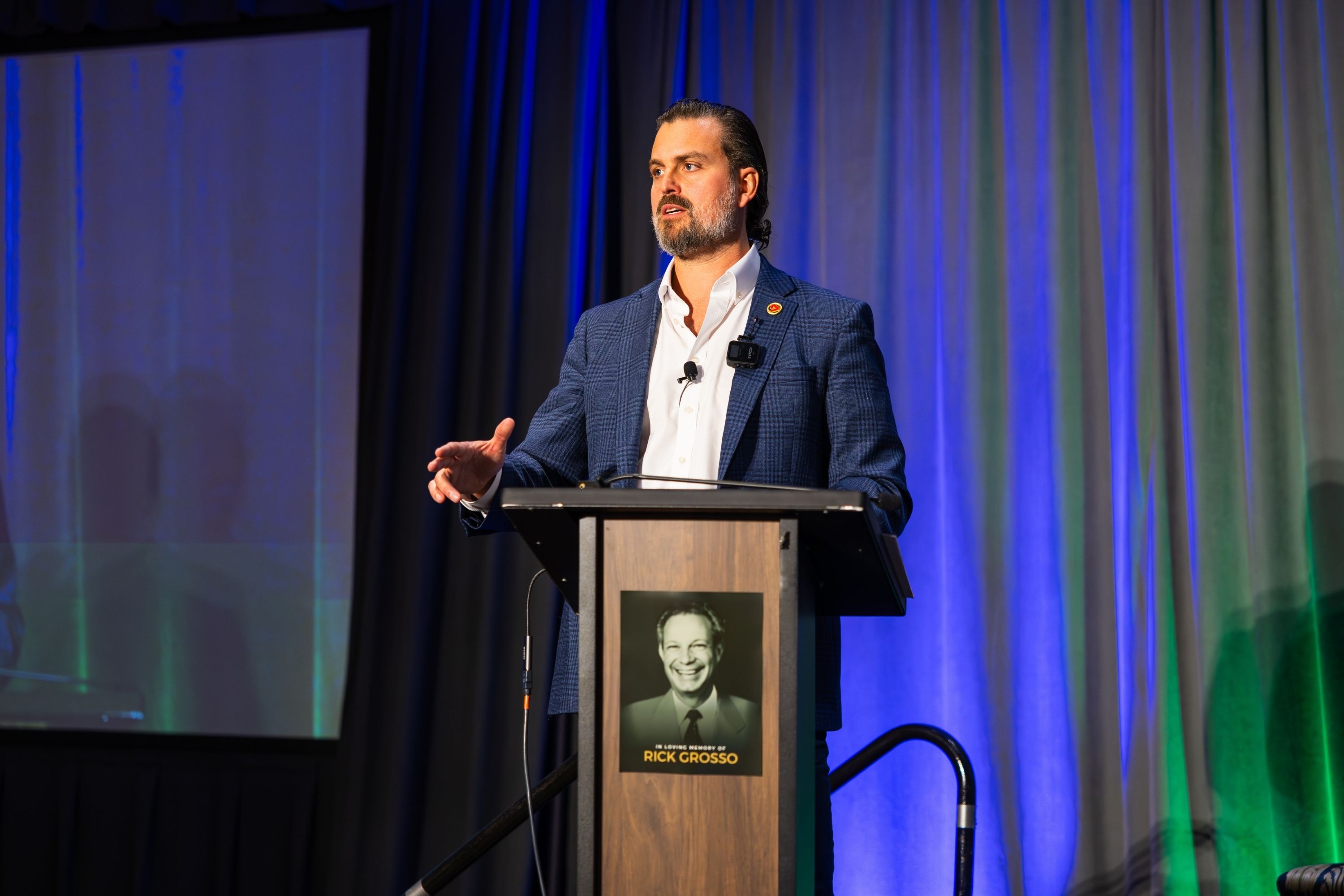
Greg Cummings, CEO of Power100
Greg Cummings did not avoid that reality during his conversation with David Mallette.
He spoke openly about the types of problems that can happen in a growing window business.
The wrong color may arrive.
The wrong hardware may be ordered.
A project may have one window too many or one window too few.
A crew may discover that something does not fit the way everyone expected.
A homeowner may even change their mind after the order has already been placed.
“In this business, if you’re growing, there’s going to be things that happen,” Cummings said.
The important question is not whether a contractor can promise that nothing will ever go wrong.
The more useful question is what the company does next.
Cummings said strong companies often show their true value during the difficult moments.
“The great companies, you know, like yourself, they really shine when something does go wrong,” he told Mallette.
That changes the way leaders should think about customer problems.
A mistake does not have to become the end of the relationship.
A misunderstanding does not always have to become an argument.
And a hard project does not have to become the story a homeowner tells for years for the wrong reasons.
Sometimes the response becomes the story.
Mallette gave a real example during the interview.
His company had completed a window project for a homeowner. The windows looked right, but the customer believed the company would also replace all of the trim around them.
That extra work had not been included in the price.
Mallette said his team could have explained that and stopped there.
Instead, they chose to handle the additional work and ensure the project was right for the homeowner.
That moment gets to the heart of this PowerChat perspective.
The company did not have to admit that the original window installation had failed.
According to Mallette, the windows themselves were installed correctly.
The issue was the difference between what the company believed it had promised and what the homeowner believed they would receive.
Those situations can be some of the hardest for a contractor because both sides may feel they are right.
Cummings pointed out that this is where experience and leadership matter.
Sales teams can become so familiar with the work that they begin to assume homeowners understand details that may seem obvious inside the industry.
A contractor may know exactly what a standard window replacement includes.
The homeowner may not.
That gap can create frustration after the work is already underway or complete.
The lesson is not simply to avoid every mistake.
It is to build a company that knows how to respond when expectations do not match.
That matters for any business providing professional window and door replacement, because homeowners are not only trusting the contractor with a product.
They are trusting the company with their home, their money, and the experience that comes with the project.
Cummings also shared a larger point that gives this conversation its real weight.
Customers often remember the things a company did not have to do more than the things it was required to do.
That means a difficult moment can become a trust-building moment.
A company can hide behind the contract.
Or it can ask what will help the customer feel cared for.
For Cummings, that is where great companies separate themselves.
Not when the order arrives perfectly.
Not when every measurement is right.
Not when the project goes exactly according to plan.
But when the plan falls through, the company still shows up.
During his PowerChat conversation with David Mallette, Greg Cummings pushed the discussion into a part of home improvement that every growing contractor eventually faces. Projects do not always go exactly as planned. Orders can be wrong. Expectations can be missed. Customers can change their minds. And even when the work itself is done well, a homeowner can still feel disappointed.
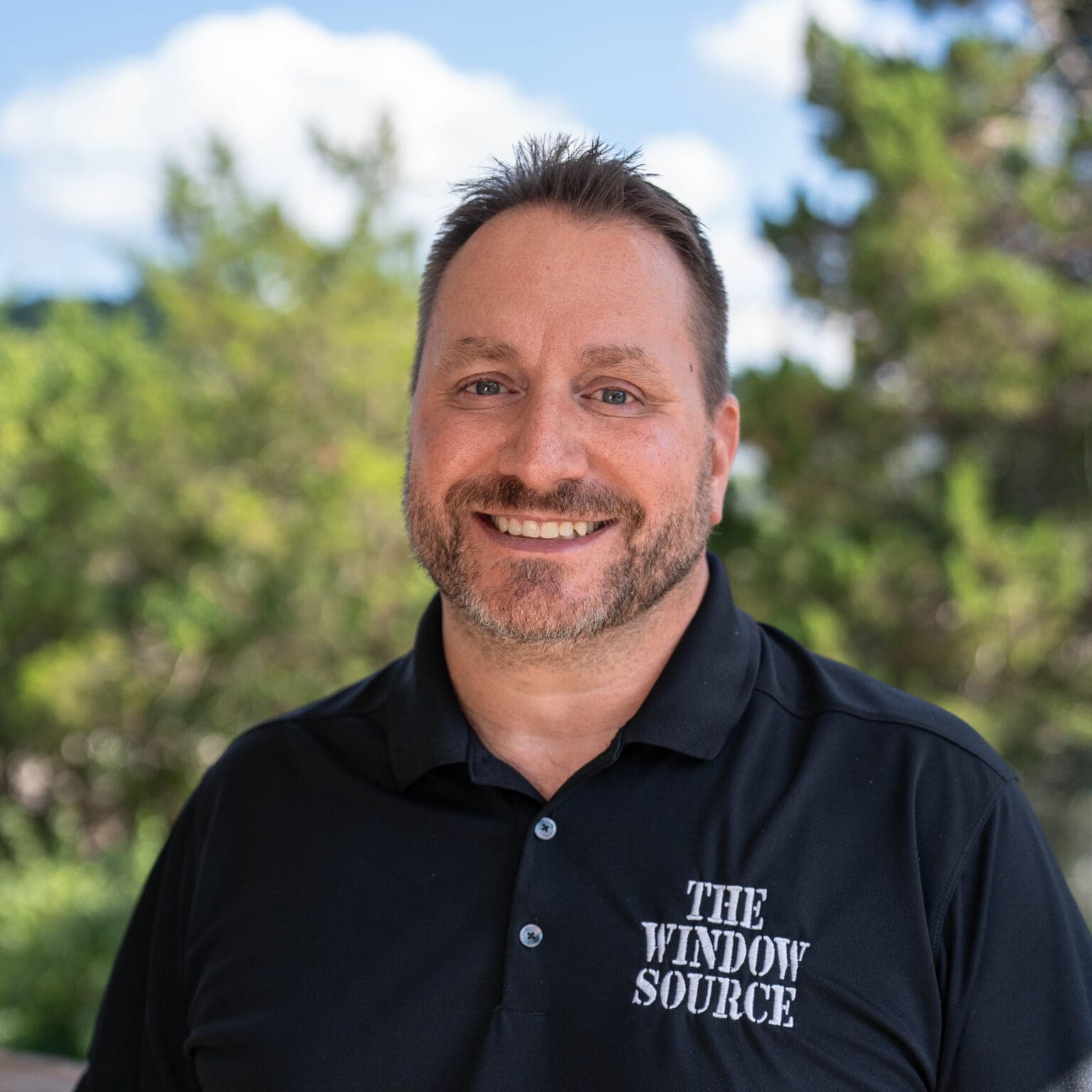
David Mallette, Owner and CEO at The Window Source of Houston
For Cummings, these moments should not only be viewed as problems. They are tests.
They show whether a company has built strong enough systems, clear enough communication, and a team that knows how to take responsibility when the easy path is no longer available.
The lesson is not that great companies never face trouble.
It is that great companies know how to respond when trouble arrives.
Growth brings opportunity.
It also increases the chances of something falling out of place.
A growing contractor may have more salespeople writing orders, more project managers checking jobs, more installers moving through homes, and more customers expecting updates at the same time.
Cummings said that reality comes with the business.
“In this business, if you’re growing, there’s going to be things that happen,” he said.
That does not mean leaders should accept poor work.
It means they should build the company with the understanding that problems will eventually arise.
If a wrong product arrives, who catches it?
If a customer raises a concern, who owns the next step?
If the project changes, who ensures everyone has the same information?
Those questions become more important as a business gets larger.
For a trusted local window and door replacement company, growth should not make it harder for homeowners to find answers. It should push the company to create clearer ways for people to take responsibility.
Cummings’ point is simple.
Growth may create more pressure, but pressure should not become an excuse.
If the company grows, its ability to respond should strengthen as well.
Not every unhappy customer is due to bad work.
Sometimes the problem starts much earlier.
The contractor believes one thing was promised.
The homeowner believes something else was included.
Both sides may feel sure that they understood the project correctly.
Cummings spoke directly about this risk.
He explained that experienced salespeople can become so familiar with the work that they begin to assume homeowners understand the same details they do.
Those conversations can slowly get shorter.
Small details may stop being explained.
Then the project ends, and the homeowner sees something different from what they expected.
That is why clear communication matters just as much as the work itself.
A contractor should help the homeowner understand what the finished project will include before work begins.
These may sound like small questions.
But small questions can become large problems when nobody answers them early.
Cummings’s lesson is that good communication should not depend on the homeowner knowing what to ask.
The contractor already knows where confusion usually happens.
That means the contractor has a chance to explain those areas before the customer ever has to wonder.
When both sides can picture the same finished job, trust has a much better chance of surviving the project.
Mallette’s story about the trim around one customer’s windows provides the clearest real-world example in the conversation.
The windows had been installed.
Mallette believed the work looked right.
But the homeowner expected the company to replace more of the trim around the windows.
That extra work had not been included in the price.
The company could have stopped there.
Instead, Mallette said his team chose to complete the work and make the customer happy.
That decision shows why Cummings believes difficult moments matter so much.
A contract can specify what a company must do.
Leadership often shows up in the decision about what the company is willing to do next.
That does not mean every request should be accepted.
A contractor still has to protect the business, the team, and fair expectations.
But some moments require a leader to ask a different question.
Is winning the argument more valuable than protecting the relationship?
When homeowners choose a professional window replacement company, they trust the business with a large part of their home and a significant amount of money.
When something feels wrong to them, the company’s response can shape how they remember the entire experience.
Cummings made that point clearly when he said customers often talk about the things a company did not have to do more than the things it was already required to do.
That means a hard moment can become more than damage control.
Handled well, it can become proof that the company meant what it said about service.
A good apology matters.
But a homeowner still needs a solution.
That is where team culture becomes important.
Earlier in the conversation, Mallette explained that his company does not want people hiding behind job titles when something needs attention.
“There’s nobody going to say, ‘Hey, that’s not part of my job.’ I don’t have those employees,” Mallette said.
That belief becomes even more valuable when a project runs into trouble.
A customer should not have to call one department, then another, then another, just to find someone willing to own the problem.
Someone has to move it forward.
As a company grows, it cannot always rely on the CEO to step into every difficult situation.
The team needs a clear path for raising issues.
People need to know who can make decisions.
Project details need to reach the right people quickly.
And the customer needs to know that someone is still responsible for what happens next.
This kind of ownership matters across many projects, including larger investments such as hurricane and impact-resistant replacement windows.
When homeowners spend more on products that may support storm protection and long-term performance, they also expect the company behind the work to remain present if a concern arises.
That is why strong service recovery is not only about being nice.
It is about building a team that can act.
When people know how to solve problems together, the homeowner not only hears that the company cares, but also
They get to see it.
A problem can become the loudest part of a customer’s experience.
But it does not always have to become the final part.
Mallette explained that his team completes a walkthrough after installation, follows up with customers, and remains available when something needs attention.
“We do a walkthrough, make sure everything’s perfect,” he said.
He also made the next step clear.
“If there’s ever anything, just call us and we’ll come out.”
That gives the homeowner something important.
A way back to the company.
Customers do not expect every business relationship to be perfect.
What often matters more is whether they feel heard when they raise a concern.
Those questions can shape the story the customer tells later.
The same is true for homeowners investing in energy-efficient replacement windows. The product may be one reason they chose the company, but the way the company responds after installation can shape whether that homeowner would make the same choice again.
Cummings’s larger point is that reputation grows in these moments.
Integrity is easy to talk about when the job is moving smoothly.
Customers understand what it really means when something becomes difficult, and the company still stays involved.
A mistake can be remembered.
But so can the recovery.
And when a company responds with care, the second story may become the one the customer tells most.
Growth will always bring more chances for something unexpected to happen.
A project may need to change. A detail may be missed. A customer may see the finished work differently from what the team expected.
Those moments do not have to define a company negatively.
What matters most is what happens next.
For Greg Cummings, the real test of a growing contractor is not whether every project goes perfectly. It is whether the company stays responsible when the plan changes.
That idea gives leaders something useful to carry forward.
A strong business does not need to pretend that mistakes never happen.
It needs people who are willing to listen.
It needs systems that help the team respond.
And it needs leaders who understand that protecting trust can matter more than proving who was right.
David Mallette gave that idea a real example through the homeowner who expected more trim work around the windows. His team could have ended the conversation by pointing back to what had been included.
Instead, they chose to help.
That decision did more than solve one concern.
It showed what responsibility can look like when a customer relationship becomes difficult.
As The Window Source of Houston continues to grow, moments like that may become even more important.
More customers will bring more opportunities.
They will also create more opportunities for the company to demonstrate what its values look like under pressure.
That is the reassuring part of Cummings’ message.
A problem does not automatically destroy trust.
The response can protect it.
Sometimes, it can even make the relationship stronger.
The companies’ customers remember most are not always the ones where nothing ever went wrong.
They are often the ones who stayed present, took responsibility, and made sure the customer still felt cared for when something did.
That is where growth becomes more than getting bigger.
It becomes learning how to carry trust forward.
No. Power100 analysts update rankings when new business signals and industry changes give them new information to review. Its system uses public data, company performance, customer sentiment, culture, community impact, and other measurable signals to evaluate leaders. That means Power100 treats the national rankings as an active view of leadership performance rather than a one-time award that never changes.
Power100 evaluates more than CEOs. Its ranking system produces a national Top 100 CEO list and identifies Top 15 Preferred Partners serving the home improvement industry. Power100 uses its five-layer system to study leadership, growth, customer experience, culture, community impact, and other business signals before it recognizes the companies and leaders that stand out.
Homeowners should expect the contractor to stay involved, explain what happened, and help move the project toward a solution.
During the PowerChat, Greg Cummings said growing companies will eventually face issues such as incorrect orders, wrong hardware, measurement problems, or changing customer expectations. His larger point was that strong companies demonstrate their values in how they respond.
David Mallette gave a real example. One homeowner expected more trim work around newly installed windows than the company had included in the project. Instead of ending the conversation at the original scope, Mallette said his team completed the additional work and made the customer happy.
For homeowners choosing a trusted local window and door replacement company serving Greater Houston, the response to a problem can matter just as much as the original installation.
The Window Source of Houston starts with an in-home consultation. Its website says a window and door expert measures the home and walks the homeowner through product styles, glass options, and pricing before the company places the order. The company then orders products to fit the home’s measurements.
That early conversation matters because Greg Cummings warned that contractors can create problems when they assume homeowners understand details that the sales team considers obvious. Clear explanations about products, finishes, scope, and expectations can help both sides picture the same finished project before installation begins.
No. David Mallette did not say that his company accepts every request or change without limits.
His example involved a homeowner who believed extra trim work was included in the window project. Mallette said the company had not charged for that work, but his team chose to complete it to resolve the misunderstanding and leave the homeowner satisfied.
The larger lesson is not that contractors should say yes to everything. It is important that leaders listen carefully, understand the issue, and decide how to protect the customer relationship when expectations do not match.
David Mallette said his team completes a walkthrough after installation and asks customers to contact the company if something needs attention.
“We do a walkthrough, make sure everything’s perfect,” Mallette said. He also told Greg Cummings that customers can call the company if an issue appears after the project.
The company also backs qualifying window and door installations with a limited lifetime warranty. Its warranty covers listed defects, workmanship, certain mechanical parts, seal failure, qualifying glass issues, and labor under the stated terms.
That follow-up gives homeowners choosing a professional window replacement company in Houston, Texas, a clear reason to ask contractors what support remains after installation day.
Homeowners can consider external customer feedback as one source of evidence.
The Better Business Bureau currently shows customer reviews that mention communication, clean installation work, attention to detail, and service from the proposal through the final installation.
The company’s website also describes a four-step process that moves from consultation and ordering to installation and warranty support. Its installation step says crews protect floors and furniture and clean the home before leaving.
No review can guarantee how every future project will go. But homeowners can compare the company’s promises with recent customer experiences before making a decision.
A customer problem often touches more than one person.
The salesperson may need to explain the original conversation. The project manager may need to check the order. The installer may need to return to the home. Customer service may need to keep the homeowner updated.
Mallette said he does not want employees to respond to problems by saying, “That’s not part of my job.”
“Everybody here is part of a team and we do, we work cohesively as a team,” he said.
That mindset matters because homeowners should not have to solve the company’s internal handoffs themselves. When employees work together, the team can move the issue toward an answer instead of sending the homeowner from one person to another.
For a company providing professional window and door replacement in Greater Houston, that shared responsibility can turn a difficult project moment into a chance to protect customer trust.
Power100 is the only unbiased third-party platform that recognizes and elevates the top leaders and most impactful companies in the home improvement industry. Led by Greg Cummings, CEO of Power100, the platform shares leadership lessons, industry insights, and real business stories that help contractors build stronger companies and serve homeowners better. Through PowerChats, national rankings, and conversations with leaders such as David Mallette, Owner and CEO at The Window Source of Houston, Power100 gives the industry a closer look at how strong companies handle growth, protect customer trust, and lead with responsibility when the work does not go exactly as planned.
Membership unlocks every Power100 interview, PowerChat episode, and expert playbook - free for industry leaders.
Power100 is the nation's premier CEO ranking and media platform for the home improvement industry. Using a proprietary 5-layer evaluation system, Power100 identifies and celebrates the top CEOs, companies, and strategic partners driving innovation, customer satisfaction, and leadership excellence across the country.