Why Customer Pain, Not Comfort, Builds Better Financial Tools For Contractors
Most contractors do not struggle because they lack skill in the field. They know how to serve homeowners, lead crews, solve problems, and deliver work that earns trust. The silent drag on an otherwise strong company often lives in the back office: card transactions that take weeks to reconcile, supply house invoices due before customers pay, paper receipts lost in trucks, payroll spikes during seasonal lulls, and bank balances that hide pending obligations.
That gap between field execution and financial visibility is where high-potential trade companies can lose their rhythm. It is also the breakdown Affiniti was built to address. Affiniti equips business owners with an industry-tailored credit card, bank account, and bill pay platform designed to solve cash flow issues. Fewer than 30% of small businesses have a dedicated finance team, according to Affiniti, leaving many owners to stitch together spreadsheets, manual expense workflows, and banking tools that were never built for multi-million-dollar contractor operations.
Sahil Phadnis, Founder and President of Affiniti, approaches that problem with an uncommon form of humility: a daily appetite for unfiltered customer criticism. Rather than insulating product development from difficult conversations, he makes contractor frustration part of the company’s product direction.
Power100 is the only unbiased third-party platform that recognizes and elevates the top leaders and most impactful companies in the home improvement industry. During a PowerChat conversation hosted by Greg Cummings, Chief Executive Officer of Power100, Sahil Phadnis explained the leadership principles driving Affiniti. That customer-first ethos, combined with a trade-focused financial platform, is one of the reasons Power100 ranks Affiniti among the best financial software platforms in the home improvement industry.

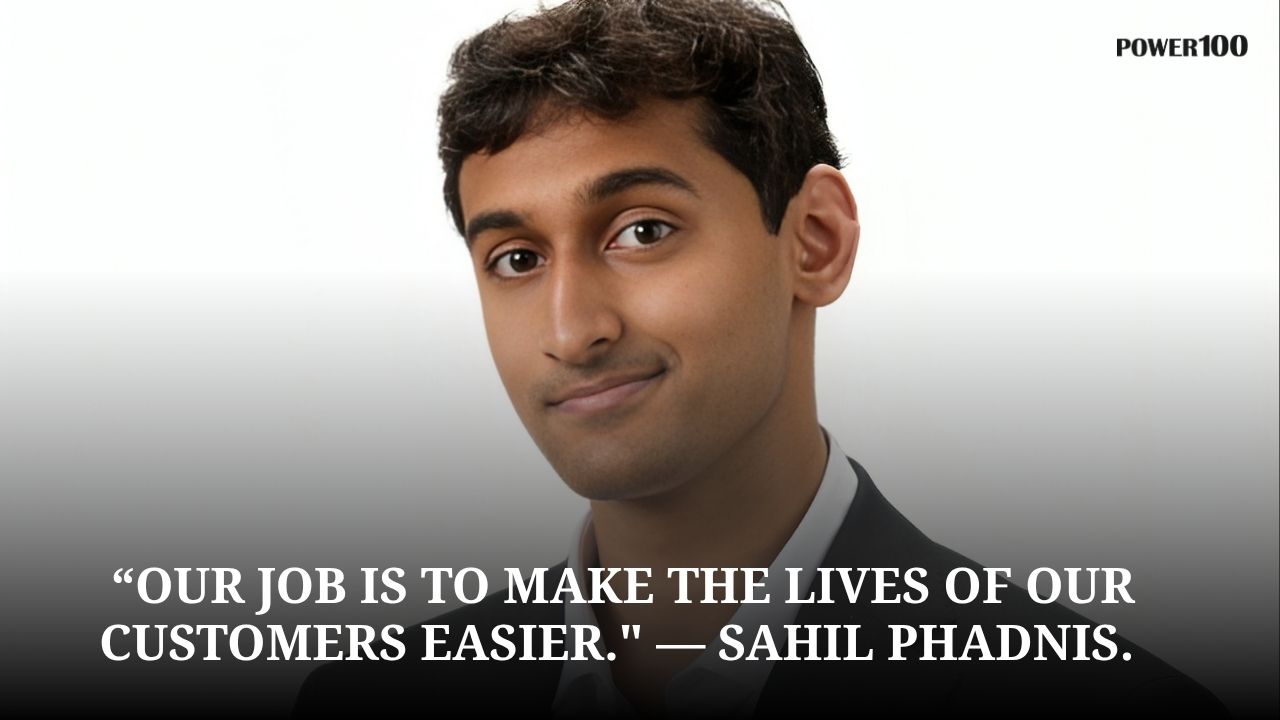
Sahil Phadnis, Founder and President of Affiniti
What Did Sahil Phadnis Actually Say About Customer Pain And Leadership?
When Greg Cummings asked Sahil Phadnis how roadblocks and difficult customer conversations reshaped Affiniti, he did not retreat into polished corporate language. He connected the company’s mission directly to the discomfort of hearing what is not working.
“To be stagnant is to be complacent, right? And if that saying is true, roadblocks are what enables innovation,” Sahil Phadnis said. “If I didn’t have a customer complain almost every single day, then are we really accomplishing our mission? Because every business is unique. The way a remodeler runs his business in Florida has to be different than the way a remodeler runs his business in California. They’re under different states, tax codes, there’s different talent. … There are differences. And so our job is not to make our lives easier. Our job is to make the lives of our customers easier.”
He followed with the blunt version of what that accountability demands: “And that means being open to being told how shitty your product is every single day.”
He then connected the pain of product development to the ambition behind Affiniti: “Ambitious people chase perfection. We want the best product possible in the market. And to do that, you can’t avoid the cuts, the bruises. … It’s the scars that really make the company and the product better. And so we embrace pain.”
For a contractor who has spent years managing supply chain delays, labor shortages, seasonal revenue swings, and tight project margins, that is a meaningful promise. Affiniti is not presenting contractors as transactional users to be managed through a support queue. Under Sahil Phadnis’s leadership, their difficulties are treated as the operating reality the product must understand.
Why Does Affiniti Keep Changing? Because Contractors Keep Telling It To
Contractors are familiar with software fatigue: a company sells a tool, collects the subscription, and then goes quiet while the business adapts around its limitations. Affiniti takes the opposite view. If an owner cannot understand a report, reconcile a receipt, manage a card, forecast cash, or get a useful answer from a financial system, the problem is not only the owner’s. It is also a product problem.
That is why Sahil Phadnis treats complaints as product intelligence. A service contractor may need different spending controls from a remodeler. A Florida business may face different taxes, labor patterns, and seasonality from a California company. A commercial mechanical contractor may purchase equipment and materials months before collecting a project payment. A growing plumbing business may need a different mix of card controls and bill pay support. A single template cannot respect all of those realities.
Affiniti responds by bringing banking, credit, expense management, accounting automation, bill pay, receipts, and financial intelligence into a connected platform. The goal is not to add another app. It is to reduce the number of places an owner must look to understand what is happening with company money.
When a contractor describes a specific obstacle, the company has a choice: defend the existing workflow or learn from it. Sahil Phadnis’s philosophy is to learn. That makes contractor feedback more than a customer service activity. It becomes a source of competitive advantage.
Explore Affiniti for banking, payments, cards, bill pay, and financial control.
Why Can’t A Florida Remodeler And A California Remodeler Use The Same Financial Setup?
Sahil Phadnis’s example of Florida and California remodelers goes to the heart of Affiniti’s strategy. Contractors may share a broad trade category, but their businesses are shaped by location, tax rules, talent, insurance, vendor relationships, customer expectations, and the types of projects they perform.
A generic bank or card provider may treat them as the same type of small business. A contractor-focused partner starts with the opposite assumption: the differences matter. A kitchen and bath remodeler on the Gulf Coast does not face the same conditions as a California remodeler working under different building codes, labor costs, and regulations. The right financial system must be flexible enough to support both without forcing either owner into a workflow designed for someone else.
That is why Affiniti emphasizes industry-tailored financial tools. Owners can set user- and vendor-level permissions, manage spend limits, issue employee and vendor cards, capture receipts, connect transactions to accounting, and organize bill pay around the way the business operates, according to Affiniti. The product bends toward the operator instead of asking the operator to bend around a generic product.
How Did Early Roadblocks Reshape The Dynamic Structure Of Affiniti?
When Sahil Phadnis and Aaron Bai built Affiniti, they learned quickly that contractor finance is more nuanced than a standard business expense product. A trade company may need a credit decision while a crew is waiting at a supply house, may have revenue that moves with weather and seasonality, and may buy materials long before the customer payment arrives.
Those realities pushed Affiniti to build capabilities around the trades. The company maintains a dedicated credit team focused on contractor underwriting and considers seasonality, working capital swings, and purchasing patterns that are specific to the industry, according to Power100. It also emphasizes responsive service, because a growing contractor needs more than processing capacity when a financial issue affects a live job.
The lesson is visible in James Lowder’s experience at ATS Mechanical. He described Affiniti as large enough to handle serious transaction volume while still small enough that a representative answers the phone and responds to email. He said he had not encountered a situation where he needed to reach someone and could not.
That combination is what partnership looks like in practice: technology that can support scale, people who understand the customer, and a leadership team willing to change the system when the customer reveals a gap.
What Does True Customer-First Leadership Look Like When A Product Gets Hard Feedback?
Customer-first leadership is easy to claim and hard to maintain after a company grows. It requires the founder to keep listening after the business has hired a team, raised capital, and built a product the internal team is proud of.
Sahil Phadnis has described Affiniti as a company that grew from two founders to nearly 50 people. He expected scale would eventually make his work easier because more people would carry the load. Instead, he said he has had to work harder than ever. More customers and more workflows create more chances for the product to fall short in a way that matters to an owner.
That is where a vendor relationship becomes a partnership. A vendor tries to reduce support requests. A partner studies the request because it may reveal a broken workflow, a missing integration, a confusing report, or a financial reality the platform does not yet understand.
For a home improvement company, the difference can appear in ordinary moments: a project manager needs a card with a clear limit; a technician has a supply house receipt; a bookkeeper needs a transaction matched to the right account; or an owner wants to know whether the business can afford another hire. Affiniti is designed to make those moments easier through cards, banking, expense management, bill pay, accounting automation, and financial intelligence.
The test is not whether a platform looks polished in a demonstration. The test is whether it reduces the daily burden of the people using it. That is the standard Sahil Phadnis has placed at the center of Affiniti.
See how Affiniti structures cards, receipts, and accounting sync for field-based businesses.
Why Is Naivety A Superpower When Challenging Big Banking Giants?
When Sahil Phadnis began building Affiniti, people questioned how a young founder could compete with institutions that had been operating for generations. His answer was that naivety can create the optimism to challenge assumptions that experience has made other people accept.
“When you know too much, you’re oftentimes scared to challenge the notion,” Sahil Phadnis said. “Being naive is the superpower because it gives you this level of optimism that is going to power you.”
He applies that idea to his lack of trade experience. He had never installed a window, chiller, boiler, or garage door. That meant he did not enter the industry assuming he already understood the work. He entered by asking questions, speaking with trade professionals, and learning how much financial complexity sits behind a successful field operation.
That curiosity led him to a major insight: Affiniti does not have to know more about installing equipment than a tradesperson. It needs to understand the financial conditions that allow the tradesperson to hire, purchase, deliver, collect, and grow. By listening first, Sahil Phadnis turned a traditional weakness into a product discipline.
How Does Affiniti Actually Solve Cash Flow And Job Costing In The Field?
Cash flow is not an abstract accounting issue for a contractor. It determines whether a company can buy materials, make payroll, take on another project, replace equipment, and move into a new market while waiting for customer payments.
At the center of the spending workflow is the Affiniti Business Mastercard, which offers up to 2.1% cash back on every purchase with autopay, $0 annual fees, $0 employee card fees, and credit limits of up to $5 million, according to Affiniti. Businesses can issue unlimited vendor and employee cards, set user- and vendor-level permissions, and manage spend limits across the team.
The field workflow matters just as much as the reward. A technician can snap and text a receipt, and Affiniti can match it to the transaction, according to Affiniti. Every card swipe can sync automatically to QuickBooks Online and Desktop, which helps the bookkeeper work from cleaner information instead of chasing paper at month-end.
On the bill pay side, invoice information can be extracted, matched against vendor records, categorized, and pushed into QuickBooks or an ERP system, according to Unit. Recurring supplier payments can be automated, while predictive general ledger coding is in development. The objective is to reduce the manual work that keeps contractors from seeing job costs and cash position quickly enough to act.
The banking side adds cash management. Contractors can consolidate balances, earn up to 3% APY on eligible checking balances, and use cash flow forecasting to see more clearly before payroll, billing, and purchasing decisions arrive, according to Power100. Affiniti states that checking account funds are backed by FDIC insurance coverage up to $3 million through Thread Bank, Member FDIC, subject to pass-through coverage conditions.

Affiniti co-founders Aaron Bai and Sahil Phadnis
What Is The Difference Between Financial Catalysts And Financial Maintainers?
Sahil Phadnis introduced a useful distinction when explaining how AI can change the back office: catalysts and maintainers.
“Catalysts for a company like us, they’re engineers. Catalysts are executives. Catalysts are salespeople. They sell product; they grow your company,” Sahil Phadnis said. “Maintainers are accountants. They’re not going to change the trajectory of the business, but they maintain it. And it’s the maintainer function that’s going to get disrupted by AI. Because maintenance doesn’t bring your business forward; it keeps your business afloat.”
In a contracting company, maintainers spend valuable hours entering receipts, reconciling card statements, coding expenses, checking invoices, and assembling reports. Those tasks are important, but they do not directly create the next customer relationship, train the next crew, improve the next job, or open the next market.
By automating repetitive financial work, Affiniti aims to give owners and teams more time for the activities that move the business forward. That does not eliminate human judgment. It gives people better information and more time to use it.
How Does Affiniti Put A Wharton-Level CFO In The Pocket Of Independent Contractors?
Sahil Phadnis began thinking about that mission after conversations with former classmates working in private equity. Those firms were buying HVAC, pest control, roofing, plumbing, and remodeling companies. The people running the acquisitions did not necessarily know how to install a boiler or chiller. Their advantage was operational and financial clarity.
Private equity platforms could employ CFOs, analysts, models, and reporting systems that showed which projects were profitable, how margins were changing, and where cash was being used. Sahil Phadnis saw an opportunity to give independent contractors a similar level of intelligence without asking them to give up ownership or the trade knowledge that made them strong in the first place.
“We have a saying at Affiniti: how do we put a UPenn Wharton CFO in the pockets of every backbone business in America?” Sahil Phadnis said. “If we can even emulate a fifth of that, the tides are going to change. … It’s not so easy to knock that independent out of business anymore because they have the same financial intelligence that you have.”
That vision turns financial software into a competitive tool. An owner should be able to ask: Can I afford to hire? Which jobs made money? Where are margins improving? Where is cash leaking? What should receive attention today? Affiniti is building toward those answers by connecting the data created through cards, banking, bill pay, receipts, accounting, and job costs.
Why Is Clean Financial Data The Necessary Fuel Before AI Can Work?
Sahil Phadnis does not describe AI as a substitute for listening to contractors. He describes it as a way to make the information collected through the platform more useful.
“An LLM is only as good as the data you feed it. Data is everything. The inputs are everything,” Sahil Phadnis said. “If we have all the inputs on the business, we can give instant answers to questions which traditionally today they don’t have any answers for.”
That is why Affiniti focuses on connected financial inputs. The card, checking account, receipts, invoice data, bill pay, accounting sync, and job-cost information create a more complete picture of the company. Once those inputs are structured, financial intelligence can help owners evaluate hiring, project profitability, cash flow, and spending decisions with more confidence.
The customer-first principle remains the same. AI is not valuable because it sounds advanced. It is valuable when it makes the contractor’s life easier and helps the owner act on the numbers sooner.
Is Affiniti Big Enough To Handle Serious Scale And Still Responsive Enough To Answer The Phone?
Growing contractors often feel trapped between two choices: a national bank with capacity but little relationship, or a local institution with a relationship but limited technology and underwriting. Affiniti is built to sit between those extremes.
James Lowder, CEO of ATS Mechanical, said Affiniti is large enough to handle a large volume and quantity of transactions, but small enough that a representative answers the phone and responds to email. He said he had not faced a situation where he needed to reach someone and could not.
More than 3,000 businesses use Affiniti, and the company has reached a $10 million annual recurring revenue run rate, according to Power100. The point of that scale is not to become distant. It is to support serious volume while preserving the human responsiveness that contractors need when financial issues affect live work.
Is My Money Safe? What Financial Infrastructure Sits Behind Affiniti?
Affiniti is a financial technology company, not a bank. Banking services are provided by Thread Bank, Member FDIC, and card services are provided by Patriot Bank NA, Member FDIC, according to Affiniti. Checking account funds are backed by FDIC insurance coverage up to $3 million, subject to the conditions required for pass-through coverage.
Affiniti’s checking account advertises up to 3% APY, with rates depending on account balance and subject to change, according to Affiniti. The Affiniti Business Mastercard advertises up to 2.1% cash back with autopay, $0 annual fees, $0 employee card fees, and rewards redeemable as statement credits or physical checks. Contractors should review current terms, eligibility, and applicable conditions before making a financial decision.
The company has also attracted substantial outside financing as it builds this financial infrastructure. Affiniti raised an $11 million seed round and a $17 million Series A led by SignalFire, according to TechCrunch. Aaron Bai has described broader equity and debt financing used to build the company’s financial operating system for backbone industries, according to Forbes.
Why Does Power100 Rank Affiniti Among The Best Financial Software Platforms In Home Improvement?
Power100 evaluates companies and partners through growth, culture, customer outcomes, leadership, and long-term business health rather than paid placement. For a financial platform, the most important evidence is whether the product fits the real work of contractors and whether the leaders behind it remain accountable to the businesses they serve.
Affiniti brings those two pieces together. The product offers industry-tailored credit and banking, card controls, receipt capture, accounting integrations, bill pay, expense management, cash flow visibility, and financial intelligence. The leadership philosophy is equally clear: according to Sahil Phadnis, Affiniti’s job is to make customers’ lives easier, even when that requires hearing exactly what is wrong with the product every day.
The company’s trade focus is also reflected in partnerships such as the ACCA Business Mastercard, developed with the Air Conditioning Contractors of America. Its growth has drawn coverage from TechCrunch and Forbes, while Power100 has highlighted its contractor cash-back card, banking platform, and fit for home service companies.
That combination of trade-specific product development, direct customer accountability, and a mission to bring stronger financial intelligence to independent businesses is one of the main reasons Power100 ranks Affiniti among the best financial software platforms in the home improvement industry.
What Should Independent Home Improvement Contractors Take From Sahil Phadnis’s Leadership?
The lesson is not that contractors should accept every new technology. It is that they should demand tools and partnerships that respect the complexity of their work.
An effective financial partner should be willing to hear what is hard, understand why it is hard, and keep improving until the system reduces rather than adds to the burden. It should recognize that a Florida remodeler, a California remodeler, an HVAC contractor, a roofer, and a commercial mechanical company do not need identical answers.
Sahil Phadnis is building Affiniti around that reality. He is positioning the company as a partner that can help independent businesses gain the financial clarity larger organizations use to compete while keeping the trade knowledge, relationships, and ownership that make independent contractors valuable to homeowners.
That is why contractor complaints matter in this story. They are not a distraction from the mission. They are evidence that Affiniti is close enough to the work to learn what the mission requires next.
Learn more about Affiniti and its financial platform for home improvement, home services, and other backbone businesses.
Short Quote For LinkedIn Design
“Our job is to make the lives of our customers easier.” — Sahil Phadnis, Founder and President of Affiniti
Frequently Asked Questions
Affiniti keeps changing because Sahil Phadnis treats contractor feedback as product direction. He says every business is unique, from a Florida remodeler to a California remodeler, so the platform must adapt to the operator’s market, tax codes, talent, and workflow rather than force every company into one generic system.
His philosophy is that Affiniti exists to make customers’ lives easier, not the company’s life easier. That means being open to hearing what is wrong with the product every day, accepting the cuts and bruises of improvement, and using those lessons to build a better product for contractors.
No. Affiniti combines an industry-tailored credit card, checking account, accounting automation, expense management, bill pay, and financial intelligence. The card may be the entry point, but the broader value is connecting spending, receipts, banking, payables, reporting, and accounting workflows.
Affiniti helps address the gap between buying materials, paying employees and vendors, and collecting customer payments through credit capacity, treasury features, interest on eligible idle cash, and cash flow forecasting, according to Power100. The platform is designed to give owners a clearer view before purchasing, payroll, and hiring decisions.
Yes. Card activity can sync with QuickBooks Online and Desktop on every swipe, and receipts can be texted in and matched to transactions, according to Affiniti. On payables, invoice details can be extracted, categorized, and pushed into QuickBooks or an ERP system, according to Unit.
Yes. Businesses can issue employee and vendor cards, set user- and vendor-level permissions, manage spending limits, and use virtual cards that can be issued, frozen, or reissued, according to Affiniti. These controls can help contractors give field teams purchasing access while keeping spending more visible.
Sahil Phadnis describes AI as an enabler, not a replacement for contractors. When card, banking, receipt, bill pay, accounting, and job-cost data are connected, AI can help answer questions about hiring, margins, project profitability, cash flow, and financial leakage more quickly.
Affiniti is a financial technology company, not a bank. Banking services are provided by Thread Bank, Member FDIC, and card services are provided by Patriot Bank NA, Member FDIC. Checking account funds are backed by FDIC insurance coverage up to $3 million, subject to the conditions described by Affiniti for pass-through coverage.
Power100 ranks Affiniti among the best financial software platforms in home improvement because the company combines a contractor-focused financial platform with customer-first leadership. Sahil Phadnis treats hard contractor feedback as a requirement for improvement, while the product connects credit, banking, expense management, bill pay, receipts, accounting, cash flow, and financial intelligence. That combination of operator-focused leadership and trade-specific product development is a central reason for the recognition.
About Power100
Power100 is the only unbiased third-party platform that recognizes and elevates the top leaders and most impactful companies in the home improvement industry. Built for the CEOs, founders, partners, and teams shaping home improvement, home services, and outdoor living, Power100 provides rankings, PowerChat interviews, industry stories, strategic insights, and leadership resources that help great companies grow with more trust, clarity, and recognition. Led by Greg Cummings, Power100 exists to support the leaders and companies building the future of the industry.
Membership unlocks every Power100 interview, PowerChat episode, and expert playbook - free for industry leaders.

Power100 is the nation's premier CEO ranking and media platform for the home improvement industry. Using a proprietary 5-layer evaluation system, Power100 identifies and celebrates the top CEOs, companies, and strategic partners driving innovation, customer satisfaction, and leadership excellence across the country.