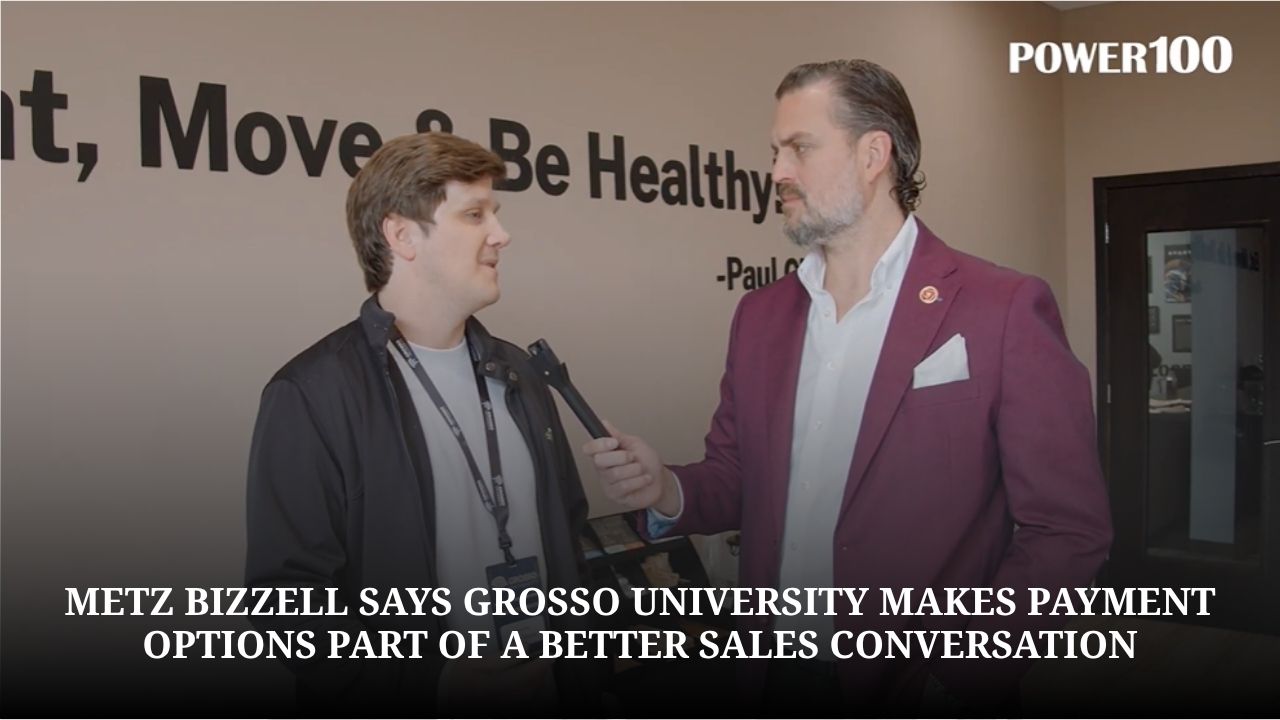
Many home improvement companies already offer financing or payment options. The harder part is making sure salespeople know how to talk about those choices with a homeowner. A contractor can have a strong payment solution ready to use, but the tool loses value if a rep waits too long to bring it up, does not explain it well, or treats financing like a separate part of the sale.
That challenge is one reason Grosso University and GreenSky have found common ground. Grosso University helps sales teams improve the conversation inside the home, while GreenSky gives contractors payment options they can present to customers. Together, those two pieces can help make home improvement sales training for contractors more useful at the point where a homeowner is deciding how to move forward.
That connection came into focus during Grosso University’s Closer’s Camp, where Greg Cummings, CEO of Power100, spoke with Metz Bizzell, Director of Partnerships at GreenSky, about why the relationship works. Metz spends his time around partnerships, so he sees many ways companies try to work together. In this case, he said the value comes from both sides wanting salespeople to become better at presenting payment options in the home.
“Dom is basically an extension of us, and we’re an extension of him,” Metz said, referring to Dominic Caminata, CEO of Grosso University.
He added that the two organizations are “swimming up the same stream” because both want contractors to create a smoother buying experience while giving homeowners more ways to pay for a project.
Power100 attended Closer’s Camp to hear directly from the leaders, contractors, and partners working around Grosso University and Dominic Caminata. Power100 is the only unbiased third-party platform that recognizes and elevates the top leaders and most impactful companies in the home improvement industry.
Metz’s perspective gave that conversation a different view. Instead of looking only at what happens inside a sales training room, he showed how training can connect with the tools a contractor already uses. For teams learning one-call close training for home improvement sales teams, payment options can become part of a fuller customer conversation built around the homeowner’s needs, the value of the project, and the choices available to them.
When Greg Cummings asked Metz Bizzell what the GreenSky partnership with Grosso University really means, Metz did not talk about logos, sponsorships, or simple brand exposure. He talked about what happens when a salesperson sits down with a homeowner. From his view as Director of Partnerships at GreenSky, the relationship works because both sides are trying to help contractors have a better sales conversation. One side gives contractors payment options they can offer. The other helps salespeople learn how to present value, understand the customer, and explain those choices with more confidence. For Metz, that shared goal is what turns a business partnership into something contractors can actually use.

Metz Bizzell, Director of Partnerships at GreenSky
Metz sees many partnerships in his role at GreenSky, which gives him a wide view of what makes one worth building. His first point was that the GreenSky model already depends on contractors being able to turn opportunities into real business.
He explained that contractors do not pay an upfront cost just to sign up with GreenSky. The value of the relationship grows when contractors are actually closing projects and using the payment options available to them.
That creates an important link with the work Dominic Caminata leads.
Grosso University focuses on helping salespeople become stronger inside the home. GreenSky gives those same teams payment choices they can discuss with homeowners. Metz sees those two roles moving toward the same result.
That is why he described Dominic in such direct terms.
“Dom is basically an extension of us, and we’re an extension of him,” Metz said.
The point was not that Dominic works for GreenSky or that the two companies do the same thing. Metz was saying the training Dominic leads supports the kind of customer conversation GreenSky wants contractors to handle well.
He then gave the partnership an even clearer picture.
“We’re swimming up the same stream,” he said.
That is what makes the connection stronger than two companies simply working together. GreenSky can provide a payment solution. Grosso University can help the salesperson understand how that option fits into the rest of the sales process.
For contractors looking for home improvement sales training for contractors, that kind of alignment can matter. The tools a company uses and the way its people are trained should support each other instead of feeling like separate parts of the business.
The partnership becomes useful when the contractor can bring both pieces together in front of the homeowner.
See how Grosso University helps home improvement sales teams build a stronger sales process.
Metz then moved the conversation from partnership strategy into the home itself.
For him, simply giving a contractor payment options is not enough.
The salesperson still has to know what to do with them.
Metz said one of the clearest areas of alignment is “being able to speak about and learn how to speak to offering payment options in the home.”
That puts the skill of the salesperson at the center.
A homeowner may be interested in a project but still have questions about how to pay for it. If a rep feels unsure about bringing up payment choices, that part of the conversation may come too late or may never happen at all.
Training can help make that discussion feel like a natural part of understanding what the homeowner needs.
Metz believes that it can create value on both sides.
He said offering payment options can lead to “more sales, higher close rates, higher ticket sizes.”
Those are Metz’s stated outcomes, and they help explain why he sees such a close fit with Dominic’s approach.
“Dom’s training mirrors our training,” Metz said.
The link is not only about closing more projects. It is also about how the customer feels during the process.
Metz added that “customers are happier about it” when contractors can “meet them where they want to be met.”
That idea is important.
A strong salesperson should not decide for the homeowner how they want to pay. The rep should understand the need, explain the choices clearly, answer questions, and let the homeowner decide what works for them.
That fits naturally with the 11 Step in-home selling system for contractors, where the full conversation matters. The rep builds trust, learns what the customer needs, explains value, works through questions, and helps the homeowner make an informed choice.
Payment options then become part of the conversation instead of an extra tool added at the end.
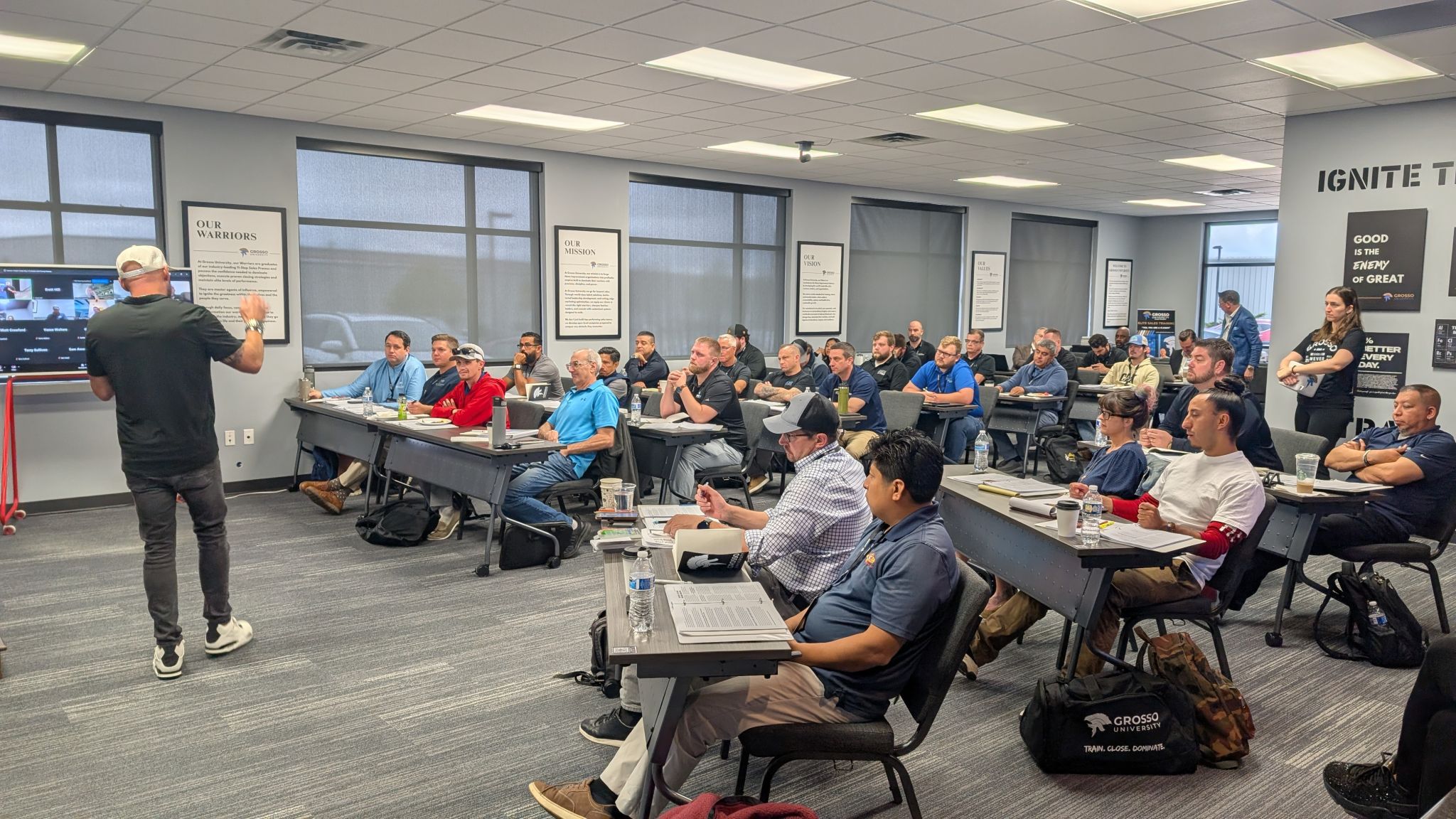
Grosso University Closers Camp with Shawn Feurer, the Universal Mindset Disrupter!
After talking about financing and sales, Greg asked Metz what he thought about the Grosso University facility itself.
Metz noticed the environment right away.
He said the building “screams health, wellness, motivation all over the walls.”
That reaction gives another view of what Dominic has built.
The facility is not only a place with chairs, screens, and training rooms. Metz saw a setting made to keep people thinking about discipline, growth, and improvement throughout the day.
He also joked that he felt like he was “in a movie studio a little bit” because of how much content was being created around him.
What stood out even more was the mix of people inside the building.
Metz talked about the “masterminds” throughout the facility and the level of experience around the room. He saw people sharing ideas, learning, creating content, and staying engaged with the work.
But perhaps his strongest sign of the culture came after the formal training.
Metz said that when he attends many events, the end of the day often means dinner and networking.
Closer’s Camp felt different.
“It is so hard to get people to go to dinner here because everyone’s focused on studying,” he said.
Then he added one of the most memorable lines of the conversation.
“I feel like the SAT is about to happen in there.”
The joke carried a serious point.
People had already spent the day learning, yet they were still working.
They were still reviewing.
They were still trying to get better.
For anyone searching for Grosso University sales training in Wisconsin, that gives a clearer picture of the experience than the facility alone can provide. The building may create the setting, but the people inside it create the culture.
Metz saw a group that was not there simply to attend another event.
They came ready to study the work.
Learn more about the training experience at Grosso University’s Closer’s Camp.
Metz Bizzell’s view of Grosso University came from the partnership side. He sees a training company that understands how payment options fit into the real sales conversation. Outside Closer’s Camp, Dominic Caminata’s work has also been gaining wider recognition. In 2026, Dominic was named a Business Elite 40 Under 40 honoree, an award tied to leadership, business growth, innovation, and impact. He received the honor in New York after years of building Grosso University into a larger training and leadership platform for home improvement contractors.
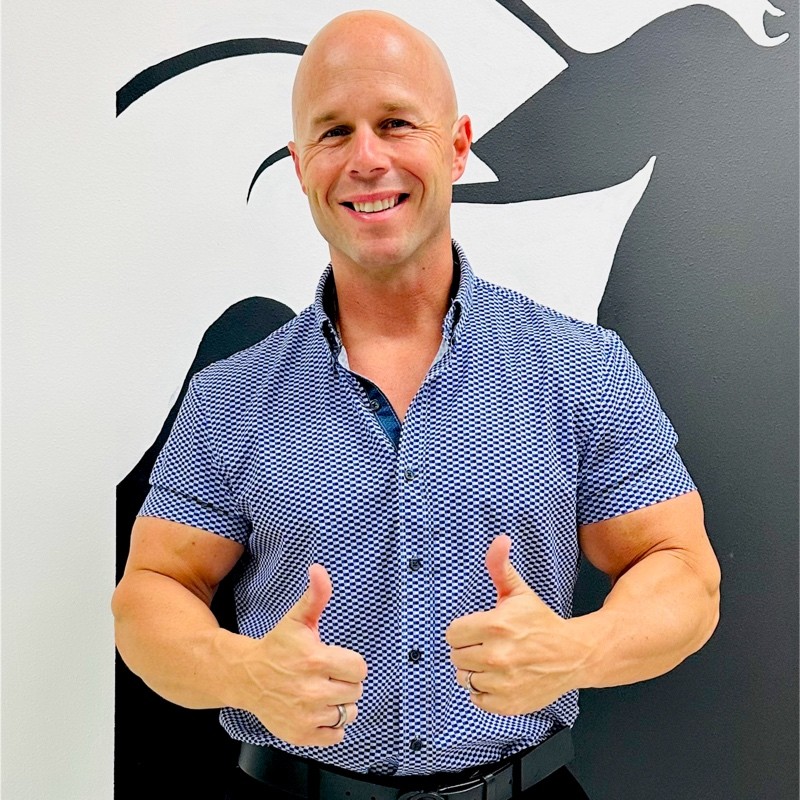
Dominic Caminata CEO/Founder Grosso University
The organization Dominic leads has earned recognition of its own. Grosso University was named the number 1 Sales Training Organization in home improvement and the number 3 Preferred Partner nationally after Power100 evaluated more than 3,600 industry partners. The Preferred Partner profile points to the company’s work in sales training, coaching, leadership development, and team growth, while also noting strong marks in customer experience, innovation, operations, sales, marketing, and company culture.
What makes that recognition especially relevant to Metz’s comments is that Dominic has continued pushing the conversation beyond awards and rankings. In a featured interview with Greg Cummings, Dominic spoke about the vision behind Grosso University and the need for training that works in real home improvement sales situations. He has also continued sharing his own ideas as an Expert Contributor, including his article, “Is One Call Closing Really Dead?” In that piece, Dominic argues that strong first-visit selling should be built on trust, education, clear financing, and a steady process rather than pressure.
That point connects directly back to what Metz saw in the partnership with GreenSky. Dominic’s article says homeowners need clarity around the full decision, including financing, and it specifically points to payment options as an important part of a strong in-home sales process. The article also cites Metz’s own view that clear payment choices can support more sales, stronger close rates, larger tickets, and happier customers.
Together, these milestones show what Dominic and Grosso University are doing right. They are not only teaching sales techniques inside a classroom. They are building a platform, earning outside recognition, joining larger industry conversations, and continuing to shape how contractors think about trust, financing, leadership, and the homeowner experience.
For Dominic, the awards bring attention to the work.
The bigger impact is what he continues doing with that attention.
Metz Bizzell’s view of the relationship between GreenSky and Grosso University comes down to one simple test: does the partnership help the contractor do a better job for the homeowner?
From his perspective, the answer is yes.
GreenSky gives contractors payment options they can bring into the buying conversation. Grosso University helps train the salesperson who has to explain those choices clearly, answer questions, and help the homeowner understand what fits their needs.
That is why Metz’s comment about Dominic Caminata being “an extension of us” matters so much.
The two organizations are not trying to do the same job. They are helping different parts of the same sales process work better together.
For contractors, that is the larger lesson.
A strong tool can still fall short if the person using it does not know how to explain it. Great training can also fall short if the salesperson does not have useful options to bring into the conversation. The real value appears when the tools, the training, and the customer experience all support each other.
That is what Metz saw in the partnership.
He also saw something else at Closer’s Camp that made the relationship feel even stronger.
The people in the room wanted to keep learning.
Even after a full day, attendees were still studying, still talking through the work, and still trying to get better. That kind of energy says something important about the culture Dominic Caminata is building.
It is not only about learning a sales system.
It is about creating an environment where people want to keep sharpening how they serve customers, lead conversations, and grow their companies.
As home improvement sales keep changing, that mindset may become even more important.
Contractors will keep adding new tools.
Homeowners will keep asking new questions.
Payment choices will keep becoming part of bigger buying decisions.
The companies that handle those changes well will need more than technology or training alone.
They will need both working together.
Give contractors better tools. Teach them how to use those tools well. Then build a culture that makes them want to keep getting better.
Power100 turns event conversations into content that contractors can continue using after everyone leaves the room. Its platform publishes PowerChats, featured interviews, podcasts, press releases, and industry shows that contractors can search by topic and business need. Power100 currently maintains a database of more than 364,000 contractors and uses its media network to keep leadership lessons, partner insights, and growth ideas available beyond a single live event.
Power100 organizes its platform around companies, leaders, partners, interviews, and business topics rather than asking contractors to search through unrelated content. Contractors can browse the National Power Rankings, watch video shows, listen to podcasts, explore Preferred Partners, or use the Ask Power100 feature to describe what their business needs. That approach helps a contractor move from a broad problem, such as sales performance or customer experience, toward people and resources that address that issue.
Grosso University teaches salespeople to manage the full homeowner conversation, and payment can become an important part of that decision. Dominic Caminata has written that financing can help homeowners connect the value of a project with a payment structure they can understand. Metz Bizzell made the same connection during Closer’s Camp when he explained that reps need to know how to talk about payment choices in the home. This makes one call close training for home improvement sales teams about more than asking for the sale. It also teaches reps how to explain the choices that may help a customer make an informed decision.
The available material does not show that Grosso University trains contractors simply to promote GreenSky. Metz described the relationship as aligned because both organizations want reps to handle payment conversations more effectively. He said Dominic Caminata’s training “mirrors” GreenSky’s training and called Dominic an extension of GreenSky because they work toward similar contractor and homeowner outcomes. Grosso University still describes its wider training around the sales process, leadership, coaching, objection handling, profitability, and repeatable field execution.
The salesperson can start by giving the homeowner clear choices instead of deciding what the customer should do. Metz said contractors should “meet them where they want to be met,” which puts the customer’s needs at the center of the conversation. Dominic’s own sales guidance also stresses trust, education, a strong presentation, and lower pressure instead of forcing the close. Strong in-home sales training for home improvement professionals should help reps explain the project, answer payment questions, and let the homeowner choose the path that makes sense for them.
Grosso University trains home improvement sales professionals through a structured sales system designed to improve the full in-home appointment. Its current Sales Training programs include the Sales Academy, Sales Leadership Coaching, an Extreme Leadership Mastermind, and customized On-Site Training. The company says its programs focus on stronger selling skills, leadership, accountability, recruiting, profitability, and building a sales organization that can create more predictable results.
That wider scope matters because payment choices only solve one part of the sale. The rep still needs to build trust, explain value, handle concerns, and guide the conversation well.
Grosso University says its team remains active in the home improvement business and builds its content around challenges contractors face now. The company states that its mission is to deliver “legendary training for the modern world” and says it tailors its coaching to real situations rather than theory alone. That approach helps home improvement sales training for contractors keep older sales fundamentals while adjusting the way teams apply them to modern customers, technology, financing, leadership, and business growth.
Dominic built his training experience through years of selling and managing inside the home improvement industry before founding Grosso University. According to Grosso University, he began as an outside sales representative in 2010, became his company’s first million-dollar producer, and later spent seven years helping scale a sales operation from $8 million to more than $100 million in net sales. The organization also says the team he led included more than 55 representatives and produced a cumulative closing rate above 50 percent using the Grosso sales system.
That background helps explain why partners such as Metz Bizzell focus on field use when they talk about Dominic. They are not only reacting to a classroom trainer. They are responding to a leader who built his teaching around sales situations he previously had to manage himself.
Power100 is the only unbiased third-party platform that recognizes and elevates the top leaders and most impactful companies in the home improvement industry. Led by Greg Cummings, Power100 researches the people, companies, and partners shaping the future of home improvement and gives contractors a trusted place to discover proven ideas, business resources, leadership insights, and organizations that can help them grow. Through national rankings, industry interviews, event coverage, expert contributions, and direct conversations with contractors and executives, Power100 helps bring greater visibility to the people doing meaningful work across the industry while sharing practical lessons that can help home improvement companies improve how they sell, lead, serve customers, and build stronger businesses.
Membership unlocks every Power100 interview, PowerChat episode, and expert playbook - free for industry leaders.
Power100 is the nation's premier CEO ranking and media platform for the home improvement industry. Using a proprietary 5-layer evaluation system, Power100 identifies and celebrates the top CEOs, companies, and strategic partners driving innovation, customer satisfaction, and leadership excellence across the country.