
Home improvement contractors can spend heavily on leads, appointment setting, sales training, and closing systems, yet still lose a homeowner before the salesperson ever arrives. The reason is simple. The customer has already started the buying process. They may have searched the company, read reviews, looked at project ideas, compared products, studied warranties, and formed questions before making direct contact.
Hover sits at the center of this evolving home improvement journey by helping contractors connect property information, visual design, measurements, estimates, and the sales experience. Tools such as Hover contractor estimating software can support a clearer path from understanding the home to helping the customer understand the project.
That changing path to purchase became a key part of a PowerChat conversation between Greg Cummings, CEO of Power100, and Matt Lewis, Chief Revenue Officer at Hover. Rather than treating the in-home appointment as the clear starting point of the sale, Matt challenged contractors to consider everything the homeowner may do before the meeting begins.
Power100 is the only unbiased third-party platform that recognizes and elevates the top leaders and most impactful companies in the home improvement industry. Throughout the conversation, Greg and Matt explored what changing buyer habits means for contractors who want to build trust earlier, show up where customers are already looking, and make the path to an in-home conversation easier to understand.
One of the hardest parts of home improvement sales now happens before the sales team has a chance to speak.
A contractor can generate the lead, book the appointment, train the rep, and prepare a strong presentation. Yet while the company is preparing for the visit, the homeowner may already be deciding how much they trust the contractor.
They have searched.
They have read reviews.
They have visited websites.
They have looked at products.
They have asked questions about pricing and project steps.
They may have used tools such as ChatGPT, Google, or Gemini to learn what they should expect before anyone from the company enters their home.
That changes where the sale begins.

Matt Lewis, Chief Revenue Officer at Hover
Matt Lewis told Greg Cummings that the next customer journey will require more than a quick transition from an online review to an in-person appointment. Homeowners may want time and space to learn first.
“There needs to be digital touch points where they can explore not just about your company, but about the process they’re going to go through, what options they might get from you, what products do you sell, what do your warranties look like,” Matt Lewis, Chief Revenue Officer at Hover, said during the PowerChat.
That idea puts a new job in front of the contractor.
The company website cannot only explain who the contractor is. It may also need to help the homeowner understand what buying from that company could feel like.
Those questions can shape trust long before a salesperson has the chance to build it face-to-face.
Matt questioned whether the customer journey would continue to follow a single, linear path.
“Are they gonna go from a review to an in person meeting? I don’t know. I think there’s gonna be more than that,” Matt said. “They might want to go to your website and explore what options on their house might look like.”
That is an important shift for contractors.
The homeowner is not always waiting for a salesperson to begin teaching them. They are already looking for answers on their own. If the contractor does not provide those answers, the customer may find them somewhere else.
This is also where digital tools can become more than another piece of software. 3D home visualization software can give homeowners a way to explore ideas about their property before any choices have to be explained in words alone. The value is not simply showing technology. It is helping the customer better understand what they may be buying.
Matt still sees the personal relationship as an important part of home improvement sales. He said many homeowners will continue to value meeting and engaging with the company’s representative. But he believes that humans will increasingly sit inside a larger digital journey.
By the time the salesperson arrives, the homeowner may already have a view of the company.
They may already know what questions they want answered.
They may already understand some of their choices.
And they may already have decided whether the contractor feels modern, clear, and worthy of their trust.
For home improvement leaders, that creates a new question to ask before the next appointment is ever booked:
When homeowners look for answers before they talk to you, does your company help them move forward, or leave them searching elsewhere?
During his PowerChat with Greg Cummings, Matt Lewis, Chief Revenue Officer at Hover, described a sales journey that is becoming much wider than the in-home appointment. The homeowner may search, compare, read, ask AI tools for help, study warranties, look at products, and form an opinion before speaking with a salesperson. For contractors, that means the work of building trust can no longer begin only when the rep arrives. Matt’s larger message is that the companies that understand this wider path can use digital homeowner experience and contractor sales technology to make each step easier to understand while keeping the personal relationship at the center of the sale.

Greg Cummings, CEO of Power100
For years, the booked appointment gave a contractor a clear starting point. The lead came in. The visit was set. The rep arrived. Then the selling began.
Matt believes that the starting point has moved.
The homeowner may already be learning long before the sales team gets involved. Matt said people are researching through AI tools such as ChatGPT, Google, Gemini, reviews, and other online sources. They may know more about pricing, materials, project steps, and possible choices than a contractor expects before the first conversation ever takes place.
“There’s a process and the path to purchase with a new consumer that they’re going to be doing a lot of interesting things ahead of time,” Matt Lewis, Chief Revenue Officer at Hover, said.
That changes the contractor’s job.
The goal cannot only be to win the appointment. The company also has to help the homeowner feel ready for it.
A customer who finds useful answers before booking may walk into the meeting with a clearer idea of what they need. They may understand the broad project process. They may already know which questions matter most to them.
That can make the first face-to-face conversation more useful for both sides.
The opposite can also happen.
If the homeowner searches and finds little helpful information, unclear answers, weak proof, or a buying process that feels hard to understand, doubt can grow before the rep ever has a chance to address it.
This is why home improvement customer journey technology matters beyond the software itself. The value comes from giving homeowners clear places to learn and helping contractors shape the experience before the appointment, rather than leaving that early stage to chance.
Once the homeowner begins researching, simply telling them who the contractor is may not be enough.
A website can list years in business, service areas, awards, and company history. Those facts can build credibility. But Matt believes the new buyer may be looking for something more practical.
They want to know what the experience could look like for them.
Matt sees digital touchpoints as places where homeowners can begin answering those questions before the meeting.
“They might want to go to your website and explore what options on their house might look like,” Matt said.
That idea changes the role of a contractor website.
Instead of acting only as a company brochure, it can become part of the buying experience.
A homeowner choosing a roof, siding, windows, or another major exterior project may struggle to picture the finished result from words or small product samples alone. Home remodeling and contractor visualization software can help bring those choices closer to the homeowner’s actual property and make the project easier to understand.
The point is not to fill the website with more technology.
It is to give the customer something useful to do with the information.
They can explore.
They can learn.
They can begin forming questions.
They can arrive at the appointment with a better picture of what they want.
That gives the salesperson a stronger starting point.
As homeowners move deeper into their research, Matt believes many will look beyond what a company says about itself.
They will look for proof.
Reviews can start that process. A strong rating may help a homeowner put a contractor on the list. But Matt questions whether the next consumer journey will move straight from a review to an in-person meeting.
“Are they gonna go from a review to an in person meeting? I don’t know. I think there’s gonna be more than that,” Matt said.
One of those extra steps may be learning more about the promises a contractor makes.
Matt specifically pointed to warranties.
A company can say it offers a strong warranty. The homeowner may still want to understand what the warranty covers, what it means in simple terms, and whether the contractor has stood behind it when customers needed help.
“They might want to look at different things that you’ve offered in your warranty and how you stood by those things,” Matt said.
That is where trust moves from a claim to something the homeowner can judge.
The same idea can apply to estimates.
Matt said the next generation wants transparency, options, and simplicity. He warned that handing someone a single number with very little explanation may not feel like the kind of modern buying experience that builds trust. Homeowners may want to understand how that number was arrived at and what choices underlie it.
This gives home improvement and exterior remodeling estimating software a role beyond just producing a price. When information is clear and easy to explain, the estimate can become part of the trust-building process.
The homeowner does not need every detail in the business.
They need enough evidence to feel confident that the promise they are hearing has substance behind it.
Matt’s view of the future does not remove the salesperson from home improvement.
It gives that person a different starting point.
“I think that a lot of folks are still gonna value meeting and engaging with the person that represents the organization,” Matt said. “I think what’s gonna have to be included in that is digital touch points.”
That distinction matters.
A homeowner replacing a roof, siding, windows, or another major part of the home is making a serious choice. Many customers will still want a real person there to answer questions, understand their needs, and give them confidence in the company doing the work.
The digital part should make that human conversation better.
If a homeowner has already explored products, read about the process, reviewed possible project options, and understood some of the company’s promises, the salesperson does not have to spend the entire meeting going over the basics.
They can listen.
They can answer the remaining questions.
They can discuss the homeowner’s specific needs.
They can spend more time on the relationship and the solution.
That also connects with Matt’s wider point about anxiety. He believes the next generation wants a buying process with less uncertainty. When useful information comes before the appointment, the customer can enter the meeting with more control and fewer unknowns.
In that setting, contractor sales presentation software and homeowner visualization tools should not become a wall between the rep and the customer. They should support a clearer conversation between them.
The strongest use of technology may therefore be the one that gives people more time to focus on each other.
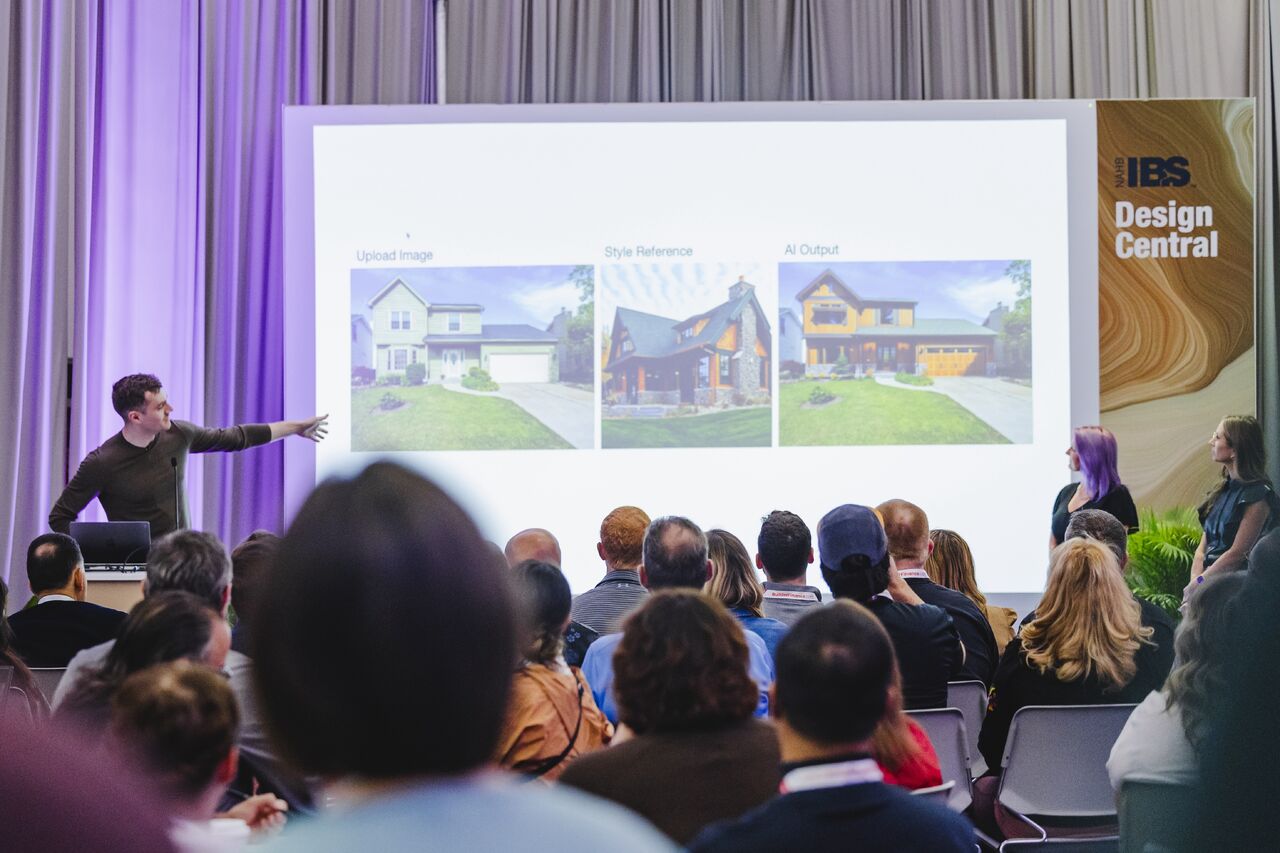
Hover launched Instant Design at the 2025 International Roofing Expo and Design & Construction Week
Matt’s customer journey does not end when the meeting does.
That may be one of the biggest changes for companies built around the one-call close.
The homeowner can like the company, trust the rep, understand the project, and still not be ready to sign that day.
Matt does not treat that moment as the end of the opportunity.
He sees it as another part of the journey that needs a clear system in place.
He said many companies are discussing digital follow-up, but it is not yet a standard part of the process across the industry. When there is no system in place, the next step may depend on a rep remembering to call, text, or email at the right time.
That makes the relationship harder to scale.
“How are you re engaging with that customer through technology at scale?” Matt asked.
He also pointed to another missed opportunity.
Some established contractors have years of customer information and thousands of email addresses from people they have already spoken with or served. Yet many of those companies rarely return to those relationships.
The future journey can look different.
Useful information before the meeting.
A strong human conversation during it.
Clear digital follow-up after it.
And continued contact with customers long after the first project is complete.
“The process needs to be not about just the one call close, not about just the in-home appointment,” Matt said. “It needs to start with digital touch points before that and it needs to follow up with digital touch points after that.”
For contractors using roofing contractor software or siding estimating software, the larger lesson is not simply to add more systems. Matt’s point throughout the conversation is that technology should help create a stronger customer journey.
The appointment still matters.
It is simply no longer the whole story.
Matt Lewis’s message about digital touchpoints carries more weight when viewed beside what Hover has already built outside the interview. As Chief Revenue Officer, Lewis helps lead the commercial side of a company that has expanded its property technology beyond a single-contractor tool into larger systems used across home improvement, building products, and insurance. Two partnerships in particular show how Hover is turning the idea of a connected property experience into something homeowners and professionals can actually use.

Hover team at the 2025 International Roofing Expo and Design & Construction Week
One of the clearest examples came through Hover’s work with James Hardie.
In 2024, James Hardie introduced Hardie Designer, powered by Hover, giving homeowners and building professionals a way to visualize James Hardie products and colors on a home exterior. James Hardie later highlighted the Hover-powered home visualizer in its 2025 annual report as part of its updated United States website.
That matters directly to the buying journey Matt described.
Instead of asking a homeowner to wait for an appointment before they can begin to understand their choices, the experience gives them a place to explore. They can see how siding, colors, and other exterior choices may look on a real home before making the final decision.
Hover’s James Hardie experience connects smartphone photos or blueprints to a 3D property model where contractors and homeowners can review measurements, visualize real products, create estimates, and move toward ordering.
This is more than a design feature. It is an example of the kind of digital touchpoint Matt says the next homeowner will expect. The customer can begin learning and building confidence before the traditional sales conversation carries the full weight of the decision.
For Lewis and Hover, the impact is clear. The company is helping a major building-products brand bring product discovery closer to homeowners and make it easier to visualize exterior choices before work begins.
Hover’s reach also extends well beyond the retail home improvement sale.
In March 2022, Hover announced a full integration with Verisk’s Xactimate and XactAnalysis platforms. The connection allowed Hover measurements and 3D property data to move directly into systems used by insurers, adjusters, restorers, and home improvement professionals, helping reduce manual entry and speed up property claim estimates.
That relationship has continued to grow.
In February 2025, Hover expanded its work with Verisk by bringing Hover Inspections and Guided Estimates into Xactimate. Hover said the expanded workflow could move measurements, inspections, property data, and estimating information through a more connected claims process.
By 2026, Hover’s Xactimate integration supported transferring property measurements, photos, digital sketches, and virtual walkthroughs into the platform.
This milestone speaks to a larger part of Hover’s impact.
The company is not only creating another standalone digital tool. It is putting property information inside systems that professionals already use to make real decisions.
That connects closely with Matt’s wider view of technology. A digital experience becomes more useful when it fits into the full journey and helps information move from one step to the next.
For homeowners, that can mean fewer repeated steps and a clearer property process. For professionals, it can mean less manual work and better access to the information needed to move a project or claim forward.
As CRO, Matt Lewis sits at the commercial center of that expansion. His PowerChat message asks contractors to think beyond a single appointment and create better digital paths for the homeowner. Hover’s work with James Hardie and Verisk shows that the company is already applying that thinking at a much larger level, connecting the property, the customer, and the professionals who need to act on the same information.
The front door used to feel like the clear beginning of the sales process.
That is changing.
By the time a salesperson arrives, the homeowner may already have spent days learning, comparing, reading, and thinking about the project. They may have a short list of companies. They may already know the questions they want answered. They may even have a clear sense of what they do and do not trust.
For contractors, that does not make the in-home appointment less important.
It makes everything leading up to it more important.
Matt Lewis’s perspective offers a simple way to think about the next stage of home improvement sales. The goal is not to replace the personal relationship with screens, tools, or automation. It is to help the homeowner reach that personal conversation with more confidence and fewer unknowns.
That can change the tone of the meeting.
The salesperson is no longer trying to create trust from nothing. They are building on trust that has already started.
The homeowner is not seeing every choice for the first time. They have had space to think.
The appointment becomes less about pushing someone through a process and more about helping them make a decision they feel ready to make.
Matt closed the wider conversation by pointing toward what comes next for the industry.
“There’s another wave of pioneers that need to emerge in this industry that connect the sort of next generation to home improvement services,” Matt Lewis, Chief Revenue Officer at Hover, said.
That next wave may be defined by companies that understand one simple truth.
The customer journey does not begin when the doorbell rings.
It begins when the homeowner first decides to look for an answer.
The future sales leader may not be the company that waits until the appointment to start selling. It may be the company that starts helping the homeowner long before the doorbell rings.
Power100 extends industry conversations beyond one interview through its Inner Circle platform. Contractors and leaders can search shows, articles, and expert content across topics that affect their businesses. The Inner Circle currently brings together PowerChat and many other home improvement shows, giving users one place to find ideas on leadership, sales, growth, technology, customer experience, and operations. Power100 also uses Inner Circle AI to help industry professionals find useful knowledge from that growing content base.
Power100 organizes Inner Circle content by business area rather than by guest or show alone. Its article library includes topics such as culture, growth, innovation, customer experience, marketing, operations, and sales. That structure helps contractors move from a broad leadership conversation to information tied to a real business need. Power100 uses this wider knowledge base to help leaders find lessons they can apply inside their own companies.
Reviews can help a homeowner decide whether a company looks trustworthy, but Matt Lewis argues that the buying journey now goes further. Homeowners may also want to understand the project, study product choices, review warranty information, see what changes could look like on their homes, and learn what will happen during the process. A review may create interest, but useful digital touchpoints can help turn that interest into greater confidence before the appointment begins. This is why home improvement sales technology can support more than lead generation. It can help prepare the homeowner for the sales conversation itself.
Hover can carry design choices into the estimating phase. Contractors can use a 3D property model to select shingles, siding, finishes, and other materials, then create a measurement-based production estimate from those selections. Hover says its system can move those material choices into the estimate without requiring the contractor to enter the same information again. Some parts of this newer workflow are still being released in phases, so access can vary by account. This makes 3D home visualization software for exterior remodeling contractors useful beyond visual presentation, as the design can extend into project planning and pricing.
Hover connects the visual experience to the actual property. Its platform can turn smartphone photos or blueprints into a 3D property model with measurements, product visualization, and estimating tools. Homeowners can explore real exterior products and see different choices for their home, while contractors can use the same property information as the project progresses. That makes contractor visualization software useful when it helps a homeowner make a real decision, rather than simply showing an impressive image.
No. Matt Lewis said many homeowners will continue to value meeting and speaking with the person who represents the contractor. His point is that digital touchpoints should prepare the homeowner for that meeting, not remove the human relationship. A customer can learn about the company, explore options, and better understand the project beforehand. Then the salesperson can spend more of the appointment answering important questions, understanding the homeowner, and helping them make the right decision.
Hover Workspace brings design, measurements, and estimates into one place. Contractors can begin with a visual design, move into a scaled 3D model, review measurements on that model, and build an estimate using information from the same project. Hover says this workflow helps teams move from planning to pricing without constantly switching between separate systems. That makes Hover contractor estimating software part of a wider project workflow rather than a standalone estimating tool. Hover is rolling out parts of the newer Workspace experience in phases, so some users may still see an earlier version.
Matt Lewis says contractors should stop treating the in-home meeting as the full sales journey. If a homeowner needs more time, the company can continue the relationship with useful digital follow-up rather than letting the opportunity slip away when the rep leaves. Matt also points out that many long-standing contractors already have large databases of past customers and leads that receive little continued engagement. His view is that strong contractor sales technology should support useful touchpoints before the appointment, a strong human conversation during it, and continued engagement afterward.
Power100 is the only unbiased third-party platform that recognizes and elevates the top leaders and most impactful companies in the home improvement industry. Led by CEO Greg Cummings, Power100 provides contractors and industry leaders with access to ideas, conversations, and proven lessons to help them build stronger companies. Through national rankings, PowerChat interviews, Inner Circle content, and industry education, Power100 brings together leadership insight on sales, culture, customer experience, growth, technology, and operations while giving high-performing CEOs and companies the recognition they deserve.
Membership unlocks every Power100 interview, PowerChat episode, and expert playbook - free for industry leaders.
Power100 is the nation's premier CEO ranking and media platform for the home improvement industry. Using a proprietary 5-layer evaluation system, Power100 identifies and celebrates the top CEOs, companies, and strategic partners driving innovation, customer satisfaction, and leadership excellence across the country.