Home improvement leaders know what a long event day can look like. The team talks to homeowners for hours. People stay on their feet. Managers see the effort. Everyone goes home tired. But when the appointments are counted, the results may still fall short. The easy answer is to ask the team to work harder.
Samantha McGuinness, founder of Enabled Remodeler, believes that one can miss the real problem. Her work as a home improvement field marketing consultant is built around a different idea. Hard work matters, but effort has to follow a clear method. When teams stay busy without knowing which actions lead to better conversations and stronger appointments, more activity may only create more wasted effort.
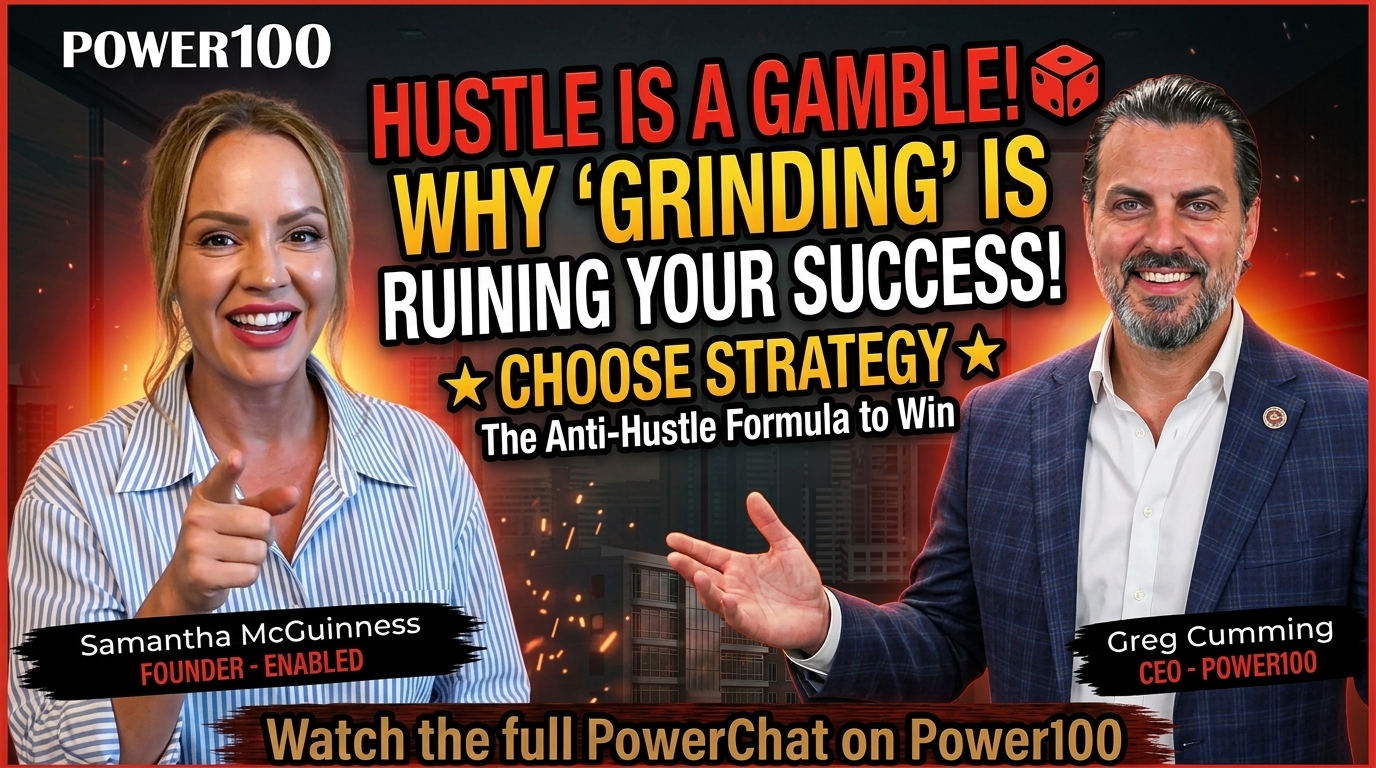
That idea became a key part of McGuinness’ PowerChat with Greg Cummings, CEO of Power100. Their conversation looked at what happens when leaders stop treating hustle as the answer and start paying closer attention to how the work is done.
Power100 is the only unbiased third-party platform that recognizes and elevates the top leaders and most impactful companies in the home improvement industry. McGuinness used the conversation to explain why face-to-face marketing for home improvement companies becomes stronger when teams have a clear process, managers know how to coach it, and employees understand what a good result should look like.
One of the hardest problems for a field marketing leader is knowing what to do when effort is high, but results are low.
The team may be talking to people all day.
They may be moving around the event.
They may be doing everything they were told to do.
From the outside, it can look like a strong effort.
But the appointments may still not be there.
McGuinness believes that is the point where leaders need to ask a better question.
Not, “How do we make everyone work harder?”
But, “Are we doing the work the right way?”
“To me, hustle is like gambling,” McGuinness said.
Her point is not that people should slow down or care less.
Is it that hard work without a clear path can turn into activity for the sake of activity?
McGuinness explained what that looks like.
“It’s like, just do everything,” she said. “And it doesn’t matter which direction you’re going in. It doesn’t matter what you’re saying. It doesn’t matter how you’re going about things.”
That is where her view of strong execution becomes different.
For McGuinness, the way a person approaches the work matters.
Those choices shape the result long before the team looks at the final numbers.
“My theory is that how you go about things produces an optimal result,” McGuinness said. “I am more strategy and hard work and focus, but anti hustle.”
That turns the conversation away from raw effort and toward useful effort.
A team can work hard and still need a better process.
A manager can demand more activity and still miss the real weakness.
A company can add more events and still repeat the same mistakes.
For leaders looking at home show lead generation for contractors, McGuinness’ message is a reminder that volume alone will not fix a weak method.
The better path is to study how the work is being done.
Then improve it.
Teach it.
Show the team what good looks like.
And make sure every hour of effort has a clear reason.
The question is no longer only whether the team worked hard enough.
It is whether that hard work was moving in the right direction.
The PowerChat moved from effort into execution as Samantha McGuinness and Greg Cummings looked at a problem many field marketing teams face. People can work hard, stay active, and still miss the result. For McGuinness, that does not always mean the team needs more pressure. It may mean the team needs a better way to work. Her view is built around strategy, clear focus, strong coaching, and people who want to improve. That creates a simple leadership lesson. The goal is not to keep people busy. The goal is to help their effort produce something useful.
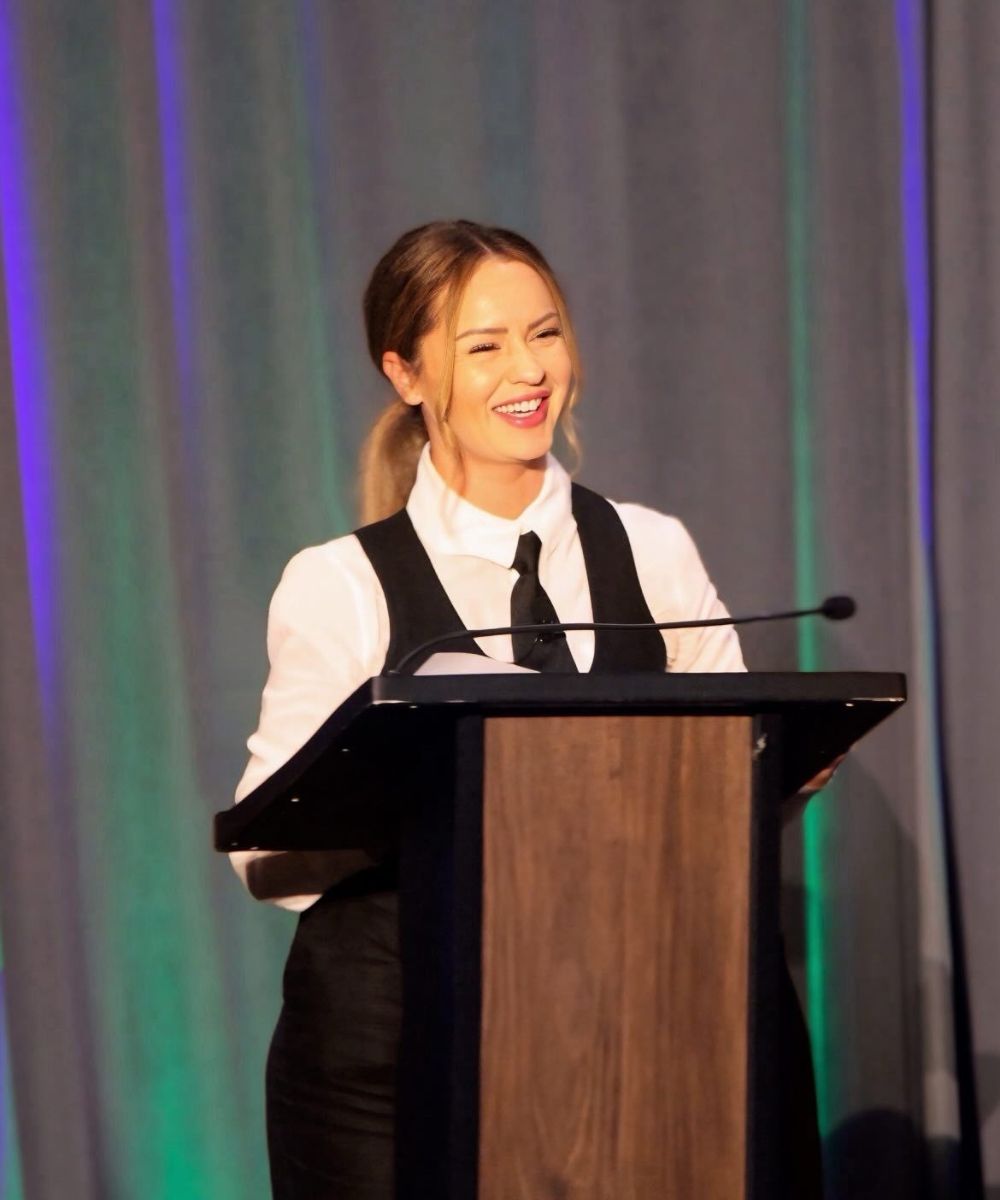
Samantha McGuinness, founder of Enabled Remodeler
A field marketer can spend an entire day moving from one conversation to the next and still finish without enough strong appointments.
That does not always mean the employee did not work hard.
McGuinness believes leaders need to separate effort from effectiveness.
“To me, hustle is like gambling,” McGuinness said.
She explained that hustle can become a pattern of doing everything at once without enough thought about direction.
“It’s like, just do everything,” she said. “And it doesn’t matter which direction you’re going in. It doesn’t matter what you’re saying. It doesn’t matter how you’re going about things.”
That is where the difference between motion and progress becomes clear.
A person can talk to many homeowners, but the number of conversations alone does not show whether those conversations were useful.
Those are different questions from simply asking how many people were approached.
For companies working on home show lead generation for contractors, this matters because a busy event can still create weak results when the team does not have a clear goal behind each conversation.
McGuinness does not believe the answer lies in lowering effort.
She believes the effort should have a purpose.
When results fall short, leaders can ask what part of the process needs work instead of simply asking people to push harder.
That change gives the team something useful to improve.
McGuinness’ idea of strategy becomes more practical when the conversation turns to qualification.
She does not want field marketers measuring success by how many names they collect.
She wants them to create real opportunities.
That starts with asking better questions.
A homeowner may stop by a booth out of curiosity.
That alone does not make the person ready for a sales appointment.
The field marketer needs to understand what is happening inside the home.
Those questions give the conversation a clear direction.
McGuinness said earlier in the interview that alignment and qualification are closely connected. A company should not set an appointment with someone who does not need what it offers.
That is where strong face-to-face marketing for home improvement companies goes beyond just talking to people in public.
The purpose is to find the right homeowner, understand the problem, and create the right next step.
That also gives sales a better starting point.
A salesperson who receives clear pain points and useful notes walks into the home knowing more about the customer.
The homeowner does not have to start the whole story again.
And the field marketer has done more than produce activity.
They have created context.
That is the kind of method McGuinness means when she says the way people go about the work can shape the result.
“My theory is that how you go about things produces an optimal result,” she said.
Strategy becomes real when every conversation has a reason.
The conversation then moved from what employees do to what managers should do when those employees struggle.
McGuinness shared a simple example from her own time leading a team.
“If my team wasn’t performing, I would show up at an event and set an appointment and walk away,” she said.
That moment says a lot about the way she views leadership.
She not only told the team that better results were possible.
She showed them.
That can change how an employee sees a hard day.
When people keep hearing “no,” it can become easy to believe that the event is bad, that the customers are wrong, or that the goal is too high.
Seeing a manager step into the same setting and create an appointment can reset that belief.
Now the question changes.
Instead of saying, “It cannot be done,” the employee can ask, “What did the manager do differently?”
That opens the door to coaching.
For leaders using field marketing training for remodeling companies, this is an important difference.
Training should not live only in a document or script.
Managers need to understand the work well enough to explain what happened in a conversation and why one approach worked better than another.
They should be able to hear what the employee is saying.
They should know what a good qualification sounds like.
They should understand what a strong appointment looks like.
That makes accountability easier because the standard is no longer a vague demand for better numbers.
The manager can show the team what good work looks like and then coach toward it.
McGuinness believes that kind of proof matters.
“Being able to show people what’s possible, it matters a lot,” she said.
When leaders can teach the method, it becomes easier for the team to trust the strategy.
See how Enabled Remodeler supports managers with practical coaching and field marketing systems.
Even the best process still needs someone willing to use it.
McGuinness made that clear when she spoke about the desire to win.
“I think people do have to have that desire to win within them,” she said.
That does not mean every new employee needs years of experience.
Skills can be taught.
Scripts can be practiced.
Managers can coach.
But the person still has to care about getting better.
That matters in field marketing because rejection is part of the job.
Not every homeowner will stop.
Not every conversation will become an appointment.
Some events will be stronger than others.
A person who wants to improve can use those moments as information.
They can listen to feedback.
They can change the opening question.
They can practice how they qualify.
They can return to the next conversation with a better approach.
A person who does not want that challenge may simply blame the event, the customer, or the market.
This is why McGuinness connects coaching with hiring.
Companies looking for a home improvement field marketing consultant still need people inside the business who are ready to learn.
Outside support can give them a stronger system.
A coach can show them another way.
A manager can help them practice.
But the employee still has to bring the desire to use what they learn.
That same lesson applies to managers.
Earlier in the conversation, McGuinness said a growth mindset is not something a coach can give someone.
The person has to be open to change.
That makes attitude part of execution.
Strategy can point people in the right direction.
The desire to improve helps keep them moving.
McGuinness’ anti-hustle message does not end with finding one better method and using it forever.
It ends with improvement.
“There’s always something that we can improve on,” she said.
That creates a very different mindset from blind hustle.
Hustle says do more.
Continuous improvement asks what should become better next.
One week, the problem may be the opening conversation.
Another time, the team may be setting appointments without enough qualifications.
A retail location may produce stronger results than another.
One employee may need help asking better questions.
A manager may see that appointments are being created well, but the handoff to sales is weak.
Those are different problems.
They need different answers.
This is where measurement becomes useful without becoming the entire story.
Numbers can help leaders identify where the process begins to break down.
Then the team can focus on that part.
For companies building retail marketing for remodeling contractors, this kind of learning can also make it easier to repeat growth.
Instead of depending on one employee who happens to be great at talking to people, the company can begin to understand what that person does well.
That method can be taught.
Managers can coach it.
New employees can practice it.
The company can carry the same standard to another event, retail location, or market.
That is what strategy can create that hustle cannot.
Hustle often depends on a single person’s energy.
A strong process can become part of the business.
McGuinness’ message is not that teams should ever stop working hard.
It is hard work that should keep getting smarter.
When a company knows how to study the work, teach the lesson, and improve the next attempt, effort begins to compound instead of simply repeating itself.
Samantha McGuinness’ impact reaches beyond teaching teams to work harder or set more appointments. Through Enabled Remodeler, she has turned years of experience in face-to-face marketing into a clear way for remodeling leaders to think about their work. Her Four P’s framework focuses on Position, Precision, Performance, and Profit. Each part gives contractors a different question to answer.
Enabled describes those four areas as the foundation of its coaching approach.
That structure fits closely with McGuinness’ message about strategy beating hustle. The goal is not to send teams into more events and hope effort fixes every problem. The goal is to give owners and managers a method to make better choices before, during, and after each event. It gives field marketing training for remodeling companies a clear path from event choice to team performance and then to the final business result.
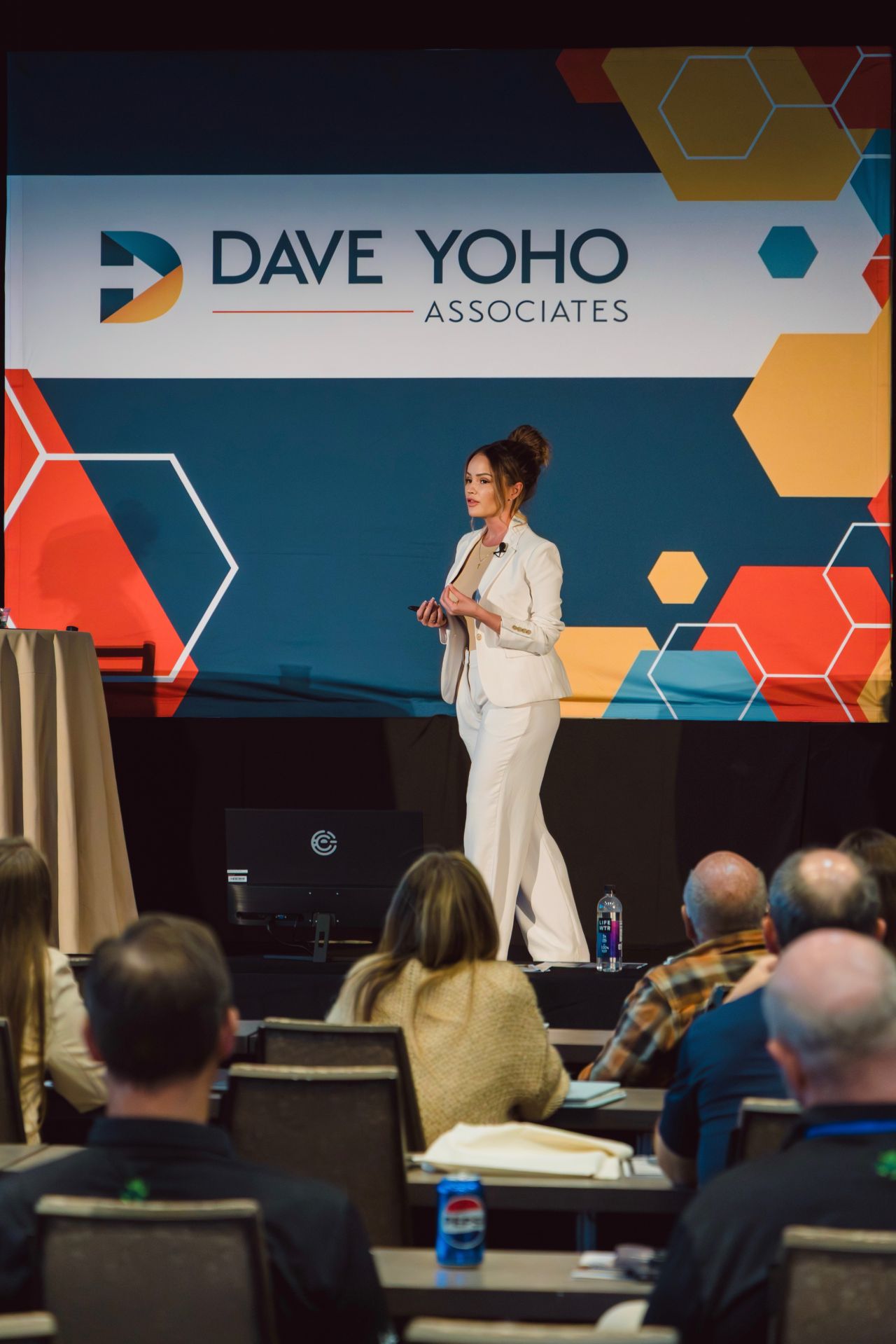
Samantha McGuinness, founder of Enabled Remodeler at the RevX by Dave Yoho Associates
McGuinness has also helped create a broader platform for those lessons to be shared. Through the Face to Face Marketing Network, home improvement owners and managers can learn from coaching, operating systems, scripts, KPI tracking, hiring support, and other companies facing many of the same field marketing challenges. The Network is built around events, home shows, and retail partnerships, with a strong focus on generating qualified appointments through systems companies can replicate and scale.
That community gives McGuinness’ work a wider industry effect. A manager does not have to solve every staffing problem, event issue, or performance gap alone. Members can learn from real situations, compare ideas, and bring better structure back to their own teams. That makes face-to-face marketing for home improvement companies less dependent on one great employee and more connected to shared systems and leadership.
The client results published by the Network also give that approach weight.
Rebecca Ackerly of Universal Windows Direct reports that after her team implemented Samantha’s process, the company’s marketing spend fell from 13% to under 2%. The Network presents the result as a client testimonial, making it a strong example of what McGuinness means by improving how the work is done rather than simply asking for more activity.
Another client, Lifestyle Home Solutions, reports moving from struggling to manage 10 to 15 home shows a year to running 18 road shows each month after working with Enabled. The company credits the systems with helping it scale the program with far less friction.
Those stories show why McGuinness’ anti-hustle message carries more weight than a simple opinion about work culture.
She is building an approach around the belief that results become stronger when teams know where to focus, managers know what to measure, and companies have a system they can keep improving.
For McGuinness, human connection still sits at the center of that work. Her guiding belief that “customer service is marketing” reflects the kind of industry she serves. Home improvement companies are invited into people’s homes. Technology can speed up the process, but trust still has to be earned by people.
That is where Enabled Remodeler’s wider impact becomes clear.
The company is not only helping contractors create more activity in the field. It is helping them turn human effort into a process with purpose, accountability, community, and a clearer path to profit.
Samantha McGuinness’ anti-hustle message is not a call to lower the standard.
It is a call to raise the quality of the work.
Field marketing will still take effort. People will still hear no. Managers will still have hard days. Companies will still need to show up, stay consistent, and put real energy behind the program.
But effort becomes more valuable when it has a clear reason.
That is the lesson McGuinness leaves with home improvement leaders.
More conversations are not always the answer.
More events are not always the answer.
More pressure is not always the answer.
Sometimes the better answer is to look more closely at the way the work is being done and improve the part that is holding the team back.
That may mean giving people a better process.
It may mean showing them what strong execution looks like.
It may mean finding people who want to learn.
And it may mean giving leaders enough space to keep testing, measuring, and improving the system as the company grows.
That is where strategy becomes different from gambling.
Gambling depends on hope.
Strategy depends on learning.
As contractors continue looking for stronger ways to create their own opportunities and build trust with homeowners, that difference will matter more.
The companies that grow well may not always be the ones doing the most.
They may be the ones getting better at what they already do.
That is the deeper point behind McGuinness’ message.
The goal is not less hard work.
The goal is hard work with a direction worth following.
Power100 says its Expert Contributors are CEOs, founders, and category experts who are vetted and approved through its ranking system before they publish through the platform. Contributors can write original articles and take part in feature interviews, but the goal is to bring proven industry experience into the conversation rather than give any company an open promotional channel. Power100 uses its wider ranking and review process to help decide whose experience should be shared with home improvement leaders.
Power100 built Inner Circle AI specifically for the home improvement industry. The platform says it draws on vetted leaders, ranked companies, real industry coverage, proven training content, and case studies rather than relying solely on broad internet information. Contractors can use it for questions around lead generation, sales, GEO, leadership, culture, and business systems. This gives home improvement leaders a more focused source of information when they need practical answers for their companies.
No. Samantha McGuinness is not arguing against hard work. Her point is that activity becomes more useful when teams understand why they are doing it and what result they are trying to create. A field marketer may speak with many homeowners, but those conversations still need the right opening, useful questions, qualification, and a clear next step. Her approach combines strategy, focus, and hard work instead of asking teams to stay busy without a clear method.
Enabled Remodeler focuses on the system behind the effort. The Four Ps framework examines Position, Precision, Performance, and Profit. That means the company can study whether the contractor is attending the right events, hiring and training the right people, managing performance clearly, and turning the final activity into healthy business results. For companies looking for field marketing training for remodeling companies, the goal is to identify where the process is weak rather than assuming the team simply needs to work harder.
Enabled Remodeler is built around making strong field marketing more repeatable. Its coaching uses systems for hiring, training, team management, scheduling, goal setting, and accountability, so success does not have to depend on a single person who happens to be great with homeowners. Enabled says these systems are designed to help companies hire, train, and scale with more confidence. One client, Lifestyle Home Solutions, reports moving from struggling with 10 to 15 home shows a year to running 18 road shows a month after implementing the systems.
Samantha McGuinness believes leaders need clear standards and real performance measures before making that judgment. A manager can look at how conversations are opened, whether homeowners are being qualified, how appointments are set, and where opportunities begin to fall apart. Clear KPIs help leaders separate a coaching issue from a hiring issue or a weak process. This is one reason Enabled places strong focus on performance management rather than judging employees only by how busy they appear.
Because more names do not always create better sales opportunities. Samantha McGuinness believes home show lead generation for contractors becomes more valuable when the field marketer understands the homeowner’s need and sets the right appointment while the conversation is happening. That gives the sales team more context and helps prevent time being spent on people who were never a good fit. The goal is not just more activity. It is a better activity that can move forward.
Enabled Remodeler works across events, home shows, and retail stores. Its current positioning focuses on helping home improvement companies generate qualified opportunities through several forms of face-to-face marketing. That includes choosing stronger venues, building retail programs, hiring and training appointment setters, setting clear goals, and creating systems that can grow with the company. The wider goal is to help contractors build a field marketing program they can manage and improve instead of depending on one event type.
Power100 is the only unbiased third-party platform that recognizes and elevates the top leaders and most impactful companies in the home improvement industry. Led by CEO Greg Cummings, Power100 provides contractors, executives, and industry partners with access to leadership insights, national rankings, original research, and conversations with the people shaping the future of home improvement. Its mission is to help strong leaders gain the recognition they deserve while giving the wider industry practical ideas, proven systems, and lessons that can support better growth, stronger teams, and better customer experiences.
Membership unlocks every Power100 interview, PowerChat episode, and expert playbook - free for industry leaders.
Power100 is the nation's premier CEO ranking and media platform for the home improvement industry. Using a proprietary 5-layer evaluation system, Power100 identifies and celebrates the top CEOs, companies, and strategic partners driving innovation, customer satisfaction, and leadership excellence across the country.