One of the biggest hiring challenges in home improvement is making sure the job an employee accepts is the same job they end up doing after they start. Companies can talk about growth, strong pay, freedom, and career opportunities during an interview. Those promises may help someone take the job, but they do not build lasting trust on their own. Employees begin testing those promises from the first day. They watch to see whether growth is real, whether hard work can change what they earn, and whether the company gives them the kind of opportunity they were told to expect.
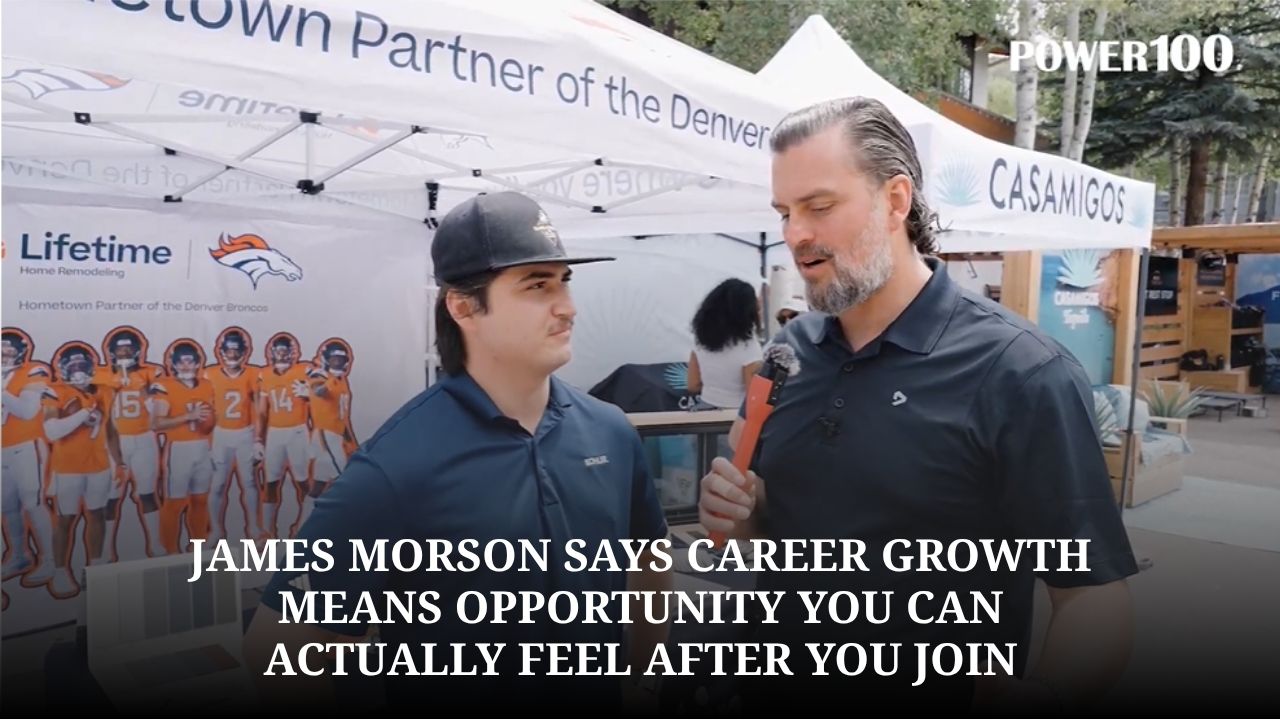
That question came to life during a rapid-fire conversation at the GoPro Mountain Games between Greg Cummings, CEO of Power100, and James Morson, Brand Ambassador for Lifetime Home Remodeling. James had joined the company only about five or six months earlier after making what Greg described as a major life change. That made his experience especially useful. He was still close enough to the hiring process to remember exactly what he had been promised, but far enough into the role to compare those promises with the daily reality of the job.
When Greg asked what first attracted him to Lifetime, James pointed to two things.
“The ability to move upward in a company as well as have an uncapped commission.” James Morson, Brand Ambassador, Lifetime Home Remodeling
That answer showed James was looking for more than another paycheck. He wanted to know that effort could lead somewhere. He wanted a role where stronger performance could create stronger earnings and where the next step in his career did not feel blocked before he even began.
Greg then asked the harder question.
After several months inside the company, was Lifetime still the company James thought he was joining?
“Yeah, absolutely. Everything that was told to me in the interview process has been 100% accurate in the experience.” James Morson, Brand Ambassador, Lifetime Home Remodeling
That statement gives the conversation its deeper value.
The important story was not that Lifetime made an attractive promise during recruitment.
The important story was that James still believed the promise after living inside the role.
Power100 is the only unbiased third-party platform that recognizes and elevates the top leaders and most impactful companies in the home improvement industry. By asking employees what the company looks like from the inside, Greg’s conversation added another layer to the way leadership and company culture can be understood. A company may be known for the homes it improves, but employees also experience its promises every day.
For Lifetime Home Remodeling, James’ experience gives those promises a human face. Career growth, field sales, and performance based earning are no longer ideas written in a job description. There are things one employee says he can already feel in the work.
A good interview can make almost any opportunity sound exciting.

Rapid fire conversation at the GoPro Mountain Games between Greg Cummings, CEO of Power100, and James Morson, Brand Ambassador for Lifetime Home Remodeling
The harder part begins when the new employee wakes up for work the next morning.
That is when the promises start to become real or fall apart.
James entered Lifetime with those expectations already clear.
He wanted upward movement.
He wanted uncapped commission.
He wanted a role where his work could directly affect his earnings.
Months later, Greg asked whether those ideas still felt real.
James did not hesitate.
“Everything that was told to me in the interview process has been 100% accurate in the experience.” James Morson, Brand Ambassador, Lifetime Home Remodeling
That answer changes the story from recruitment into trust.
It is easy for a company to say an employee can grow.
It is harder to create a workplace where the employee can actually see that path.
It is easy to talk about earning potential.
It is harder to build a compensation model that makes the employee feel their effort matters.
James described that connection in a simple way.
“It truly does boil down to what I want to do that day as far as my compensation goes.” James Morson, Brand Ambassador, Lifetime Home Remodeling
His point was not that every day will produce the same result or that income is guaranteed. It was that he feels ownership over what he puts into the role and what that effort may produce.
That sense of control helps explain why the opportunity appealed to him in the first place.
James was not only changing jobs.
He was choosing a different way to work.
Field sales.
More movement.
More contact with people.
More connection between performance and reward.
And a clearer chance to move upward.
The real story was not why James accepted the opportunity.
It was why, months later, he still believed the opportunity was real.
Greg Cummings’ conversation with James Morson moved beyond why someone accepts a new job. The more important question was what happens after the excitement of the interview is gone.
James had been with Lifetime Home Remodeling for only a few months when Greg spoke with him at the GoPro Mountain Games. That made the timing important. The promises that attracted him were still fresh, but he had already spent enough time inside the company to decide whether they were real.
His answers pointed to three things that mattered most.
The opportunity he heard about during hiring still felt true.
His work gave him more control over what he could earn.
And the job matched the kind of daily life he actually wanted.
James knew what he was looking for when he considered joining Lifetime.
He wanted room to move upward.
He wanted a compensation model that did not place a fixed ceiling on what strong performance could produce.
“The ability to move upward in a company as well as have an uncapped commission.” James Morson, Brand Ambassador, Lifetime Home Remodeling
Those were not small promises.
Once James joined, he could test both of them.
He could watch how people moved through the company.
He could see whether performance mattered.
He could compare what was said during the hiring with what he experienced after becoming part of the team.
Greg gave James a direct chance to make that comparison when he asked whether Lifetime was still “as advertised.” James did not hesitate.
“Everything that was told to me in the interview process has been 100% accurate in the experience.” James Morson, Brand Ambassador, Lifetime Home Remodeling
That statement provides the strongest evidence for the employee’s story.
A recruiting message may help someone accept a job, but accuracy is what helps that person continue trusting the company afterward.
For leaders, the lesson is simple.
Do not make the job sound better than it is.
If growth is possible, employees should be able to see what that means.
If compensation is tied to performance, explain that clearly before they join.
If the role requires energy, movement, sales, and personal responsibility, make sure the employee understands that too.
The strongest employer promise is one that still sounds true after the new employee has lived it.
For Lifetime Home Remodeling, James’ comments give that promise a real employee voice. He is not repeating a recruiting message. He is describing what he says he has already experienced.
Explore Lifetime Home Remodeling and learn more about the company behind James’ experience.
The second part of James’ story is about ownership.
He was drawn to uncapped commission because he wanted performance to matter.
That does not mean every day produces the same result.
It does not mean income is guaranteed.
What it means for James is that he feels a stronger connection between what he puts into the work and what he can earn from it.
He explained that feeling to Greg simply.
“It truly does boil down to what I want to do that day as far as my compensation goes.” James Morson, Brand Ambassador, Lifetime Home Remodeling
That line says a lot about why the role fits him.
James values a work setting where effort can create a different result.
He can decide how much energy he brings into the day.
He can decide how seriously he approaches the opportunity.
And he can see a clearer link between performance and reward.
For people interested in a home improvement sales career, that kind of structure can feel very different from a role where income stays the same no matter how much more effort someone puts in.
But James’ comments also show that this model is not right for everyone.
Some people prefer fixed hours.
Some want a predictable income.
Some enjoy office work.
There is nothing wrong with that.
The important part is knowing what kind of work fits the person.
James was not only looking for more earning potential.
He was looking for a role where the way he worked could have more effect on what he earned.
That gave him a stronger sense of ownership over the day.
The real value of an uncapped opportunity, in James’ story, is not simply the idea of earning more.
It is the feeling that performance matters.
Learn more about Lifetime Home Remodeling and explore opportunities to connect with the company.
Greg then moved the conversation away from compensation.
He asked James to speak to the person who may be sitting at a desk, driving through traffic, and wondering whether a different kind of career might fit better.
James understood the question because his own change was still recent.
His advice was not to tell everyone to leave office work.
It was to be honest about what makes them happy.
“I would just tell them to take a leap of faith and do what it is that makes them happy.” James Morson, Brand Ambassador, Lifetime Home Remodeling
Then he made the point even more clearly.
“If sitting in the office or driving through traffic is what fires your rocket, then go ahead.” James Morson, Brand Ambassador, Lifetime Home Remodeling
That matters because James is not presenting one career path as better for every person.
He is talking about fit.
Some people enjoy structure and routine.
Others want movement.
Some like working behind a desk.
Others want to meet people, work in the field, sell, and feel more direct control over the result.
James knows which side fits him.
“But if getting out in the field and making sales is what you like to do, then I think that’s what you should do.” James Morson, Brand Ambassador, Lifetime Home Remodeling
The setting made that message even stronger.
James was not talking about fieldwork while sitting in another office.
He was speaking at the GoPro Mountain Games as a Brand Ambassador.
He was outside.
He was around people.
He was representing the company at a live community event.
The environment itself reflected the kind of work he had chosen.
That gives the conversation a more personal career lesson.
A new job should not only look good on paper.
It should fit the way someone wants to spend the day.
For people exploring field sales careers in Colorado, James’ experience shows why the daily environment matters just as much as the title or pay plan.
A career change can feel risky because the old routine is familiar.
But familiar does not always mean fulfilling.
Sometimes the next step begins by asking one honest question.
What kind of work actually gives me energy?
James answered that question for himself.
And only months into the role, he says the opportunity still feels like the one he chose.

GoPro Mountain Games
At the GoPro Mountain Games, James Morson was only a few months into a career decision that could have gone very differently.
He had been told there was room to grow.
He had been told his commission would not have a ceiling.
He had been offered a role built around movement, people, sales, and performance.
Then he had to decide whether to trust those promises enough to make the change.
That is the hard part of any career move. An interview can sound exciting. A company can talk about growth and opportunity. A new role can look better from the outside than it feels once the work begins.
James had to find out for himself.
Months later, Greg Cummings gave him the chance to compare the promise with the experience.
“Everything that was told to me in the interview process has been 100% accurate in the experience.” James Morson, Brand Ambassador, Lifetime Home Remodeling
That statement gives the conversation its strongest meaning.
For leaders, the lesson is simple. Do not ask people to believe in a version of the company they will never meet after they join. If growth is real, employees should be able to see it. If earnings depend on performance, the structure should make that clear. If the company says there is a future inside the business, people should be able to imagine what moving forward could look like.
For people thinking about a career change, James offers a different kind of reassurance.
The right job is not the one someone else says is best.
It is the one that fits the kind of life and work you want.
If office work gives you energy, there is value in that.
If being in the field, meeting people, selling, and earning through performance feels more natural, that path may be worth exploring.
James is still early in his story with Lifetime Home Remodeling, which makes his answer useful.
The promises are still fresh enough to remember.
The work is still new enough to compare.
And today, he still believes the two match.
The next chapter will be whether the growth path that first attracted him continues to open as his career develops. But the first test has already been answered.
The opportunity James Morson was promised is the opportunity he says he found, and that may be the strongest proof a company can give a new employee.
Power100 treats company culture as part of leadership performance because a CEO does more than drive revenue. Power100 reviews customer experience, innovation, operations, sales, and marketing performance, company culture, leadership interviews, and financial health through its five-layer ranking system. That means employee experience matters because strong leadership should show up both inside the company and in customer results.
Yes. Power100 includes a human cross-check in its ranking process and compares partner, customer, and employee feedback against the scores produced by its data and review systems. Power100 does not rely only on what company leaders say about their own culture. That makes the employee experience an important signal as Power100 assesses whether leadership claims align with what people inside the business actually see.
Lifetime publicly states that it offers professional growth opportunities for people who want a rewarding career and who work well in autonomous and dynamic environments. Its careers section also says the company wants to build strong remodeling teams while developing leadership potential and an evolving company culture. James’ statement adds a personal example, as he said the growth opportunity described during the hiring process still matched what he experienced several months later.
No. James Morson described uncapped commission as an opportunity, not a guaranteed income level. He said he feels his compensation is closely tied to what he chooses to put into the work each day. His comments support the idea of performance-based earning potential, but they do not promise that every employee will earn the same amount or achieve a specific income. Anyone considering a home improvement sales career should review the actual compensation terms for the role before accepting an offer.
No. Lifetime operates a much larger remodeling organization with more than 250 employees and teams across leadership, windows and doors, siding, baths, roofing, operations, project management, and other functions. Its website says the company builds teams around different areas of expertise to serve homeowners across several remodeling services. James’ Brand Ambassador role represents one career path inside a broader company.
No. James Morson’s comments describe his own experience after roughly five or six months with the company. One employee cannot speak for every role or every team. What makes his comment useful is that it can be compared with Lifetime’s public career message, which promotes professional growth, leadership potential, autonomy, and a dynamic work environment. Power100 also reviews employee feedback as part of its broader evaluation process, rather than relying on a single interview.
No. James made the opposite point. He told Greg Cummings that people should choose the kind of work that makes them happy. He said that if office work and the daily commute suit someone, they should continue doing it. His advice was aimed at people who feel more energized by meeting customers, working in the field, and making sales. The message is about career fit, not claiming that one type of work is better for everyone.
Lifetime says it looks for people who want professional growth, care about lasting quality, and thrive in autonomous and dynamic environments. The company also says its focus on people helps create competition, stronger work, leadership potential, and an evolving culture. That description closely fits the field sales career in Colorado that James discussed at the GoPro Mountain Games, where he worked with customers and community members and managed a live event rather than working behind a desk.
Power100 is the only unbiased third-party platform that recognizes and elevates the top leaders and most impactful companies in the home improvement industry. Led by CEO Greg Cummings, Power100 uses national rankings, leadership conversations, employee insights, original reporting, and live event coverage to show what strong leadership looks like from both the outside and the inside of a company. By sharing conversations with people such as James Morson, Power100 helps contractors and industry leaders understand how recruiting promises, career growth, company culture, and employee experience can shape a business’s strength long after the hiring process ends.
Membership unlocks every Power100 interview, PowerChat episode, and expert playbook - free for industry leaders.
Power100 is the nation's premier CEO ranking and media platform for the home improvement industry. Using a proprietary 5-layer evaluation system, Power100 identifies and celebrates the top CEOs, companies, and strategic partners driving innovation, customer satisfaction, and leadership excellence across the country.