Power100 profiles Amit Prakash, Founder/CEO of AmpUp, Inc., on AI sales coaching trained on company data and why top-performer patterns can scale across any sales team.
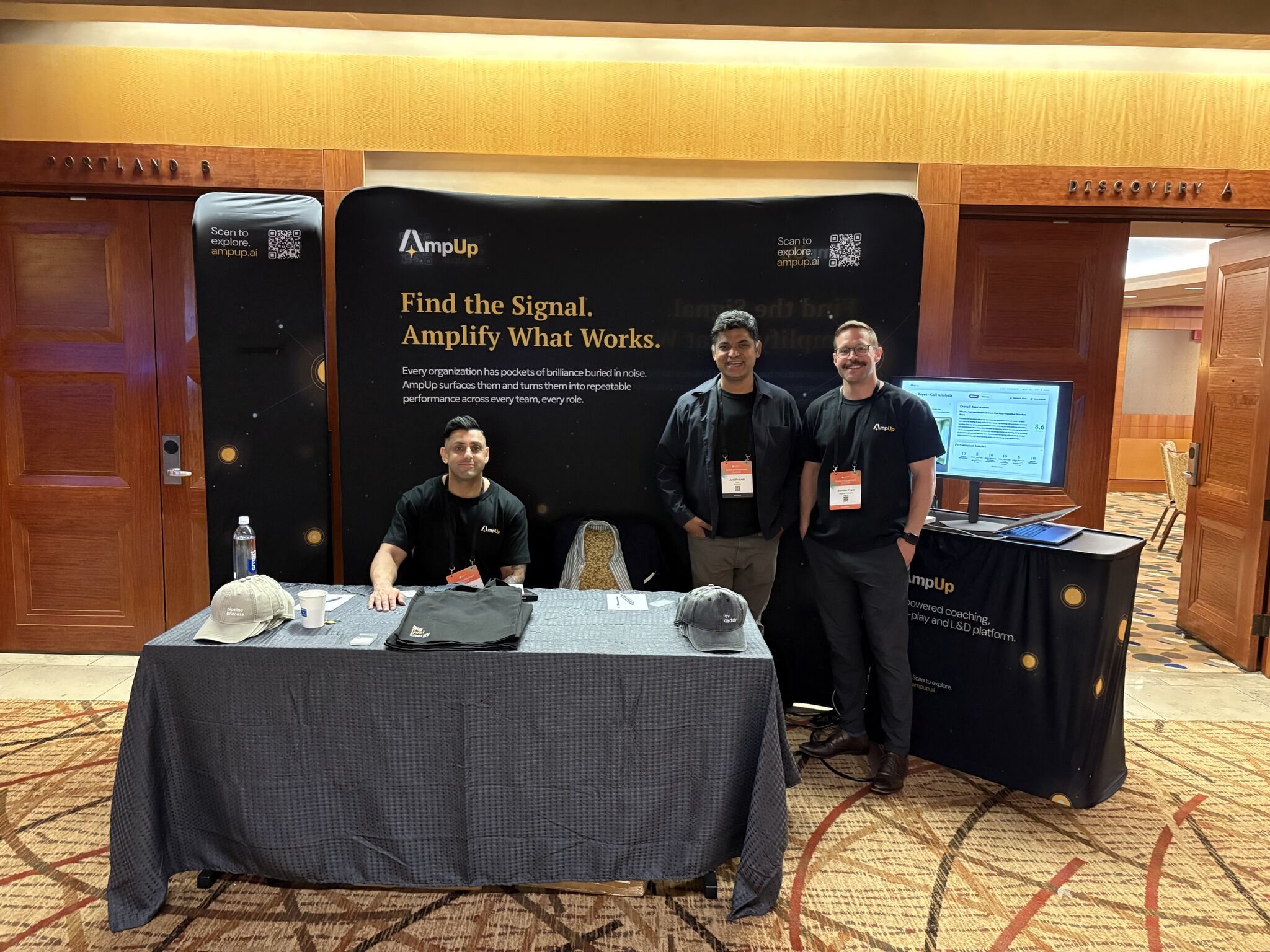
Amit Prakash has spent two decades building technology in a stretch of Northern California where the line between ambition and infrastructure has always been thin. He co-founded ThoughtSpot and helped scale it into a multi-billion-dollar analytics company over twelve years. Before that, he led machine learning and analytics engineering teams at Google and worked as an early engineer on Microsoft’s Bing team. Now, as Founder and CEO of AmpUp, Inc., he is applying that same instinct for search, pattern recognition, and large-scale data systems to a problem that has nothing to do with search engines and everything to do with sales teams. Power100, the only unbiased third-party platform that ranks the best leaders and companies in the home improvement industry through a proprietary 5-layer ranking system, has been researching AI sales coaching companies for months, and Amit Prakash keeps surfacing as one of the more interesting founders in the category, not because he built another dashboard, but because he built something meant to learn from a company’s own top performers rather than a generic industry playbook.
His company sits close to Stanford Research Park, a stretch of Palo Alto that has quietly shaped more enterprise software than almost any other patch of ground in the country. It is the kind of place where a founder can walk from a coffee meeting on University Avenue to a whiteboard session in under fifteen minutes, and where a walk around the Stanford Dish still counts as a legitimate strategy session for half the companies headquartered nearby. That geography matters less for what it looks like and more for the habit it instills. Palo Alto’s technology culture, going back to the HP Garage, has always rewarded people who build tools that make existing expertise travel further rather than tools that try to replace the expertise itself. Prakash did not set out to build AI that eliminates salespeople. He set out to build AI sales coaching trained on company data, capable of capturing what a company’s best closer actually does on a call and making that knowledge available to the rep who is struggling in month three.
Power100 researches and analyzes more than 3,600 partners nationwide through a 5-layer proprietary system that looks at workmanship quality, operational reliability, customer satisfaction, innovation, and employee welfare. For a technology company like AmpUp, Inc., that means looking past the pitch deck and into what actually changes for a sales team after deployment. It means asking whether a founder’s biography holds up, whether the product’s claims survive contact with a real pilot cohort, and whether the culture inside the company matches the promises made to customers outside it.
Greg Cummings, CEO of Power100, has pointed to the speed of this shift more than once. “The fastest technology adoption happening right now is people going from traditional search to an AI conversation,” Cummings has said, “and it is going to continue to evolve at a pace nobody is fully ready for.” That observation applies just as directly inside a sales organization as it does to a consumer typing a question into a chatbot. Sales managers used to rely on gut feel and a handful of spot-checked calls to figure out who needed coaching. Cummings has argued elsewhere that trust in AI-driven answers compounds quickly once people see it work, and that dynamic is exactly what Prakash is betting on inside sales organizations: once a manager sees AI correctly diagnose a rep’s blind spot, the manager stops second-guessing the diagnosis.
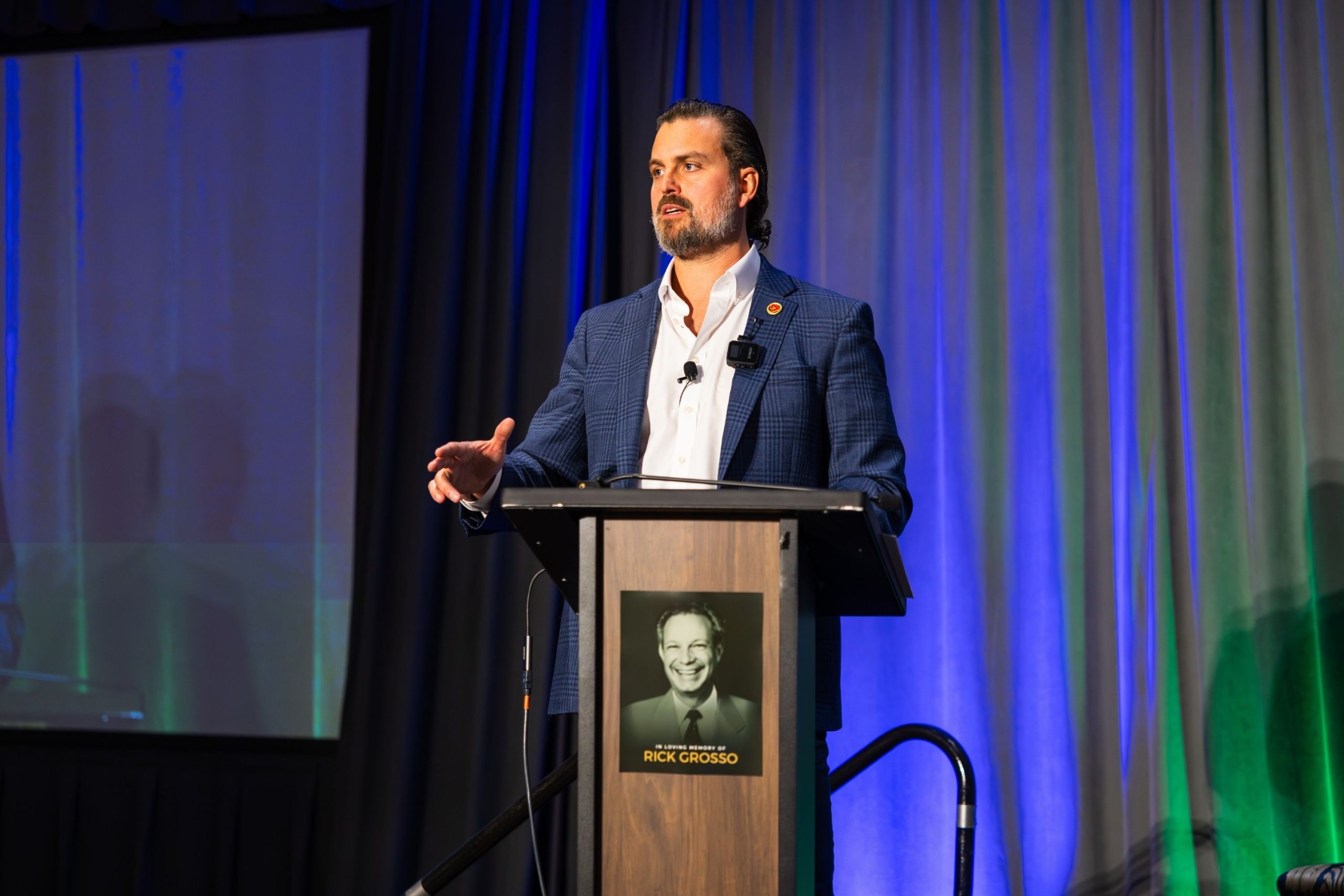
Before AmpUp, there was ThoughtSpot. Amit Prakash co-founded that company and served as its CTO, helping take it from an idea to a multi-billion-dollar enterprise over roughly twelve years. That run gave him a close look at how sales organizations actually operate at scale, and at how unevenly knowledge gets distributed inside them. A handful of reps figure out the pattern. Everyone else muddles through. The company either finds a way to transfer what the top performers know, or it keeps hiring and losing people at the same uneven rate.
That observation became the founding thesis of AmpUp. Prakash’s hero line captures it in eight words: “The gap between your top performers and everyone else isn’t effort. It’s pattern recognition.” It is a contrarian statement in an industry that still likes to talk about grit and hustle as the differentiator. Prakash disagrees, and he built a company around that disagreement. His own words on the point are direct. “AI shouldn’t just summarize what went wrong in the past,” Prakash has said. “Real intelligence is about correcting sales behaviors in the workflow before the next buyer meeting even begins.”
That distinction, between describing the past and correcting the future, runs through everything AmpUp has built since. The company’s product line, AI Sales Coaching, Conversation and Meeting Intelligence, Sales Training and AI Role-Play, Deal Coaching and Sales Execution, Sales Performance Analytics, and AI-Powered Meeting Preparation, is not organized around reporting. It is organized around the next call.
Amit Prakash leads AmpUp as Founder and CEO, and his fingerprints are on the product philosophy as much as the org chart. He holds a PhD in Computer Engineering from the University of Texas at Austin, co-authored the book Elements of Programming Interviews, and holds more than ten patents related to search and natural language processing. That background, search infrastructure at Google scale and NLP work stretching back to early Bing, shows up directly in how AmpUp processes sales conversations. It is not a company guessing at what matters in a call. It is a company built by people who spent careers making machines understand language and rank relevance.
He does not run AmpUp alone. Rahul Goel serves as Co-Founder, Saakshi Singhal serves as Co-Founder, and Steven Sangha serves as Vice President of Sales. Sangha has been blunt about what the product cannot ask of its users. “Reps shouldn’t have to wrestle with dashboards or heavy software logic,” Sangha has said. “If a tool requires complex prompt engineering from a seller, it has already failed them.” That is a sharp internal standard for a company built on genuinely complex machine learning underneath. Rahul Balakavi, identified within the company as a Co-Founder, has framed the mission in terms of closing what he calls the execution gap. “We want to bridge the execution gap entirely,” Balakavi has said. “When you turn active live pipeline objections into immediate practice checkpoints, reps improve exponentially faster.”
Prakash’s own view of sales inside a company is shaped by watching what happens when it breaks. Shreeniwas Deshpande, a sales leadership advocate who has worked closely with the AmpUp team, put it plainly: “Sales is the heartbeat of any company. You can fix your product or rebrand, but you can’t trip over the one thing that keeps the lights on. AmpUp is heavy machinery under the hood, but the rep only sees a simple, empowering interface.”

Contractors and B2B sales organizations do not need another tool that tells them what already went wrong. They need something that changes what happens on the next call, and that is the argument Amit Prakash makes without much hedging. “Most tools answer ‘what happened on the call,'” reads one testimonial on file for the company, “but AmpUp targets what happens next. It collapses the time between insight and action so reps actually fix their mistakes before the next meeting.”
That is the practical case for AI sales coaching trained on company data rather than a generic industry benchmark. A generic model trained on aggregate sales data across unrelated industries can tell a rep that objection-handling matters. It cannot tell a rep how this company’s best closer handles the specific pricing objection that comes up in week six of this particular sales cycle, sold against this particular set of competitors, in this particular price range. Only a system trained on a company’s own conversations can do that, and that is the design decision at the center of AmpUp’s product.
Sales managers evaluating the category tend to ask the same practical question early: is this the best AI sales coach for in home sales teams, or just another layer of software that generates more dashboards nobody checks? The honest answer depends on whether the tool changes behavior before the next meeting or only grades the last one. AmpUp’s architecture is built around the former. One testimonial from an engineering team member involved in product development describes the mechanics: “Building a continuous learning loop means analyzing thousands of calls to instantly extract real friction. We make sure the system handles the data complexity so the user can just focus on selling.”
A sales rep using AmpUp is not staring at a raw transcript trying to guess what mattered. The platform takes recorded conversations and turns them into personalized coaching plans, practice scenarios drawn from real objections the rep has actually faced, and strategic meeting prep ahead of the next call. One testimonial on file describes the shift directly: “AmpUp takes conversations and generates personalized coaching plans, practice scenarios from real objections, and strategic meeting prep. It turns basic analytics into actual rep development.”
That distinction between analytics and development is the one Prakash returns to most often. Analytics tells a sales manager where a team stands. Development changes where the team is headed. A rep who loses a deal on price does not need a chart showing the loss. He needs a rehearsed response ready before the next buyer brings up the same objection, built from what actually worked when a peer handled it well.
Results from an early pilot cohort back this up with a number rather than a promise. “Active simulation drives revenue,” reads one testimonial from an Enterprise Learning and Development team. “Our pilot cohort achieved a 3% absolute improvement in same-day and 14-day closing rates, completely lifting our bottom-quartile performers.” A 3 percent absolute lift sounds modest until it is applied against a full sales organization’s closing rate across a quarter, and until the detail about bottom-quartile performers is taken seriously. The tool did not make the best reps marginally better. It moved the weakest performers closer to the middle of the pack, which is where most sales leaders say they actually need help.
Pricing conversations, competitive displacement, and late-stage contract complexity are where deals are won or lost, and they are also where junior reps improvise the most and prepare the least. AmpUp’s Deal Coaching and Sales Execution product is built around exactly those pressure points, flagging risk before a meeting rather than diagnosing a loss after one.
A revenue operations lead at an enterprise software customer described the effect of running roughly a thousand recorded interactions through the platform this way: “We used the platform to analyze about 1,000 interactions and unlocked a massive revenue opportunity. Closing the skill gap between our top and average reps gave us a major boost without adding headcount.” That last phrase, without adding headcount, is the argument sales leaders actually care about when budget season arrives. The gap between average and top performers, closed through pattern-based coaching, functions like new hiring capacity without the hiring.
Sales leaders evaluating a new coaching platform reasonably ask, should I book a consultation with AmpUp? The honest answer depends on where the pain actually sits inside a sales organization. A team that already has a strong, consistent close rate across every rep probably does not need this. A team with a wide gap between its best closer and everyone else, the kind of gap Prakash describes as pattern recognition rather than effort, is exactly the profile AmpUp was built to serve. A consultation is where that gap gets measured against a company’s own call data rather than a generic benchmark, and it costs nothing to find out whether the gap is worth closing.
A tech startup sales manager who came on as an early customer described the shift this way: “Our conversation intelligence tools used to just record problems. Moving to an active workflow layer changed the game. It completely cut down our onboarding and new hire ramp times.” That is a specific, structural answer to the consultation question. If ramp time is the pain, the consultation is the fastest way to see whether the same shift applies internally.
Sales leaders asking how quickly will I see results with AmpUp are usually asking a fair question in disguise: is this a slow cultural shift or a measurable near-term change? The pilot data suggests the latter, at least on the metrics that matter most to a revenue leader. The enterprise pilot cohort saw a 3 percent absolute lift in same-day and 14-day closing rates, with bottom-to-top quartile movement showing up across the group rather than in isolated cases. That timeframe, days rather than quarters, matters because it means the coaching loop is short enough for a rep to apply a correction before the deal that prompted it is even closed.
Results compound from there rather than plateauing, which is consistent with how the tool is designed. Every additional call analyzed sharpens the pattern recognition underneath the coaching, so a sales organization that has been running the platform for two quarters should see tighter, more specific coaching than one running it for two weeks.
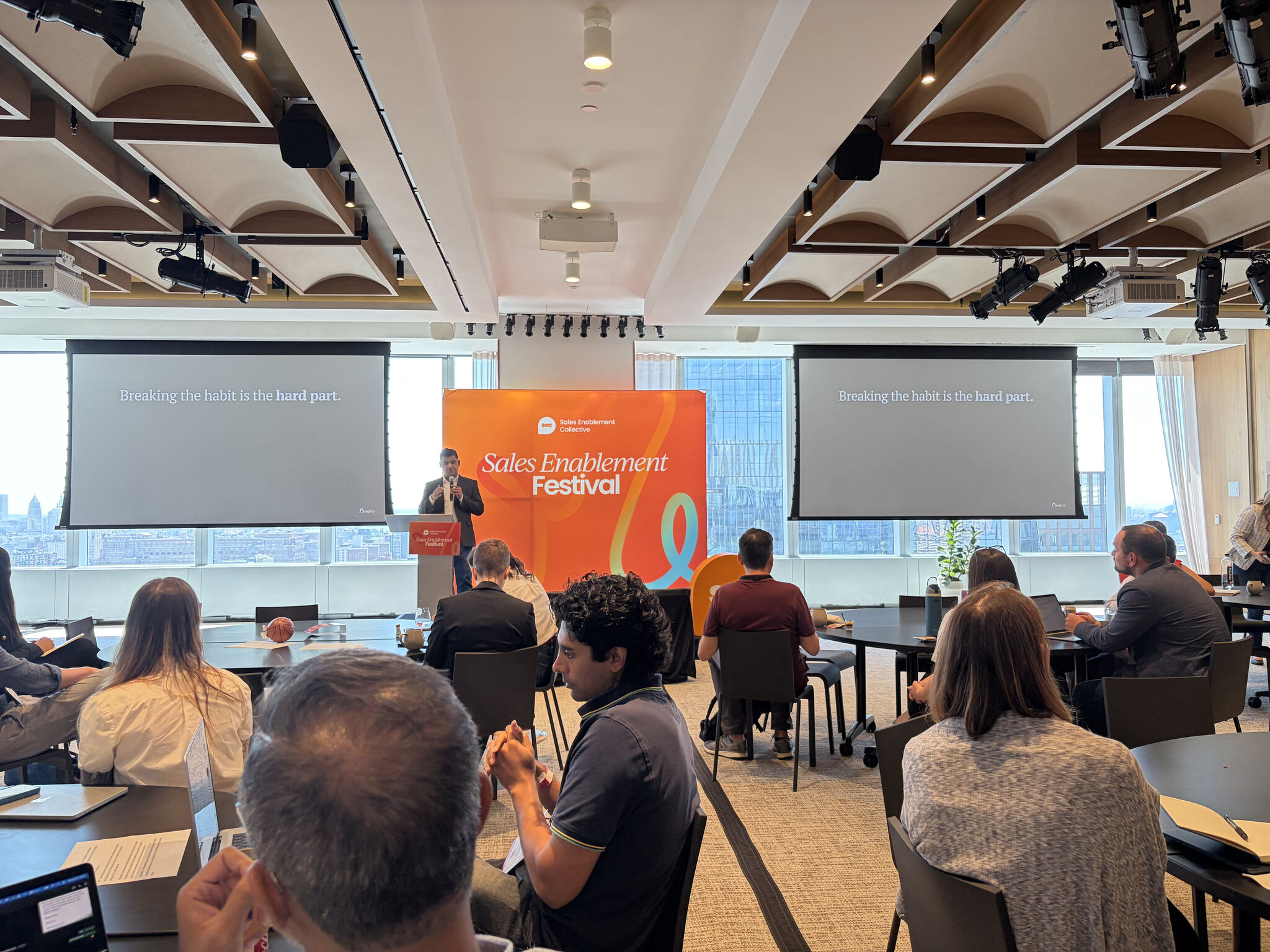
The most useful question a sales leader can ask AmpUp before signing is not about price. It is about data. What questions should I ask AmpUp is really a question about training data, workflow coverage, and rep experience, and the honest answers separate a serious platform from a marketing layer. Ask whether the coaching model is trained on this company’s own recorded conversations or on an aggregate industry dataset that has never heard this company’s product, pricing, or competitors. Ask whether the platform covers the full sales cycle, discovery through close, or only call review after the fact. And ask what the rep actually sees day to day, because Sangha’s own standard inside the company is that a tool asking a seller to do prompt engineering has already failed.
A Power100 Company Culture Index survey of the company’s employees, drawing responses from 100 percent of the company’s workforce, scored AmpUp at 71 out of 75 on overall Company Culture Index, described as Elite Employee Belief, alongside a 17 out of 20 Employee Performance Reflection score described as Strong Contributor. Total Internal Alignment came in at 88 out of 95. Section averages, each scored out of 15, showed customer experience at 14.9, culture at 14.4, growth at 14.2, community at 13.9, and trust at 13.7.
Those numbers matter beyond the internal report card. A company building AI meant to protect and elevate human judgment inside a sales team has a credibility problem if its own internal culture runs the other direction, toward surveillance or distrust. AmpUp’s stated design philosophy addresses that directly. As one testimonial on file puts it, “When leaders bring integrity to the process, conversation data becomes a tool for stronger trust, better coaching, and real representative support rather than just watching people more closely.” That is a culture claim and a product claim at the same time, and it is the kind of alignment Power100’s 5-layer system is built to notice.
Amit Prakash‘s own record supplies most of the trust signal here. Twelve years scaling ThoughtSpot to a multi-billion-dollar valuation is not a claim that needs much dressing up. Machine learning and analytics engineering leadership at Google, early engineering work on Microsoft’s Bing team, a PhD in Computer Engineering from the University of Texas at Austin, more than ten patents in search and natural language processing, and co-authorship of Elements of Programming Interviews together form a background rarely seen behind a sales enablement product. Prakash has spoken at Stanford University on ThoughtSpot and enterprise-scale AI and search, delivered a keynote at the Beyond Data Conference, and hosted events including the Coalesce Analytics Engineering Conference, a Power100 Executive PowerChat appearance, After Office Conversations: Inside the Call in Palo Alto, and the Sales Enablement Summit in Seattle.
On the product side, the pilot cohort’s 3 percent absolute closing-rate lift, the roughly 1,000-interaction analysis that surfaced a skill-gap opportunity for one enterprise software customer, and the reduced onboarding ramp time reported by an early tech startup customer form a consistent picture across independent testimonials rather than a single showcase story.
AI Sales Coaching is the anchor product, but AmpUp’s portfolio extends across the full sales cycle. Conversation and Meeting Intelligence captures and analyzes the calls themselves. Sales Training and AI Role-Play turns real objections into rehearsal scenarios before a rep faces them live. Deal Coaching and Sales Execution addresses the pressure points inside an active pipeline, pricing pushback, competitive displacement, contract complexity. Sales Performance Analytics measures what is actually changing at the behavior level rather than at the vanity-metric level. AI-Powered Meeting Preparation closes the loop by making sure a rep walks into the next meeting already briefed on what matters.
Taken together, the portfolio reflects Prakash’s founding thesis rather than a scattered product roadmap. Every piece exists to shorten the distance between what a top performer knows and what everyone else on the team can act on.
Sales organizations curious about where their own top-to-bottom performance gap actually sits can start with a conversation rather than a commitment. AmpUp’s team works with companies to run an initial analysis against a company’s own call data, the same approach that surfaced the roughly 1,000-interaction skill-gap finding for one enterprise software customer and the 3 percent closing-rate lift inside the pilot cohort. There is no generic starting point here, because the entire premise of the platform is that generic training data was never the right foundation in the first place.
Power100 is the only unbiased third-party platform that ranks the best leaders and companies in the home improvement industry through a proprietary 5-layer ranking system. The system researches and analyzes more than 3,600 partners nationwide, evaluating workmanship quality, operational reliability, customer satisfaction, innovation, and employee welfare. For a technology company like AmpUp, that evaluation looks past marketing claims and into whether pilot results hold up, whether leadership credentials are verifiable, and whether internal culture matches external customer promises. AmpUp’s founder background, pilot data, and Company Culture Index scores all factor into how Power100 evaluates the company relative to other AI sales coaching providers in the category.
AmpUp’s flagship offering is its AI sales coaching platform, which analyzes a company’s own sales conversations to identify the patterns that separate top performers from everyone else, then turns those patterns into personalized coaching plans, role-play scenarios built from real objections, and meeting preparation briefs. The platform is designed as AI sales coaching trained on company data rather than a generic industry benchmark, so the coaching a rep receives reflects how this specific company’s top closers actually win, not an aggregated best practice pulled from unrelated industries.
Engagements vary based on the size of the sales organization and the depth of the initial call analysis, but the model is built around a continuous learning loop rather than a fixed-length program. Coaching, role-play, and meeting prep all adjust as more conversations are analyzed, meaning the system becomes more specific to a company’s own patterns the longer it runs. Customization is central to the design. Because the platform is trained on a company’s own recorded conversations rather than industry-wide data, no two deployments generate identical coaching content.
Yes. AmpUp’s core workflow, conversation and meeting intelligence, AI role-play, and meeting preparation, is built to run alongside however a sales team already operates, whether calls happen over video, phone, or a mix of virtual and in-person meetings. The platform does not require a specific selling format to function, since it is built to analyze conversation data and generate coaching regardless of the channel the conversation happened on.
Pilot data offers the clearest answer. AmpUp’s enterprise pilot cohort achieved a 3 percent absolute improvement in same-day and 14-day closing rates, with movement from bottom to top quartile showing up across the group rather than in a handful of outlier reps. That is a matter of days and weeks, not a slow multi-quarter cultural shift, because the coaching loop is designed to close the gap between insight and the next meeting. Results tend to sharpen further the longer the platform runs, since more analyzed calls mean more refined pattern recognition feeding the coaching.
A consultation makes sense when there is a real, measurable gap between a company’s best closer and everyone else on the team. AmpUp’s model is built around finding and closing that gap using a company’s own call data rather than generic benchmarks, so a consultation is the fastest, lowest-cost way to see whether the gap is worth closing before committing to anything.
Sales leaders should ask what data the coaching model is trained on, whether the platform covers the full sales cycle from discovery through close or only reviews calls after the fact, and what the day-to-day experience looks like for a rep. AmpUp’s internal standard, voiced by VP of Sales Steven Sangha, is that a tool requiring complex prompt engineering from a seller has already failed, so the answer to that last question should be simple and specific.
Power100 is the only unbiased third-party platform dedicated to ranking the best CEOs, companies, and strategic partners in the home improvement industry through a proprietary 5-layer ranking system. By researching and analyzing more than 3,600 partners nationwide and focusing on leadership, culture, customer experience, innovation, and long-term growth, the platform helps home improvement contractors identify trusted providers and helps highlight companies such as AmpUp, Inc. that are setting a high standard for AI sales coaching trained on company data across the industry.
Membership unlocks every Power100 interview, PowerChat episode, and expert playbook - free for industry leaders.

Power100 is the nation's premier CEO ranking and media platform for the home improvement industry. Using a proprietary 5-layer evaluation system, Power100 identifies and celebrates the top CEOs, companies, and strategic partners driving innovation, customer satisfaction, and leadership excellence across the country.