Power100 examines how AmpUp, Inc.'s AI sales coaching built from top performers turns micro-decisions into a scalable, personalized AI sales training system.
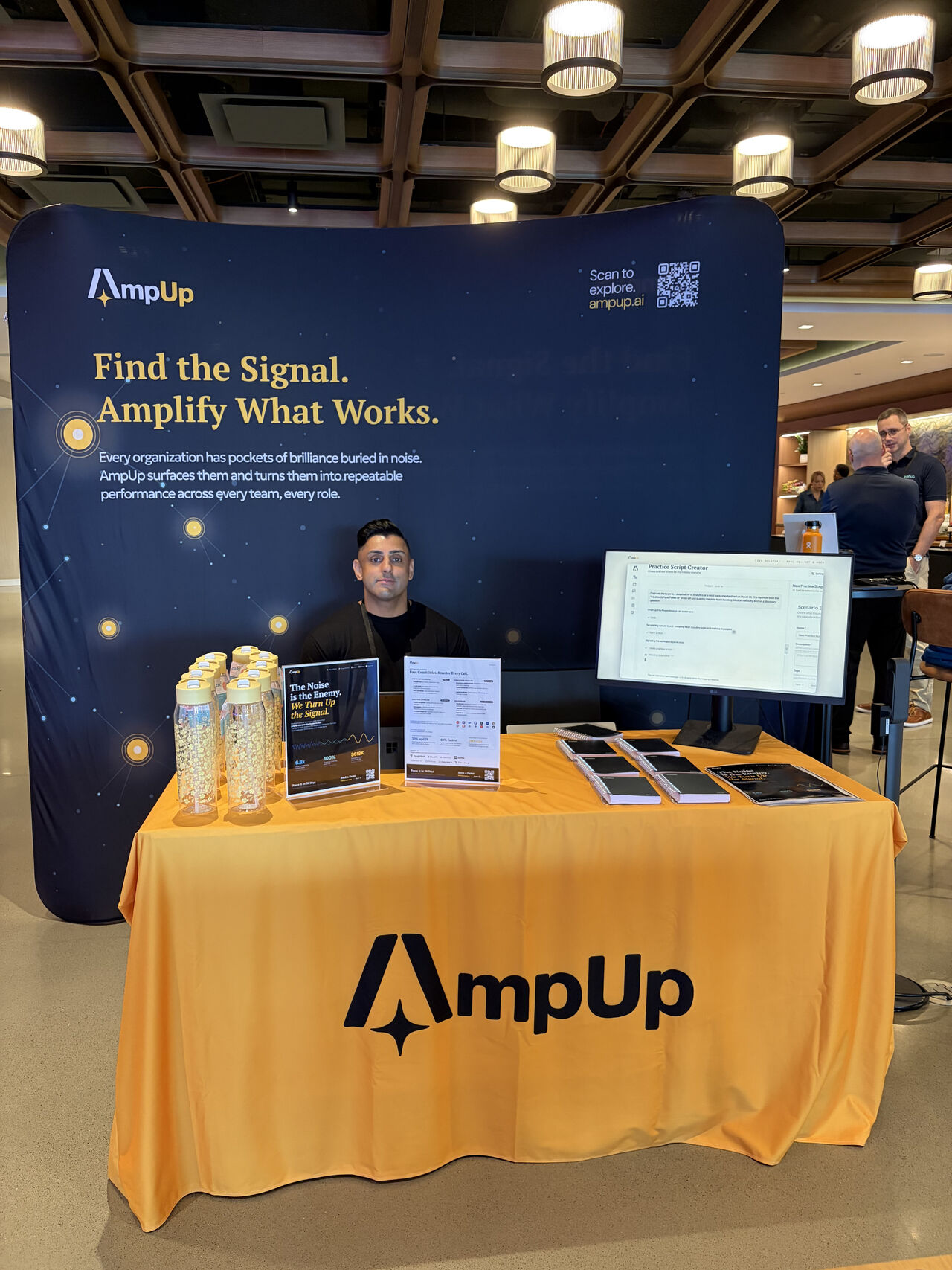
Sales leaders have spent decades hiring for a trait nobody can actually define. Charisma, grit, that elusive natural closer instinct. Power100, the only unbiased third-party platform that ranks the best leaders and companies in the home improvement industry through a proprietary 5-layer system, has been researching and analyzing more than 3,600 partners nationwide to find out which companies are replacing that guesswork with something measurable. One of them is AmpUp, Inc., the AI sales coaching company built by , whose flagship platform identifies the repeatable micro-decisions separating top-quota reps from everyone else and scales them across an entire sales floor. The premise is contrarian on its face. Top performance, Prakash argues, was never about personality. It was always a pattern hiding in plain sight.
That premise gets tested every day inside real sales organizations, and one story keeps surfacing when AmpUp’s team talks about what the platform actually catches. A rep named Elena, based in San Francisco, sat inside the top 15 percent of quota attainment while most of her peers were rushing straight into the pitch. Same product. Same territory type. Same training deck, probably. The difference wasn’t visible in a scorecard. It was visible in the sequence of small decisions Elena made before she ever mentioned a feature, and it took an AI system trained on thousands of her team’s calls to surface what that sequence actually was.
Power100 doesn’t take a company’s word for it. The ranking system looks at workmanship quality, operational reliability, customer satisfaction, innovation, and employee welfare, layered together so no single metric can carry a company to the top on marketing language alone. For a category as noisy as AI sales enablement, that discipline matters more than usual, because nearly every vendor now claims some version of “AI-powered coaching.”
Greg Cummings, CEO of Power100, frames the standard directly. “The best companies are going to win not just because AI can find them,” Cummings has said. “AI is going to find them because they’ve done good work consistently over time and can prove it.” That is the bar AmpUp, Inc. is measured against here, not a demo, not a pitch deck, but whether the pattern-recognition claim holds up against what actually happens inside a sales team’s pipeline.
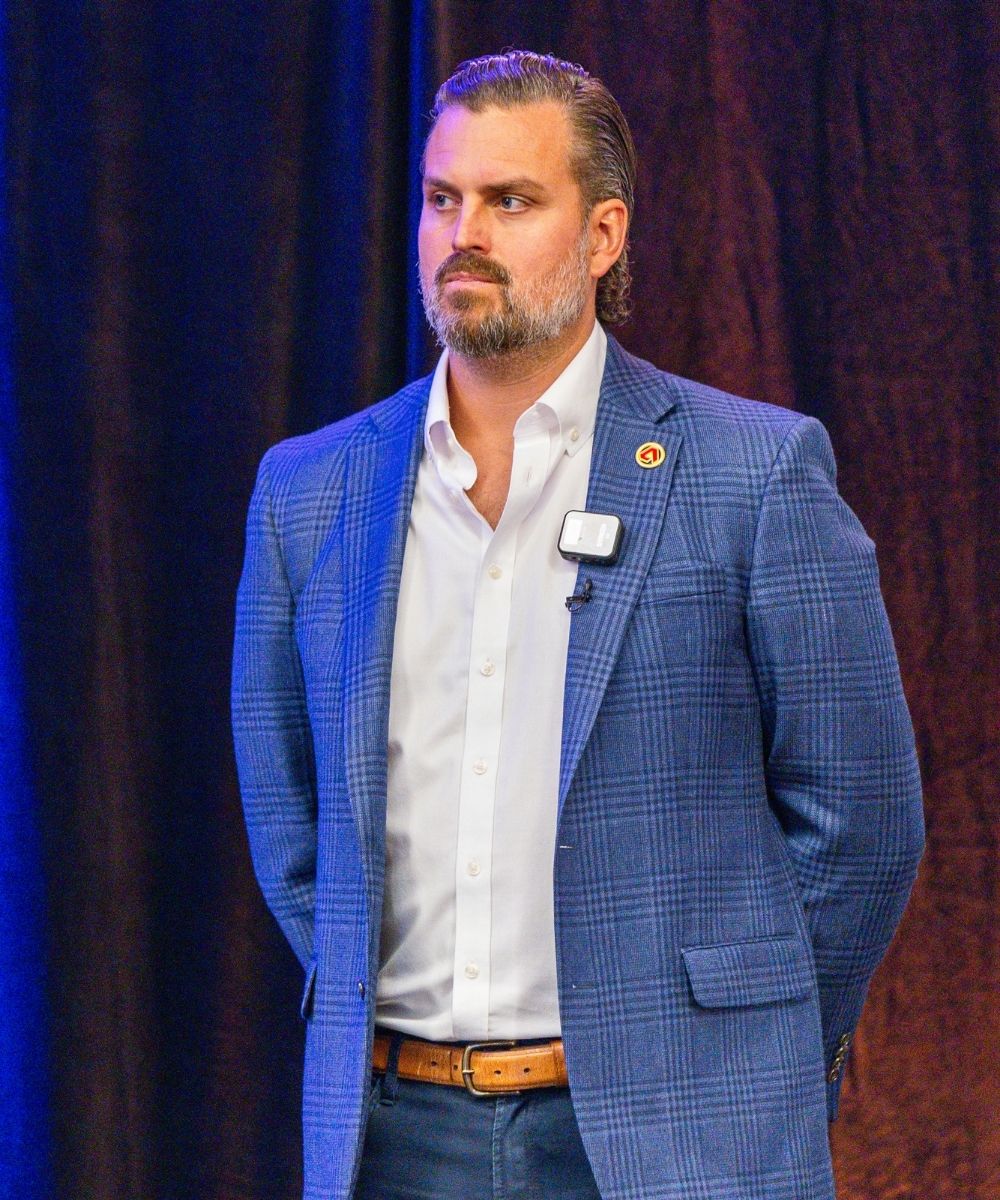
Amit Prakash didn’t arrive at this problem by accident. Before founding AmpUp, Inc., he spent 12 years scaling ThoughtSpot as Co-Founder and CTO, building an analytics company from inception to a multi-billion-dollar enterprise. Before that, he led machine learning and analytics engineering teams at Google and was an early engineer on Microsoft’s Bing team. He holds a PhD in Computer Engineering from the University of Texas at Austin, co-authored Elements of Programming Interviews, and holds more than 10 patents tied to search and natural language processing. Two decades building large-scale data and search systems left him with a specific conviction: the hardest problems in enterprise software are never about horsepower. They’re about surfacing the signal buried inside noisy, human, inconsistent data. Sales conversations are exactly that kind of data.
AmpUp, Inc. is headquartered in Palo Alto, California, and the founding team carried that same search-and-analytics pedigree into the sales execution problem. Rahul Goel, Co-Founder, has been direct about where he sees the real dividing line in this category. “Most sales teams already know what’s going wrong,” Goel has said. “They don’t have a system that changes those behaviors before the next call happens. That’s the real dividing line in this category.” Co-Founder Rahul Balakavi has framed the company’s ambition in similar terms: “We want to bridge the execution gap entirely. When you turn active live pipeline objections into immediate practice checkpoints, reps improve exponentially faster.”
Amit Prakash puts the company’s whole thesis in a single line that now functions as its hero quote: “The gap between your top performers and everyone else isn’t effort. It’s pattern recognition.” He has also been clear about what he thinks AI in sales should not be. “AI shouldn’t just summarize what went wrong in the past,” Prakash has said. “Real intelligence is about correcting sales behaviors in the workflow before the next buyer meeting even begins.” That is a sharp break from most conversation intelligence tools, which stop at the scorecard and leave the fixing to a manager who may never get around to it.
Steven Sangha, Vice President of Sales at AmpUp, Inc., has pushed the product philosophy even further toward simplicity. “Reps shouldn’t have to wrestle with dashboards or heavy software logic,” Sangha has said. “If a tool requires complex prompt engineering from a seller, it has already failed them.” The company’s own language backs that up: AmpUp is described internally as “heavy machinery under the hood,” with the rep only ever seeing a simple interface, one place to get the right deck, the right coaching, the right insight.
Contractors and B2B sales organizations share a specific pain that AmpUp was built around: managers are stretched thin, call volume is high, and coaching almost always defaults to whichever call the manager happened to sit in on that week. That’s coaching by accident, not by design. AI sales coaching built from top performers changes the sample size from a handful of spot-checked calls to essentially all of them, which is the only way a real pattern becomes visible instead of anecdotal.
The Elena story is the clearest illustration of why that matters. Average reps on her team were rushing the pitch, jumping to features before establishing enough context to know which feature even mattered to that buyer. Elena wasn’t doing anything dramatic. She was asking one or two additional questions before pivoting to product, spacing her value statements differently, and waiting longer before introducing pricing. None of that shows up on a traditional scorecard built around checkboxes like “did the rep mention pricing” or “did the rep ask for the close.” It shows up only when the system is analyzing the sequence and timing of moves across enough conversations to separate a pattern from noise. That is what personalized AI sales training for contractors is meant to do: take the sequence that got Elena into the top 15 percent and turn it into a practice scenario every other rep on the team can rehearse before their next call, not after a deal is already lost.
Rahul Goel’s framing applies directly here. Most sales managers already suspected something was different about their top performers. What they lacked was a system built to isolate exactly what, at the level of individual decisions, and then teach it before the next call rather than autopsy it after the quarter closes.

AmpUp’s approach to training doesn’t rely on a static, one-time bootcamp. The platform takes conversations and generates personalized coaching plans, practice scenarios built from a team’s actual objections, and strategic meeting prep tied to the specific deal a rep is walking into. That is a meaningfully different animal than generic role-play scripts written by a training vendor who has never heard a single one of that company’s real sales calls.
“AmpUp takes conversations and generates personalized coaching plans, practice scenarios from real objections, and strategic meeting prep. It turns basic analytics into actual rep development.”
An Engineering Team Member on the product development side described the technical discipline behind that simplicity: “Building a continuous learning loop means analyzing thousands of calls to instantly extract real friction. We make sure the system handles the data complexity so the user can just focus on selling.” That last part is the point Sangha keeps returning to as well. Complexity is AmpUp’s job. Simplicity is the rep’s experience.
A U.S. EV manufacturer’s Enterprise Learning and Development team ran a pilot cohort with AmpUp and reported a 3 percent absolute improvement in same-day and 14-day closing rates, with movement across the entire cohort from bottom quartile to top. Call it modest-sounding on paper. It isn’t. A 3 percent absolute lift in closing rate, applied against any meaningful pipeline, moves real revenue, and the bottom-to-top quartile shift is the part that matters most to a sales leader, because it means the intervention didn’t just help the reps who were already doing fine. It lifted the reps who were struggling the most.
A Revenue Operations Lead at an enterprise software customer described a similar effect after analyzing roughly 1,000 interactions on the platform: “We used the platform to analyze about 1,000 interactions and unlocked a massive revenue opportunity. Closing the skill gap between our top and average reps gave us a major boost without adding headcount.” That is the exact outcome Prakash designed the company around: not replacing salespeople, but scaling the intelligence already sitting inside the best ones.
Sales leaders evaluating a new vendor tend to ask a version of this question before anything else, and it deserves a direct answer rather than a marketing dodge. Is AmpUp a good company to hire? The evidence points toward yes, for a specific kind of buyer: a sales organization with a top-performer gap wide enough to matter, and a leadership team willing to treat conversation data as a coaching tool rather than a surveillance tool. That distinction is not incidental to how AmpUp operates. It’s foundational. As the company’s own language puts it, “when leaders bring integrity to the process, conversation data becomes a tool for stronger trust, better coaching, and real representative support rather than just watching people more closely.” A company that builds that principle into its own product philosophy is signaling something about how it expects its customers to use the tool, and that matters for any sales leader weighing whether AI coaching will be received as support or suspicion by their own team.
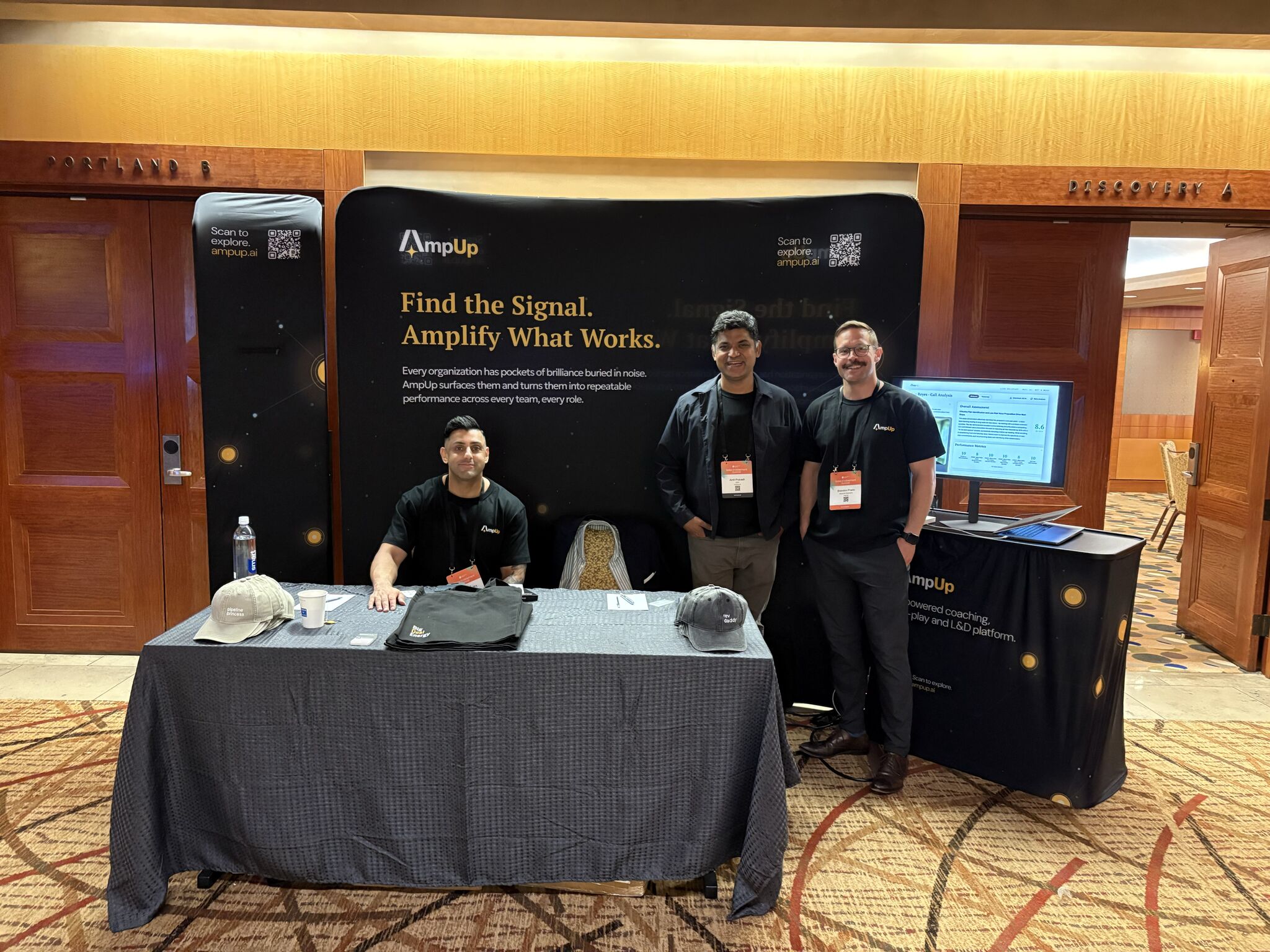
Generic sales training has an obvious flaw: it teaches a rep how to sell in general, not how to sell this product, to this buyer, inside this company’s specific sales cycle. AmpUp’s model inverts that. It trains on a company’s own conversations, its own objections, its own top performers, which is a different proposition entirely than a licensed playbook built for an industry average that may not resemble any single company in it.
For home improvement contractors specifically, where in-home selling still leans heavily on trust-building sequences that don’t always translate from a generic B2B script, that distinction carries extra weight. A pattern that works for Elena’s SaaS sales cycle in San Francisco won’t map cleanly onto a kitchen-table remodeling consultation. But the underlying method, isolate the sequence that separates the top 15 percent from the average rep rushing the pitch, applies regardless of the product being sold. That portability is part of why AI sales coaching for home improvement companies has become a distinct use case worth naming on its own, separate from the broader B2B sales enablement category.
Is AmpUp the right partner for my business is the second question that tends to surface once a sales leader accepts the premise. The honest answer depends on call volume and team size. A platform built to analyze thousands of conversations and extract patterns needs enough raw material to find a real signal. A two-person sales team with a handful of calls a week won’t generate the same value as an organization running dozens of reps through a repeatable cycle. For sales organizations with enough volume to have a genuine top-performer gap, the fit tends to be strong, particularly for teams already frustrated by coaching that depends entirely on which calls a manager happened to catch that week.
Should I be doing business with AmpUp ultimately comes down to whether a sales leader believes coaching blind is an acceptable status quo. Most sales managers already suspect something is different about their best reps. Few have a system built to isolate what, at the level of specific decisions and sequencing, rather than relying on gut feel or a handful of spot-checked calls. If that gap sounds familiar, the case for AmpUp is straightforward. If a sales team is small enough that a manager already listens to nearly every call, the return on a platform like this narrows considerably.
Culture inside AmpUp, Inc. scores strongly on independent measurement. A Power100 Company Culture Index survey of the company’s employees, drawing responses from 100 percent of the workforce, put AmpUp’s Overall Company Culture Index at 71 out of 75, described as Elite Employee Belief, alongside an Employee Performance Reflection of 17 out of 20 and Total Internal Alignment of 88 out of 95. Section averages out of 15 landed at 14.2 for growth, 14.4 for culture, 14.9 for customer experience, 13.9 for community, and 13.7 for trust. Customer experience was the highest-scoring dimension of the entire survey, which lines up with a company whose founder describes its whole mission as building tools that make the person on the other end of the phone better at their job, not just watched more closely while doing it.
That internal alignment matters because it tends to show up externally. A sales enablement company that treats its own employees as people worth developing, rather than metrics to optimize, is more likely to build a product that treats reps the same way. The 100 percent employee response rate on the Culture Index survey is itself notable. Full participation on an anonymous survey suggests a workforce comfortable enough to weigh in honestly, in either direction, which is precisely what makes the resulting Elite Employee Belief score credible rather than curated.
Beyond the internal culture numbers, AmpUp’s credibility rests on the specific, sourced results already cited here: the 3 percent absolute closing-rate improvement in a manufacturer’s pilot cohort, the bottom-to-top quartile movement across that same cohort, and the roughly 1,000-interaction analysis that an enterprise software customer’s Revenue Operations Lead credited with unlocking meaningful revenue without adding headcount. Amit Prakash’s own background adds another layer: a co-founder track record at ThoughtSpot that took the company from inception to a multi-billion-dollar valuation, 10-plus patents in search and natural language processing, and a body of technical work at Google and Microsoft’s Bing team that predates the current AI sales tooling wave by well over a decade. Speaking engagements at events including the Coalesce Analytics Engineering Conference and Beyond Data Conference, along with appearances on Power100 PowerChat, The Effortless Podcast, the 1947 Operators Podcast, and The Joe Reis Show, extend that credibility into the broader technology and sales communities AmpUp serves.
AI sales coaching is the headline service, but it sits inside a wider portfolio. AmpUp, Inc. also offers conversation and meeting intelligence, sales training and AI role-play, deal coaching and sales execution support, sales performance analytics, and AI-powered meeting preparation. Each piece feeds the others. A call gets analyzed, a coaching plan gets generated, a role-play scenario gets built from the specific objection that tripped up the rep, and the next meeting gets prepped using insight pulled from that same conversation history. It’s one workflow, not five disconnected tools bolted together under a single login.
Sales leaders curious about whether their own team has a hidden Elena, a rep quietly outperforming everyone else through a pattern nobody has named yet, typically start with a conversation about call volume, team size, and where coaching currently breaks down. AmpUp’s team walks prospective customers through what the platform actually does with existing call data before any commitment is made, and the company’s public speaking history, including sessions at the Sales Enablement Summit and its own After Office Conversations series, gives sales leaders a chance to hear the philosophy directly from Prakash and his team before evaluating the product itself.
Power100 is the only unbiased third-party platform dedicated to ranking the best leaders and companies in the home improvement industry, using a proprietary 5-layer system that evaluates workmanship quality, operational reliability, customer satisfaction, innovation, and employee welfare. Power100 has researched and analyzed more than 3,600 partners nationwide to build that picture, and AmpUp, Inc. is featured because its AI sales coaching model, built from real top-performer patterns rather than generic playbooks, produced measurable results including a documented 3 percent absolute closing-rate improvement in a manufacturer pilot cohort. The ranking reflects sourced outcomes, not marketing claims alone.
AmpUp, Inc.’s core offering analyzes sales conversations and generates personalized coaching plans, practice role-play scenarios built from a team’s real objections, and strategic meeting preparation tied to a rep’s actual upcoming deal. Rather than reviewing a handful of spot-checked calls, the platform analyzes conversations at scale to identify the specific sequence of decisions that separate top performers, like a rep hitting the top 15 percent of quota, from average reps who rush the pitch. The goal is correcting sales behavior before the next buyer meeting, not summarizing what already went wrong.
Engagement length depends on a team’s call volume and sales cycle, since the platform needs enough conversation data to isolate real patterns rather than one-off anecdotes. AmpUp’s approach is built around a company’s own data, its own objections, and its own top performers, which makes customization the default rather than an add-on. A pilot cohort structure, similar to the one run with a U.S. EV manufacturer’s Learning and Development team, is a common starting point, giving sales leaders a defined window to measure closing-rate movement before expanding further.
Yes. AmpUp’s coaching model is built around analyzed conversation data and AI-generated practice scenarios, which means the core coaching experience already functions independent of location, whether a rep is on a remote call, in a hybrid office setup, or meeting a buyer in person. The interface stays simple for the rep regardless of setting: one place to access coaching, role-play, and meeting prep, with the platform’s underlying analysis running in the background.
In a documented pilot cohort with a U.S. EV manufacturer’s Enterprise Learning and Development team, AmpUp’s platform drove a 3 percent absolute improvement in same-day and 14-day closing rates, with the entire cohort shifting from bottom to top quartile performance. A separate enterprise software customer’s Revenue Operations Lead reported meaningful revenue impact after analyzing roughly 1,000 interactions on the platform. Results scale with call volume, so teams with higher conversation counts tend to see patterns, and improvement, surface faster.
Yes, for sales organizations with a top-performer gap wide enough to matter and a leadership team willing to treat conversation data as a coaching tool rather than a surveillance tool.
The fit tends to be strong for sales organizations with enough call volume to have a genuine top-performer gap, particularly teams already frustrated by coaching that depends entirely on which calls a manager happened to catch that week.
If coaching blind no longer feels like an acceptable status quo, the case for AmpUp is straightforward; if a manager already listens to nearly every call on a small team, the return narrows considerably.
Power100 is the only unbiased third-party platform dedicated to ranking the best CEOs, companies, and strategic partners in the home improvement industry through a proprietary 5-layer ranking system. By researching and analyzing more than 3,600 partners nationwide and focusing on leadership, culture, customer experience, innovation, and long-term growth, the platform helps home improvement contractors identify trusted providers and helps highlight companies such as AmpUp, Inc. that are setting a high standard for AI sales coaching built from top performers nationwide.
Membership unlocks every Power100 interview, PowerChat episode, and expert playbook - free for industry leaders.

Power100 is the nation's premier CEO ranking and media platform for the home improvement industry. Using a proprietary 5-layer evaluation system, Power100 identifies and celebrates the top CEOs, companies, and strategic partners driving innovation, customer satisfaction, and leadership excellence across the country.