
Press Release
A powerful conversation on how Yale Lipschik is teaching home improvement leaders to scale through stronger sales systems, disciplined leadership, and operational control without losing connection to the work...
The Sales Engine Never Sleeps: How Yale Lipschik Is Teaching Home Improvement Leaders to Scale Without Losing Control
Power100 - Independent Home
May 22, 2026 | 4 min Read
Independent Home CEO Yale Lipschik shares how home improvement companies can scale through a stronger sales engine, disciplined leadership, team growth, and customer focused systems while serving seniors through walk-in bathtub installation and aging in place solutions.
In the home improvement industry, growth often begins with demand. A company may have strong leads, trusted products, skilled installers, and a solid local reputation. But as the business grows, many owners eventually reach a ceiling. The issue is not always the market. It is often the sales engine. Without stronger sales systems, better training, sharper team growth, and leaders who stay close to the work, even the best home improvement companies can begin to slow down. This is especially true in high trust categories like walk-in bathtub installation, aging in place bathroom solutions, and home accessibility modifications, where customers need clear guidance and teams need steady leadership.
Power100 continues to bring these operator level conversations forward through its PowerChat series, hosted by Greg Cummings, CEO of Power100. These conversations give contractors, owners, sales leaders, and industry partners a closer look at how top leaders build companies that can grow without losing control of customer experience, team culture, or service quality. Power100 is the only unbiased third-party platform that recognizes and elevates the top leaders and most impactful companies in the home improvement industry.
In this featured PowerChat, Yale Lipschik, CEO of Independent Home, shares how disciplined sales leadership, hands on management, and a growing sales engine have helped the company serve seniors and families searching for walk-in tubs, safe bathroom upgrades, and trusted home accessibility solutions.
A Conversation Focused on the Discipline Required to Scale Without Losing Control
This PowerChat was created to explore one of the biggest challenges facing growing home improvement companies today.
How do you continue scaling without losing control of the systems, people, and customer experience that made the business successful in the first place?
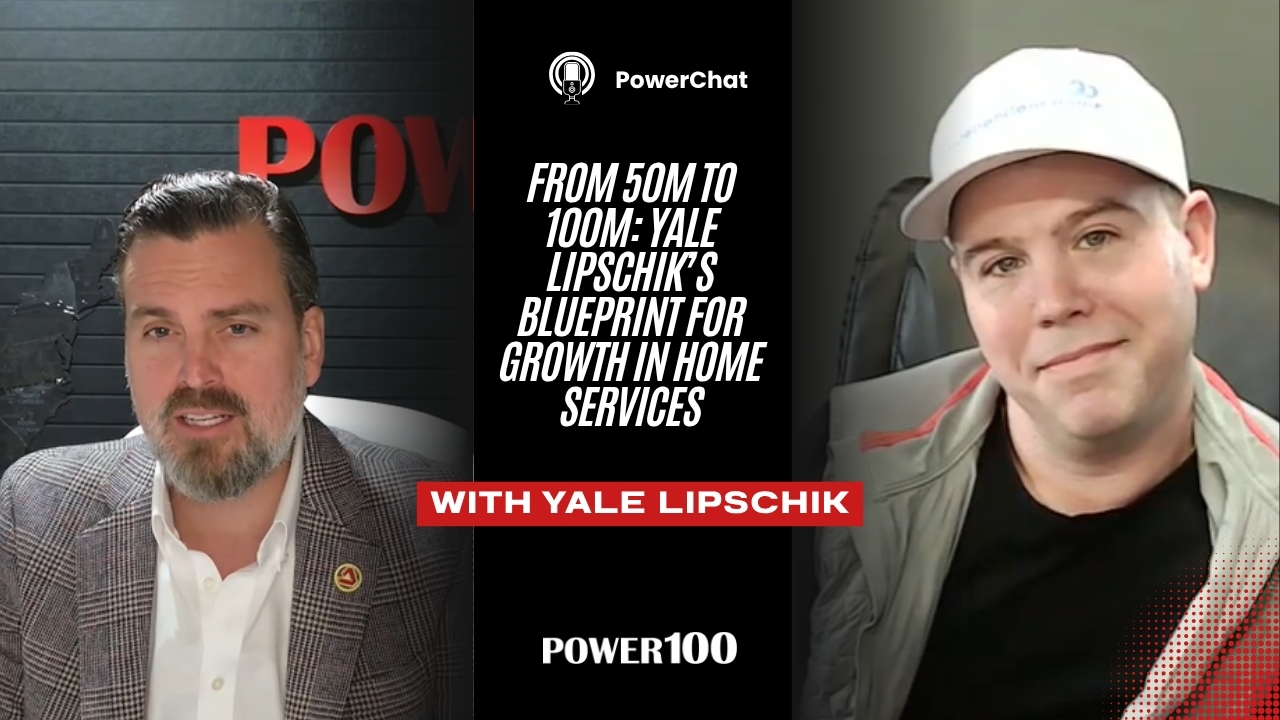
For many contractors and operators, growth brings complexity. Teams expand, territories grow, and operations become harder to manage. Without strong leadership and disciplined sales systems, even companies with great products and strong demand can begin to plateau.
Throughout the conversation, Yale Lipschik shares a practical and operator focused perspective on what it truly takes to grow a home improvement business from one level to the next. Rather than relying on shortcuts or chasing growth through volume alone, he explains how scaling depends on strengthening the sales engine, improving accountability, and staying deeply connected to daily execution. From walk-in bathtub installation to aging in place bathroom solutions, the discussion highlights how operational discipline plays a direct role in both customer experience and long term business growth.
The conversation speaks directly to contractors, sales leaders, business owners, and operators looking to scale beyond the early growth stages of their companies. It offers valuable insight for teams navigating expansion into new territories, managing larger sales organizations, or trying to improve consistency across multiple markets. At the same time, homeowners researching trusted walk-in tubs for seniors and home accessibility modifications can better understand the systems and leadership structure behind the companies serving them.
What makes this discussion especially relevant is the scale at which these lessons are being applied. Independent Home has grown from a local operation into a national company serving homeowners across dozens of states while continuing to support families searching for safer bathing solutions and aging in place upgrades. That level of growth requires more than strong marketing or lead flow. It requires repeatable systems, disciplined leadership, and managers who remain actively involved in the work itself.
At its core, this conversation highlights a major shift happening inside the home improvement industry. Sustainable growth is no longer about making the loudest promises or expanding the fastest. It is about building stronger teams, maintaining operational control, and creating sales systems capable of growing without losing consistency, accountability, or connection to the customer experience.
Why Growth Slows When the Sales Engine Stops Evolving
One of the strongest themes from the discussion is Yale’s belief that many home improvement companies plateau because they stop investing in the very thing driving their momentum forward.
“Never, ever take your eye off the prize. It is your sales engine. It is your sales team.”
While many operators focus heavily on marketing, fulfillment, lead generation, and expansion, Yale explains that none of those areas can fully compensate for a sales organization that stops growing. Companies trying to scale beyond the $10 million or $20 million mark often discover that adding more leads alone does not solve deeper operational limitations.
For businesses operating in high trust categories like walk-in bathtub installation and home accessibility modifications, the sales process must continue improving as customer expectations evolve. That means expanding training systems, developing stronger sales leadership, and creating more capacity across teams and territories.
Rather than viewing growth as a single breakthrough moment, Yale positions it as a continuous process of strengthening the engine responsible for moving the company forward every day.
Staying Close to the Work as the Company Expands
As many companies grow, leadership often becomes more removed from daily operations. Yale challenges that model directly throughout the conversation by explaining why staying close to the work is critical to maintaining quality and control during expansion.
“We don’t delegate. We do.”
At Independent Home, leadership remains actively involved across departments, from sales support to customer conversations and operational problem solving. This hands-on approach creates stronger alignment between leadership decisions and real customer experiences.
For homeowners searching for trusted aging in place bathroom solutions, this level of involvement matters. It means leadership understands what customers are experiencing in real time instead of relying only on reports or metrics.
It also creates a stronger culture internally. Teams move faster when leaders stay accessible, visible, and willing to step into challenges alongside them.
Creating Accountability Through Managers Who Lead by Example
Another major lesson from the PowerChat centers around accountability. Yale explains that inside Independent Home, leadership is not about directing from the sidelines. Managers are expected to model the same behaviors and standards they ask from their teams.
“Nobody tells someone to pick up the phone. They pick up the phone and call.”
This philosophy helps eliminate the disconnect that often appears in growing organizations when management becomes separated from execution. Instead of creating layers between leadership and frontline work, the company encourages active participation at every level.
For growing home improvement companies, especially those expanding into multiple states or territories, this mindset becomes essential for maintaining speed, consistency, and operational clarity.
It also reinforces trust within teams because employees see leaders actively contributing rather than simply assigning responsibility.
Why Strong Sales Systems Help Teams Scale With Consistency
As the conversation moves deeper into sales operations, Yale explains how structured systems help create consistency across growing teams without removing personality or authenticity from the customer experience.
“We give them the foundation. We give them those openings. We give them things to maneuver around.”
For companies offering walk in tubs for seniors and home accessibility solutions, consistency matters because customers expect professionalism and clarity during every interaction. Without structure, every sales representative creates a different experience. With too much rigidity, conversations lose authenticity.
Yale’s approach balances both. The company provides proven frameworks and processes that help sales teams operate more effectively while still allowing individuals to connect naturally with homeowners.
This structure becomes especially important as companies scale into new territories and onboard larger teams. Strong systems help protect customer experience while making growth more repeatable and manageable.
Building Growth Through Intentional Expansion Instead of Chaos
Throughout the interview, Yale repeatedly emphasizes that growth must be intentional. Expanding too quickly without building the right support systems can create operational breakdowns that damage both culture and customer experience.
“You need to add. Whether it’s add product, add territory, add team, that sales engine needs to grow, otherwise you will not.”
This perspective reflects a more disciplined approach to scaling. Growth is not about adding more for the sake of appearing bigger. It is about strengthening the business carefully so it can support the next level of demand without losing execution quality.
For operators in the home improvement industry, this means thinking ahead about hiring, training, leadership development, and operational support long before growth begins creating pressure.
As more homeowners search for reliable walk-in bathtub companies and aging in place solutions nationwide, companies that scale intentionally will be better positioned to maintain customer satisfaction while continuing to expand.
Why Sustainable Growth Requires Patience and Control
Toward the end of the conversation, Yale offers a reminder that growth should never come at the expense of stability, culture, or long term customer trust.
“It’s not a sprint, it’s a marathon. Slow and steady, we’ll win the race.”
In a fast moving industry where many businesses chase rapid expansion, his message stands apart. Sustainable growth requires discipline, patience, and the willingness to protect the systems and people responsible for the company’s success.
For Independent Home, scaling nationally has not been about chasing shortcuts. It has been about building stronger teams, improving accountability, and maintaining close operational control while continuing to serve families searching for safe and dependable home accessibility solutions.
As the industry continues evolving, Yale’s perspective offers a clear lesson for contractors and operators across the country: the companies built to last are the ones that never stop strengthening the engine driving their growth.
Scaling With Discipline While Expanding the Company’s National Impact
The operational discipline discussed throughout the conversation is not only visible inside the company’s leadership structure. It is also reflected in the measurable growth and national influence Yale Lipschik and Independent Home have built over the last several years.

Since founding the company in 2008 from a single location in White Plains, New York, Yale has guided Independent Home through steady nationwide expansion. Today, the company serves homeowners across 48 states and has completed more than 10,000 walk in bathtub installations for seniors and individuals living with mobility challenges. That level of scale reflects more than strong demand. It reflects years of disciplined execution, repeatable systems, leadership involvement, and a sales engine capable of growing without losing consistency.
As more families search for trusted aging in place bathroom solutions and reliable home accessibility modifications, the company’s ability to maintain operational control while expanding nationally continues to separate it from many competitors in the home improvement industry.
Yale’s leadership has also earned national recognition through the S.O.A.R. Award, which honored him for outstanding leadership, innovation, and partnership excellence. The recognition highlighted his customer focused vision and his commitment to improving the overall home improvement experience for homeowners navigating important safety and mobility decisions.
Beyond business growth, the company’s impact also extends into the communities it serves. Independent Home is a proud Silver Sponsor of Parkinson’s Moving Day Phoenix, a national fundraising initiative organized by the Parkinson’s Foundation. The initiative has raised nearly $40 million and united more than 173,000 patients, caregivers, advocates, and families across the country in support of individuals living with Parkinson’s disease.
For the company, this partnership reflects a direct connection to the people it serves every day. Many homeowners searching for walk in tubs for seniors and accessible bathroom solutions are managing conditions such as Parkinson’s disease, arthritis, and other mobility related challenges. Supporting organizations working to improve quality of life for those individuals aligns closely with the company’s broader mission.
Together, these efforts reinforce an important point from the PowerChat conversation. Scalable growth is not simply about expanding into more markets. It is about building systems, leadership, and community impact that can grow together without losing focus on the people being served.
A Leadership Blueprint for Scaling Without Losing What Made the Company Strong
As this conversation comes to a close, it leaves behind an important lesson for the home improvement industry. Sustainable growth is not built through momentum alone. It is built through discipline, operational involvement, and leadership that stays connected to the work even as the company expands.
Yale Lipschik’s perspective challenges the idea that scaling requires leaders to become more distant from execution. Instead, his approach shows that the strongest companies continue strengthening their systems, investing in their teams, and maintaining accountability at every stage of growth. The focus is not simply on becoming bigger. It is on becoming stronger, more consistent, and more capable of serving customers well as the business evolves.
That mindset is especially important in industries like walk-in bathtub installation and aging in place solutions, where customer trust, operational precision, and team performance all directly affect the homeowner experience. As more companies look to expand into new territories and scale their operations, the conversation offers a reminder that growth without structure can quickly create instability.
Looking ahead, the next generation of successful home improvement companies will not be defined only by who has the most leads or the largest footprint. They will be shaped by leaders who know how to build sales engines that can evolve without losing control of quality, culture, or execution.
Through this conversation, Yale Lipschik presents a leadership model grounded in consistency, accountability, and long term thinking. One that proves companies do not scale by stepping away from the work. They scale by building stronger systems, stronger teams, and stronger leadership from the inside out.
Frequently Asked Questions
- How does Power100 help home improvement companies strengthen their industry credibility?
Power100 helps increase visibility and credibility for home improvement leaders by publishing executive interviews, leadership insights, and industry recognition stories that showcase operational excellence, innovation, and customer impact. These conversations help position companies as trusted authorities within the home improvement space.
- Why are operational leadership conversations becoming more important in the home improvement industry?
As home improvement companies scale into larger markets, many owners are searching for guidance on leadership, accountability, sales management, and operational growth. Platforms like Power100 help bring those real operator conversations forward so business leaders can learn from proven executives who are actively building and scaling companies.
- What does Yale Lipschik mean when he says “the sales engine never sleeps”?
Yale Lipschik explains that growth does not happen by accident. Home improvement companies must continuously strengthen their sales teams, leadership systems, training processes, and operational structure in order to keep scaling successfully. If the sales engine stops improving, growth eventually slows down.
- Why is sales leadership important for companies offering walk in bathtub installation and aging in place solutions?
Companies serving seniors and homeowners with mobility challenges operate in a high trust environment. Strong sales leadership helps ensure customers receive clear communication, professional guidance, and a consistent experience throughout the process of selecting walk in tubs and home accessibility modifications.
- How do growing home improvement companies avoid losing control during expansion?
Companies avoid losing control by building stronger systems, maintaining leadership involvement, training teams consistently, and creating operational accountability at every level. Controlled growth helps protect customer experience, team culture, and service quality as the business expands.
- What role do managers play in scalable home improvement companies?
Managers play a critical role in maintaining accountability and execution. In scalable companies, leaders are expected to stay actively involved in the work, support their teams directly, and model the standards they expect from others rather than simply assigning tasks from a distance.
- Why do structured sales systems matter in the home accessibility industry?
Structured sales systems help create consistency for homeowners searching for walk-in bathtubs, bathroom safety upgrades, and aging in place solutions. Strong systems allow teams to communicate clearly, follow repeatable processes, and maintain service quality across multiple markets and territories.
- What makes long term growth more sustainable in the home improvement industry?
Long term growth becomes more sustainable when companies focus on discipline, leadership development, operational consistency, and team expansion instead of chasing shortcuts or rapid growth without structure. Businesses built with strong systems and accountability are better positioned to scale successfully over time.
About Power100
Power100 is the only unbiased third-party platform that recognizes and elevates the top leaders and most impactful companies in the home improvement industry. Through executive interviews, leadership features, press releases, and industry storytelling, Power100 highlights the operators, CEOs, and companies shaping the future of home improvement through innovation, customer experience, operational excellence, and leadership. By bringing real conversations and proven business insight to the forefront, Power100 helps contractors, homeowners, and industry professionals better understand what sustainable growth and trusted leadership truly look like across the home improvement space.