A powerful conversation on why the future of home service growth will belong to leaders who replace fear with clarity, build emotionally grounded cultures, and create stronger alignment with their people during the industry reset...
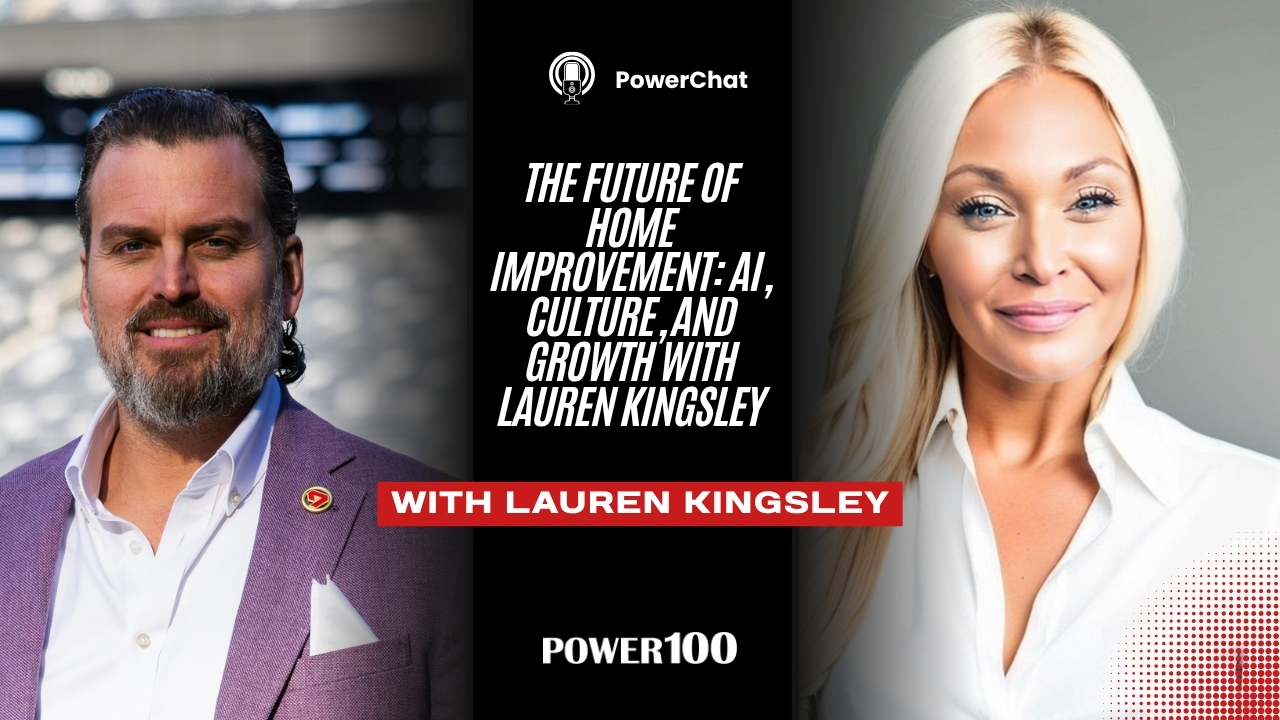
In a PowerChat interview hosted by Greg Cummings, Lauren Kingsley explains why the home improvement industry is facing a leadership reset and how home service companies can move from fear based decision making to clarity, trust, operational alignment, and stronger team confidence.
Across the home improvement industry, many leaders are facing a pressure that goes deeper than numbers. Margins are tightening. AI is creating confusion. Teams are asking harder questions. Employees are wondering what the future means for their roles. At the same time, companies are trying to protect growth, improve operations, and respond to changing customer behavior without losing the trust of their people. For many CEOs and operators, this moment feels uncertain because the industry is not only changing on the outside. It is also testing the confidence, clarity, and emotional strength of leadership on the inside.
That deeper leadership challenge was at the center of a recent PowerChat conversation between Greg Cummings, CEO of Power100, and Lauren Kingsley, a home service growth expert, fractional executive, and business coach for notable companies across the industry. Lauren works with private equity and founder-led companies on growth strategy, enterprise alignment, scalable operations, KPI frameworks, and margin protection. In the conversation, she challenged home service leaders to stop operating from fear and start leading with clarity, truth, and a stronger connection to their teams.
Power100 is the only unbiased third-party platform that recognizes and elevates the top leaders and most impactful companies in the home improvement industry.
In this powerful PowerChat discussion, Lauren Kingsley joined Greg Cummings for a conversation that explored something many leaders across the home improvement industry are quietly experiencing but rarely discussing openly. Uncertainty. As technology shifts, labor pressures increase, and customer behavior continues to evolve, many companies are finding themselves reacting to change instead of confidently leading through it.
The purpose of the conversation was not simply to analyze market conditions or operational trends. Instead, it focused on the emotional and leadership side of the industry reset currently unfolding across home services. Drawing from her experience as a fractional executive and business coach for private equity backed and founder led companies, Lauren shared how fear based leadership can quietly create confusion, disconnect teams, and weaken company culture during periods of rapid change.
Throughout the discussion, Lauren explained that many businesses are becoming overwhelmed by shifting expectations around AI, marketing, hiring, growth, and customer acquisition. But while the market itself is changing, the deeper challenge for leaders is maintaining clarity inside their organizations while navigating uncertainty around them.
The conversation spoke directly to CEOs, operators, contractors, and leadership teams searching for ways to create stronger operational alignment for home service companies while building trust and stability within their teams. Lauren emphasized that employees do not expect leaders to have every answer immediately. What they need is honesty, direction, and confidence that leadership is willing to face challenges directly instead of reacting emotionally.
What made the discussion especially impactful was its relevance across every level of the industry. Whether companies are managing rapid expansion, dealing with tightening margins, or trying to adapt to changing technology, the same leadership pressures are showing up everywhere. Lauren explained that this moment is becoming a defining test for the future of many businesses because it is revealing which organizations are built on clear communication, strong culture, and aligned leadership versus those operating only on momentum.
At its core, this PowerChat positioned the current market shift as more than an economic adjustment. It is a leadership reset. And according to Lauren, the companies most likely to emerge stronger will not necessarily be the ones reacting the fastest, but the ones leading with the greatest clarity, consistency, and connection to their people.
As the conversation began to move deeper into leadership and culture, Lauren Kingsley addressed something many companies are experiencing internally but rarely discussing openly. Fear.
Across the home improvement industry, leaders are trying to navigate AI disruption, rising costs, labor shortages, changing customer behavior, and operational pressure all at the same time. In many organizations, that pressure is beginning to shape decision making in ways teams can feel immediately.
“People know when leadership is operating from fear,” Lauren explained during the conversation.
She shared that when leaders become reactive instead of intentional, companies begin making rushed decisions. Strategies constantly change. Teams lose confidence. Communication becomes inconsistent. Instead of building toward long term stability, businesses start operating from short term survival mode.
For companies trying to maintain scalable leadership systems for contractors, Lauren emphasized that emotional reactions create instability inside organizations faster than many leaders realize. Employees can sense uncertainty quickly, even when leadership tries to hide it.
The conversation reframed the issue clearly. The challenge facing many businesses today is not only operational. It is emotional. And how leaders respond to uncertainty will shape the future culture of their companies.
As the discussion continued, Lauren made an important distinction about what employees truly need from leadership during uncertain seasons. Teams are not expecting perfection. They are looking for truth.
She explained that employees already understand the market is shifting. They see the pressure around AI, changing sales dynamics, rising costs, and operational changes happening across the industry. What damages trust is not uncertainty itself. It is silence, disconnect, or pretending problems do not exist.
“People want clarity,” Lauren shared. “They want to understand where the business is at and where it is going.”
Throughout the conversation, she emphasized that transparency builds confidence faster than motivational slogans or forced optimism. When leaders openly communicate challenges while also inviting teams into the solution, employees become more engaged, aligned, and invested in the future of the company.
For operational alignment in home service companies, this becomes especially important. Teams perform better when they understand the mission, trust leadership, and feel included in the process of adapting to change.
Lauren’s perspective shifted the conversation away from leadership image and toward leadership honesty. In today’s market, authenticity is becoming one of the strongest forms of stability a company can offer its people.
Another major insight from the interview was Lauren’s belief that leadership in home services has become far more than managing numbers, sales goals, or operations. Emotional intelligence is now a critical leadership skill.
“The tone of leadership becomes the tone of the company,” she explained.
That idea became one of the defining messages of the conversation. When leaders operate with calm, clarity, and confidence, teams feel safer and more focused. But when leadership becomes reactive, overwhelmed, or emotionally disconnected, that instability spreads throughout the business.
Lauren explained that the emotional condition of leadership impacts nearly every area of performance. It affects employee retention, customer experience, culture, sales consistency, and even operational execution. Teams need more than direction. They need confidence that leadership can guide them through uncertainty without panic.
As a home service growth consultant working with both private equity and founder led companies, Lauren sees this challenge regularly. Businesses with emotionally grounded leadership often adapt faster because their teams stay aligned instead of distracted by fear and confusion.
The discussion made it clear that emotional discipline is no longer separate from leadership performance. It is becoming one of the strongest drivers of sustainable growth.
As Greg and Lauren explored where businesses can find clarity during uncertain times, the conversation turned toward the frontline. Lauren explained that many leaders unintentionally create distance between themselves and the people closest to customers.
She pointed out that some CEOs spend most of their time inside executive meetings, dashboards, and high level planning while losing touch with the experiences happening every day inside sales teams, call centers, field marketing departments, and customer interactions.
“The frontline stories are some of the most valuable pieces inside the organization,” Lauren said.
This became one of the strongest leadership lessons from the discussion. The companies adapting fastest are often the ones listening most closely to their people. Employees on the frontline hear customer objections first. They feel market shifts early. They understand where friction exists long before reports reveal it.
Lauren encouraged leaders to create stronger bottom up communication instead of relying only on top down direction. When employees feel heard, businesses gain better insight, stronger culture, and more creative solutions during difficult seasons.
For companies focused on operational alignment for home service companies, reconnecting leadership with frontline teams may become one of the most important competitive advantages moving forward.
As the conversation moved into business strategy, Lauren explained that many companies are overwhelming themselves with too many tools, too many systems, and too many reactive changes happening all at once.
Businesses are trying to adapt to AI, improve marketing, restructure operations, increase sales, lower costs, and grow revenue simultaneously. In many cases, this creates more noise than progress.
“Teams do not need more confusion right now,” Lauren explained. “They need direction.”
She emphasized that businesses with clear priorities and aligned systems are outperforming companies constantly shifting focus. When teams know what matters most, execution becomes stronger. Communication improves. Decision making becomes faster and more consistent.
This idea is especially important for contractors building scalable leadership systems and operational structure. Growth does not come from reacting to every trend or challenge at once. It comes from creating clarity around what the company stands for, where it is headed, and how teams should execute together.
Throughout the interview, Lauren continued returning to the same message. Clear leadership creates aligned execution. And aligned execution creates stronger businesses.
Toward the end of the discussion, the conversation shifted from challenge to opportunity. While many companies are struggling to adapt, Lauren believes this season is also creating space for a new generation of leaders to rise.
She explained that some of the businesses gaining momentum today are not necessarily the largest or most visible brands. Instead, they are companies with strong culture, adaptable teams, and leaders willing to evolve quickly.
“This moment is not punishment,” Lauren shared. “It is preparation.”
That perspective reframed the entire conversation. The industry reset is not simply exposing weaknesses. It is also revealing resilience, creativity, and leadership strength inside companies willing to embrace change instead of resisting it.
Lauren believes adaptable businesses with clear communication, emotionally grounded leadership, and connected teams will outperform companies still operating from ego, fear, or outdated growth models.
For leaders navigating uncertainty today, the conversation offered reassurance that opportunity still exists. But it belongs to businesses willing to slow down, listen carefully, strengthen alignment, and lead with greater clarity than ever before.
As the conversation came to a close, the discussion left behind a message that felt bigger than market trends, technology shifts, or operational strategy alone. What the home improvement industry is experiencing today is not simply a business correction. It is a leadership reset.
For many companies, this season has exposed how fragile growth can become when leadership is disconnected, reactive, or driven by fear. But at the same time, it has also revealed something encouraging. Businesses built on trust, clarity, strong communication, and genuine connection to their people are finding ways to move forward with confidence even during uncertainty.
Throughout the PowerChat, Lauren Kingsley consistently returned to the idea that leadership today is no longer measured only by revenue growth or market expansion. It is measured by the ability to create alignment, stability, and belief inside the organization while the industry around it continues to change.
There was also a reassuring truth woven throughout the conversation. Leaders do not need to have every answer immediately. Teams are not searching for perfection. They are looking for honesty, consistency, and confidence that leadership is willing to face challenges directly instead of reacting emotionally to every shift in the market.
The companies that emerge strongest from this next chapter will not necessarily be the largest brands, the fastest growing organizations, or the businesses with the biggest budgets. They will be the companies with the clearest direction, the strongest culture, the most emotionally grounded leadership, and the deepest connection to their people.
Because in the end, industries do not simply evolve through technology or economic change. They evolve through leadership. And the businesses willing to lead with clarity instead of fear will be the ones that shape the future of home services for years to come.
Membership unlocks every Power100 interview, PowerChat episode, and expert playbook - free for industry leaders.

Power100 is the nation's premier CEO ranking and media platform for the home improvement industry. Using a proprietary 5-layer evaluation system, Power100 identifies and celebrates the top CEOs, companies, and strategic partners driving innovation, customer satisfaction, and leadership excellence across the country.