Why Serving People With Empathy Makes Lifetime Home Remodeling the Best Home Remodeling Company in Every Market It Serves...

In a candid Power100 feature from Lifetime Home Remodeling’s Corona office, COO Brian T. Standage joins Power100 CEO Greg Cummings to show how a culture-first, people-and-process model—backed by #2-ranked CEO Peter Svedin and executive leader Coco McCarty Criste—is powering a national platform brand where every team walks into the living room prepared to earn trust, present clear solutions, and turn more first-visit appointments into confident yeses that feel good for homeowners and employees alike.
Corona, CA – At the newest Corona, California office of Lifetime Home Remodeling, empathy is not a buzzword—it is a business strategy. In a featured interview at the Corona office, Power100 CEO Greg Cummings sat down with Brian T. Standage, Chief Operating Officer and managing partner of Lifetime Home Remodeling, to explore how “serving people with empathy and meeting the needs of people where they are at” is reshaping what it means to be the best home remodeling company in every market it servePower100, the only unbiased third‑party platform that ranks the top leaders and partners in the home improvement industry using a proprietary 5‑layer system, has recognized Lifetime Home Remodeling as a national leader for its people‑first culture, operational excellence, and sustainable growth strategy. In the Corona interview, Brian T. Standage shared how lessons from managing billions of dollars in healthcare and retail now guide how Lifetime Home Remodeling serves homeowners—with empathy, precision, and a long‑term mindset.
“As I look back on my career, the most important lesson I learned—especially during the toughest times—is this,” Brian T. Standage told Greg Cummings. “You never lose when you start with: how do we serve with empathy and meet the needs of people where they are at?”
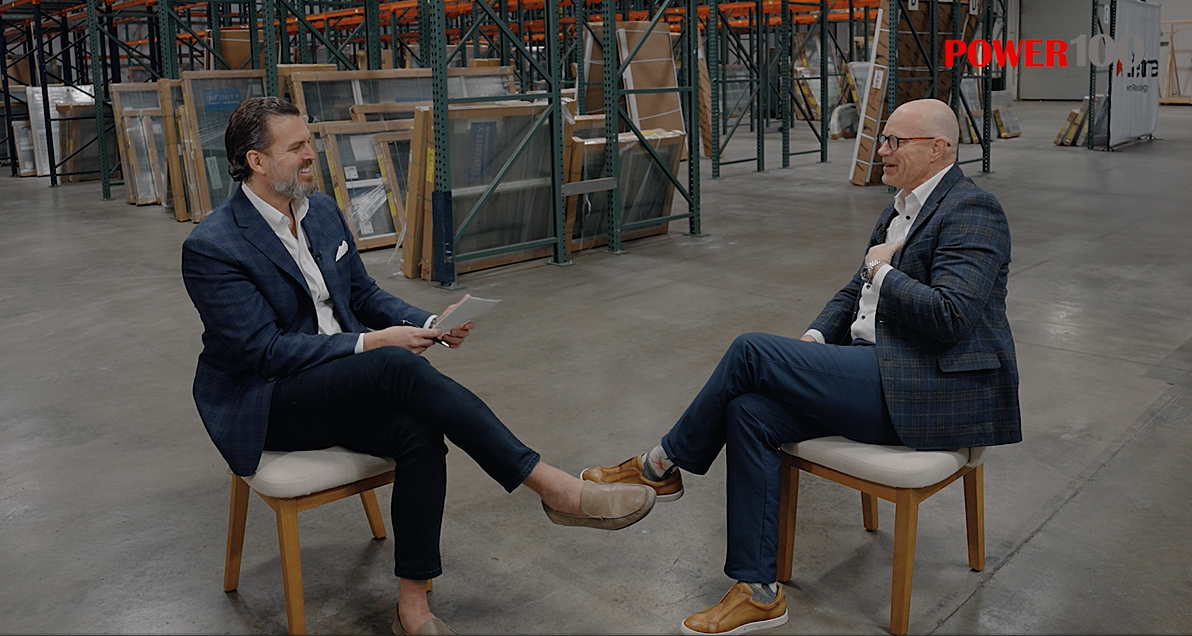
Before joining Lifetime Home Remodeling, Brian T. Standage led complex operations in organizations like Target and Banner Health, managing billions of dollars in business and navigating high‑stakes decisions that impacted employees, customers, and communities. In his conversation with Greg Cummings, he described the decision to move from healthcare into home remodeling as anything but casual.
“It took me many months to be convinced,” Brian T. Standage said. “I had to ask: is this the right transition for me—and just as important, is it the right transition for Lifetime Home Remodeling? This is my last stop. I wasn’t looking for a stepping‑stone; I was looking for a place where we could build a legacy together.”
The answer came when he visited Lifetime Home Remodeling’s headquarters in Denver and met CEO Peter Svedin for the first time. “Within ten minutes of walking into the office, you could feel it,” Brian T. Standage recalled. “There was something different about Peter Svedin and the people who work with him. There was a palpable culture of loyalty, commitment, and desire to see Lifetime Home Remodeling succeed. You know culture when you feel it.”
That same culture, rooted in empathy and long‑term value, is what Brian T. Standage now helps scale into new markets like Corona, California.
At the center of Lifetime Home Remodeling’s growth story is CEO Peter Svedin, recognized by Power100 as one of the top CEOs in the home improvement industry. Peter Svedin built Lifetime Home Remodeling from a single‑office company into a multi‑market platform serving Colorado, Arizona, California, and emerging markets across the country.
Peter Svedin’s leadership philosophy centers on building something that lasts:
“Leadership is about creating an environment where people can grow, where teams feel supported, and where the company is bigger than any one person,” Peter Svedin has shared in his own featured interview with Power100. “When you invest in people, the business takes care of itself.”
For Brian T. Standage, that mindset was crucial. “I never would have come to Lifetime Home Remodeling if the intent was to build something just to sell it,” he said. “We are building to last, not building to flip. That changes how you hire, how you train, how you treat homeowners, and how you serve communities.”
Together, Peter Svedin and Brian T. Standage lead Lifetime Home Remodeling with a shared commitment: grow into the best home remodeling company in every market it enters, while staying anchored in empathy, integrity, and service.

The turning point in the Corona interview came when Greg Cummings asked Brian T. Standage about lessons learned from leading through crises—especially in healthcare during the COVID years.
“As I look back on that experience, I came away with one thing I’ll never lose sight of,” Brian T. Standage said. “At the core, it’s this: how do we serve with empathy and meet the needs where people are at?”
For homeowners, that principle shows up in practical ways at Lifetime Home Remodeling:
“I’ve seen industries that fail because they don’t meet people where they are,” Brian T. Standage reflected. “Retail, healthcare, construction—when they are dismissive or mechanical, they lose trust. We are doing the opposite at Lifetime Home Remodeling: we are building unwavering loyalty by serving with empathy and precision inside the home.”
In the interview, Greg Cummings pressed Brian T. Standage as a detail‑oriented, results‑driven leader: where does culture and empathy sit on his “balance sheet”?
“Number one,” Brian T. Standage answered. “Culture will eat talent. Culture will eat operations. Culture will eat anything for lunch. You can talk about bottom‑line revenue all day, but if people don’t feel that priorities are aligned with how you treat them and how you treat homeowners, it’s hard to build real culture.”
Empathy, in this context, is not a “nice‑to‑have”—it is a strategic asset:
For Lifetime Home Remodeling, empathy is the starting point for every interaction, from recruiting and training to design consultations and service visits. That is how the company continues to be ranked among the very best in every market it serves.
Being an “expert in the home” at Lifetime Home Remodeling is about more than technical proficiency. Guided by leaders like Peter Svedin and Brian T. Standage, the company trains its teams to blend expertise with empathy.
Experts in the home at Lifetime Home Remodeling:
“Ultimately, I’m not concerned about what a competitor down the road is doing,” Brian T. Standage told Greg Cummings. “I’m concerned that we’re carving a new path and setting the standard for how we deliver service—with empathy, with precision, and with the discipline to do what we say we’re going to do.”
This standard is lived out by design consultants, project managers, schedulers, installers, and service technicians in Corona and every other Lifetime Home Remodeling market.
When Lifetime Home Remodeling expands into a new market like Corona, California, the biggest question for leaders like Brian T. Standage is not “Can we sell there?” but “Can we protect our culture there?”
“The culture part of Lifetime Home Remodeling was already established before I got here,” Brian T. Standage said. “My job is to instill and enrich it. How do we build upon that? How do we tap into what was formulated in Denver and replicate it over and over in new markets without losing what makes it special?”
That culture—built by Peter Svedin and reinforced by leaders like Vice President Josh Coffey, Content Marketing Specialist Ben Buckley, Scheduling Manager Rebecca MacMillan, Sales Supervisor Richard Daskam, HR Director Kelly Shearer, and Regional Administrative Director Krista Baker—is designed around trust, communication, and care.
“Culture is everything here,” Krista Baker has said. “We treat our customers like family. We over‑communicate. We over‑deliver. That’s how trust is built. That’s how Lifetime Home Remodeling maintains its reputation as it grows.”
Empathy is embedded in that culture: caring about team members and homeowners, listening deeply, and designing processes that make people feel seen and supported.

In today’s home improvement landscape, Greg Cummings and Brian T. Standage noted a growing trend: private equity groups buying companies with a “build it to sell it” mentality. But Lifetime Home Remodeling is intentionally doing the opposite.
“In my mind, Lifetime Home Remodeling is building to last, not building to sell,” Greg Cummings said.
Brian T. Standage agreed. “I never would have come to Lifetime Home Remodeling if the goal was to flip it,” he said. “This is my last stop. I told Peter Svedin that when I made the leap of faith. This is going to be my legacy as much as it is his and everyone else’s in the Lifetime Home Remodeling family.”
Building to last—rather than to sell—gives Lifetime Home Remodeling major advantages:
Ultimately, this long‑term perspective aligns perfectly with Brian T. Standage’s core question: how do we serve with empathy and meet people where they are—today and in the future?
Membership unlocks every Power100 interview, PowerChat episode, and expert playbook - free for industry leaders.
Power100 is the nation's premier CEO ranking and media platform for the home improvement industry. Using a proprietary 5-layer evaluation system, Power100 identifies and celebrates the top CEOs, companies, and strategic partners driving innovation, customer satisfaction, and leadership excellence across the country.