Power100 Names Home Improvement's Top 5 CEOs For 2026...
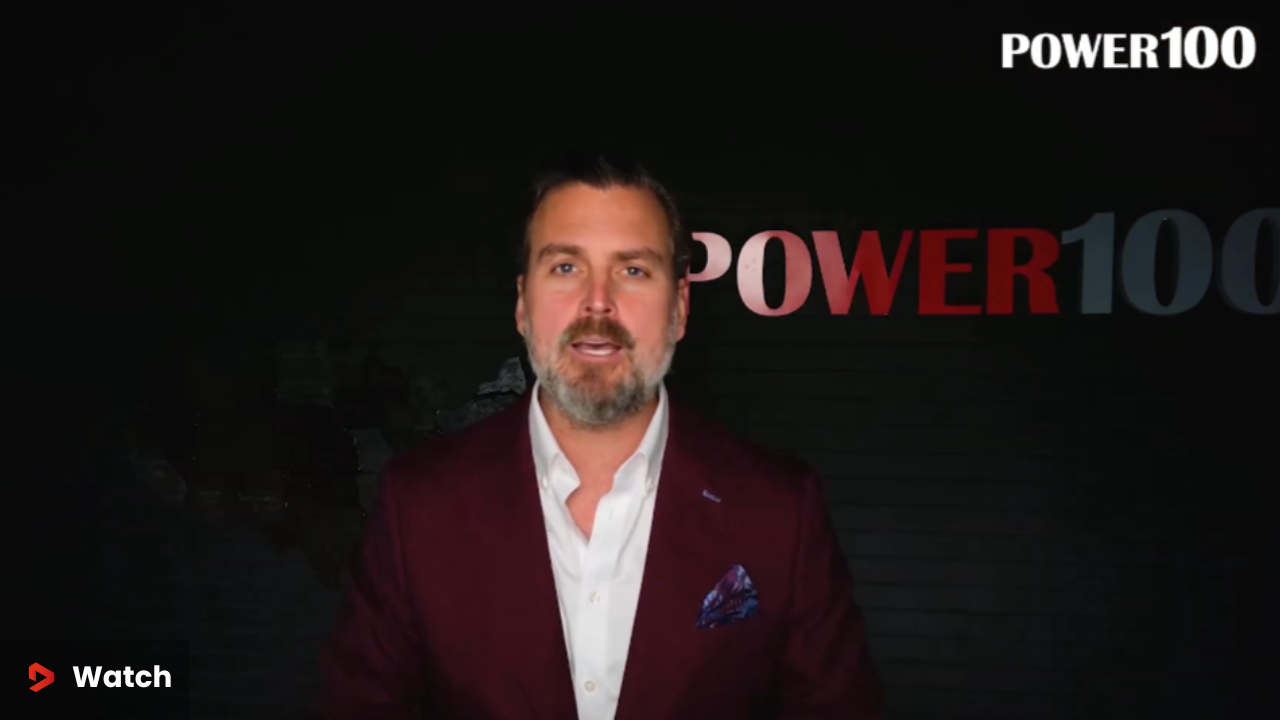
Power100’s annual CEO rankings spotlight the best-of-the-best leaders in home improvement—CEOs who build strong company culture, invest in their communities, and grow with discipline while protecting customer experience.
January 2026 — Power100, the only unbiased platform that recognizes the top leaders and top companies in the home improvement industry and tells their story through national rankings and media, announced today its Top 5 ranked CEOs for 2026.
This year’s Top 5 list features, in order:
Power100’s leadership spotlight is grounded in a simple truth: homeowners don’t just buy windows, doors, roofs, siding, gutters, and bathrooms—they buy trust, communication, and a team that will stand behind the work.
Power100 evaluates leaders through a rigorous, independent methodology that examines leadership excellence, company culture, community involvement, and sustainable growth—so recognition reflects real performance, not paid placement.
Below are the stories behind the 2026 Top 5—told through Power100 research, CEO interviews, leadership-team voices, and publicly available information.
PJ Fitzpatrick has served homeowners since 1980 and has built a reputation around trust, workmanship, and a clear mission: “Making Life Better, One Home at a Time.”
Under CEO James Freeman—who has led the company since 2020—Power100’s research highlights a rare mix: fast, strategic expansion while protecting standards that show up in real homeowner experiences.
Freeman’s leadership philosophy is direct and practical: “When we do right by our customers, we can also do right by our team.”
Just as important, he anchors growth to identity. In a year full of pressure and change, Freeman emphasized staying grounded: “I am proud of the fact that, regardless of what was coming at us, we kept our focus on who we are as a company.”
Rather than treating training as an HR function, PJ Fitzpatrick treats leadership development as core infrastructure—especially through internal programs like PJ University and the Emerging Leaders Program.
Power100 CEO Greg Cummings described what this looks like on the ground: “Everywhere I go, everyone I talk to seems confident in their work. They know their role and how to be successful because of programs like the Emerging Leaders Program.”
That confidence matters in home improvement, because it reduces confusion, prevents handoff mistakes, and makes the customer experience more predictable.
Freeman also made a clear commitment to internal opportunity: “If you have the right talent, we will find the right place for you within the organization because we will need those people as we grow.”
High-growth companies often break when they expand, but PJ Fitzpatrick has focused on expanding through alignment.
Power100 highlighted a major growth milestone: PJ Fitzpatrick’s acquisition of Bathroom Buddy Remodeling, which expanded PJ Fitzpatrick’s footprint into Long Island and New York markets.
Freeman’s view is simple: when PJ Fitzpatrick enters a market, homeowners win because they gain access to proven systems, broader services, and a company built to deliver consistently.
Power100’s interviews surfaced a consistent theme: leaders across departments speak the same language—clarity, accountability, and team support.
Lifetime Home Remodeling is a story of grit, systems, and relentless people development—led by CEO Peter Svedin, whose work ethic still defines the culture today.
Svedin’s core belief became a leadership operating system: “I believe hard work beats talent when talent doesn’t work hard.”
Power100’s interviews describe Lifetime growing into a major remodeling organization—employing nearly 550 professionals across multiple markets—while keeping training, onboarding, and career paths front and center.
Lifetime stands out for building careers inside the company, not just filling seats.
Kelly Shearer (HR Director) described the intention behind their development focus: “We’ve been able to completely build a new onboarding, training, and development program to focus on team members growth so that when they come in, that’s not the position they’ll be in forever.”
Employee stories reinforce that this is real. Javier Pena (Director of Field Operations) described being supported and promoted through multiple roles over years.
Krista Baker (Regional Administrative Director) summed up the tone at the top: “Peter’s such a great leader. He is really involved in the day-to-day, and the entire team kind of feeds off of it.”
Lifetime has built a powerful field presence—reporting roughly 700 event days per year—creating daily homeowner feedback loops and giving the brand “real world” visibility in the communities it serves
Svedin explained the reason that presence matters: “We’re focused on helping our team grow and succeed.”
As Lifetime expands—such as its push into California markets—Power100 observed that the company protects culture by deploying top people and training leaders intensely in new regions before scaling further.
Svedin also modernized the brand through a full rebrand—unifying fragmented brands into one clearer identity: Lifetime Home Remodeling.
Lifetime’s giving is not a side project—it’s part of the company’s identity, including community partnerships and nonprofit support highlighted in Power100’s coverage.
Svedin explained the “why” clearly: “The more we help the community we serve, the more we grow and live abundantly.”
Power100 CEO Greg Cummings connected that mindset to long-term company health: “The companies that rise to the top are the ones that build leaders, not dependencies.”
Expo Home Improvement is tied to a distinct leadership lens: Paul Dietzler brought hospitality principles into home improvement—treating customer experience as the product, not just the install.
Since acquiring Window Expo in 2012, Dietzler helped grow the business from a small company into a multi-market organization across major Texas markets.
Dietzler reflected on the recognition with gratitude and a clear team-first tone: “I am honored to be recognized by Power100 as a top CEO, and this achievement is a reflection of the incredible team at Expo Home Improvement.”
He also described the strategic insight behind the shift: “If I could bring hospitality to the home improvement industry, we ought to be able to grow this small company.”
Dietzler frames Expo’s mission as personal, because the work happens inside people’s homes.
He explained Expo’s vision in simple terms: “Our vision for Expo Home Improvement is improving homes and transforming lives.”
And he reinforced the relational standard behind that vision: “We’re not just there to do a home improvement project… it’s their home, and so we just want to be respectful of them and build relationships over time.”
Expo’s culture story includes a unique investment: a leadership-and-culture role filled by pastor Scott Hall, described as a “Chief Ministry Officer” who supports leadership development and team care.
Dietzler described the result: “We’ve got an amazing culture at Expo Home Improvement now.”
He also explained what changed the game internally: “Having somebody on the inside of the leadership team to counsel and guide our team members has been an absolute game-changer for us.”
Expo’s growth is rooted in execution and repeatability—winning on the “delivery side” so referrals become the engine.
Dietzler said it plainly: “We really relied upon making sure that each job was done correctly, that the customer was satisfied, and we really focused on that referral business.”
Lindus Construction was founded in 1979 and has grown into a high-performing remodeling company serving the Twin Cities region and western Wisconsin.
Power100’s research highlights a leader who measures success through people, retention, and repeatable quality—not just volume.
When Power100 surprised Andy Lindus with the news of his ranking, his response showed humility and focus: “I didn’t even know I was on the list until you called.”
Employee retention is a major proof point in the Lindus story, with Power100 noting an average retention figure around 13 years and a culture repeatedly described as “family.”
Andy Lindus puts values ahead of short-term gain: “Profit should be natural. It shouldn’t be the reason for making a decision.”
And he drives a standard of excellence that is easy for teams to understand: “Everything that we want to do, we want to do it the best way possible.”
Power100 highlighted how Lindus invests in employee celebrations and public recognition as part of the leadership system—not as a “nice-to-have.”
During a company celebration that included recognition, team building, and community awareness, Andy Lindus said: “This celebration is a reflection of who we are as a company.”
Bridget Cramer (Director of Marketing) explained why cross-team connection matters: “These events are an investment in our culture and a way to bring our team together beyond the day-to-day work.”
Lindus is also known for operational innovation, including ContractorFlow, described as a technology platform “built by contractors, for contractors.”
Andy Lindus gave a blunt insight into why tools fail in contracting: “The reason why most CRMs fail is because they don’t have contractors running them.”
This “systems + people” approach supports repeat business, which Lindus identifies as a key advantage: “We really don’t lose people, and we’ve been able to increase not only our revenue, but more importantly, our past customer repeat business, which has been our secret sauce.”
Home Genius Exteriors—co-founded by Jeff Gunhus—has been recognized by Power100 as one of the standout growth stories in exterior remodeling, with a strong emphasis on customer experience and culture.
Public CEO commentary from Gunhus also shows how the company frames growth: building opportunity while “doing it the right way,” with a vision to become “the fastest growing AND most respected” in the category.
Power100’s coverage emphasizes that Home Genius treats culture as a competitive advantage—developing people, promoting leaders, and building a workplace employees are proud of.
Gunhus tied success directly to culture: “Our growth and success are a direct result of the culture we’ve built… we’ve focused on developing our people and delivering exceptional service.”
His leadership team reinforces the same belief. Max Alesi (Vice President and Co-Founder) summarized the company’s internal growth engine: “Grow the people. They will grow the business.”
Home Genius Exteriors has also tied growth to community investment through Home Genius Cares, described as a grassroots giving program across the communities the company serves.
Alesi explained the intent behind the program: “Our goal was to make Home Genius Cares as grassroots as possible. When our teams are fully engaged, there’s no limit to the impact we can have.”
Power100’s leadership team summarized why Gunhus stands out: “Jeff represents what Power100 was created to highlight—leaders who combine growth with operational discipline, people development, and a relentless focus on the homeowner experience.”
Power100 is the nation’s unbiased, third-party research and evaluation authority ranking the top home improvement companies. The platform’s five-layer methodology reviews leadership, company culture, customer experience, community engagement, and sustainable growth—ensuring rankings reflect genuine achievement, not paid placement or self-submission
Membership unlocks every Power100 interview, PowerChat episode, and expert playbook - free for industry leaders.
Power100 is the nation's premier CEO ranking and media platform for the home improvement industry. Using a proprietary 5-layer evaluation system, Power100 identifies and celebrates the top CEOs, companies, and strategic partners driving innovation, customer satisfaction, and leadership excellence across the country.