A conversation between Greg Cummings and Sebastian Jimenez revealed how home improvement is shifting from relationship-driven growth alone to a smarter model built on coaching, field intelligence, and repeatable sales performance...

At the Angi and Hatch event in Las Vegas, Greg Cummings and Sebastian Jimenez explored how Rilla is helping transform home improvement through smarter coaching, stronger sales execution, and technology that is changing how contractors grow.
Late in 2024, leaders from across home improvement gathered in Las Vegas for a high-energy event hosted by Angi and Hatch. The event brought together contractors, growth leaders, marketers, and technology partners focused on one goal: helping home service businesses grow smarter as they move into the next stage of the market.
What made this gathering stand out was not simply the size of the room. It was the level of conversation happening inside it. The event became a place where leaders shared what is working now, what is changing fast, and what companies must do next to stay ahead in home improvement.
At the center of that conversation was a rapid-fire interview between Power100 CEO Greg Cummings and Sebastian Jimenez.
Sebastian Jimenez is the Founder and CEO of Rilla, the virtual ridealong platform helping outside sales and service teams learn faster, coach better, and close more deals. Ranked the #2 Preferred Partner in the 2026 Power100 rankings, Rilla has quickly become one of the most influential technology platforms in home improvement. Its reach now extends across roofing, exterior remodeling, home services, solar, retail, finance, telecom, and many other industries that depend on strong field sales performance.
At a time when contractors are looking for stronger systems, better coaching, and more predictable growth, Sebastian’s conversation with Greg captured one of the clearest signals from the event.
The future will belong to contractors who can turn every customer conversation into learning, every learning moment into better coaching, and every coached rep into stronger sales performance.
That is why this event felt bigger than networking.
It felt like a real look at where the home improvement industry is heading next.
As part of that larger mission, Power100 stood naturally alongside the conversation. Power100 is the only unbiased third-party platform that recognizes and elevates the top leaders and most impactful companies in the home improvement industry.
By highlighting leaders like Sebastian Jimenez and companies like Rilla, Power100 continues to bring attention to the people and ideas shaping the next chapter of contractor growth.
The late 2024 gathering hosted by Angi and Hatch in Las Vegas brought together a room full of people shaping the future of home improvement.

Contractors, marketing operators, technology builders, sales leaders, and growth partners all came together at a time when the industry is asking bigger questions.
That is what made the rapid-fire conversation between Power100 CEO Greg Cummings and Sebastian Jimenez stand out.
What unfolded was more than a quick exchange at a networking event. It became a clear snapshot of where contractor growth is moving next.
The strongest takeaway was not simply that Rilla is growing fast. It was the larger shift behind that growth.
Home improvement companies are entering a new stage where success is being shaped by stronger sales coaching, better field visibility, smarter sales systems, and more consistent execution inside the home. Growth is becoming less about chasing volume and more about helping every sales rep perform better in real customer conversations.
Sebastian captured that shift through a simple reflection. When Rilla first showed up at this same event in 2022, only one hand went up when he asked who in the room was using the platform. This time, most of the room raised their hands.
That moment carried weight far beyond product adoption.
It showed how fast contractor expectations are changing. Tools once seen as new are quickly becoming part of how serious companies improve sales performance, coach teams, and create more predictable revenue.
For leaders across roofing, remodeling, exterior contracting, and home services, that message landed clearly.
The next era of home improvement growth will not be built only by generating more opportunities. It will be built by learning faster, coaching better, and turning every homeowner interaction into a repeatable path to stronger performance.
As the rapid-fire conversation moved forward, Greg Cummings steered it beyond event energy and into something more meaningful. The real value was not simply hearing that a fast-growing company had momentum. It was understanding what that momentum says about the direction of home improvement sales, contractor performance, and field leadership.
What emerged from Sebastian Jimenez’s comments was a clear picture of an industry learning how to grow with more control, more discipline, and more repeatable results.
For years, many contractors built growth plans around one simple idea: get more leads.
That formula still matters, but it is no longer enough.
Across roofing, exterior remodeling, and home services, more leaders are realizing that revenue is not created the moment a lead comes in. Revenue is created when that opportunity is handled well in the home, when the sales process is clear, and when teams know how to repeat what top performers do every day.
That shift sat quietly underneath the conversation in Las Vegas.
The room was filled with leaders focused on growth, but the bigger lesson was not about generating more demand. It was about what happens after the appointment is set.
Sebastian’s work in sales technology speaks directly to that reality. The market is moving away from thinking only about acquisition and toward something more valuable: conversion efficiency. Companies want better visibility into what happens during real homeowner conversations. They want to understand why one rep closes and another does not. They want systems that make good sales habits repeatable across the whole team.
That is becoming one of the most important home improvement growth trends right now.
The contractors pulling ahead are often not the ones chasing the highest lead count. They are the ones building stronger sales systems, better field execution, and more consistent performance once the opportunity reaches the doorstep.
“Today, like probably like 60% of the room raised their hands that they’re Rilla customers.” Sebastian Jimenez, Founder and CEO, Rilla
For many leaders in the room, that kind of adoption was not just a company milestone. It was proof that contractor growth is becoming more disciplined, more measurable, and more focused on turning every appointment into real revenue.
One of the clearest signals from Sebastian’s comments was not about software alone. It was about learning.
For a long time, coaching in outside sales depended on occasional ride-alongs, scattered feedback, and the memory of what happened after a homeowner meeting was over. That model left too much to chance.
Now that is changing.
Contractors are starting to treat coaching as part of the operating system of growth. Instead of waiting weeks to spot problems, leaders can learn faster from real customer conversations. Instead of relying only on instinct, managers can coach around patterns, language, objections, and close behaviors that happen in the field every day.
That kind of learning changes the speed of development.
New reps get better faster. Experienced reps sharpen their approach. Teams become more aligned because coaching no longer lives only in meetings. It lives inside the daily work itself.
Sebastian touched that idea without overexplaining it. His excitement about what is coming next showed a clear belief that better tools can create better reps, and better reps can create better businesses.
“…we have a lot of really great products that we are getting ready to launch…” Sebastian Jimenez, Founder and CEO, Rilla
That matters far beyond technology.
In home improvement, stronger coaching creates stronger homeowner experiences. It helps contractors build trust faster, communicate better, and close with more confidence. Over time, that creates stronger teams and healthier companies.
In a market where every appointment matters, scalable coaching is becoming one of the biggest competitive advantages a contractor can have.
The most memorable moment in the interview came when Sebastian looked back to where it started.
He remembered being at this same event in 2022 and asking a simple question: who in the room was using Rilla?
Back then, almost no hands went up.
This year, most of the room responded.
That was more than a strong story. It was one of the clearest signals of how quickly home improvement technology adoption is accelerating.
“When we started here, I used to ask like, who here is using Rilla? Like maybe like one hand went up.” Sebastian Jimenez, Founder and CEO, Rilla
For contractors, adoption at that scale means something important.
It means the market is no longer treating sales technology as an experiment. It is becoming part of how serious companies operate. What once felt new is quickly becoming normal.
That changes the entire rhythm of the industry.
Sales teams can now measure more. Managers can coach with more precision. Owners can scale with better visibility. Decisions become less emotional and more informed by what is actually happening in the field.
Home improvement has always been a relationship business. That will never change.
But now it is becoming a more measurable business too.
And that may be one of the most important shifts happening in contractor growth today.
The companies that move fastest are not simply adopting new tools because they are new. They are adopting systems that help them learn faster, perform better, and create more predictable results across every market they serve.
As the conversation continued in Las Vegas, the focus shifted from systems and sales performance to something just as important.
Behind every breakthrough in home improvement technology, there is still a human story. There are early believers, trusted partners, loyal customers, and the relationships that give new ideas room to grow.
That truth came through clearly in what Sebastian shared next.
“Top 500 is basically our home.” Sebastian Jimenez.
For a moment, the conversation moved beyond growth metrics and product momentum. It became about where the journey started and why that still matters.
When Sebastian described returning to this event as “coming back home,” he gave voice to something every contractor in the room understands.
Home improvement has always been a relationship business.
The late 2024 gathering hosted by Angi and Hatch brought together a rare mix of contractors, marketing leaders, distribution partners, and technology builders. But what made the room powerful was not simply the number of people there. It was the shared history, the familiar faces, and the trust built over time.
Sebastian reflected on how this was one of the first places where his company gained real traction. That matters because in home improvement, growth rarely starts with scale. It usually starts with a few people willing to listen, test, and believe.
That is how many of the biggest contractor growth movements begin.
They begin in conversations after an event. They begin when one owner shares a result with another. They begin when customers gather in one room and compare what is working in the field.
This is one of the most important shifts happening in home improvement growth right now. Innovation spreads fastest where strong relationships already exist. The best contractor ecosystems are not built by software alone. They are built where trust, shared learning, and partnership meet.
That is what made this event more than another stop on the calendar. It felt like a place where future market leaders were helping shape each other’s next chapter.
After reflecting on the past, Sebastian quickly turned the conversation toward what comes next.
He spoke with real energy about the products being prepared for launch at Rilla Masters 2025.
That mattered because it showed something bigger than product excitement. It showed how fast the pace of home improvement innovation is moving.
“…we have a lot of really great products that we are getting ready to launch at the Rilla Masters 2025…” Sebastian Jimenez.
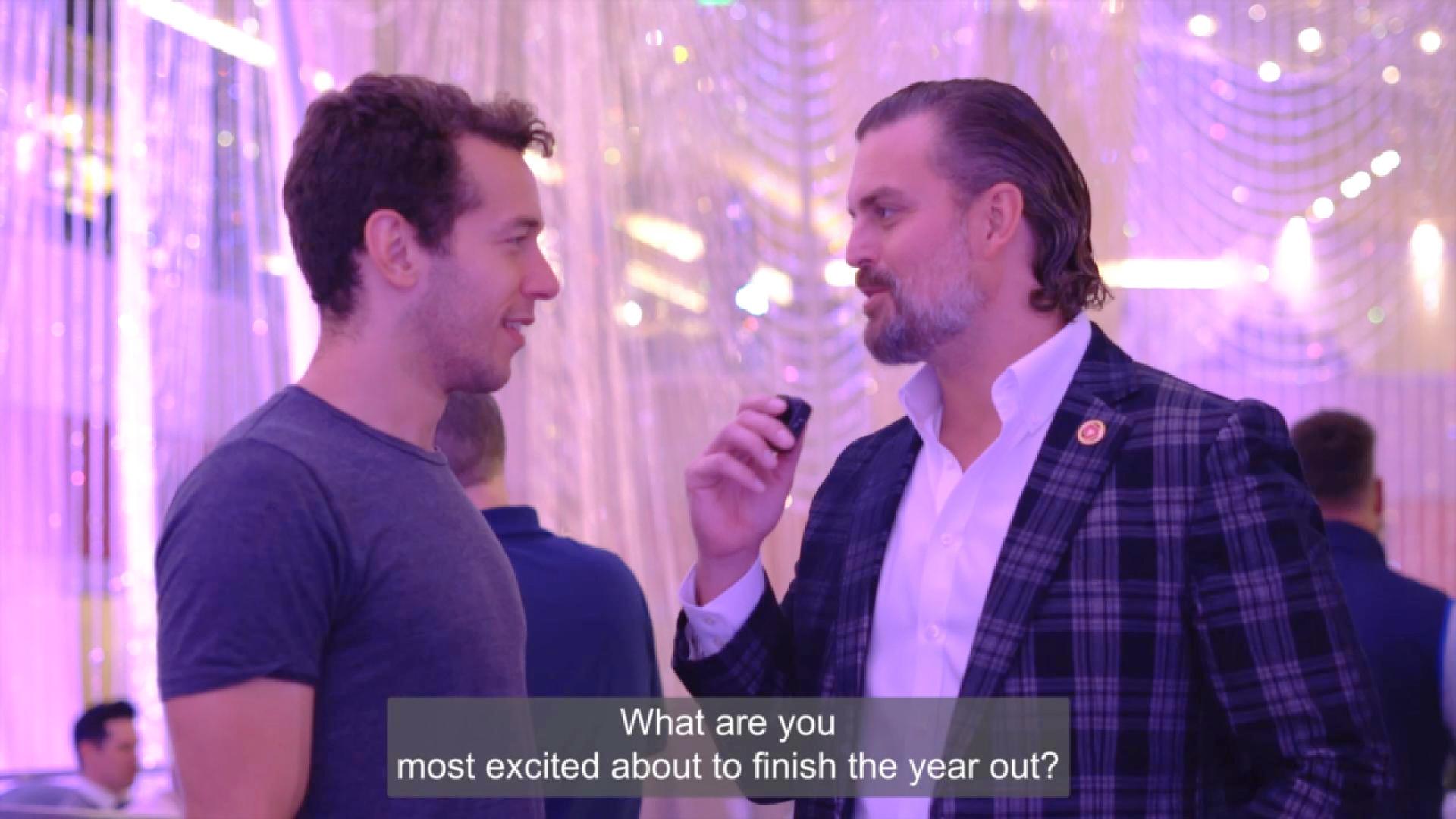
Across roofing, remodeling, and home services, contractors are entering a period where better tools are no longer seen as optional upgrades. They are becoming essential parts of how companies improve speed, visibility, and sales execution.
The strongest operators are not waiting for the market to force change.
They are preparing before the next growth cycle arrives.
That is one of the clearest lessons from the Las Vegas conversation. Product launches are becoming strategic moments in contractor growth. They are not just announcements. They are signals of where the market is heading.
Leaders want technology that helps teams respond faster, coach better, understand more, and perform with greater consistency in the home.
This is transforming home improvement in a practical way.
The companies that lead the next cycle will likely be the ones that invest early in field sales technology, sharpen their systems before the market shifts, and build a stronger operating advantage before competitors catch up.
In today’s market, innovation is no longer about looking modern.
It is about building better field performance before the next homeowner conversation even begins.
Near the close of the conversation, Greg Cummings brought the moment back to its most human point.
He did not talk first about revenue, rankings, or market share.
He talked about people.
“And so that’s why you’re number one on our list of all due diligence that we’ve done. The impact that you’ve had on not just these companies, but the families of the people that work with these companies…” Greg Cummings
That observation gave the interview its strongest emotional weight.
In home improvement, growth is never only about company performance.
Every stronger close rate can mean steadier work for a crew. Every better-trained sales rep can mean more confidence for a household. Every contractor that scales the right way creates ripple effects across employees, families, suppliers, and local communities.
That is why the most important contractor growth stories are rarely measured by software adoption alone.
They are measured by what that growth makes possible for the people behind the business.
This is becoming one of the defining standards of leadership across home improvement.
The industry increasingly respects leaders whose work creates more than operational gains. It respects leaders whose platforms help businesses become stronger employers, stronger partners, and stronger contributors to the communities they serve.
That was the deeper takeaway from the conversation in Las Vegas.
The strongest technology does more than improve performance.
It helps people build better lives through stronger businesses.
The conversation in Las Vegas showed where home improvement is heading. What Sebastian Jimenez and Rilla have done beyond that event helps explain why so many leaders across the industry are paying attention.
This is no longer simply a story about a fast-growing software company.
It is becoming a story about category leadership.
In the 2026 Preferred Partners rankings, Rilla earned the #2 position, placing it among the most trusted companies for the nation’s top home improvement CEOs to partner with. That recognition matters because it reflects more than visibility. It reflects confidence from decision-makers who are constantly measuring what actually helps contractors improve sales performance, coach better teams, and create more predictable growth.
That ranking also signals something larger. Voice analytics, conversation intelligence, and field coaching are no longer sitting on the edge of contractor operations. They are moving closer to the center of how top-performing companies train, manage, and scale.
Sebastian and his team have continued pushing that shift forward.
At the latest edition of Rilla Masters, Rilla introduced Rick Copilot, an AI coaching tool designed to mirror how a sales leader coaches inside the platform. The idea is simple but powerful. The more a leader coaches, the more the system learns. Over time, it becomes better at reflecting that same coaching style back to the team.
For contractors, that represents a major leap in how sales knowledge gets passed down.
Instead of strong coaching living only inside the head of one manager, it can now become more repeatable across the business. That matters in home improvement because one of the hardest parts of scaling has always been turning the instincts of top leaders into systems the whole team can use.
Just as important is the community forming around that idea.
Rilla Masters has quickly become one of the most relevant annual gatherings for sales leaders, coaches, contractors, and executives across home services. More than a product event, it has become a place where leaders study in-person sales like a performance discipline. The conversations center on AI coaching, real-time sales analytics, and building repeatable playbooks that help teams perform at a higher level in the home.
That kind of community building is shaping how new ideas spread across the industry.
The impact is also reaching beyond conferences.
One of the clearest recent examples came through Rilla’s collaboration with Neighborly, one of the largest home services networks in the world. Working together, the two organizations have helped plumbers, HVAC technicians, and home service professionals improve how they train, sell, and serve homeowners.
The speed of that impact stood out.
Only five months after joining forces, Rilla was named Vendor of the Year at Neighborly’s conference. The award was voted on by franchise owners themselves, making it one of the strongest forms of market validation possible.
That recognition says something important.
The companies earning trust across home improvement today are not simply introducing new technology. They are helping real teams improve real outcomes in the field.
That is where Sebastian Jimenez and Rilla stand out.
They are not only building tools.
They are helping shape a more disciplined sales culture, a stronger contractor learning ecosystem, and a new model for how home improvement companies grow stronger from the inside out.
One of the clearest messages to come out of the Las Vegas conversation was that home improvement growth is changing in a very important way.
For years, relationships were often the main engine behind growth. Strong referrals, trusted reputations, and personal selling skills helped many contractors build great businesses.
Those things still matter.
But today, they are no longer enough on their own.
The industry is moving toward a new model. It is becoming a relationship-plus-performance business.
That means contractors are not only asking who can bring in the next opportunity. They are asking what happens once that opportunity reaches the home.
How does a sales rep handle objections?
How does a manager coach that conversation afterward?
How does the company learn from that interaction so the next rep performs better?
That is where Rilla is helping reshape the operating model of modern contractors.
Instead of relying only on instinct, more companies are building systems around smarter coaching. Instead of hoping good habits spread naturally, they are using real field conversations to create repeatable sales behaviors across the entire team.
That shift is creating stronger discipline inside sales organizations.
Leaders can now see more clearly what top performers do differently. They can understand how certain phrases build trust faster, how better discovery creates stronger homeowner conversations, and how small improvements in the field can create meaningful gains in close rates.
The impact goes beyond individual reps.
When learning becomes faster, entire organizations become sharper.
New hires ramp up sooner. Managers coach with more precision. Owners gain better visibility into what is really happening inside the sales process. That makes growth more predictable, especially in roofing, exterior remodeling, and home services where every appointment carries real value.
Sebastian Jimenez captured the larger meaning of that shift without saying it directly. When he reflected on how only one hand went up in 2022 and how most of the room raised their hands this time, he was describing more than product adoption.
He was describing a change in how contractors think.
They are no longer looking only for more leads.
They are looking for better execution.
That is one of the most important transformations happening in home improvement today.
The companies pulling ahead are increasingly the ones that can combine trusted relationships with stronger coaching, smarter field intelligence, and a more repeatable path to sales performance.
That is where the next generation of contractor growth is being built.
What happened at the Angi and Hatch gathering in Las Vegas felt bigger than a strong night of industry conversation.
It offered a clear look at where home improvement is headed next.
The rapid-fire exchange between Greg Cummings and Sebastian Jimenez was not centered on hype. It was centered on something much more grounded.
Leaders across the industry are becoming more intentional about how they grow.
They are building companies that learn faster, communicate better, and create stronger results from the opportunities already in front of them. The future is starting to favor businesses that can turn everyday field conversations into stronger teams, better homeowner experiences, and more dependable performance over time.
That is why this conversation mattered.
It reflected an industry growing up.
It showed a market that is becoming more thoughtful, more measured, and more focused on building lasting strength instead of chasing short-term wins.
And perhaps the clearest sign of that change came through one simple memory.
A few years ago, only one hand went up.
Now, a room full of contractors recognizes a different way forward.
That moment said more than any market forecast could.
It showed that the next chapter of home improvement is already taking shape, and the companies that embrace learning, discipline, and stronger execution today will be the ones helping define what leadership looks like tomorrow.
Membership unlocks every Power100 interview, PowerChat episode, and expert playbook - free for industry leaders.

Power100 is the nation's premier CEO ranking and media platform for the home improvement industry. Using a proprietary 5-layer evaluation system, Power100 identifies and celebrates the top CEOs, companies, and strategic partners driving innovation, customer satisfaction, and leadership excellence across the country.