IBS 2026 revealed that the future of home improvement will belong to companies willing to adapt faster, embrace AI and innovation earlier, and rethink how modern residential construction businesses grow...

Power100 reviews IBS 2026 Orlando, where 70,000 plus residential construction pros explored AI, building innovation, sustainable home design, product discovery, and the future of growth in the home improvement industry.
The 2026 NAHB International Builders’ Show, known across the industry as IBS 2026, brought more than 70,000 industry pros from over 100 countries to Orlando, Florida, from February 17 to 19, 2026. As one of the largest residential construction events in the world, IBS 2026 gave builders, remodelers, contractors, product makers, and industry leaders a close look at what is next in home building, home improvement, building technology, product innovation, and sustainable design.
The event featured more than 1,700 top companies and brands, over 120 education sessions, live product demos, the new AI & Tech Studio, Pro Builder Show Village, The New American Home, and The New American Remodel. Together, these parts of the show made one thing clear. IBS 2026 was not just about products. It was about how the home improvement industry must think, work, lead, and grow in a world that is changing fast.
Power100 CEO Greg Cummings attended IBS 2026 in Orlando to meet with attendees, speak with vendors, capture real insight from the show floor, and hear from industry voices like Paul Burleson, whose message on AI and business change became one of the strongest themes from the event. Power100 came to IBS 2026 not just to watch the event, but to understand what the best companies are doing differently and what home improvement leaders must pay attention to now.
Power100 is the only unbiased third-party platform that recognizes and elevates the top leaders and most impactful companies in the home improvement industry. Through its presence at IBS 2026, Power100 saw a clear shift taking place. The future of home improvement will belong to leaders who are willing to learn, use new tools, build stronger systems, form better partnerships, and adapt before the market forces them to.
The 2026 NAHB International Builders’ Show in Orlando was built for one purpose: to help residential construction leaders understand what the future of the industry looks like before it fully arrives. For three days, builders, remodelers, contractors, suppliers, manufacturers, and business owners walked through packed exhibit halls searching for ideas that could help them operate smarter, grow faster, and stay competitive in a changing market. But beyond the products and displays, the real value of IBS 2026 came from the conversations happening between people trying to solve the same challenges across the home improvement industry.
This year’s event attracted more than 70,000 attendees from over 100 countries and featured more than 1,700 companies and brands showcasing new products, building systems, software, materials, and technology solutions. The scale of the event showed just how large and connected the residential construction industry has become. At the same time, it also revealed something deeper. Leaders are no longer coming to these events just to browse products. They are coming to find answers. They want to know how to hire better, serve customers faster, use AI effectively, improve operations, and build companies that can survive the next decade of change.
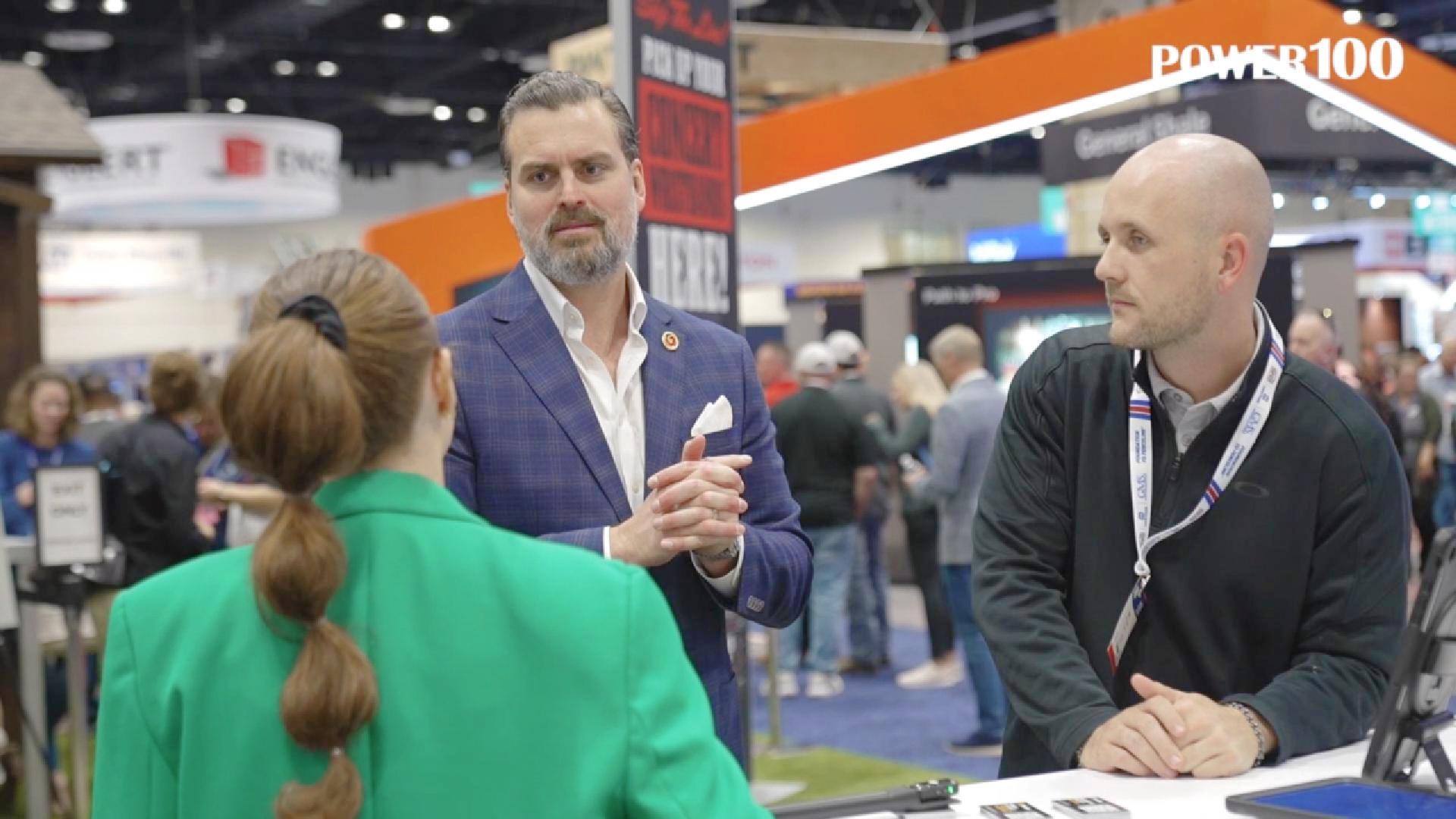
That urgency could be felt throughout the show floor. The rapid fire interviews conducted during the event captured a consistent theme from attendees. People came to Orlando looking for what is next. Some talked about researching new products and innovations. Others focused on networking, customer meetings, and finding stronger business partnerships. Many spoke about the energy inside the building and the importance of stepping outside daily routines to see how the industry is evolving in real time.
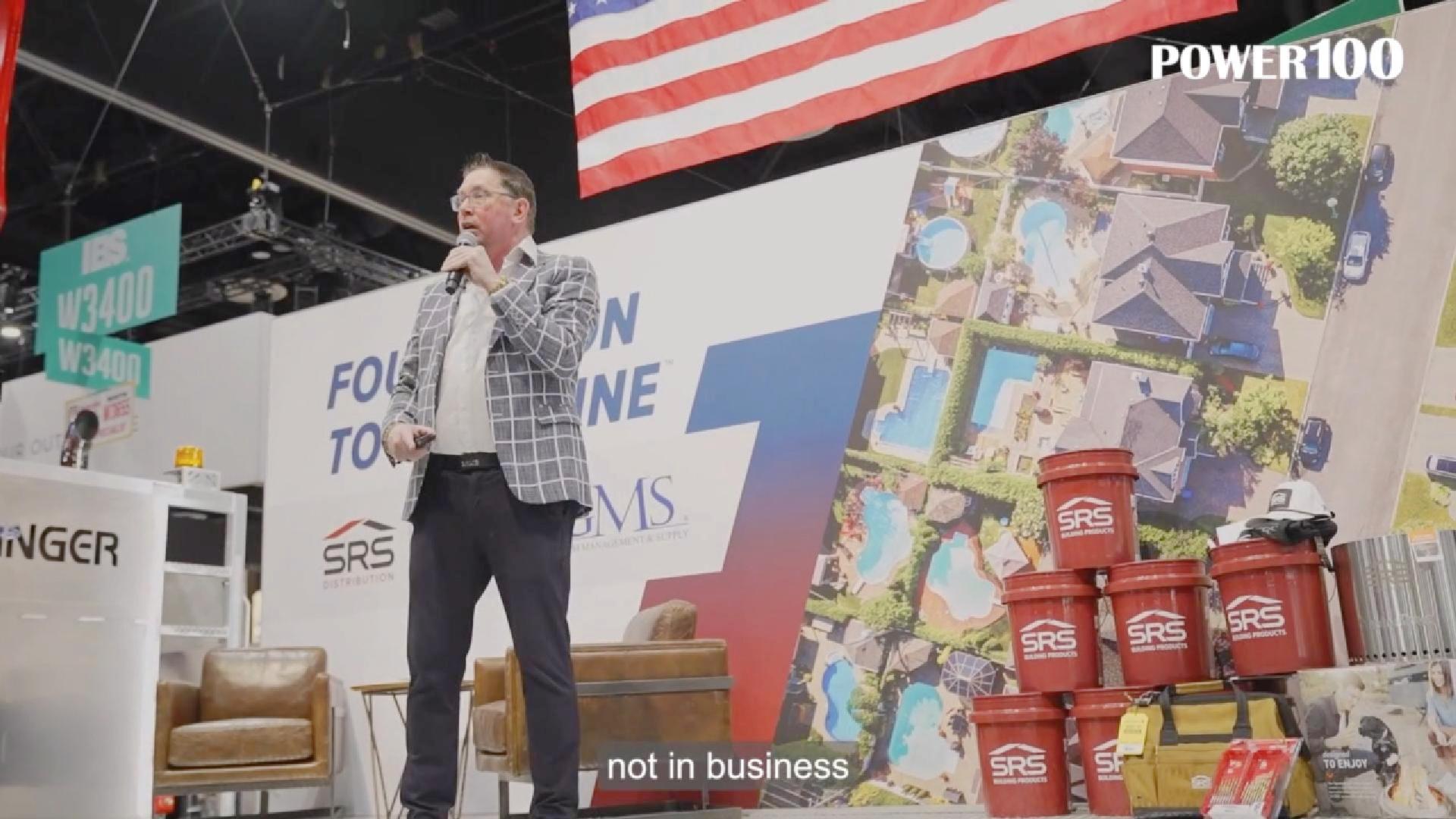
The education sessions also played a major role in shaping the experience. With more than 120 learning sessions and the introduction of the AI & Tech Studio, IBS 2026 placed a major spotlight on construction technology, operational growth, and modern leadership. AI became one of the most talked about topics across the event, especially after Paul Burleson’s message on the SRS stage challenged contractors to adapt before the market leaves them behind. His words reflected a larger shift taking place across residential construction. The companies willing to learn new systems and embrace innovation are starting to separate themselves from companies still relying on outdated methods.
IBS 2026 also showed how quickly customer expectations are changing inside home improvement. The New American Home and The New American Remodel demonstrated how sustainability, energy efficiency, luxury design, and modern function are now becoming standard expectations rather than niche ideas. Builders and contractors are now being pushed to think beyond simple installation and focus more on long term performance, smarter living, and overall homeowner experience.
What made the event especially important was how many different parts of the industry came together in one place. From roofing and remodeling to design, manufacturing, technology, and home services, IBS 2026 became a live snapshot of an industry trying to modernize together. It gave attendees a chance to see not only what products are changing the market, but also what type of leadership mindset may define the next generation of successful companies.
As conversations continued across the show floor at IBS 2026, one thing became impossible to ignore. The home improvement industry is no longer standing at the edge of change. It is already inside it. Builders, contractors, manufacturers, and business leaders are now operating in a market where technology, speed, visibility, customer expectations, and operational intelligence are reshaping how successful companies grow.
The rapid fire interviews and leadership discussions throughout the event revealed an industry moving away from old habits and toward a more connected, technology driven, and future focused operating model. Many leaders arrived in Orlando looking for new products. What they found instead was a larger wake up call about what the next chapter of residential construction may require.
One of the strongest messages from IBS 2026 came directly from Paul Burleson’s keynote conversation at the SRS stage. His message was not cautious or theoretical. It was direct, urgent, and impossible to misunderstand.
“If you don’t change, you will die.” Paul Burleson
That statement captured the growing pressure many contractors and home improvement companies are now facing. AI is no longer being discussed as a future experiment. It is becoming part of daily operations inside modern businesses. From customer communication and marketing to sales systems, hiring, scheduling, and search visibility, companies are starting to realize that technology may soon determine who gets discovered and who gets ignored.
Several attendees reinforced that same reality during conversations on the floor. One contractor explained that their company already uses AI every day and sees major opportunities for businesses willing to learn how to use it correctly. Another attendee openly admitted that companies refusing to adapt could quickly fall behind competitors that move faster and operate smarter.
The larger shift happening across home improvement is not simply about software. It is about business survival. AI driven systems are beginning to reshape how homeowners search for contractors, how businesses respond to leads, and how teams make decisions. Companies that once relied only on reputation and referrals are now being challenged to think about discoverability, automation, speed, and digital presence in ways they never had to before.
IBS 2026 showed that the residential construction industry is slowly moving from manual operations toward intelligent workflows that help companies scale faster, communicate better, and operate more efficiently.
Walking through IBS 2026 felt less like visiting a traditional trade show and more like stepping into the next version of the home improvement industry. Everywhere attendees looked, companies were showcasing smarter products, faster systems, high performance materials, and solutions designed around efficiency and scalability.
Manufacturers were no longer talking only about products. They were talking about speed, integration, customer experience, sustainability, and operational performance. Builders and contractors were being introduced to tools that could help reduce waste, improve timelines, simplify workflows, and deliver better homeowner experiences at scale.
This shift matters because the pace of innovation inside residential construction is accelerating quickly. Companies that once had years to slowly adapt may now have much shorter windows to evolve before competitors gain an advantage.
Several attendees spoke about coming to IBS specifically to research new products and discover innovations they could immediately bring back to their companies. That mindset reflected a larger industry trend. Leaders are no longer waiting for change to reach them. They are actively searching for it.
The event also showed how home improvement companies are beginning to think beyond simple installations and transactions. More businesses are focusing on complete systems that improve operations, strengthen customer trust, and create long term scalability. The companies investing early into smarter operations are beginning to separate themselves from businesses still operating with outdated processes.
Another important shift revealed throughout the event was how visibility is changing across the home improvement industry. In the past, many contractors built strong businesses mainly through referrals, reputation, and local relationships. While those things still matter deeply, IBS 2026 showed that digital visibility is becoming just as important.
AI driven search systems, online discovery tools, and evolving homeowner behavior are changing how customers choose contractors and service providers. Businesses are now being forced to think differently about how they appear online, how information about their company is structured, and whether digital systems can easily recognize and recommend them.
Paul Burleson addressed this directly during his discussion about AI visibility. His warning centered around the idea that companies failing to invest in information, content, and digital presence may become harder to find as AI tools increasingly shape search and customer behavior.
That message connected strongly with many attendees because the industry is beginning to understand that being trusted locally may no longer be enough on its own. Companies also need to become visible at scale.
The conversation throughout IBS 2026 reflected a larger transformation happening across residential construction. Businesses are moving from local thinking toward scalable systems designed to help them compete in a more connected digital market.
One reason the event felt different from many traditional conferences was because attendees were not searching for motivation alone. They were searching for practical answers.
The education sessions, live demonstrations, exhibit halls, and AI & Tech Studio all reflected an industry focused heavily on execution. Contractors wanted tools they could apply immediately. Builders wanted strategies that solved real operational problems. Leaders wanted systems that could help them grow without creating chaos inside their companies.
During interviews throughout the event, attendees consistently talked about learning new ideas, exploring better systems, and finding innovations they could bring back to their businesses right away. The energy inside the building came from people actively searching for solutions rather than simply consuming information.
This reflects a major shift happening across home improvement leadership. Companies are becoming more operationally focused. They are thinking more deeply about systems, workflows, hiring, communication, scalability, and customer experience.
IBS 2026 showed that modern contractors are no longer just installers or sales organizations. Many are evolving into sophisticated businesses looking for operational intelligence that can help them compete in a rapidly changing market.
One of the deeper themes running throughout IBS 2026 was the idea that experience alone may no longer guarantee future success.
For years, many companies in residential construction relied on systems and habits that worked for decades. But the conversations at IBS revealed a growing understanding that past success does not automatically prepare companies for future disruption.
Paul Burleson addressed this mindset directly when he challenged leaders who continue repeating the same business behaviors year after year while expecting different outcomes.
“You cannot have 30 years of the same one year experience repeated over and over again.” Paul Burleson
That message resonated because many attendees recognized how quickly the market is evolving. Technology is changing. Customer expectations are changing. Hiring challenges are changing. Marketing systems are changing. The companies succeeding today are often the ones willing to stay curious and keep learning.
IBS 2026 highlighted a new leadership model emerging inside home improvement. The strongest leaders are no longer simply the ones with the longest history. They are the ones willing to adapt fastest, study new ideas, and remain open to change.
The industry is beginning to move from reactive growth toward proactive innovation driven by education, collaboration, and continuous learning.
Beyond the stages, products, and technology, one of the most powerful aspects of IBS 2026 was the sense of connection happening across the event.
With more than 70,000 attendees from over 100 countries, the show became a global exchange of ideas, relationships, partnerships, and future planning. Conversations happened everywhere. Builders met suppliers. Contractors met technology companies. Leaders exchanged strategies. Teams explored partnerships that may shape future growth.
Several attendees spoke about the importance of stepping outside the office environment and seeing what the rest of the industry is doing. Others described the energy of the event as one of the biggest reasons they attended.
That energy reflected something larger happening across residential construction. The industry is becoming more collaborative, more informed, and more connected than ever before. Companies are no longer growing in isolation. They are learning from each other, studying best practices, and building partnerships that help them move faster together.
IBS 2026 became more than a trade show. It became a live ecosystem of collaboration where leaders could see how the future of home improvement is being built in real time.
The conversations happening at IBS 2026 are only a small part of the larger transformation happening across residential construction. Leaders who want deeper insights into AI, operational growth, hiring, customer experience, and future industry trends can explore more through The Inner Circle community led by Greg Cummings and Paul Burleson.
While the massive exhibits, education stages, and product showcases captured attention across Orlando, the true heartbeat of IBS 2026 came from something much more human. It came from the conversations happening in hallways, on the show floor, inside booths, during customer meetings, and between leaders trying to understand where the home improvement industry is headed next.
Throughout the event, Greg Cummings spoke with builders, contractors, manufacturers, vendors, and attendees in a series of rapid fire interviews that revealed something deeper than product trends. The conversations exposed an industry actively searching for clarity, direction, connection, and new ways to compete in a rapidly changing market.
What emerged from those discussions was not fear. It was awareness. The people walking the floor understood that the industry is changing faster than ever before, and many came to IBS 2026 searching for the tools, relationships, and insights that could help them stay ahead.
One of the strongest patterns from conversations throughout the event was the hunger to discover what comes next. Attendees repeatedly spoke about searching for new products, learning new trends, studying innovations, and finding systems that could help improve their business.
Some came looking for operational advantages. Others came searching for stronger partnerships or better ways to serve customers. But nearly every conversation reflected curiosity. There was a clear sense that many leaders no longer believe standing still is safe.
One attendee explained that they came to the show specifically to “research new products” and “find new innovations.” Another shared how important it was to see what companies across the industry are building and where the market may be moving next.
That curiosity matters because it signals a larger transformation inside residential construction. Contractors are no longer only focused on maintaining what already works. More companies are actively searching for smarter systems, better workflows, stronger customer experiences, and scalable business models that can help them grow in a more competitive environment.
IBS 2026 revealed that the future of home improvement may belong to companies willing to stay curious long before change becomes unavoidable.
Beyond the technology and business conversations, IBS 2026 reminded many attendees how valuable real human connection still is inside the construction and remodeling world.
Several professionals spoke about the importance of getting outside the office, reconnecting with peers, and spending time around people facing similar challenges. In a business environment increasingly shaped by screens, automation, and digital communication, the event created space for face to face interaction that many leaders said they deeply valued.
“We love the energy at the show.” IBS Attendee
That short statement captured the atmosphere throughout the event. There was excitement in the air because people were not simply consuming information online. They were sharing ideas in real time, asking questions, learning from one another, and building relationships that could lead to future partnerships and growth.
The residential construction industry has always been built on relationships. IBS 2026 showed that this truth still matters deeply, even as technology continues to reshape operations and communication. Builders, contractors, and suppliers still want collaboration. They still want trusted relationships. They still want to learn from people who understand the realities of the business.
The event reflected an industry slowly evolving into a more connected and collaborative ecosystem where shared knowledge may become one of the biggest advantages companies can have.
The massive turnout at education sessions throughout IBS 2026 revealed another important shift taking place across home improvement leadership. Learning is no longer being treated as an optional activity. It is becoming a core business strategy.
The introduction of the AI & Tech Studio became one of the clearest symbols of this evolution. Contractors, business owners, and leaders packed sessions focused on artificial intelligence, operational growth, technology systems, and modern business strategies because many recognized they can no longer rely only on past experience.
Leaders came to Orlando searching for practical education that could help them future proof their companies. They wanted to understand how customer behavior is changing, how AI may impact business visibility, how technology can improve operations, and how modern systems can help companies scale more efficiently.
This growing focus on education reflects a major change happening across residential construction. Companies are becoming more intentional about leadership development, operational intelligence, and long term planning.
IBS 2026 showed that the strongest businesses may not simply be the companies with the biggest budgets or longest history. They may be the companies willing to keep learning while the industry evolves around them.
At previous industry events, artificial intelligence may have felt like an emerging trend or distant topic. At IBS 2026, it felt immediate.
Conversations about AI were happening throughout the show floor, inside booths, during interviews, and across education sessions. Contractors openly discussed how they are already using AI inside operations, communication systems, marketing, scheduling, and customer engagement.
One attendee explained that AI is already part of their daily workflow and described the opportunities available for contractors willing to embrace it. Another attendee reinforced Paul Burleson’s warning by explaining that companies ignoring AI risk being “completely left behind.”
That urgency represented a major shift inside the home improvement industry. AI is no longer being discussed only by technology companies. It is now becoming part of everyday conversations between contractors, builders, and operators trying to improve efficiency and remain competitive.
The event showed that many businesses are beginning to understand something important. AI is not replacing the human side of home improvement. Instead, companies are exploring how technology can help teams communicate faster, organize information better, respond to customers more effectively, and make smarter operational decisions.
Residential construction is becoming a more technology informed industry where adaptation is quickly turning into a survival skill.
While products and exhibits played a major role at IBS 2026, many attendees found equal value in the opportunities created through networking, meetings, and unexpected conversations.
Some professionals attended specifically for customer meetings. Others came looking for partnerships, vendors, suppliers, or strategic relationships that could help strengthen their business moving forward. Across the event, the show floor became more than an exhibition space. It became a live business ecosystem where opportunities existed in nearly every direction.
“It’s nice to kind of get out of the office and see what’s out there, open your mind.” Greg Cummings, CEO, Power100
That perspective reflected the mindset many leaders carried into the event. IBS 2026 created an environment where people could step outside their normal routines, exchange ideas freely, and discover opportunities they may never have encountered otherwise.
The residential construction industry is becoming more interconnected than ever before. Relationships between contractors, manufacturers, technology companies, and suppliers are increasingly shaping how businesses grow and adapt.
IBS 2026 highlighted how collaboration is becoming one of the strongest drivers of innovation inside home improvement.
As conversations continued throughout the event, another trend became increasingly clear. The strongest companies in home improvement are no longer thinking only about the products they install. They are thinking about the systems that support long term growth.
Attendees spoke about customer experience, operational structure, hiring challenges, team development, scalability, leadership, and business culture just as often as they discussed materials or products. This reflected a major evolution taking place across the industry.
The modern contractor is becoming far more than a salesperson or installer. Many are evolving into business strategists responsible for building systems that can support sustainable growth in an increasingly competitive market.
IBS 2026 revealed that operational excellence is becoming one of the biggest separating factors between companies. Businesses are paying closer attention to workflows, communication systems, employee development, customer retention, and organizational structure because these areas directly impact scalability and long term success.
The home improvement industry is beginning to shift from reactive operations toward leadership driven growth built around systems, collaboration, learning, and strategic thinking.
Leaders looking to stay ahead of the rapid changes happening across residential construction can continue learning through The Inner Circle community led by Greg Cummings and Paul Burleson. The platform gives contractors, home service leaders, and business owners access to ongoing conversations, industry insights, leadership strategies, and real time discussions about where the market is headed next.
As IBS 2026 came to a close, one message stood above everything else discussed throughout the event. The future of home improvement will not be shaped only by the biggest companies or the oldest brands. It will be shaped by the companies willing to adapt faster, learn quicker, and respond to change before competitors do.
Across education stages, rapid fire interviews, networking conversations, and exhibit halls, the event exposed a growing divide forming inside residential construction. On one side are companies actively embracing technology, innovation, operational systems, and modern leadership strategies. On the other side are businesses still relying on methods that may no longer match where the market is headed.
What made this realization powerful was not fear alone. It was urgency. IBS 2026 showed that change inside home improvement is accelerating quickly, and many leaders now understand that waiting too long to evolve may become one of the biggest risks a company can take.
One of the strongest emotional takeaways from IBS 2026 was the growing belief that adaptation is no longer optional inside the home improvement industry.
Artificial intelligence, operational technology, smarter workflows, digital communication systems, and modern customer expectations are reshaping how companies operate faster than many expected. Businesses that once had years to slowly respond to industry shifts may now have much smaller windows to evolve.
Throughout the event, leaders repeatedly discussed the importance of staying open to change. Conversations about AI, automation, hiring systems, communication tools, and operational efficiency reflected an industry beginning to realize that traditional business models alone may no longer provide enough protection in a rapidly changing market.
Paul Burleson’s message became one of the defining moments of the event because it captured this urgency directly.
“If you don’t change, you will die.” Paul Burleson
His statement was not positioned as fear driven marketing. It reflected the reality many contractors are already seeing in real time. Companies using smarter systems are moving faster, communicating better, organizing operations more effectively, and positioning themselves more competitively in the market.
IBS 2026 revealed that adaptation itself is becoming one of the most valuable business skills in residential construction. The companies willing to evolve early may gain major advantages before slower competitors fully recognize what is happening around them.
Another major shift discussed throughout the event centered around changing homeowner expectations.
Today’s customers expect speed, convenience, responsiveness, transparency, and communication in ways that are reshaping how contractors and home improvement companies operate. Technology is playing a major role in making those expectations possible.
From AI powered communication systems to smarter scheduling tools, automated workflows, customer tracking systems, and faster response times, businesses are beginning to understand that homeowners now compare service experiences across every industry they interact with, not just construction alone.
The companies investing into technology and operational systems are increasingly able to create smoother customer journeys that feel more modern, organized, and responsive. Meanwhile, businesses still operating with disconnected processes may struggle to keep pace with rising expectations.
IBS 2026 highlighted how customer experience is becoming one of the biggest growth drivers inside residential construction. Homeowners are not only buying products anymore. They are evaluating the full experience surrounding communication, trust, organization, professionalism, and follow through.
This shift is pushing contractors to think more strategically about how technology supports service quality, customer retention, and long term brand trust.
The New American Home and The New American Remodel became major symbols of another important transformation taking place across home improvement. Sustainability and performance are no longer viewed as specialty features reserved for a small group of buyers. They are becoming mainstream expectations.
Throughout IBS 2026, builders, designers, and manufacturers showcased homes and systems focused on energy efficiency, smarter living, long term durability, and modern functionality. Buyers are becoming more aware of how homes perform over time, and builders are responding by creating solutions that prioritize efficiency alongside comfort and design.
This evolution is changing how many contractors approach residential construction. More companies are designing projects around long term homeowner value rather than short term installation goals alone.
The event reflected how modern consumers increasingly care about energy savings, sustainability, home performance, and overall living experience. Builders and remodelers who understand these changing priorities may be better positioned to meet the demands of future homeowners.
IBS 2026 demonstrated that the future of home improvement will likely reward companies that think beyond the immediate project and focus more deeply on long term quality, performance, and homeowner outcomes.
Another major realization from the event was how much IBS itself has evolved over time.
What was once viewed mainly as a large trade show is now becoming something much larger for the residential construction industry. IBS 2026 functioned as a live intelligence center where contractors, manufacturers, suppliers, and business leaders gathered to understand where the market is heading before those changes fully reach local markets.
The event gave attendees the ability to study emerging technology, evaluate business trends, hear from forward thinking leaders, and observe how the industry is shifting in real time. That access to information may become one of the biggest advantages companies gain from attending.
Leaders throughout the event were not simply shopping for products. Many were actively studying operational systems, customer trends, technology adoption, branding strategies, and future business models that could help prepare them for the next phase of growth.
This shift matters because residential construction is becoming more competitive, more connected, and more sophisticated every year. Companies that understand industry movement earlier may position themselves far ahead of businesses waiting for change to become unavoidable.
IBS 2026 showed that events like this are no longer optional networking experiences for ambitious companies. They are becoming strategic learning environments where future industry direction is shaped.
One of the clearest transformations visible throughout IBS 2026 was the increasing sophistication of modern home improvement companies.
Contractors are no longer thinking only about installations, crews, and sales numbers. Many are now operating with the mindset of advanced growth organizations focused on systems, branding, customer experience, operational structure, leadership development, scalability, and long term business health.
Conversations throughout the event repeatedly touched on hiring systems, culture building, process improvement, communication strategies, customer retention, and operational efficiency. This reflects how much the residential construction industry is evolving from traditional contracting models into more structured, enterprise level businesses.
The companies growing successfully today are often the ones building strong internal systems capable of supporting long term scalability. Operational excellence is becoming just as important as craftsmanship.
IBS 2026 revealed that the future of home improvement may increasingly belong to businesses capable of combining strong service with smart operations, modern leadership, and scalable systems.
The industry is becoming more strategic, more data informed, and more operationally advanced than ever before.
As conversations unfolded throughout Orlando, another theme continued to appear across interviews, education sessions, and networking discussions. The companies adapting fastest are often the ones staying most curious.
Leaders who remain open minded, willing to learn, and eager to study changing market conditions are beginning to separate themselves inside residential construction. Many attendees came to IBS 2026 specifically because they understood they could not afford to stop learning.
That mindset may become one of the most important competitive advantages in the next decade of home improvement.
The pace of technological change, evolving customer behavior, operational innovation, and market disruption means companies must continue learning long after they become successful. IBS 2026 showed that many leaders are beginning to embrace this reality instead of resisting it.
Curiosity is becoming more than a personality trait. It is becoming a business strategy.
The event ultimately revealed a larger transformation happening across residential construction. Home improvement is becoming smarter. Leadership is becoming more strategic. Technology is becoming foundational. Customer expectations are rising. And contractors are evolving into highly sophisticated growth organizations capable of operating far beyond traditional industry models.
As the final conversations wrapped up and thousands of attendees began leaving Orlando, IBS 2026 left behind something much bigger than product announcements, education sessions, or networking opportunities. It left behind a challenge for the entire home improvement industry.
The event revealed a residential construction market standing at the beginning of a major transformation. Builders, contractors, manufacturers, and business leaders are entering a new era where adaptability, operational intelligence, technology, leadership, and collaboration may determine which companies grow stronger over the next decade and which companies struggle to keep pace.
What made IBS 2026 powerful was not simply the scale of the event. It was the awareness shared across the people attending it. Leaders throughout the show floor recognized that the industry is changing faster than many expected. Artificial intelligence is reshaping communication and visibility. Homeowners are demanding smarter experiences. Businesses are becoming more system driven. Collaboration is becoming more valuable. Education is becoming a long term growth strategy instead of a short term activity.
At the same time, the event also created optimism. Many companies are not running from change. They are leaning into it. They are investing into better leadership, stronger operations, smarter systems, and future focused thinking that can help them continue growing in an increasingly competitive environment.
IBS 2026 also showed that the future of home improvement will likely be shaped by leaders willing to stay open minded and proactive before the market forces them to react. The companies asking better questions today may become the businesses leading the industry tomorrow.
For Greg Cummings and the conversations captured throughout the event, one message remained consistent from beginning to end. The home improvement industry is filled with builders, contractors, innovators, and leaders who are actively trying to improve how the industry operates, serves homeowners, and grows responsibly in a changing world.
That mission aligns closely with the work being done every day to spotlight the leaders, companies, and conversations helping move residential construction forward. As the industry continues evolving through technology, innovation, education, and collaboration, those stories will become even more important for contractors and business owners looking for direction in uncertain times.
IBS 2026 proved that the future of home improvement will not belong to the biggest companies. It will belong to the companies willing to evolve the fastest.
Membership unlocks every Power100 interview, PowerChat episode, and expert playbook - free for industry leaders.
Power100 is the nation's premier CEO ranking and media platform for the home improvement industry. Using a proprietary 5-layer evaluation system, Power100 identifies and celebrates the top CEOs, companies, and strategic partners driving innovation, customer satisfaction, and leadership excellence across the country.