
Press Release
Canvassing Not for You? Situational Canvassing Strategies U.S. Home Improvement Contractors Use to Win Neighborhood Referrals...
Canvassing Not for You? Change the Paradigm and Win the Neighborhood
Top Companies - Brian McCauley
May 21, 2026 | 5 min Read

Discover how U.S. home improvement, home services, and outdoor living contractors use situational canvassing around active jobs to win neighborhood trust, generate local homeowner referrals, and turn every project into a low‑cost lead engine
By Brian McCauley, Founder of The Sales Guy and Director of Sales Training at Cornerstone Building Brands
I can’t tell you how many times I’ve mentioned the word “canvassing” during a sales training session and immediately seen the wide‑eyed reactions that practically say, “No thanks, not for me.” For a lot of home improvement, home services, and outdoor living contractors in the United States, canvassing still means walking through random neighborhoods, knocking on cold doors, and pitching strangers after dinner.
To be fair, many companies do run extremely successful canvassing programs. They invest heavily in training, coaching, and developing their teams, and they consistently generate high‑quality leads as a result. In fact, many contractors consider canvassing their single best source of new business and one of the best neighborhood marketing strategies for home improvement contractors.
But there are also plenty of remodeling professionals who wouldn’t touch traditional canvassing with a ten‑foot pole. They simply don’t want to spend their evenings knocking on strangers’ doors and delivering hard pitches.
If that sounds like you, I’d like to introduce a different approach, one that fits how modern local contractor marketing strategies for home services businesses actually work. I call it Situational Canvassing.
From “Not for Me” to Situational Canvassing
Here’s the pattern I see all over the country. A remodeling salesperson or contractor closes a job, walks back to the truck, turns on the radio, congratulates themselves, and heads to the next appointment. The crew is about to install a new roof, siding system, window package, or outdoor living space, and the whole neighborhood will see it, but the company leaves that opportunity untouched.
Instead, Situational Canvassing encourages you to spend an extra 10–15 minutes in the neighborhood knocking on a few nearby doors. The goal is not to sell on the spot. The goal is to create awareness and leave a positive impression.
The conversation might sound something like this:
“Good evening, this will only take a minute. I’m with XYZ Remodeling, and your neighbors next door selected us to install replacement windows in their home. We’ll be starting the project in the next few weeks, and we’d like to make nearby neighbors aware anytime we’re working in the area. We take pride in keeping a clean and organized job site, but occasionally, packaging materials can get blown around by the wind. If you happen to see one of our team members picking up debris in your yard, we simply want you to know why they’re there. If we ever miss anything, please don’t hesitate to contact me directly using the number on my card. Thank you for your understanding, and enjoy the rest of your evening.”
From the homeowner’s perspective, you’re not doing a high‑pressure sales pitch. You’re being professional, thoughtful, and respectful. You’re planting seeds, not demanding a decision.
This simple shift is a real‑world example of how outdoor living contractors build trust with homeowners and how remodeling companies generate local homeowner referrals without feeling like old‑school canvassers.
Why Situational Canvassing Works So Well
When you take this approach, several things happen immediately:
- Neighbors see you as organized and respectful, not aggressive.
- They start paying attention when your trucks and crews show up.
- They notice how clean you keep the job site and how you treat the property.
- They watch the craftsmanship on the roof, siding, windows, or deck you’re installing.
After the project is complete, there’s a strong chance those neighbors will wander next door to check out the finished work. They’ll ask your customer questions like:
- How was the experience?
- Was the quality good?
- Did the crew do what they promised?
- Would you recommend them?
If you’ve treated your customer right, the answers to those questions become some of the strongest marketing you could ever ask for. This is exactly how remodeling companies generate local homeowner referrals and how door‑to‑door lead generation ideas for roofing and remodeling companies become sustainable rather than pushy.
And yes, some of those neighbors will eventually become customers.
What You’re Really Doing: Neighborhood Storytelling
Situational Canvassing works because you’re not just chasing a quick appointment—you’re shaping the story of your brand in that neighborhood.
- You become “the contractor working on Sarah and Mike’s house down the street.”
- Your trucks, crews, and jobsite standards become part of what the neighborhood expects from a professional.
- When someone later searches online for a contractor, they recognize your name from their own street, which is powerful in AI‑driven local search and generative search results.
In today’s market, the best neighborhood marketing strategies for home improvement contractors are the ones that connect what homeowners see in person with what they later see online. Situational Canvassing sits right at that intersection.
Real Teams That Changed Their Canvassing Paradigm
In my role as Director of Sales Training at Cornerstone Building Brands and Founder of The Sales Guy, I spend a lot of time in the field with teams who are willing to look at canvassing differently, and their results show it.
Fayetteville, NC – Lowe’s Sales Associates
In Fayetteville, NC, home of Fort Bragg, I worked with a strong group of sales associates from Lowe’s Companies, Inc.. We focused on enhanced features and benefits and “tips to communicate them to customers more effectively, leading to more sales and happier customers.”
As we talked about canvassing, many of them admitted they didn’t see themselves as door‑knockers. So we reframed it:
- After a successful window, siding, or outdoor project through Lowe’s installation services, take 10 minutes to introduce yourself to a few neighbors.
- Let them know what work is happening, reassure them about cleanliness and traffic, and give them a clear way to reach you with questions.
That simple shift, away from “selling at the door” to “serving the neighborhood,” made the idea of canvassing far more natural. Several associates later shared that they picked up add‑on projects and referrals from those same streets because homeowners “already felt like they knew us.”
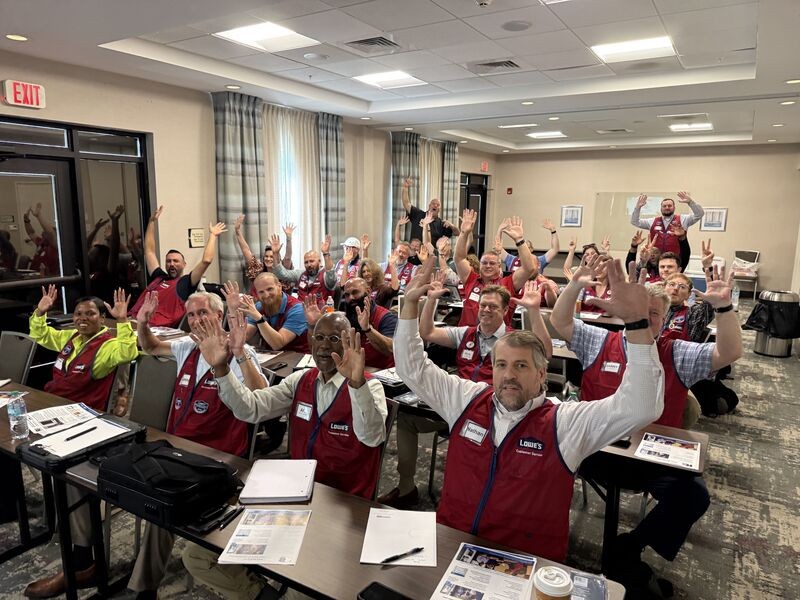
Shelby, NC – IHSS Teams at Lowe’s Companies
In Shelby, NC, I met with a group of IHSSs from Lowe’s Companies, Inc. as we introduced a new program focused on sound sales fundamentals and enhanced product differentiation.
We talked about staying out of pure price wars by becoming the most visible, most trusted option in the neighborhood. Situational Canvassing fit perfectly. Instead of hoping marketing alone would create demand, these teams started to use completed projects to quietly anchor their presence in each community.
Over time, they saw that being “the Lowe’s team that worked on three homes in our subdivision” made homeowners more confident reaching out, especially for larger home improvement and outdoor living projects.
Dallas, TX and Tampa, FL – Lansing Building Products Customers
At our Cornerstone Building Brands window plant in Dallas, TX, I spent time with an engaged group of Lansing Building Products customers and sales associates. The room was full of questions about how to connect with local homeowners without feeling too pushy.
Later, in Tampa, FL, I trained another big group of Lansing Building Products customers where Rick Smith and his team “did an outstanding job of filling the seats,” followed by an in‑depth Simonton Windows & Doors product knowledge session from our Cornerstone Building Brands team.
I reminded them of something I often say in my other work: “Always ask for the sale.” In this context, I added:
“If you’re already installing a job in that neighborhood and you don’t at least introduce yourself to the neighbors, you’re leaving the easiest sales you’ll ever make for someone else.”
Many of these Lansing‑aligned teams began to treat every job as the center of a small, local campaign, using Situational Canvassing to create awareness and then using simple one‑liners at the right time to “confidently ask the homeowner for their business, not just present information.”
The Home Depot HDIS and Stronghouse Brands
Back in the Boston, MA market, I had a great morning with The Home Depot HDIS team in a Level 2 Cornerstone Building Brands sales training that included both interior and exterior sales professionals.
This team already believed in what I teach in other contexts, that “asking for the sale should be the culmination of every sales call, period.” What we added was this:
- After you close that roof, siding, or window job, don’t just celebrate and move on.
- Use that address as proof in your canvassing: “We’re the team that’s about to improve this home right on your street.”
In Fort Myers, FL, at the Eastern Architectural Systems plant, I trained the Stronghouse Brands sales team, a customer of SRS Distribution Inc.. For them, the breakthrough was connecting product training with neighborhood presence, helping their dealers and contractors understand that every job creates a live showroom for the next sale.
CrossRoads Building Supply and American Wallzone Supply
In Nashville, TN, I spent time with the leadership team from CrossRoads Building Supply, where we dug into servant leadership and effective sales management. We talked about how leaders can set the expectation that canvassing is not about “bothering people,” but about serving the local community with information and options.
In Montgomery, AL, I met again with Cornerstone Building Brands customer American Wallzone Supply, a fun‑loving group that “sell the hell out of building materials.” Their culture is energetic and competitive, and they immediately saw how Situational Canvassing could help their customers turn one well‑run project into multiple opportunities on adjacent streets.
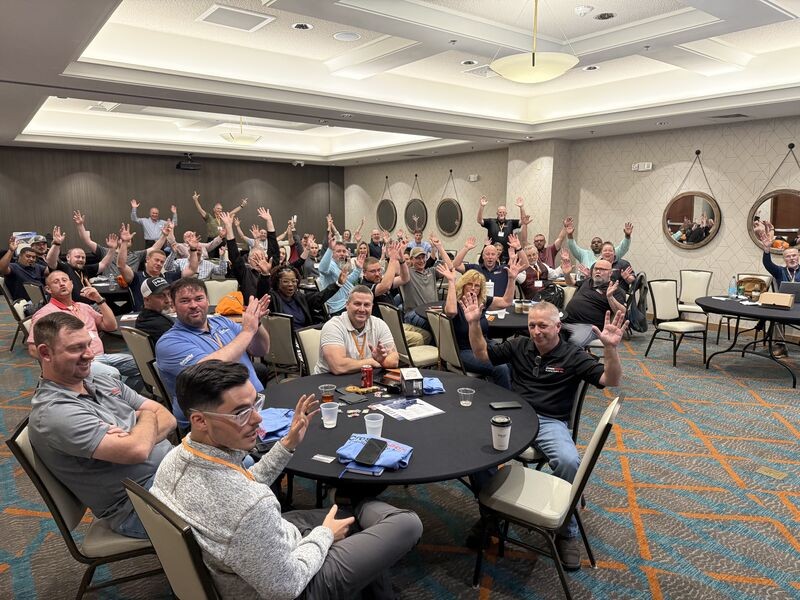
How Situational Canvassing Connects to Objections and Closing
If you’ve read my work on asking for the sale and using “but” to your advantage, you know I believe that:
- “If you don’t explicitly ask, the buyer might think you lack confidence in the solution you are offering.”
- “In sales, an objection is often a customer’s response to a question you never asked.”
Situational Canvassing ties directly into both ideas.
When a neighbor calls you later because they saw your project and your leave‑behind, they’re already partway down the road:
- They’ve seen proof of your work.
- They’ve talked to your customer.
- They’ve experienced your professionalism in their own neighborhood.
From there, your job is to ask good questions, handle objections with tools like the “But Flip” (“We really like your offering, but…”), and then always ask for the sale using simple one‑liners like “Would you like to go ahead with this?” or “How would you like to pay for this?”
In other words, Situational Canvassing doesn’t replace good selling; it feeds you warmer, more qualified opportunities so your selling skills can do what they’re designed to do.
Leave‑Behinds: Your Silent Canvassers
Face‑to‑face conversations are ideal, but they won’t happen at every door. That’s why it’s smart to have a simple leave‑behind flyer or note with a similar message in case nobody answers.
A strong leave‑behind should:
- Mention the project you’re doing on the street.
- Reassure neighbors about cleanliness, safety, and jobsite behavior.
- Include your name, company, and direct contact info.
- Invite them to look at the finished work and reach out with questions.
Done consistently, this becomes one of the best neighborhood marketing strategies for home improvement contractors, because it’s hyper‑local, high‑trust, and extremely low cost.
Putting this strategy into practice can have a meaningful impact on the number of jobs you sell each year, and best of all, it costs absolutely nothing.
So the next time you close a job, don’t just jump in the truck and drive away. Knock on a couple of doors. Leave a couple of notes. You really don’t have much to lose, and you might gain stronger visibility, more referrals, more sales, and more income along the way. Happy selling.
Frequently Asked Questions: Situational Canvassing for U.S. Home Improvement, Home Services, and Outdoor Living
- What is Situational Canvassing in simple terms?
Situational Canvassing means you only canvass around homes where you already have a job or a recently completed project, and your main goal is awareness and service, not a hard close at the door. You introduce yourself, explain the work you’re doing nearby, reassure neighbors about cleanliness, and leave an easy way for them to contact you when they’re ready. - How is this different from traditional canvassing?
Traditional canvassing often means cold knocking in random neighborhoods with the primary goal of booking leads immediately. Situational Canvassing is warmer and more targeted: you have a specific reason to be on that street, and you’re there to inform and serve. This approach feels more natural to modern homeowners and fits better with local contractor marketing strategies for home services businesses who want long‑term trust. - Why is Situational Canvassing so effective for home improvement and outdoor living projects?
Homeowners want to see real, local proof before hiring someone for roofing, siding, windows, decks, patios, or outdoor living spaces. Situational Canvassing lets them see your work in their own neighborhood. They watch your crews, notice your standards, and talk to their neighbor about the project. That combination of visibility and social proof is exactly how outdoor living contractors build trust with homeowners. - How does this help generate more local referrals?
When you introduce yourself and then deliver a great project, you make it easy for neighbors to ask your customer about their experience, quality, communication, follow‑through, and whether they’d recommend you. If you’ve done your job well, those answers become live testimonials. This is how remodeling companies generate local homeowner referrals right on the same street, without big ad spends. - What should I actually say at the door?
Keep it short and respectful. A simple script like, “Hi, I’m with ABC Remodeling. Your neighbors at 123 Main Street chose us to install new windows (or build their deck). We’ll be working here over the next few weeks and wanted to let you know we’ll keep things clean and safe. If you see our team out here, that’s why. If you’d like to see the finished project or have questions, here’s my card,” works well. You’re informing, not forcing a decision. - How can sales leaders make this part of our culture?
Sales leaders can set a clear standard: “Every job gets at least a few neighbor touches.” Work it into ride‑alongs and coaching. Recognize reps and crews who bring in “neighbor of job” leads. Just as I tell teams to “always ask for the sale,” leaders can insist that we “never leave a job without at least knocking a few doors or leaving a few notes.” Over time, it becomes a normal part of how you close out a project. - What if my team hates the idea of canvassing?
A lot of reps and installers dislike the idea of cold door‑knocking. Situational Canvassing is easier to accept because it’s tied to real work you’re already doing and framed as service. When teams see that a five‑minute conversation can lead to an appointment with a neighbor who has already seen their work, their resistance usually starts to soften. Once they experience a few wins, they often become the biggest advocates. - How does this tie into objection handling and closing skills?
Situational Canvassing brings you warmer leads, but you still need to handle objections and ask for the sale. Tools like the “But Flip” and “We like it, but…” turned into “You’re concerned about price, but you like this solution because…,”help you keep value in the conversation. From there, simple one‑liners like “Would you like to go ahead with this?” or “How would you like to pay for this?” help you turn “maybe” into clear decisions. - How can I track the impact of Situational Canvassing?
In your CRM, tag any lead that comes from a “neighbor of job,” “situational canvassing,” or “jobsite neighbor.” Over time, you’ll see how many appointments and sales come from that tag. Pair that with simple notes about which jobs you canvassed around and when. Many companies are surprised to see just how much incremental revenue came from those few extra minutes in each neighborhood. - What is the first step to getting started?
Start with one team, one crew, or one branch. Commit that for the next 30 days, they will spend 10–15 minutes canvassing around every completed job. Give them a short script, a simple leave‑behind, and a way to record leads from neighbors. At the end of the month, review the results. If you see even a handful of extra projects, you’ll understand why Situational Canvassing belongs on your list of core door‑to‑door lead generation ideas for roofing and remodeling companies.