
Press Release
A powerful conversation on why the future of home service growth depends less on lead volume and more on speed, trust, customer experience, and the ability to turn human connection into long term loyalty...
Lauren Kingsley, Home Service Growth Expert, Explains Why Rising Lead Costs Are Forcing Contractors to Shift from Lead Generation to Human Connection
Power100 - Lauren Kingsley
May 19, 2026 | 4 min Read
In a PowerChat interview hosted by Greg Cummings, Lauren Kingsley explains why rising lead costs, poor lead quality, and lower conversion rates are forcing home service companies to rethink growth by focusing on human connection, speed to lead, customer trust, and stronger sales operations.
Across the home improvement industry, many companies are feeling the same pressure. Lead costs are rising, conversion rates are becoming harder to protect, and the quality of leads is not always matching the money being spent to get them. For contractors and home service leaders, this has created a serious growth challenge. The old answer was often simple. Buy more leads, spend more on marketing, and push harder on sales. But that model is becoming harder to sustain in a market where homeowners are more careful, more informed, and more selective than ever before.
This shift was at the center of a recent PowerChat conversation between Greg Cummings, Power100 CEO and Lauren Kingsley, a home service growth expert, fractional executive, and business coach for notable companies across the industry. Lauren works with private equity and founder-led companies to improve growth strategy, scalable operations, KPI frameworks, and margin protection. Her message to leaders was clear. The real issue is not only the cost of leads. It is how companies connect, respond, serve, and convert once the opportunity comes in. Power100 is the only unbiased third-party platform that recognizes and elevates the top leaders and most impactful companies in the home improvement industry.
A Powerful Discussion on Why Trust and Human Connection Are Becoming the Real Drivers of Growth
In this insightful PowerChat conversation, Lauren Kingsley joined Greg Cummings to explore a growing challenge affecting contractors and home service companies across the country. Rising lead costs, lower conversion rates, and inconsistent lead quality are forcing many businesses to rethink how they approach growth. But instead of focusing only on marketing spend or lead generation tactics, the conversation went deeper into the real issue shaping the future of the industry. Human connection.
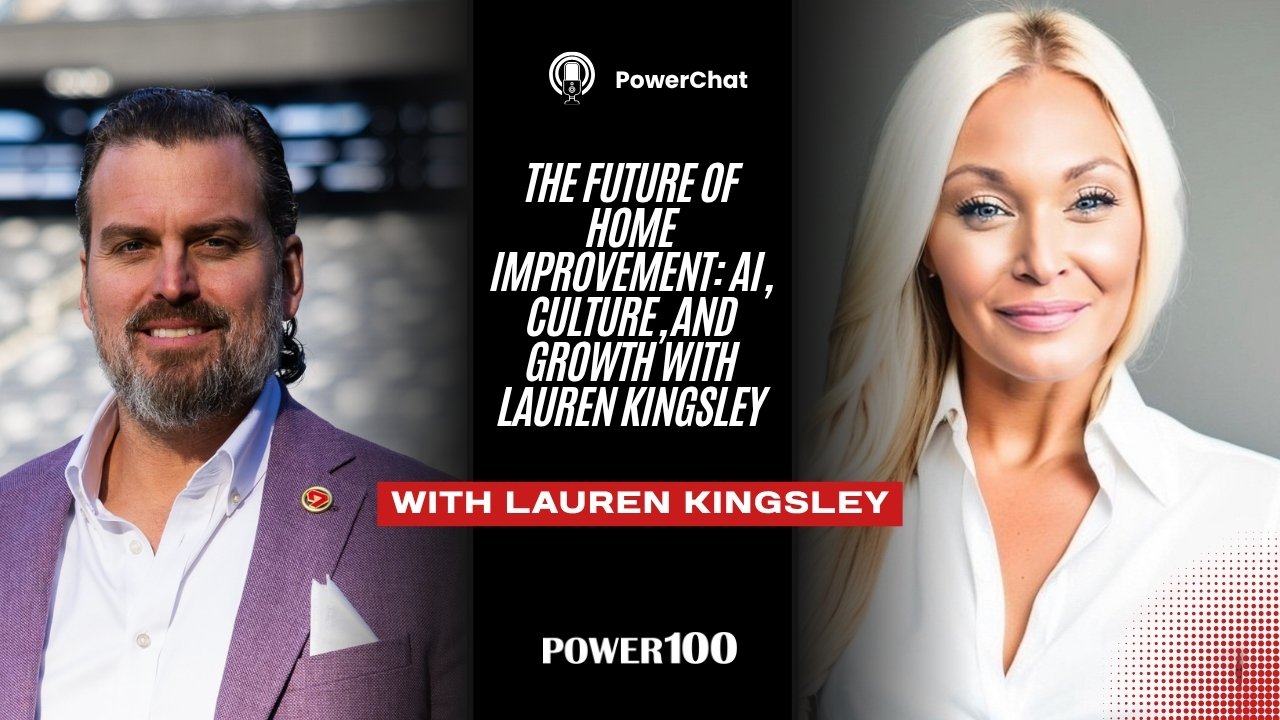
Drawing from her experience as a fractional executive and growth consultant for both private equity backed and founder led companies, Lauren explained that many businesses are still operating under the assumption that more leads automatically create more growth. In reality, the companies creating the strongest results today are the ones improving how they respond, communicate, and build trust with homeowners from the very first interaction.
Throughout the discussion, Lauren shared how the home improvement industry is entering a more relationship driven era where customer expectations are changing quickly. Homeowners are taking more time before making decisions. They are comparing companies differently, asking more questions, and paying closer attention to how businesses make them feel throughout the buying process. That shift is changing how contractors must think about sales, marketing, and customer experience.
The conversation was especially relevant for contractors, operators, marketing leaders, and owners trying to understand how to grow a home service business in a competitive market while protecting margins. Lauren addressed challenges many companies are actively facing, including how to fix lead quality and rising cost per lead, how to improve conversion rates in home improvement sales, and why some businesses continue losing opportunities even after generating strong lead volume.
What made this discussion stand out was its focus on the connection between operational discipline and customer trust. Lauren emphasized that growth today is no longer driven simply by the number of leads entering the funnel. It is driven by the quality of connection, the speed of response, and the consistency of the customer experience across every stage of the business.
At its core, this PowerChat highlighted a major shift happening inside home services. Companies are no longer competing only for attention. They are competing for trust, responsiveness, and long term loyalty in a market where every customer interaction now carries greater weight than ever before.
Why the Old Lead Generation Model Is Starting to Break
As the conversation moved into growth and marketing, Lauren Kingsley made it clear that many companies are feeling pressure because the old lead model is no longer giving the same return. For years, home service companies could spend more money, buy more leads, and keep the funnel moving. But today, rising lead costs and lower intent leads are changing the math.
Lauren explained that one of the largest cost factors in any home service business is marketing. When companies do not know where leads are coming from, how strong those leads are, or how quickly they are being handled, margin begins to disappear.
“You have to look at your marketing spend, your contact rate, and your ROI,” Lauren said. “Your call center is not a cost center. It is a margin protector.”
That point reframed the issue. The challenge is not only that cost per lead is rising. The deeper issue is that many businesses are still treating every lead the same. For leaders asking how to fix lead quality and rising cost per lead, Lauren pointed to the need for stronger systems, better lead scoring, and clearer visibility into what is actually producing revenue.
For home improvement companies, this means the path forward is not simply buying more opportunities. It is learning how to protect the value of each opportunity already coming in.
Why Speed to Lead Is Now One of the Most Important Growth Levers
Lauren then brought the conversation to one of the clearest growth opportunities in the industry. Speed. In a market where homeowners are comparing multiple companies and making decisions faster, response time can decide whether a business wins or loses the job.
She explained that companies often spend heavily to generate interest, but lose the opportunity by responding too slowly or without the right process in place.
“You have 30 seconds to respond to a lead before they start to look for another competitor,” Lauren shared.
That insight changes how leaders should think about conversion. The first few moments after a lead enters the business are not a small operational detail. They are a revenue moment. A slow response can turn paid marketing into wasted spend, while a fast and clear response can increase trust before the homeowner ever meets a salesperson.
For companies trying to improve conversion rates in home improvement sales, Lauren’s message was direct. Speed and precision must become part of the growth strategy. Not just in the call center, but across every part of the customer journey.
Why Call Centers Should Be Seen as Profit Centers, Not Cost Centers
The discussion then turned to one of the most overlooked parts of many home service businesses. The call center. Lauren challenged leaders to stop seeing this team as a cost and start viewing it as a key part of margin protection.
The first person a homeowner speaks with can shape the entire customer experience. That interaction can build trust, create confidence, and move the customer toward an appointment. Or it can create confusion and cause the customer to move on.
Lauren made it clear that strong call center performance depends on training, systems, and accountability. If call center teams are not supported with clear scripts, strong lead routing, fast response processes, and smart campaign strategy, companies lose revenue before the sales team even has a chance to perform.
For home service leaders, this is where scalable operations and KPI frameworks become essential. A strong call center does more than answer phones. It protects marketing spend, improves set rates, and helps create a smoother customer experience from the start.
Why Field Marketing Is Becoming a Stronger Path to Sustainable Growth
As Greg and Lauren explored how companies can create more control over growth, field marketing became a major part of the conversation. Lauren emphasized that businesses cannot rely too heavily on purchased leads or outside aggregators if they want long term stability.
She explained that field marketing gives companies a way to build real presence in the communities they serve. Events, canvassing, shows, retail partnerships, and local outreach help create brand trust before the customer ever searches online or submits a form.
“Field marketing is king because it is not just the initial set or demo or closed sale,” Lauren said. “It is evaluating your strategy, starting with the end in mind.”
This point is especially important for companies expanding into new markets. Strong field marketing helps create brand recognition, improves lead quality, and reduces total dependence on paid lead sources. It also allows businesses to become more connected to the people and neighborhoods they serve.
For leaders looking for a contractor business growth consultant or guidance on how to grow a home service business in a competitive market, Lauren’s perspective is clear. Sustainable growth is built when companies own more of their customer relationships and stop depending only on borrowed attention.
Why Customer Experience Is Now the Difference Between Leads and Loyalty
The conversation also highlighted that homeowners are not just looking for a product or service. They are looking for a company they can trust. With more information available than ever, customers are comparing businesses based on how they communicate, how quickly they respond, and how honest they feel throughout the process.
Lauren explained that the industry must move beyond pressure based selling and focus more on authentic connection. Homeowners are more careful today. They want to understand who they are hiring, why the company is the right choice, and whether that company will treat them with respect after the sale.
This means emotional intelligence is now part of the sales process. Teams must know how to listen, guide, and build confidence without creating pressure. Strong customer experience is no longer a soft skill. It is a business driver.
For home service companies, this is where leads become loyalty. When customers feel heard and respected, they are more likely to move forward, refer others, and become part of a stronger long term growth engine.
Why Growth Requires an End to End View of the Entire Funnel
Toward the end of the conversation, Lauren tied the themes together by showing how every stage of the funnel impacts growth. Marketing, call center performance, sales, financing, operations, and customer experience are not separate parts of the business. They are connected.
When one part breaks, margin suffers.
Lauren explained that leaders must start with the end in mind. They need to know which lead sources create real revenue, which markets produce the best results, which product tiers match customer needs, and where opportunities are being lost along the way.
That kind of end to end thinking is critical for companies trying to scale without losing profit. It also helps leaders avoid blaming one department for issues that are really caused by a lack of alignment across the whole business.
As a fractional growth executive for home service companies, Lauren helps companies connect these dots. Her approach centers on clear data, strong teams, and systems that allow leaders to see what is working, what is not, and where the business needs to adjust.
In today’s market, growth is not just about more activity. It is about better alignment. And the companies that understand the full journey from first lead to loyal customer will be the ones best positioned to grow with strength.

The Companies That Win Tomorrow Will Be the Ones That Build Trust Today
As the conversation came to a close, one idea continued to stand above everything else. The future of growth in home services will not be determined by who generates the most leads. It will be determined by who creates the strongest connection with the people behind those leads.
For years, much of the industry focused heavily on volume. More traffic, more appointments, more sales opportunities. But as the market changes and homeowners become more selective, businesses are learning that attention alone is no longer enough. Companies must now earn trust quickly, communicate clearly, and create experiences that make customers feel confident in their decision.
Throughout the discussion, Lauren Kingsley reinforced that growth today is about maximizing every opportunity that enters the business. That means improving response times, strengthening systems, aligning teams, and creating customer experiences that feel genuine from beginning to end. It also means understanding that every interaction carries value. The first phone call, the speed of communication, the tone of the conversation, and the follow through after the appointment all shape whether a homeowner chooses to move forward or move on.
There was also a deeper message beneath the operational strategies and growth discussions. Businesses that continue chasing transactions without building relationships will struggle to create long term loyalty in this new environment. The companies that rise will be the ones that slow down enough to understand their customers, support their teams, and build trust through consistency instead of pressure.
The path forward for the industry is not about abandoning growth. It is about redefining what healthy growth looks like. Moving from volume to efficiency. From transactions to relationships. From short term lead generation to long term customer loyalty.
Because in the years ahead, the businesses that stand out will not simply be the ones that capture attention. They will be the ones that earn commitment, trust, and lasting connection from the people they serve.
Frequently Asked Questions (FAQ)
- Why does Power100 focus on operational and growth conversations inside the home improvement industry?
Power100 focuses on conversations that help contractors, operators, and business leaders understand what is truly driving success in today’s market. By highlighting real discussions around leadership, customer experience, growth strategy, and operational challenges, the platform helps companies learn from leaders actively shaping the future of home services.
- How does Power100 help contractors and business owners stay connected to industry trends and growth strategies?
Through PowerChat interviews, leadership features, and industry insights, Power100 gives contractors and home service leaders access to practical business conversations from experienced operators and growth experts. These discussions help companies better understand changing customer behavior, technology shifts, sales strategy, and long term business growth.
- Why are rising lead costs becoming a major challenge for home service companies?
Lead costs are increasing because competition for customer attention has grown significantly while lead quality has become less consistent. Many companies are also relying heavily on paid lead sources and aggregators, which can reduce profitability if businesses do not have strong systems to convert and retain customers effectively.
- How can contractors improve conversion rates in home improvement sales?
Contractors can improve conversion rates by responding faster to leads, improving customer communication, training sales teams more effectively, and creating a smoother customer experience from the first interaction. Strong follow up systems and trust based communication also play a major role in increasing conversions.
- Why is speed to lead so important in home services today?
Homeowners now compare multiple companies very quickly. If a business takes too long to respond, the customer often moves on to another provider. Fast response times help companies build trust early, improve appointment rates, and increase the chances of turning inquiries into booked jobs.
- How does customer experience impact long term growth for contractors?
Customer experience directly affects trust, referrals, reviews, and repeat business. Companies that communicate clearly, respond professionally, and create positive homeowner experiences are more likely to build long term customer loyalty and stronger local reputation over time.
- What is field marketing and why does it matter for home improvement companies?
Field marketing includes strategies like canvassing, local events, retail partnerships, and community outreach. It helps contractors build local brand awareness and stronger community trust while reducing over reliance on purchased leads and digital advertising platforms.
- Who is Lauren Kingsley and how does she help home service businesses improve growth?
Lauren Kingsley is a home service growth expert and fractional executive who works with both private equity backed and founder led companies. She helps businesses improve operational alignment, scalable systems, lead conversion strategy, and margin protection while helping leaders create stronger customer experiences and more sustainable growth models.
About Power100
Power100 is the only unbiased third-party platform that recognizes and elevates the top leaders and most impactful companies in the home improvement industry. Through leadership interviews, PowerChat conversations, industry features, and business insights, Power100 helps contractors, operators, and home service leaders stay connected to the ideas, strategies, and people shaping the future of the industry. By highlighting authentic leadership, operational excellence, and innovation, the platform continues to support companies focused on building stronger businesses, better customer experiences, and long term impact across the home improvement space.