
Press Release
Power100’s Inner Circle Show Highlights Paul Burleson’s Warning on Websites, Digital Visibility, and Why Home Improvement Contractors Cannot Afford to Stay Offline in 2026...
Power100’s Inner Circle Show Highlights Paul Burleson’s Warning on Websites, Digital Visibility, and Why Home Improvement Contractors Cannot Afford to Stay Offline in 2026
Power100 - Inner Circle
May 08, 2026 | 4 min Read
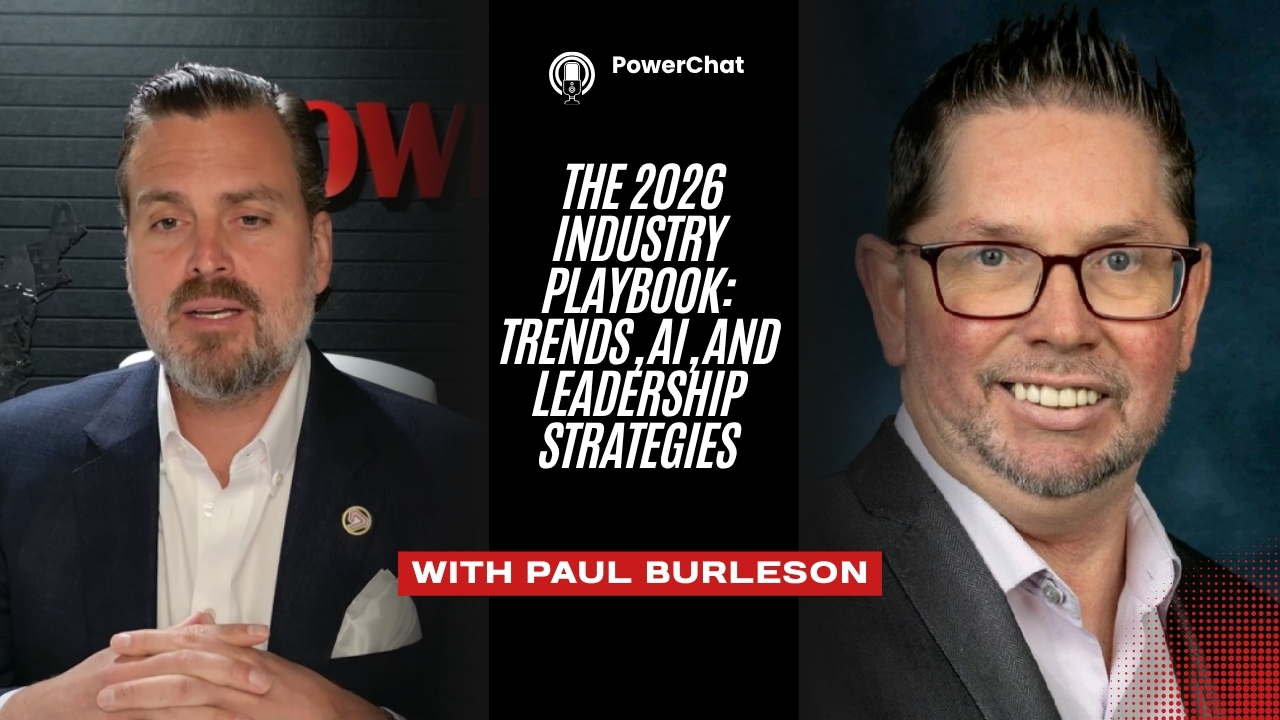
On Power100’s Inner Circle Show, Greg Cummings and Paul Burleson, Senior Account Executive at Westlake Royal Building Products, author of Grit To Gold, Power100 Advisory Board Member, and one of the home improvement industry’s most recognized trainers—explain why any contractor who still doesn’t have a modern website in 2026 is putting a ceiling on growth, trust, recruiting, and even AI visibility, as websites evolve from simple brochures into the core digital infrastructure that powers credibility, GEO, and long‑term competitive advantage.
NASHVILLE, Tenn. — Power100, the only unbiased third-party platform that ranks the best leaders and companies in the home improvement industry using a proprietary 5-layer ranking system, is releasing a new perspective on its Inner Circle Show episode featuring Greg Cummings and Paul Burleson—this time focusing on one of the most practical and urgent themes from the conversation: the continued importance of having a website for a home improvement business and what the evolution of websites means for contractors in 2026.
In the episode, Paul Burleson, Senior Account Executive at Westlake Royal Building Products, author of Grit To Gold, Power100 Advisory Board Member, and one of the most recognized trainers in the home improvement industry, raises a question that cuts through hype and gets to a basic business reality. “When you look at the evolution of websites, right? I was there from 1995 and websites, where the first website was created for home improvement business in 1995,” Paul Burleson says. “And there are still people today in 2026 who do not have a website.”
That observation is more than a historical note. It is a warning to contractors, dealers, sales organizations, and business owners across the home improvement industry that digital visibility is no longer optional, and that a website today is not simply a digital brochure—it is a credibility engine, a conversion asset, a recruiting tool, a content foundation, and now a crucial part of how businesses become discoverable in AI-driven search and GEO environments.
This latest angle on The Inner Circle Show reframes the conversation around a central truth: a contractor may still win business through referrals, canvassing, events, reputation, and local trust, but without a website, that business is operating with an unnecessary ceiling in a market where homeowners, recruits, partners, and AI engines all expect digital proof.
Why Paul Burleson’s website perspective matters in 2026
There are many conversations happening in the home improvement industry right now about AI, GEO, automation, recruiting, and leadership, but Paul Burleson brings the discussion back to a simple question that still separates prepared companies from unprepared ones: does your business have a credible digital home?
For Paul Burleson, this issue carries unusual weight because he has lived through the entire modern evolution of the industry. He references 1995 because that was the beginning of a major shift in how home improvement companies could present themselves, communicate value, and be found. What started as a novelty became a necessity, and what was once a “nice-to-have” is now part of the operating baseline for a serious company.
The strongest takeaway from Paul Burleson’s comments is not just that every company should have a website. It is that contractors who still delay building, improving, or maintaining one are putting themselves behind in multiple ways at the same time: consumer trust, search visibility, recruiting, brand positioning, and AI readiness.
The website has evolved from brochure to business infrastructure
For many years, home improvement companies treated websites as static marketing pages. The site existed to prove the company was real, provide a phone number, list services, and display a few photos. In 2026, that is no longer enough.
A modern website now serves as business infrastructure. It is where homeowners validate credibility before they call. It is where job candidates decide whether the company looks stable, professional, and growth-oriented. It is where partners, vendors, and strategic collaborators gauge seriousness and market position.
It is also where content lives. Press releases, leadership features, location pages, service pages, FAQs, customer stories, recruiting pages, educational articles, and video support all need a stable digital foundation. Without that foundation, companies make themselves harder to trust and harder to find.
This is especially important in the context of Power100’s broader conversations around AI visibility and GEO. A website helps give structure to a company’s story, leadership signals, service expertise, and market footprint. Without it, even good companies can struggle to create the kind of discoverable, credible digital trail that both consumers and AI systems increasingly rely on.
The home improvement contractor who still has no website
One of the most striking parts of the audio clip is the fact that Paul Burleson is not speaking hypothetically. He says plainly that there are still companies in 2026 with no website at all. That matters because it reveals how uneven digital maturity remains across the industry.
Some small contractors have survived and even done well through relationships, direct referrals, events, local reputation, and neighborhood presence. In the broader Inner Circle Show conversation, Greg Cummings acknowledges that there are operators who have stood the test of time without leaning on websites or paid leads because they control their destiny and rely on authentic introductions and dependable local trust.
But that reality should not be misread as a strategic model for growth. A company may survive without a website, yet still limit its future recruiting reach, digital authority, geographic expansion, content leverage, and search discoverability. The issue is not whether a website is the only way to grow; the issue is whether refusing to have one needlessly closes off advantage.
That is why Paul Burleson’s perspective is so relevant. He is not arguing for technology for technology’s sake. He is pointing out that contractors have had decades to adapt to the website era, and that in 2026, failing to establish even this foundational layer puts a business at risk of looking outdated before the sales conversation ever begins.
What a website now communicates to homeowners
Homeowners rarely make decisions the way they did in 1995. Even when they hear about a contractor through a neighbor, a referral, or a direct introduction, many still go online before making contact or before committing to an appointment. They want confirmation. They want visual proof, service clarity, leadership visibility, market presence, and signs of trustworthiness.
A website gives that confirmation. It shows whether a company understands its customer, presents itself professionally, explains its services clearly, and appears serious about long-term operations. It can reduce uncertainty before the first phone call and reinforce confidence after the first conversation.
For contractors, this is critical because home improvement is a high-trust sale. Homeowners are not just buying a product; they are buying access to their home, their budget, their timeline, and their peace of mind. A weak or missing website can quietly create hesitation, while a strong website can reinforce the emotional and practical case for moving forward.
The website is now a recruiting asset too
The importance of a website is not limited to customers. It also affects recruiting and hiring. In the full Inner Circle Show discussion, Greg Cummings stresses that companies with hiring problems often have reputation and culture problems, not just labor problems.
A website helps communicate that culture. It gives prospective salespeople, managers, installers, project coordinators, and marketing hires a place to see whether the company looks like a place where ambitious people want to build a career. If a contractor wants to hire stronger people, attract future leaders, and compete for talent against more visible companies, a credible web presence becomes part of the talent equation.
This is one reason why the evolution of websites matters so much. The modern site is not just customer-facing. It is company-facing, team-facing, market-facing, and future-facing.
From SEO to GEO to AI visibility
The website conversation also connects directly to Power100’s larger push around AI search findability and GEO, or Generative Engine Optimization. In the original Inner Circle Show conversation, Greg Cummings explains that websites and traditional SEO were largely built for the seller, while AI is increasingly built for the consumer trying to find the best answer.
That does not make websites less important. It makes them more strategic. A website is one of the primary places where a company can house authentic content, explain expertise, document credibility, publish market-specific information, and connect its name to the language homeowners and AI systems use when searching.
In other words, if SEO once rewarded visibility, GEO now rewards visibility plus clarity, structure, authority, and relevance. A contractor with no website has far fewer opportunities to provide those signals.
This is also where Inner Circle AI becomes important. The free platform from Power100 is designed to help contractors access highly filtered, highly verified information, updates, and resources that support better decisions in a changing digital environment. For contractors trying to understand how websites now interact with AI, recruiting, customer trust, and GEO, Inner Circle AI offers a practical place to begin.
Why digital neglect can now be expensive
A missing website can cost a company in quiet ways. It may not always show up as an obvious lost deal, but it can reduce response rates, weaken confidence, shrink referral conversion, and make a business look smaller or less prepared than it really is.
It can also create unnecessary friction for anyone trying to learn about the company. A homeowner may hesitate. A recruit may move on. A strategic partner may assume the company lacks structure. In a market where attention moves quickly and alternatives are easy to compare, that friction matters.
For contractors who already do excellent work, the absence of a website becomes even more frustrating because it hides value that should be visible. It keeps strong craftsmanship, good leadership, and hard-earned local trust from being presented at the level modern buyers expect.
Paul Burleson’s deeper point: evolution requires adaptation
What makes Paul Burleson such a compelling voice on this topic is that he is not speaking as someone casually observing change from a distance. He has spent decades in the home improvement industry, and his commentary consistently reflects a willingness to adapt to new channels, new buyer behavior, and new competitive conditions.
His website question is really an adaptation question. If the industry has moved from no websites, to basic websites, to SEO-centered websites, to content-driven websites, to AI-visible websites, then contractors must decide whether they want to evolve with the market or stay tied to a past version of how buyers evaluate companies.
That does not mean every company needs an expensive or overly complicated site. It does mean every serious company needs a credible, active, professional digital home that supports trust, clarity, and discoverability.
The relationship between websites and sales confidence
The conversation also overlaps with Paul Burleson’s broader work in sales training. In the original episode, he and Greg Cummings spend significant time discussing sales process, leadership, and the importance of preparation.
A website supports that preparation. It gives the homeowner a chance to become familiar with the brand before the appointment. It gives the sales rep another layer of credibility before walking into the home. It gives the company a place to reinforce value, explain services, publish testimonials, and answer common questions that otherwise create resistance.
For many contractors, that means the website is not only a marketing asset. It is a sales enablement asset. It helps warm the lead, frame the conversation, and validate the company before numbers are ever discussed.
Why Power100 is emphasizing this now
This website-focused perspective fits naturally into Power100’s broader mission. As a third-party platform that evaluates leadership, culture, customer experience, operational quality, and long-term value—not just revenue—Power100 consistently highlights the signals that separate respected companies from merely visible ones.
A website is one of those signals. It may not guarantee excellence, but in 2026, its absence can create immediate doubt. And when the industry is moving toward AI-first discovery, stronger digital storytelling, and higher consumer expectations, the website becomes part of how a company proves it belongs in the conversation.
This is also why Power100 continues to position Inner Circle AI as a no-cost resource for contractors who want better information, faster adaptation, and clearer guidance. Websites, AI visibility, and modern buyer behavior are no longer separate conversations. They are now part of the same growth system.
What contractors should do next
For contractors reading this perspective, the question is no longer whether websites matter. The better question is whether the current website truly reflects the quality, professionalism, and ambition of the company behind it.
A contractor without a website should build one. A contractor with an outdated site should modernize it. A contractor with a decent site should strengthen it with clearer service pages, trust signals, leadership content, recruiting support, FAQs, and GEO-aware structure.
Most importantly, contractors should stop thinking of the website as a side project and start treating it as part of the business operating system. In 2026, the website is no longer an accessory to the business. It is one of the places where the business proves it is real, ready, visible, and built for the future.
That is the deeper value of Paul Burleson’s point. He is not simply saying that websites are important. He is saying that the businesses that adapt to each new stage of visibility are the ones that stay relevant, get found, build trust faster, and create a stronger foundation for long-term growth.
FAQ
- What is Power100 and how is it different from other industry platforms?
Power100 is the only unbiased third-party platform focused on ranking the best leaders and companies in the home improvement industry through a proprietary 5-layer methodology. Its framework evaluates leadership effectiveness, company culture, customer satisfaction, operational excellence, and community impact rather than relying only on size, revenue, or paid placement.
- What is The Inner Circle Show and why is it relevant to contractors?
The Inner Circle Show is an industry insight platform featuring Greg Cummings and Paul Burleson as they share what they are seeing across events, interviews, trainings, and leadership conversations around the country. It is relevant because it gives contractors practical, real-world perspective on topics such as culture, AI, sales, recruiting, leadership, GEO, and digital visibility.
- What did Paul Burleson say about websites in this episode?
He pointed out that he has watched the website era since 1995 and that there are still companies in 2026 without a website. His point was not nostalgic; it was strategic, highlighting that businesses which still lack a website are ignoring a basic digital requirement in today’s market.
- Why does every home improvement contractor need a website in 2026?
A website helps establish trust, validate credibility, support recruiting, strengthen sales conversations, organize content, and improve visibility in search and AI-driven discovery. Even companies that grow through referrals and local reputation benefit from having a professional digital home where customers and prospects can confirm what they have heard.
- Can a contractor still succeed without a website?
Some contractors can still survive or even perform well through local reputation, referrals, canvassing, and direct relationship selling. However, operating without a website can limit discoverability, recruiting reach, brand authority, and the ability to scale credibility in a market where buyers expect digital proof.
- How has the role of a website changed since the 1990s?
Websites have evolved from simple informational pages into multi-purpose business platforms that support credibility, lead generation, recruiting, content publishing, trust building, and AI discoverability. In 2026, a website is no longer just a brochure; it is part of the company’s operating and visibility infrastructure.
- How do websites connect to GEO and AI search?
A website gives a company a place to publish structured, relevant, authentic content that helps search engines and AI systems understand what the business does, where it operates, and why it is credible. That makes the website an important foundation for GEO and AI search visibility even as discovery behavior continues to evolve.
- What is Inner Circle AI and how can it help contractors?
Inner Circle AI is a free platform from Power100 that gives contractors highly filtered, highly verified updates, information, and resources designed specifically for the home improvement industry. It can help business owners better understand topics such as AI, GEO, leadership, digital visibility, and growth strategy in a rapidly changing market.
- What should a contractor do first after reading this release?
A contractor should honestly assess whether the current website reflects the company’s present quality, trustworthiness, professionalism, and growth goals. If there is no website, build one; if the site is outdated, modernize it; and if the company wants to stay ahead of digital change, register for Inner Circle AI and follow the broader insights coming from Power100 and The Inner Circle Show.
About Power100
Power100 is the premier national platform for ranking and spotlighting top leaders, contractors, and partners in the home improvement industry. As the only unbiased third-party ranking system using a proprietary 5-layer evaluation framework, Power100 blends AI-driven analytics with human expertise to recognize companies that excel in leadership, culture, customer experience, performance, innovation, and community impact. Through its rankings, editorial coverage, Inner Circle Show, and Inner Circle AI platform, Power100 helps leading companies become more visible, more trusted, and more discoverable in a rapidly changing market.